This site is supported by our readers. We may earn a commission, at no cost to you, if you purchase through links.
A snake handler got bitten through denim jeans last month, and the fabric reduced venom injection by over 60 percent. That single layer of tough material made the difference between a hospital visit and a potential tragedy. Your clothing isn’t just something you throw on before grabbing a snake—it’s your first line of defense, and sometimes your last.
The right gear protects you from fangs, claws, and unexpected defensive strikes while keeping the snake calm enough to handle safely. Thick leather gloves, high boots, long sleeves—each piece fulfills a specific purpose, whether you’re relocating a garter snake from your garden or working with venomous species in a professional setting. Get it wrong, and you’re gambling with painful consequences that proper preparation could’ve prevented entirely.
Table Of Contents
Key Takeaways
- Tough clothing like denim, leather gloves, high boots, and long sleeves dramatically reduce the risk and severity of snake bites.
- The right protective gear keeps you safe and helps keep snakes calm, making every handling session less stressful for both sides.
- Specialized materials and good fit—like Kevlar gloves, snake chaps, and snug cuffs—offer real-world protection without sacrificing comfort or mobility.
- Clean, disinfect, and store your snake handling gear properly, and replace worn-out or damaged items before they put you at risk.
Why Clothing Matters When Handling Snakes
The right clothing isn’t just about comfort—it’s your first line of defense between skin and fangs. What you wear directly affects both your safety and the snake’s stress levels during handling.
Proper protective gear also helps prevent accidental injuries that could introduce bacteria or pathogens, which is especially important since recognizing early signs of snake diseases often starts with monitoring skin condition after handling sessions.
Let’s break down the three key reasons proper gear matters, whether you’re handling a docile corn snake or preparing for something more serious.
Knowing the best way to pick up a snake becomes even more important when you add the right protective equipment to your handling routine.
Preventing Bites and Scratches
The right protective gear creates a proven barrier between you and fangs. Research shows that even ordinary denim can reduce venom injected by 60-66 percent, while triggering more dry bites where no venom enters at all.
Proper handling techniques, including safe approaches to restrain and transport snakes, can further minimize defensive strikes and the need for protective gear altogether.
Proper protective gear acts as a proven barrier—even basic denim reduces venom injection by 60-66 percent and increases dry bites
Your protective clothing lineup should include:
- Thick leather gloves for hand and wrist coverage during safe handling
- High-top boots to shield feet and ankles from surprise strikes
- Long sleeves and pants as your first defense against venomous species
This safety equipment won’t make you invincible, but it dramatically cuts bite severity and helps prevent scratches during routine snake handling techniques. Additionally, wearing denim snake protection can be a vital factor in reducing the risk of venomous bites.
Minimizing Stress for Snakes
Your safety gear doesn’t just protect you—it calms the snake down, too. Smooth leather gloves and fitted clothing let you use gentle handling techniques without fumbling or sudden movements that trigger defensive strikes.
When you’re confident in your protective gear, you handle with steadier hands, which means less stress for the animal. That’s animal welfare in action—snake safety and precautions that benefit everyone involved, especially during venomous snake handling.
Protecting Against Allergens and Contaminants
Snakes carry Salmonella on their skin, and that bacteria loves hitching rides on your sleeves and pants.
If you’re dealing with snakes on farmland, check out these proven pest control strategies for agricultural properties to manage populations safely while protecting your gear from contamination.
Protective clothing acts as a barrier against snakeborne pathogens, keeping contaminants off your skin and out of your home. Dedicated gloves and coveralls for reptile work aren’t just about allergen prevention—they’re your first line of defense in hygiene practices that protect your family, too.
You really need to follow proper reptile handling guidelines to minimize the risk of disease transmission.
Essential Protective Gear for Snake Handling
You wouldn’t show up to a sword fight with a pool noodle, right? Same logic applies when you’re handling snakes—your gear matters, and the right stuff can mean the difference between a smooth session and a trip to urgent care.
Let’s walk through the essentials that’ll keep you protected, confident, and ready for whatever your scaly friend throws at you.
Types of Gloves and Their Effectiveness
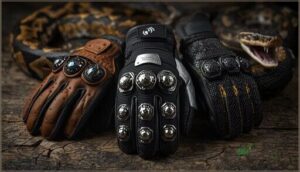
Not all gloves offer the same protection, and knowing the difference could save your hand. Thick leather provides decent abrasion resistance but won’t reliably stop fangs from large venomous species.
If you do get bitten—whether from a ball python or another species—knowing how to respond to a ball python bite can help you stay calm and handle the situation safely.
HexArmor and SuperFabric gloves deliver level 5 needlestick resistance, markedly reducing fang penetration.
Kevlar-reinforced options blend cut resistance with flexibility for better finger dexterity and hand safety—critical when you’re managing tools and snakes simultaneously.
Choosing The Right Boots and Footwear
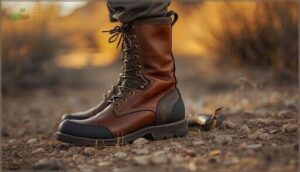
Footwear design matters more than you’d think—most snake bites hit the ankle and lower leg. That’s why boots with 16–18 inch shafts offer essential ankle protection beyond standard hikers.
Look for layered construction blending thick leather or Cordura with reinforced stitching, not single-layer materials. Quality snake gaiters paired with sturdy boots deliver 96–99 percent puncture resistance in field testing, turning close calls into non-events.
Benefits of Long Sleeves and Pants
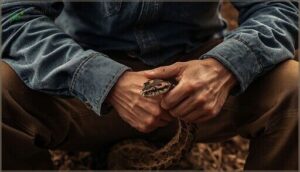
Think of your arms and legs as a snake’s primary target zone—every square inch of exposed skin is an open invitation during handling. Long sleeves and pants create essential fabric barriers that deflect strikes before they connect.
Thick cotton or denim works well for non-venomous species, but venomous snakes demand tougher materials. Choose snug cuffs at wrists and ankles—loose fabric bunches up, reducing your protective coverage when you need it most.
Snake Chaps and Additional Barriers

Venomous snakes strike low, fast, and hard—that’s where snake chaps and gaiters shine. These protective layers use high-denier nylon or reinforced canvas, tested to resist puncture forces up to 25 pounds.
Snake gaiters wrap your lower legs and boot tops with multiple barrier materials, creating strike protection where you’re most vulnerable. They’re not bulletproof, but they deliver 96-99% effectiveness when fitted right.
How to Choose Proper Clothing Materials
Not all fabrics are created equal when you’re inches away from a snake’s business end. The right material can mean the difference between a close call and a trip to the ER, but choosing wisely means balancing protection, comfort, and practicality.
Let’s break down your options so you can suit up with confidence.
Leather Vs. Synthetic Fabrics
Both leather and synthetic alternatives bring serious strengths to protective clothing for snake handling. Thick full-grain leather gloves offer outstanding puncture resistance, blocking fangs from smaller pit vipers in field tests.
Meanwhile, modern synthetics like Cordura nylon deliver impressive tear strength, and breathability matters when you’re working long hours.
Multi-layer systems combining both materials optimize safety equipment performance, balancing fabric durability with material safety and real-world comfort.
Fit and Mobility Considerations
Your protective gear won’t protect you if it stops you from moving safely. Tight gloves reduce dexterity when supporting a snake’s midsection, while restrictive pants limit hip and knee flexion during repositioning.
Choose flexible materials that balance protective layers with garment flexibility—denim or canvas pants stay loose enough for full mobility, and adjustable glove designs let you maintain snake handling techniques without mobility restrictions or safety equipment failures.
Clothing for Hot Vs. Cold Environments
Temperature extremes throw a wrench in your gear choices, because sweating through thick gloves or shivering in lightweight fabric both mess with your handling precision.
Hot climates demand breathable fabrics and moisture-wicking layers—you can’t afford slippery palms. Cold weather requires thermal insulation and layering systems that don’t sacrifice mobility:
- Mesh-lined tactical clothing keeps you cool without sacrificing protection
- Merino wool base layers regulate temperature during outdoor adventure safety tasks
- Climate control starts with snake-resistant footwear that ventilates or insulates
- Lightweight protective clothing and gear beats heavy alternatives in humid zones
- Adjustable layering systems adapt as conditions shift throughout your handling session
Special Considerations for Venomous Snakes

Venomous snakes demand a whole different level of respect—and gear. You’re not just protecting against a defensive nip here; you’re preparing for a medical emergency that could put you in the hospital.
Let’s break down what you absolutely need to know before you even think about getting close to a hot snake.
Advanced Protection Needs
When you’re working with hot snakes, standard gear won’t cut it. Facial protection and eye safety become critical with spitting cobras, where venom can blind you before you even see the strike coming.
You’ll need layered skin barriers, specialized gloves with genuine venom resistance, and sometimes respiratory guards. Think of personal protective equipment as your safety net—one that catches what your reflexes can’t.
These sophisticated tools reduce bite severity markedly, giving you breathing room when things go sideways.
Identifying Venomous Species Before Handling
Before you reach for protective gear, you need to know what you’re dealing with. Morphological traits like triangular heads, vertical pupils, and heat-sensing pits between the eyes help confirm venomous snakes.
If you’re unsure how these traits show up locally, this guide to venomous and non-venomous snake species in New Mexico breaks down what to look for by region.
Study snake patterns and behavior—pit vipers flatten defensively, rattlesnakes buzz warnings.
But here’s the catch: some harmless species mimic venomous ones perfectly, so when doubt creeps in, treat every snake as dangerous until expert species identification proves otherwise.
Emergency Preparedness and Bite Protocols
Knowing species isn’t enough—your emergency plan starts before you even touch the snake. Map the nearest antivenom-equipped facility, train nearby staff in bite response, and keep emergency contacts visible.
If a bite happens, call help immediately, move away from the snake, keep calm, and position the limb at heart level. Remove rings early, apply a pressure bandage for neurotoxic species, and never cut, suck, or ice the wound.
Hygiene and Maintenance of Snake Handling Clothing

Your snake gear isn’t clean until it’s actually clean—and trust me, there’s a difference. Proper hygiene keeps you safe from bacteria, prevents cross-contamination between snakes, and extends the life of your expensive protective equipment.
Let’s cover how to clean your gear correctly, store it safely, and know when it’s time to retire those beloved but beat-up gloves.
Cleaning and Disinfecting Gear
Think of your protective gear as a bacteria magnet—every handling session leaves invisible hitchhikers that soap alone won’t remove. Proper gear sanitization protects both you and your snakes from Salmonella and other pathogens that thrive on gloves and chaps.
Here’s your cleaning protocol for snake safety:
- Wash gloves in warm water with detergent (never bleach-based), then air dry completely between uses
- Disinfect leather surfaces with diluted sodium hypochlorite solutions or 70% isopropyl alcohol for biofilm removal
- Machine wash snake chaps and clothing separately from household laundry to prevent cross-contamination
- Apply disinfectant types like quaternary ammonium compounds while wearing chemical-resistant gloves for skin protection
- Inspect safety equipment regularly for cracking or stiffness—damaged protective gear loses its effectiveness and needs replacement
Allow several minutes of wet contact time before drying for maximum reptile hygiene.
Safe Storage Practices
After disinfecting your gear, tossing it in a dark corner or damp garage practically invites mold, odors, and material breakdown—storage matters just as much as cleaning.
| Storage Safety Factor | Best Practice | Why It Matters |
|---|---|---|
| Humidity Control | Use secure containers with ventilation holes | Prevents mildew on leather gloves |
| Venomous Segregation | Store venomous-handling gear separately | Avoids cross-contamination risks |
| Location | Keep away from snake enclosures | Reduces pathogen transfer between sessions |
Keep protective gear in dry, climate-controlled spaces where snake handling equipment stays ready without degrading.
When to Replace Protective Clothing
Even the toughest snake gloves won’t last forever—wear and tear eventually turns reliable protection into a liability you can’t afford. Check your protective gear monthly for fabric tears, thinning leather, and compromised seams. Once you spot punctures or weak spots, replace immediately—don’t gamble with snake safety.
Most handlers follow replacement schedules of 12-18 months for frequent use, but let wear patterns and hygiene standards guide your timeline, not just the calendar.
Frequently Asked Questions (FAQs)
Can I handle snakes while wearing jewelry?
Here’s the bottom line: leave the bling at home. Jewelry poses serious snake entanglement risks, and handling precautions demand you remove rings, bracelets, and watches before contact—no exceptions for safety protocols.
What colors should I avoid when handling snakes?
Color psychology plays a minor role in snake handling—most species don’t see like we do.
However, avoid bright patterns that startle you or make it harder to spot the snake against your clothing for practical safety reasons.
Do different snake sizes require different clothing?
Absolutely—small juveniles under a meter need basic long sleeves and sturdy pants, while medium constrictors demand thicker fabrics and gloves.
Large venomous species? Full snake chaps, high boots, and specialized bite-resistant gear become non-negotiable.
Should I wear eye protection when handling snakes?
Your eyes are windows to the world—but they’re vulnerable targets during snake handling. Venom exposure causes serious ocular injuries, so protective eyewear isn’t optional.
Even seasoned handlers can misjudge risk the way people misjudge whether cats can actually kill a snake, so proper eye protection matters more than instinct alone.
Safety equipment protects against unexpected strikes and defensive spray.
Are there specific clothing brands recommended for handlers?
Yes. TurtleSkin SnakeArmor gaiters use ballistic fiber weaves, while HexArmor Gloves deliver puncture-resistant protection for venomous handling.
Snake Chaps from Blocker Outdoors and Chippewa’s purpose-built snake proof boots offer trusted, field-tested safety apparel.
Conclusion
Think of proper gear as your safety net—except this net stops fangs before they reach skin. That snake handler’s denim saved him because he layered protection between himself and sharp teeth.
You’ve got the knowledge now: what to wear when handling snakes isn’t complicated, but it’s critical. Gloves, boots, long sleeves—each layer reduces risk dramatically.
Suit up correctly every single time, and you’ll handle snakes confidently without becoming another cautionary tale nobody wants to hear.