
This site is supported by our readers. We may earn a commission, at no cost to you, if you purchase through links.

I’ve watched too many snake owners lose their pets to something as preventable as dirty water—and it still breaks my heart every time. Bacterial blooms, respiratory infections, scale rot—these aren’t just theoretical risks you read about in care sheets. They’re real consequences I see in my clinic when well-meaning owners think yesterday’s water is “probably still fine.”
The truth is, knowing how often to change snake water isn’t just about following a schedule—it’s about understanding your specific snake’s habits, species needs, and the warning signs that scream “change this now.” Some snakes are careful drinkers who barely disturb their bowls, while others treat their water dishes like combination toilet-and-spa facilities. Getting this right means learning to read both the water and your snake’s behavior.
Table Of Contents
Key Takeaways
- Change your snake’s water daily or every other day at minimum, but watch for immediate red flags like fecal contamination, cloudiness, debris, or odor—those demand an instant swap regardless of schedule.
- Bacterial blooms thrive in neglected water bowls within 24 hours, leading to preventable but serious health issues like respiratory infections, scale rot, and dehydration that can cost hundreds in vet bills.
- Species-specific needs matter: semi-aquatic snakes need daily changes since they constantly soak, while desert species drink sparingly but still deserve fresh water every 24-48 hours to prevent kidney issues and metabolic problems.
- Weekly deep-cleaning with chlorhexidine or F10SC veterinary disinfectant prevents biofilm buildup that daily rinses miss, and choosing smooth ceramic or stainless steel bowls over scratched plastic dramatically reduces bacteria harboring.
How Often Should You Change Snake Water?
Look, there’s no one-size-fits-all answer here—it really depends on your snake’s habits and how messy they are. Most snakes do fine with fresh water every day or every other day, but some need changes more often if they’re soakers or, ugh, bowl poopers.
Just make sure the bowl is big enough for your snake to soak comfortably—check out this complete pet snake feeding guide for more on proper setup and hydration needs.
Let’s break down the main factors that’ll help you nail down the right schedule for your scaly friend.
Getting the snake cage lighting dialed in is one of those small tweaks that makes a huge difference in your pet’s overall health.
Daily Vs. Every Other Day Schedules
Honestly? Daily water changes are your safest bet for most snakes. A 24-hour turnover keeps bacterial growth in check and prevents stagnation—especially critical for juveniles or species that love soaking. Some keepers stretch to every other day only after confirming water stays crystal-clear for several consecutive days, but here’s what works:
If your snake refuses meals after a rough shed, troubleshooting common snake feeding problems often reveals dehydration as the hidden culprit.
- Empty and refill before breakfast—make it routine
- Watch for debris floating after feeding sessions
- Check clarity with a quick glance each morning
- Adjust frequency if your snake soaks frequently
- Monitor odor as your early-warning system
Think of it as reptile health monitoring on autopilot.
Species-Specific Water Needs
Not all snakes drink alike—your desert kingsnake won’t guzzle like a water python, right? Species-specific hydration patterns dictate your water change rhythm. Semi-aquatic species need daily refreshes since they’re constantly immersing themselves, while arid-adapted snakes may drink sparingly but still deserve fresh water every 24–48 hours.
| Species Type | Water Change Frequency | Bowl Depth |
|---|---|---|
| Desert Species | Every 1–2 days | Shallow |
| Semi-Aquatic | Daily (minimum) | Deep/large |
| Tropical Species | Daily | Medium-wide |
Monitor individual snake hydration needs through behavior—some ball pythons soak religiously during sheds, demanding immediate reptile water quality attention.
Signs Water Needs Immediate Changing
You’ll know it’s time for an emergency water swap the moment you spot debris floating around or catch a whiff of something funky—your nose doesn’t lie! Bacterial growth thrives in neglected bowls, putting your snake at serious risk.
Watch for these urgent water contamination red flags:
If you notice cloudy eyes, sunken skin, or lethargy in your snake, check out this guide on how to treat a dehydrated snake before things get worse.
- Fecal pollution or substrate debris floating in the bowl
- Cloudy appearance with visible particles or film
- Odor detection—that musty, stale smell means trouble
Don’t wait for your scheduled change if water quality tanks!
Why Fresh Water is Vital for Snakes
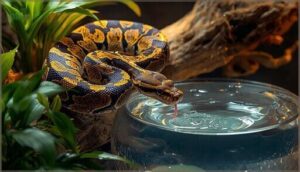
Water isn’t just a nice-to-have for your snake—it’s the foundation of their health, right up there with temperature and feeding. Without access to clean, fresh water, even a well-fed snake can run into serious trouble fast.
Keeping that water bowl between 77–86°F helps your snake stay hydrated—check out this complete guide to snake water requirements for tips on monitoring temperature and water quality year-round.
Fresh water is the foundation of snake health—without it, even a well-fed snake can run into serious trouble fast
Let’s break down exactly why that water bowl matters so much and what happens when it’s neglected.
Hydration and Snake Health
Think of water as your snake’s internal delivery system—it moves nutrients, flushes waste, and keeps digestion humming along. Without consistent hydration, you’ll see dull skin, sluggish behavior, and tough sheds.
Water intake ties directly to feeding frequency and ambient humidity, so monitoring your snake’s hydration isn’t optional—it’s foundational reptile care that prevents kidney issues and keeps metabolic health on track.
Risks of Dirty or Stagnant Water
Stagnant bowls quickly become breeding grounds for waterborne pathogens—bacterial growth spikes within 24 hours, biofilm formation coats surfaces, and toxin accumulation from waste irritates your snake’s mouth and skin.
Poor water quality directly undermines snake hydration, inviting gastrointestinal distress and respiratory irritation.
Microbial persistence lingers even after rinsing, so proactive water management isn’t just hygiene—it’s frontline reptile health protection.
Preventing Dehydration in Snakes
Check your snake’s skin elasticity weekly—wrinkled folds or sunken eyes signal trouble fast. Fresh water isn’t optional; chronic dehydration drives impaction, renal failure, and immune collapse. Humidity control matters too: maintain 50–60 percent with humid hides and daily water changes.
Reptile health depends on proactive snake care—dehydrated snakes show lethargy and poor sheds before serious complications arise, so watch water quality religiously. Monitoring reptile hydration is vital for preventing dehydration-related issues.
Spotting When Snake Water Needs Changing
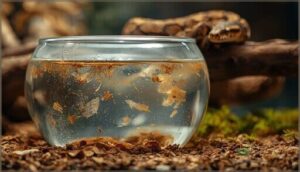
You don’t always need to wait for your scheduled water change—sometimes your snake’s bowl is screaming for attention right now. Learning to spot the red flags makes all the difference between preventing a problem and scrambling to fix one.
Here’s what I watch for when checking water quality throughout the week.
Visual Signs of Contaminated Water
Your snake’s water bowl is basically a window into their living conditions—and trust me, when things go south, you’ll see it before you smell it.
Look for water discoloration—anything from murky brown to cloudy water signals bacterial growth. Fecal contamination shows up as floating debris or dark particles.
If you spot floating bits of shed skin or substrate, that’s your cue for immediate replacement to protect reptile health.
Smells and Cloudiness
If your snake’s water bowl smells funky—even just a little off—that’s bacteria throwing a party you definitely didn’t invite. Cloudy conditions and foul smells mean bacterial growth has compromised water quality, and your snake’s hydration is at risk.
Don’t wait—dirty water can harbor pathogens that’ll make your snake sick. Dump it, scrub that water bowl clean, and refill immediately.
Water Soiled by Feces or Shedding
Snakes love to defecate—and even shed—right in their water bowls, turning clean hydration into a pathogen soup overnight. Fecal contamination introduces bacteria like Pseudomonas and Salmonella, while shedding hygiene demands vigilance since shed skin fragments fuel biofilm prevention challenges.
The moment you spot debris, poop, or sloughed skin floating in that bowl, you’re looking at water-borne pathogens waiting to strike. Dump it, disinfect the dish, and restore safe water quality immediately—reptile sanitation isn’t optional.
Regular monitoring of snake health issues is vital to prevent such problems.
Best Practices for Cleaning Water Dishes
Changing the water is only half the battle—you’ve also got to keep that bowl itself squeaky clean. A grimy dish can undo all your hard work, turning fresh water into a bacteria party faster than you’d think.
Let’s walk through how often to scrub it down, what actually works for sanitizing, and how to stop that slimy biofilm before it even starts.
How Often to Clean The Bowl

Daily cleaning is your baseline for maintaining water quality and proper snake hygiene—think of it as non-negotiable.
Here’s your cleaning schedule breakdown:
- Daily routine: Rinse and refill the water bowl every morning to prevent bacterial growth
- Weekly deep-clean: Sanitize with reptile-safe disinfectant for thorough bowl maintenance
- Immediate replacement: Change water instantly if you spot feces, shed skin, or cloudiness
Sanitizing Methods and Tools

Once you’ve nailed down your cleaning schedule, choosing the right sanitizing tools becomes key to maintaining water quality. A gentle chlorhexidine solution like Nolvasan (diluted 1:30–1:40) works beautifully for weekly deep-cleaning—it’s effective against bacteria without harsh bleach odors. Pair that with a dedicated scrub brush for mechanical cleaning, and you’ve got solid hygiene protocols in place.
| Disinfectant Options | Dilution Ratio | Best For |
|---|---|---|
| Chlorhexidine (Nolvasan) | 1:30–1:40 | Routine sanitizing |
| F10SC Veterinary | 1:250 (general use) | Full enclosure cleaning |
| Diluted Bleach | ~10% stock solution | Deep decontamination |
| White Vinegar | Undiluted | Mineral deposit removal |
Preventing Biofilm and Bacteria
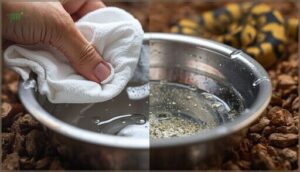
Even with solid sanitizing methods, biofilm control demands daily mechanical disruption—that slimy coating isn’t just gross, it’s a microbial fortress. Wiping your snake’s water bowl each morning breaks down bacterial growth before it layers into stubborn colonies.
Weekly deep cleaning with chlorhexidine addresses what daily rinses miss, maintaining water quality and reptile hygiene. Smooth ceramic or stainless bowls resist biofilm better than scratched plastic ever will.
Choosing The Right Water Bowl for Snakes

You’ve nailed the water-changing routine—now let’s talk about the bowl itself. Picking the right water dish isn’t just about aesthetics; it directly affects how often your snake drinks, how quickly the water gets dirty, and whether you’re refilling it every few hours or sticking to your planned schedule.
Here’s what you need to keep in mind when choosing a bowl that works for both you and your snake.
Bowl Size Recommendations by Age
As your snake grows, you’ll need to upgrade its water bowl to match—think of it like buying bigger shoes for a kid.
Here’s a quick breakdown by age:
- Hatchling bowls: Around 4 inches wide, 1.5 inches deep—shallow enough to prevent drowning but roomy for soaking
- Juvenile sizing: Step up to 4–6 inch bowls as they grow
- Adult capacity: Large enough for full-body coiling; often 7+ inches for most species
- Water depth: Always prioritize shallow, stable designs over tall containers
Right-sized snake hydration starts here!
Material and Design Considerations
Once you’ve nailed bowl size, material matters just as much. Ceramic safety wins for stability—heavy enough to resist tipping—but watch for cracks that trap gunk. Stainless steel is easy to sanitize, though noisy. Plastic is budget-friendly but scratches harbor bacteria, compromising water quality. Smooth, rounded interiors boost water flow and simplify scrubbing, keeping your reptile water dish cleaner longer.
| Bowl Material | Pros | Cons |
|---|---|---|
| Ceramic | Stable, won’t tip easily | Can crack; etched surfaces trap biofilm |
| Stainless Steel | Rust-resistant, easy to sanitize | Noisy, may dent from chewing |
| Plastic | Lightweight, inexpensive | Scratches harbor bacteria, degrades faster |
Placement for Easy Access
Where you position that water bowl can make or break your terrarium design. Bowl placement near basking zones nudges your snake to drink when active, while multiple access points mean less slithering when thirsty. Raise it slightly off substrate to protect water quality from shed skin and waste, and keep it visible from the enclosure entrance—easy cleaning starts with easy monitoring, right?
- Near basking area: Encourages drinking during peak activity
- Off substrate: Reduces contamination from feces and shed debris
- Away from heat lamps: Prevents rapid temperature swings in water
- Unobstructed view: Lets you spot dirty water fast for quick changes
Selecting Safe Water Sources for Snakes

Not all water is created equal regarding your snake’s health—and honestly, choosing the right source matters more than most people realize. You’ve got options, from straight tap water to filtered varieties, but each comes with its own set of considerations.
Let’s break down what’s safe, what needs treatment, and how to keep your snake’s water bowl as clean and stress-free as possible.
Tap Vs. Filtered Water
So, tap water or filtered water for your snake? Here’s the deal: if your municipal tap is safe for you to drink, it’s generally fine for your snake—once you’ve tackled chlorine and chloramines.
Filtered water can dial down contaminants and that chlorine smell, but it may strip out helpful minerals.
Either way works, as long as you address water quality and treatment first.
Dechlorination and Water Treatment
Most tap water needs dechlorination before your snake takes a sip—chlorine and chloramines can irritate delicate mucous membranes and skin. Here’s how to handle water treatment safely:
- Commercial dechlorinators neutralize both chlorine and chloramine quickly; they’re reliable and reptile-safe
- Activated carbon filtration reduces chlorine levels and improves taste, though contact time matters
- Test regularly to confirm your dechlorination methods actually work
Chemical treatment beats boiling for chloramine removal every time.
Water Temperature Safety Tips
You don’t need fancy water heating gadgets—room-temperature water between 75 and 85°F keeps your snake hydrated without thermal shock. Cold water below 60°F? That’s asking for stress and potential dehydration.
Skip direct heat sources in the enclosure; they create dangerous hot spots. Temperature control matters for aquatic health, so match snake water to your ambient enclosure conditions during each change.
Frequently Asked Questions (FAQs)
Can snakes drink distilled or purified water safely?
Here’s the thing—distilled water actually strips away every trace mineral your snake needs.
Purified reverse osmosis water? Much safer.
But dechlorinated tap or spring water with natural minerals beats both for daily hydration.
Do snakes need water during brumation periods?
Yes—brumating snakes still drink periodically. Keep fresh water available throughout dormancy to prevent reptile dehydration.
They’ll wake occasionally for hydration, so consistent water availability aids brumation care and overall snake health during shedding cycles and dormancy.
Should multiple snakes share one water bowl?
Sharing might seem convenient, but communal water risks cross-contamination—salmonella, parasites, and biofilm spread fast among snakes.
Individual water bowls improve disease transmission control, hygiene monitoring, and guarantee every snake gets adequate hydration without competition.
How does humidity affect snake water consumption?
Higher humidity cuts evaporative loss through your snake’s skin and lungs, so they’ll drink less often.
In drier setups, expect more trips to the water bowl—sometimes daily—to stay hydrated.
What if my snake never drinks visibly?
Many snakes drink when you’re not watching—nocturnal habits and subtle sipping make hydration monitoring tricky.
Track skin elasticity, shed quality, and weight stability instead of relying on visible drinking to confirm your snake’s water needs.
Conclusion
Like a smoke detector you check weekly but hope never screams—how often to change snake water becomes second nature once you’ve seen what happens when it’s ignored.
Fresh water isn’t negotiable; it’s the cheapest, easiest protection against infections that’ll cost you hundreds in vet bills and heartbreak.
Trust your eyes, trust the schedule, and when in doubt? Change it anyway. Your snake’s counting on you to get this right.
- https://www.thebiodude.com/blogs/reptile-and-amphibian-husbandry-basics/dehydration-in-reptiles-how-to-prevent-it-and-keep-them-hydrated-appropriately
- https://reptifiles.com/corn-snake-care-guide/sick-corn-snake-diseases-health/dehydration/
- https://wheremyscalesslither.weebly.com/dehydration.html
- https://www.petmd.com/reptile/care/evr_rp_how-can-i-tell-if-my-snake-sick
- https://www.bloodpythons.com/index.php/blood-stp-info/husbandry/captive-environment