This site is supported by our readers. We may earn a commission, at no cost to you, if you purchase through links.

You can’t build a thriving bioactive enclosure on coconut coir alone. The substrate is the literal foundation of your ecosystem—it determines whether your cleanup crew colonizes successfully, whether your plants actually root and grow, and whether waste breaks down or just sits there smelling like regret.
Most keepers focus on getting the right springtails and isopods, but if your substrate can’t support microbial life, drain properly, or hold the right moisture gradient, those cleanup crews won’t survive their first month. The difference between a self-sustaining vivarium and a glorified terrarium with bugs comes down to layering the right materials in the right proportions.
Your substrate options for bioactive setups range from simple two-ingredient mixes to complex recipes with eight components, each serving a specific ecological function.
Table Of Contents
Key Takeaways
- Your bioactive substrate‘s success depends more on proper layering and component ratios than simply buying expensive premade mixes—drainage layers, moisture gradients, and microbial zones matter more than brand names.
- Most substrate failures stem from imbalanced moisture retention and drainage rather than wrong ingredient choices, with 40-60% moisture being critical for aerobic decomposition and preventing anaerobic dead zones that cause odor.
- Matching substrate depth, texture, and composition to your specific species’ native habitat (tropical vs. arid vs. forest floor) determines whether your cleanup crew colonizes successfully and your plants actually thrive long-term.
- Established bioactive substrates don’t need complete replacement—only top layer refreshes every 3-6 months—because the living microbial ecosystem becomes more stable over time rather than degrading like traditional bedding.
Key Components of Bioactive Substrates
Building a substrate that actually works means understanding what goes into it. Each component plays a specific role—whether it’s holding moisture, supporting airflow, or feeding the organisms that keep your tank balanced.
Swapping out old material or upgrading your substrate setup becomes easier when you know how each layer contributes to filtration and stability.
Let’s break down the four essential categories you’ll need to know.
Base Materials for Bioactive Setups
Base selection sets the foundation for your bioactive substrate. You’ll want materials that balance moisture levels with porosity, like coconut coir for water retention and orchid bark for compaction prevention.
Mix in charcoal or pumice to maintain substrate texture and support microbial colonization. These components create a neutral to slightly acidic pH, letting both burrowing species and beneficial microbes thrive without rapid degradation.
Incorporating bioactive materials performance insights from recent research can further refine substrate blends for healthy microbial activity.
Drainage and Aeration Additives
Once you’ve picked your base, drainage and aeration additives prevent waterlogging and support gas exchange optimization.
Pumice and lava rock improve water infiltration while raising total porosity by 15 to 25 percent in typical mixes. LECA balls maintain pore space management even as substrate settles, creating capillary breakage that reduces root zone saturation.
Your aeration system directly shapes moisture management and overall drainage balance. For further insight into aeration and drainage amendments, learn how these materials contribute to healthy substrate environments.
Organic and Nutrient-rich Ingredients
Beyond drainage layers, your bioactive substrate needs fuel for its living workforce. Earthworm castings and coco coir deliver plant-available nitrogen while supporting beneficial bacteria.
Compost tea accelerates nutrient cycling through humic acids and microbe-friendly compounds. These organic fertilizers create the chemical foundation microfauna rely on, turning waste into stable humus that feeds both roots and decomposers in your closed-loop system.
Role of Microfauna and Microflora
Once you’ve layered in nutrient-rich ingredients, microfauna and microflora transform them into ecosystem health. Springtails and isopods fragment waste, while bacteria and fungi mineralize nitrogen and decompose lignin—microbial activity that keeps your bioactive substrate cycling nutrients instead of rotting.
- Nematodes and protozoa graze bacteria, releasing plant-available ammonium into the rhizosphere
- Mycorrhizal fungi boost phosphorus uptake and drought tolerance in live plants
- Saprotrophic fungi break down cellulose, returning carbon to soil ecology networks
Together, microfauna and microflora drive nutrient cycling and maintain microbial balance.
Matching Substrate to Habitat Types
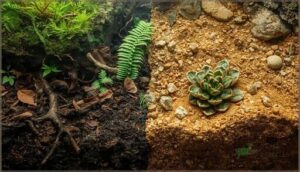
Your substrate mix needs to match the ecosystem you’re building, whether that’s a humid rainforest floor or a sun-baked desert landscape.
Getting this right means your plants root properly, your cleanup crew thrives, and your reptiles feel at home.
Here’s how to build substrates for the most common habitat types.
Tropical Bioactive Substrate Mixes
Tropical bioactive substrate mixes mimic rainforest floor conditions, balancing humidity control with soil structure that keeps microbe balance thriving. You’ll want a base of coco coir blended with orchid bark, leaf litter, and charcoal to drive nutrient cycling.
Adding springtails and isopods as microfauna creates ecosystem stability. These bioactive ecosystems need 3-5 inches depth so your tropical bioactive soil mix accommodates both plant roots and your cleanup crew‘s burrowing habits.
Arid and Desert Bioactive Blends
Arid ecosystems demand a completely different balance than rainforest setups. Your desert substrate should emphasize drainage with 50-70% mineral-rich topsoil mixed with calcareous sand and volcanic substrate for rapid water movement.
Add small amounts of coco coir for moisture retention without creating wet zones. A drainage layer beneath prevents pooling, while coarse particles like pumice maintain open structure that desert-dwelling reptiles and drought-tolerant plants need in dry climate bioactive mixes.
Forest and Woodland Substrate Options
Forest floor environments thrive on mimicry of natural woodland debris. You’ll want a bioactive substrate with leaf litter layered over decayed hardwoods, sphagnum moss, and tree bark to create that loose, crumbly texture burrowing species love.
Coco coir blended with leaf mold maintains moisture without compaction, while soil composition rich in organic matter feeds both terrarium plants and the microfauna driving your vivarium’s nutrient cycle.
Factors for Mixed or Custom Environments
Combining desert dwellers with tropical plants demands zoned substrate composition that accommodates opposing moisture needs. You can create distinct microclimates within a single enclosure by layering arid blends alongside moisture-retentive sections, adjusting drainage balance to support species compatibility.
Custom blends enable precise habitat simulation while maintaining ecosystem balance through strategic substrate selection and maintenance that keeps microbial activity thriving across varied microclimate control zones.
DIY Bioactive Substrate Recipes
Creating your own bioactive substrate gives you complete control over moisture retention, drainage, and nutrient availability.
The ABG mix remains the industry benchmark, but you can tweak ratios or swap ingredients to match your species’ native habitat.
Here’s how to build substrates that support everything from dart frogs to bearded dragons.
Classic ABG Mix and Modifications
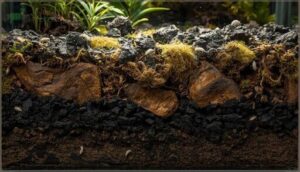
The classic ABG Mix ratio balances tree fern fiber, sphagnum moss, peat moss, orchid bark, and charcoal by volume to achieve stable substrate composition. You can tweak humidity control by adjusting sphagnum moss for moisture retention or adding orchid bark for better drainage layer performance.
Proper substrate layering fosters microbial activity while maintaining vivarium stability. This bioactive substrate promotes microbial balance without requiring constant intervention.
Sustainable Alternatives to Peat Moss
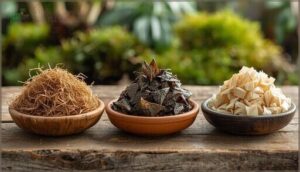
Peat extraction damages fragile bog ecosystems, so you’ll want to explore renewable alternatives that maintain soil quality and microbial activity.
Here are three sustainable options for your bioactive substrate:
- Coconut coir delivers moisture retention with neutral pH and slow decomposition
- Leaf mold adds beneficial microbes and improves structure for burrowing
- Wood fiber provides aeration while anaerobic digestate enriches nutrient profiles
These materials support sustainable ecosystems without compromising performance.
Layering Techniques for Optimal Function
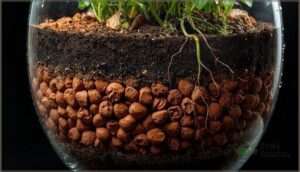
Layering your bioactive substrate creates distinct microbial zones that prevent waterlogging while maintaining moisture gradients. Start with a drainage layer of leca or lava rock, then add terrarium mesh to separate it from your soil mix.
This simple technique improves drainage balance and ecosystem balance by giving roots space to breathe and allowing beneficial bacteria to colonize different moisture retention zones based on substrate depth.
Adjusting Recipes for Specific Species
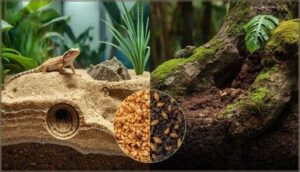
Once you’ve mastered layering, fine-tune your bioactive substrate for species needs. A burrowing gecko requires deeper substrate depth and finer particle size than a tree frog, while desert species need lower moisture retention to support temperature gradients that mimic their habitat.
Your microfauna selection should match dietary waste output—springtails excel with high-protein diets, while isopods handle plant matter. This habitat mimicry makes all the difference.
Substrate Considerations for Plant and Animal Health
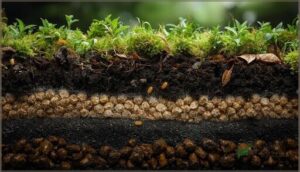
Getting your substrate right isn’t just about mixing ingredients—it’s about creating conditions where plants can thrive and animals stay healthy without constant intervention.
The balance between moisture, drainage, plant compatibility, and waste breakdown determines whether your bioactive setup becomes self-sustaining or requires endless tweaking. Let’s break down the four critical factors you need to examine before you commit to a substrate mix.
Moisture Retention and Drainage Balance
Getting drainage and water retention right isn’t rocket science, but it’s the foundation of your bioactive enclosure’s success. When you balance moisture profiles with drainage speed, you create stable conditions that keep microfauna active and prevent anaerobic pockets from forming.
Here’s what you need to dial in:
- Water holding capacity depends on organic content and pore structure within your bioactive substrate
- Capillary action moves moisture upward through substrate depth, reaching roots and burrows evenly
- Drainage layers of 20-60mm create air pockets that stop waterlogging while maintaining moisture retention
- Texture balance between fine and coarse particles controls drainage speed without drying too fast
- Substrate depth must support your drainage system while preventing compaction over time
Compatibility With Live Plants
Your bioactive substrate must feed both roots and microbes without tipping the scales. A slightly acidic pH between 6.0 and 7.0 fosters most tropical live plants while maintaining microbe balance for nutrient cycling.
Choose substrate options with balanced minerals and organic matter that promote root growth without salt buildup. Water retention paired with cation exchange capacity keeps plant nutrition available between waterings in your terrarium substrate.
Depth and Texture for Burrowing Reptiles
Proper soil structure turns digging from frustration into instinct for fossorial species. Your substrate depth must match burrowing behavior—generally twice the animal’s body diameter minimum—while texture balances digging ease with tunnel stability.
- Loose loam mixes with 40-60% moisture content preserve burrow stability without mudding or collapse
- Fine particles under 2mm reduce compaction risk while chunky coconut husk chips prevent hard crusts
- Layered approaches create soft upper strata over firmer bases that support deeper tunnel depth
- Sand-clay blends strengthen tunnel walls under reptile weight during repeated excavation
- Moisture dynamics through drainage amendments like perlite keep burrow channels consistently usable without waterlogging
Waste Management and Odor Control
Success in waste management and odor control hinges on microbial balance within your bioactive substrate. Aerobic decomposition drives odor removal when moisture stays between 40 and 60 percent, while segregating high-protein waste from plant matter reduces ammonia spikes.
Odor control depends on keeping substrate moisture between 40 and 60 percent so aerobic microbes can break down waste efficiently
Proper drainage prevents leachate buildup that triggers anaerobic zones, and adding charcoal creates biofilter systems that adsorb volatile compounds before substrate maintenance becomes a chore.
Top Substrates and Additives for Bioactive Setups
Now that you understand what makes a substrate work, let’s look at some solid options that deliver the moisture retention, drainage, and microbial support your setup needs.
These substrates and additives cover everything from arid habitats to tropical rainforest conditions. Each one brings something specific to the table, whether you’re building from scratch or fine-tuning an existing enclosure.
1. Bio Dude Terra Sahara Substrate
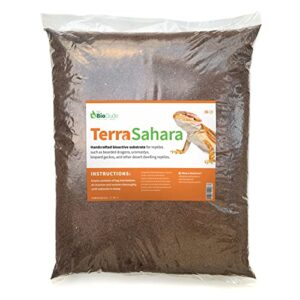
If you’re housing bearded dragons, uromastyx, or leopard geckos, the Bio Dude Terra Sahara delivers exactly what arid bioactive setups demand. This 36-quart substrate maintains burrows and tunnels at 25-40% moisture without spiking humidity levels that desert reptiles can’t tolerate.
It’s bio-balanced to support springtails and isopods while providing the drainage and aeration your plants need. Yes, it settles over time and kicks up dust when dry, but occasional misting solves both issues. You’re getting a proven foundation that actually holds structure for diggers.
| Best For | Reptile keepers running bioactive desert setups for bearded dragons, uromastyx, or leopard geckos who need a substrate that holds burrows without raising humidity. |
|---|---|
| Primary Material | Douglas fir bark blend |
| Habitat Type | Desert/arid |
| Volume/Size | 36 quarts |
| Moisture Control | Balanced water retention |
| Ecosystem Support | Bio-balanced |
| Maintenance Level | Easy to clean |
| Additional Features |
|
- Maintains tunnel structure at 25-40% moisture while keeping humidity low for arid species
- Bio-balanced formula supports cleanup crews and desert plants with proper drainage
- Handles the needs of diggers without breaking down quickly
- Kicks up dust when dry and needs occasional misting to stay settled
- Compacts and loses depth over time as it settles in the enclosure
- Color may not match every desert aesthetic you’re going for
2. Zilla Reptile Terrarium Bedding
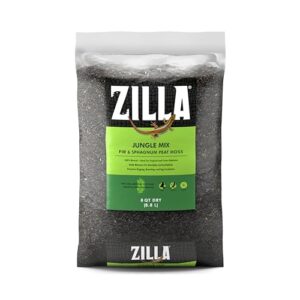
Zilla Jungle Mix pairs aged Douglas fir bark with sphagnum peat moss, creating a moisture-retentive foundation that tropical frogs, rainforest geckos, and forest snakes appreciate. You’ll get consistent humidity control and a texture that encourages natural digging and nesting behaviors.
The 8-quart bag runs about $10, though it can dry out within 24-30 hours if you’re not misting regularly. Mix it with coco coir or layer it over a drainage substrate to keep moisture levels stable and support your microfauna colony long-term.
| Best For | Tropical and forest setups where you need a moisture-holding substrate that lets frogs, rainforest geckos, and snakes dig, nest, and thrive in stable humidity. |
|---|---|
| Primary Material | Fir bark & peat moss |
| Habitat Type | Tropical/forest |
| Volume/Size | 8 quarts |
| Moisture Control | Highly absorbent |
| Ecosystem Support | Natural behaviors |
| Maintenance Level | 1-2 inch depth |
| Additional Features |
|
- Organic Douglas fir bark and peat moss blend holds moisture well and supports natural digging behaviors
- Works great for bioactive builds when layered with drainage material or mixed with coco coir
- Affordable at around $10 for 8 quarts with a soft texture and earthy smell
- Dries out fast (24-30 hours) without regular misting, so you’ll need to stay on top of maintenance
- Larger bark pieces can be sharp and may splinter—not ideal for delicate species like salamanders
- Performs better when mixed with other substrates rather than used alone for long-term moisture retention
3. Galapagos Natural Magnolia Leaf Litter
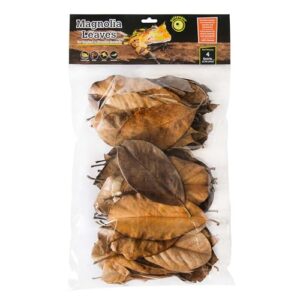
Galapagos Natural Magnolia Leaf Litter brings the forest floor straight into your vivarium with 6-8 inch organic leaves that decompose slowly, feeding your microfauna and boosting humidity retention between mistings. You’ll see isopods and springtails thrive under this lightweight top layer while your dart frogs or leaf-tailed geckos get natural shelter.
The 4-quart bag costs around $12, though some leaves arrive broken or dusty—give them a quick rinse first. Stack it over your bioactive soil to create that layered complexity tropical setups need.
| Best For | Bioactive vivarium keepers who want natural leaf litter that feeds cleanup crews while giving reptiles and amphibians realistic hiding spots. |
|---|---|
| Primary Material | Magnolia leaves |
| Habitat Type | Universal/bioactive |
| Volume/Size | 4 quarts |
| Moisture Control | Natural breakdown |
| Ecosystem Support | Nutrient recycling |
| Maintenance Level | Low maintenance |
| Additional Features |
|
- Large 6-8 inch organic leaves decompose slowly to feed springtails and isopods while maintaining humidity
- Sustainably harvested magnolia leaves provide natural shelter for dart frogs, geckos, and other vivarium animals
- Budget-friendly 4-quart bag covers decent ground for around $12
- Leaves often arrive dusty or broken and need rinsing before use
- Some customers report mold spots or quality control issues
- Smaller bag size gets expensive fast if you’re filling larger enclosures
4. Exo Terra Volcanic Substrate
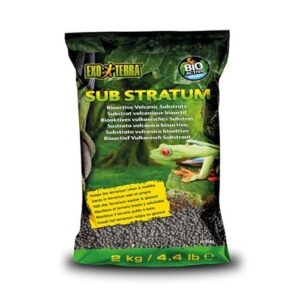
Exo Terra Volcanic Substrate pulls mineral-rich tephra from Japan’s Aso Volcano foothills, giving you a drainage powerhouse that weighs in at 4.4 pounds per bag. The andesitic and rhyolitic blend stays porous enough to prevent root rot while delivering calcium and potassium straight to your plants.
You’ll notice cleaner tanks since it neutralizes ammonia naturally, though it can stain surfaces if you’re not careful. Rinse it before layering to cut down dust, then watch your tropical plantings take off in that nutrient-dense, arid-friendly base.
| Best For | Hobbyists who want a natural, mineral-rich substrate that handles drainage and odor control while supporting both live plants and reptiles in bioactive setups. |
|---|---|
| Primary Material | Volcanic clay soil |
| Habitat Type | Tropical/planted |
| Volume/Size | 4.4 lb |
| Moisture Control | Superior drainage |
| Ecosystem Support | Bioactive compatible |
| Maintenance Level | Reusable substrate |
| Additional Features |
|
- Naturally neutralizes ammonia and keeps terrariums smelling fresh without chemical additives
- Excellent drainage prevents root rot and waterlogging, making it perfect for tropical plants and moisture-sensitive species
- Packed with volcanic minerals like calcium and potassium that feed plants and create a thriving ecosystem
- Costs more than standard substrates like coconut fiber or bark chips
- Can leave permanent stains on counters, floors, or decorations if you’re not careful during setup
- Needs a thorough rinse before use to remove dust and prevent cloudy water or contamination
5. Josh’s Frogs Bioactive Terrarium Soil
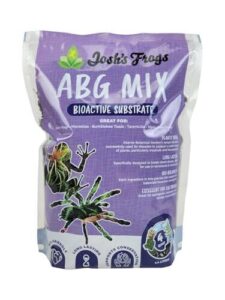
Josh’s Frogs Bioactive Terrarium Soil blends coir, peat moss, and vermiculite into a ready-to-use mix that nurtures springtails, isopods, and tropical plants without you sourcing every ingredient. The 4-quart bag breaks down slowly enough to sustain roots and microfauna while charcoal keeps odors in check.
You’ll find it ideal for dart frogs and small geckos, though larger tanks eat through those quarts fast. Layer it over a drainage substrate, top with leaf litter, and let the cleanup crew handle the rest.
| Best For | Hobbyists setting up bioactive terrariums for dart frogs, small geckos, or tree frogs who want a ready-made substrate that supports both plants and cleanup crews. |
|---|---|
| Primary Material | Bioactive soil mix |
| Habitat Type | Tropical/bioactive |
| Volume/Size | 4 quarts |
| Moisture Control | Slow decomposition |
| Ecosystem Support | Cultures cleanup crew |
| Maintenance Level | Reduces cleaning frequency |
| Additional Features |
|
- Contains charcoal to control odors and breaks down slowly to feed microfauna like springtails and isopods
- Ready to use right out of the bag without mixing multiple ingredients yourself
- Works well for tropical plants and creates a balanced ecosystem that reduces how often you need to clean
- The 4-quart size runs out quickly if you’re filling larger tanks (15 gallons or more)
- May arrive with unexpected live critters like snails or millipedes from eggs in the substrate
- Not compatible with hermit crabs or pac-man frogs, limiting its versatility
6. Halatool Reptile Clay Substrate Pebbles
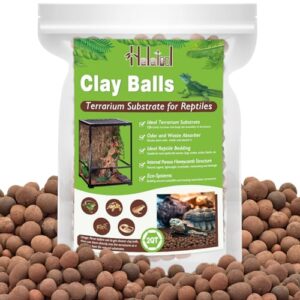
Beneath your substrate, Halatool’s expanded clay pebbles form a drainage layer that keeps roots aerated and prevents waterlogged muck from suffocating burrowing species. The porous honeycomb interior wicks moisture upward for humidity-loving plants and amphibians, then releases it gradually so your soil never turns to swamp.
Rinse them once, install with a mesh barrier, and they’ll last through multiple enclosure refreshes without compacting. For shallow bioactive setups where every millimeter counts, these lightweight pebbles deliver stable drainage without the bulk of lava rock.
| Best For | Hobbyists building bioactive terrariums who need a lightweight drainage layer that keeps humidity stable without taking up too much vertical space. |
|---|---|
| Primary Material | Expanded clay balls |
| Habitat Type | Universal/drainage |
| Volume/Size | 2 quarts |
| Moisture Control | Gradual moisture release |
| Ecosystem Support | Air circulation |
| Maintenance Level | Easy to clean/reuse |
| Additional Features |
|
- Porous clay naturally absorbs and releases moisture, keeping humidity levels steady for amphibians and tropical plants
- Lightweight and reusable—rinse and refresh between enclosure cleanings without replacing the entire layer
- Low-dust formula is gentler on respiratory health compared to dustier substrates
- Requires rinsing before first use to remove any residual clay dust
- Gets expensive fast if you’re filling a large enclosure or multiple tanks
- Needs a mesh barrier between the pebbles and topsoil to prevent mixing
Frequently Asked Questions (FAQs)
How often should bioactive substrate be completely replaced?
Think of bioactive substrate like a living forest floor—it doesn’t need replacing unless something’s broken.
Most keepers refresh top layers every three to six months, only doing full changes when odor or health declines.
Can bioactive substrates be reused in different enclosures?
Reusing bioactive substrates between enclosures risks transferring pathogens and disrupts established microbial communities.
Instead, you can mix small portions of old substrate into fresh material to seed beneficial organisms without compromising your new setup’s health.
What signs indicate substrate microbial activity is failing?
A vivarium starts smelling sour within two days of fresh substrate addition. That’s your first red flag.
Watch for compacted clumps, surface water beading, persistent sogginess, ammonia odors, or mold dominating beneficial microbes.
How long does substrate take to become fully established?
Your bioactive substrate usually reaches full establishment in 4 to 12 weeks, depending on temperature, moisture, and composition. Tropical setups stabilize faster—often within 4 to 6 weeks under warm, humid conditions.
Are bioactive substrates safe for egg-laying or breeding?
Breeding-friendly substrates strike the right balance—moisture balance stays stable, mold control stays minimal, and beneficial microbes keep waste in check.
Choose blends that support nesting without synthetic additives that stress egg-laying females.
Conclusion
Most keepers obsess over morphs and lighting schedules, but your enclosure’s long-term success lives six inches underground.
The substrate options for bioactive setups you choose determine whether you’re maintaining an ecosystem or just replacing bedding every month. Get your base layer, drainage, and organic matter proportions right, and your cleanup crew does the work for you.
Skimp on quality materials or ignore moisture gradients, and you’ll be troubleshooting mold and die-offs instead of enjoying a self-sustaining vivarium.