This site is supported by our readers. We may earn a commission, at no cost to you, if you purchase through links.

Your snake’s health hinges on one critical measurement: the width of its prey compared to the widest part of its body. Get this wrong, and you’re looking at regurgitation, injury, or worse—a slow decline that’s entirely preventable. The rule sounds simple: prey should measure 1.0 to 1.5 times your snake’s girth.
But here’s where most keepers stumble: they eyeball it, trust the pet store employee, or assume their growing snake can handle what worked last month. Measuring correctly isn’t optional—it’s the difference between a thriving snake and an emergency vet visit.
You need to know how to measure your snake’s girth accurately, recognize when prey size needs adjusting, and spot the warning signs before feeding goes wrong.
Table Of Contents
Key Takeaways
- Prey should measure 1.0 to 1.5 times your snake’s widest girth—eyeballing it or trusting guesses leads to regurgitation, injury, or slow decline you can prevent with accurate measurement.
- Use flexible measuring tape or calipers to measure the widest part of your snake’s midsection, then compare that number directly to prey diameter before every feeding to avoid dangerous oversizing or nutritional deficiencies from undersizing.
- Watch your snake closely during and after meals for warning signs like repeated swallowing attempts, regurgitation within 24-72 hours, persistent gagging, or prolonged digestion—these behaviors tell you immediately when prey size needs adjustment.
- Increase prey size gradually by only 10-15% per feeding as your snake grows, and choose frozen-thawed prey over live to eliminate bite injuries, reduce parasite transmission, and remove ethical concerns while maintaining proper nutrition.
How Big Should Prey Be for Your Snake?
Getting prey size right is one of the most important decisions you’ll make as a snake owner. Too large, and you risk serious health problems—too small, and your snake won’t get the nutrition it needs.
Let’s start with the core guidelines that keep your snake safe and healthy.
General Prey Size Guidelines
Choose prey that’s about 1.0 to 1.5 times your snake’s widest girth. This prey size ratio prevents digestion issues and ensures safe snake feeding. For hatchlings, measure prey width at roughly two to three times the snake girth measurement—not including the head. Always double-check your measurements against a reliable snake feeding prey thickness guide to avoid overfeeding or underfeeding your pet.
Proper prey selection depends on accurate snake care practices, and following these feeding guidelines protects your snake from serious health complications. Prey width limits matter greatly for successful feeding frequency. Ensuring the health of your snake also requires attention to methodological rigor in scientific studies on animal care.
Importance of Proper Prey Sizing
Getting prey size calculation right isn’t just helpful—it protects your snake’s digestive health and overall well-being. Proper prey selection tips directly impact feeding frequency, snake nutrition, and long-term care success. When you match prey diameter to your snake’s girth, you’re following feeding guidelines backed by real evidence.
Here’s why accurate prey size matters:
- Prevents dangerous swallowing complications that can injure your snake’s jaw or throat
- Reduces regurgitation incidents by ensuring efficient digestion after each meal
- Fosters healthy growth patterns through consistent nutritional intake over time
- Minimizes stress and injury during the critical feeding process
- Helps you track weight trends so you can adjust snake feeding as your pet grows
Risks of Incorrect Prey Size
When prey size errors occur, the consequences can be serious. Oversized meals trigger feeding complications—regurgitation spikes, swallowing difficulties mount, and gut impaction becomes a real threat. Your snake may refuse food entirely or show stress-related behaviors. Keeping your snake at a healthy weight through proper portion control and activity also reduces the risk of long-term metabolic issues—learn how to prevent snake obesity before it starts.
Oversized prey triggers regurgitation, swallowing struggles, gut impaction, food refusal, and stress in snakes
On the flip side, undersized prey leads to nutritional deficiencies and stunted growth. Both extremes create snake health risks that proper feeding guidelines help you avoid.
Measuring Your Snake for Prey Selection
Getting the prey size right starts with knowing your snake’s measurements. You’ll need a few simple tools and a straightforward process to measure your snake accurately.
Once you’ve got those numbers, comparing them to potential prey becomes quick and reliable.
Tools for Measuring Snake Girth

Measuring your snake’s girth accurately is the cornerstone of safe feeding guidelines. You’ll need one of three precision tools: a flexible measuring tape to wrap around the body, a caliper for spot measurements, or simple string paired with a ruler.
Digital calipers offer readings to fractions of a millimeter, while soft tapes provide quick circumference data without stressing your snake. Tracking these measurements over time also helps veterinarians assess your snake’s overall health during routine checkups.
Step-by-Step Measuring Process

How do you guarantee accuracy when your snake won’t hold still? Start by gently restraining your snake, then wrap your flexible measuring tape around the widest part of its midsection—that’s your snake girth baseline. If your snake refuses food after measurements, check out common feeding issues and solutions to rule out stress-related appetite loss.
Record this measurement in millimeters for precise prey comparison. These measurement tools and feeding safety techniques protect snake digestion while guaranteeing proper prey diameter matches your snake feeding guidelines every time.
Comparing Prey to Snake Size
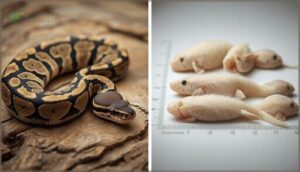
Once you’ve measured your snake girth, how do you pick the right prey diameter? Hold the frozen prey item next to your measurement for instant comparison.
Your snake feeding strategy depends on accurate prey size ratios:
- Hatchlings need prey diameter at 0.5 to 0.75 times midbody girth
- Juveniles handle prey matching their thickest point
- Adults tolerate prey equal to midbody measurement
- Digestion efficiency improves when prey diameter limits match species-specific needs
Factors Influencing Ideal Prey Size

Choosing the right prey size isn’t just about measuring your snake’s girth—several important factors shape what’s actually safe and healthy for your pet. Your snake’s age, species, and current health all play vital roles in determining the best prey size at any given time.
Let’s look at three key factors that directly influence how you should size your snake’s meals.
Snake Age and Growth Stage
Your snake’s age directly impacts its feeding requirements and capacity. Hatchlings need pinky mice, while juveniles graduate to larger prey as they grow.
Growth patterns vary by species, but most snakes show rapid development in their first two years. Younger snakes have higher metabolic rates, requiring more frequent feeding than adults.
Always match prey size to your snake’s current development stage, not its potential adult size.
Species-Specific Needs
Different snake species have evolved unique prey type preferences that mirror their ecological niche considerations in the wild. Ball pythons thrive on rodents, while garter snakes may prefer fish or amphibians as wild food analogues.
Understanding your species’ natural feeding habits ensures proper nutrition and prevents rejection. Corn snakes handle more variety than specialized feeders, so consult species-specific feeding guidelines before choosing prey for your snake’s diet.
Health and Condition of Your Snake
Your snake’s current health directly shapes its feeding guidelines. A snake recovering from illness or showing poor gut health needs smaller prey and adjusted feeding frequency to avoid digestive issues.
Monitor weight regularly—stable gains signal good snake nutrition and hydration, while sudden changes require veterinary care.
Proper snake health assessment ensures your prey size choices support recovery, not stress.
Safe Feeding Practices for Proper Prey Size

Getting the prey size right is only half the battle—how you actually feed your snake matters just as much. The way you introduce new prey sizes, watch for warning signs, and choose between live or frozen options can mean the difference between a healthy snake and a trip to the vet.
Let’s walk through the feeding practices that keep your snake safe and thriving.
Gradual Prey Size Increases
As your snake grows, you’ll need to match its prey size to its expanding girth—but don’t rush it. Start at 50–80% of the midsection width, then bump up prey by no more than 10–15% per feeding. Track each step carefully. If you see straining or regurgitation, drop back to the previous size.
Monthly weigh-ins help you fine-tune feeding strategies and digestion rates while safeguarding snake health through smart prey scaling.
Monitoring for Swallowing and Digestion Issues
Watch your snake closely during and after every meal. If prey passage takes longer than usual or you spot visible regurgitation, that prey was too large. Swallowing difficulties and abnormal swelling signal serious feeding complications or choking hazards.
Persistent lethargy or odd fecal timing after eating? That’s your cue to reassess prey size and protect snake health from digestion issues before they escalate.
Prey Type (Live Vs. Frozen/Thawed)
Once you’ve confirmed proper prey size, your next choice matters just as much: live prey or frozen? Frozen prey wins on nearly every safety metric—no bites, fewer parasites, easier prey handling. Live prey brings risks: injuries to your snake, stress for both animals, and ethical concerns around humane practices. For most keepers, prekilled prey promotes better snake nutrition without the danger.
- Frozen/thawed prey reduces injury risk and parasite transmission
- Live prey can bite or scratch your snake during feeding
- Proper thawing ensures prey variety and consistent snake feeding
- Feeding ethics favor humane practices that minimize prey suffering
Recognizing and Addressing Prey Size Problems

Even with careful measurement, you might encounter feeding problems that signal your prey sizing is off. Your snake’s behavior and physical response after feeding tell you everything you need to know about whether you’re getting it right.
Let’s look at the warning signs, potential health consequences, and how to adjust your approach when something isn’t working.
Signs Prey is Too Large or Small
How can you tell if prey sizing is off? Your snake’s behavior reveals the answer. Watch for repeated swallowing attempts with backward motion—that signals the prey is too large. Regurgitation within 24 to 72 hours confirms oversizing.
Feeding cues like head-bobbing or nostril flaring during feeding indicate trouble. If your snake shows persistent gagging or refuses after chomping, adjust prey selection immediately.
Health Risks From Improper Prey Size
Improper prey size threatens your snake’s health in serious ways. Oversized prey can cause jaw trauma, digestive issues, and regurgitation—sometimes days after feeding. Undersized prey leads to nutritional imbalance and stunted growth.
Metabolic stress builds when snake feeding consistently misses the mark, triggering feeding refusal over time. Getting prey size right for your snake species protects against these complications and keeps feeding frequency on track.
Adjusting Feeding Based on Observation
How do you know if your prey size and feeding frequency really match your snake’s needs? Watch for feeding cues and snake behavior closely. Track these observation techniques:
- Monitor strike accuracy and swallowing ease during meals
- Record body condition changes after each feeding
- Note activity levels and appetite shifts
- Document any regurgitation or prolonged digestion
- Adjust prey selection based on consistent patterns
Health monitoring guides safer snake feeding decisions.
Frequently Asked Questions (FAQs)
How often should I feed my snake?
Adult snakes usually eat every one to two weeks, while hatchlings need weekly meals.
Feeding frequency depends on your snake’s species, age, and growth rate, directly affecting nutrition and healthy digestion.
Can snakes eat different prey types simultaneously?
Snakes can’t handle multiple prey items at once. Snake feeding behavior focuses on one prey at a time—simultaneous ingestion creates digestion challenges and regurgitation risks.
Offer single, appropriately sized meals to prevent multiple prey issues.
Do temperature changes affect prey size requirements?
Yes, temperature effects directly influence digestion rates and metabolic changes in your snake. Warmer conditions speed processing, allowing standard prey size adjustments, while cooler temps may require smaller meals to prevent thermal stress and regurgitation issues.
Should prey size vary during breeding season?
During breeding season, energy demands and metabolic activity shift, but keep prey size consistent. Monitor digestion efficiency closely—some species tolerate modest adjustments supporting reproductive effort, though conservative feeding guidelines prevent regurgitation risks in gravid females.
What prey alternatives exist for picky eaters?
When your snake refuses standard food, try species-appropriate alternatives like chicks, quail, or fish. You can also improve prey presentation by warming frozen prey or rotating between different food types to reduce rejection.
Conclusion
A keeper once watched her ball python struggle for hours with prey just slightly oversized—the snake survived, but the stress was visible for days. That moment taught her what measurements couldn’t: your snake depends entirely on your judgment.
Measure carefully, compare visually, and never rush the decision of how big prey should be. When you get this right, feeding becomes routine instead of risky. Your attention to detail keeps your snake healthy, safe, and thriving for years ahead.