This site is supported by our readers. We may earn a commission, at no cost to you, if you purchase through links.

A snake that looks like a sausage isn’t a happy snake. It’s a patient waiting to happen.
I see it in my exam room all the time. A corn snake fed every three days. A ball python given a rat the size of its own head. Owners mean well, but extra fat strains the liver, the heart, and reproductive health. Learning how to prevent snake obesity protects your pet’s lifespan.
The fix is rarely complicated. It comes down to the right meal schedule, properly sized prey, an enclosure that makes your snake move, and regular weigh-ins. Here’s how to get each one right.
Table Of Contents
- Key Takeaways
- Causes of Obesity in Pet Snakes
- How Can You Prevent Snake Obesity Through Feeding?
- Encouraging Snake Activity With Enclosure Enrichment
- Recognizing Snake Obesity and Monitoring Body Condition
- Maintaining Healthy Snake Weight With Veterinary Guidance
- Frequently Asked Questions (FAQs)
- What are 5 ways to prevent obesity?
- How can I tell if my snake is obese?
- How to tell if a snake is overfed?
- What does an obese snake look like?
- Can certain snake breeds never become obese?
- Do obese snakes require special veterinary treatments?
- How does snake age affect obesity risk?
- Are there safe weight loss supplements for snakes?
- When should I consult a reptile veterinarian?
- Can overweight snakes safely lose weight over time?
- Conclusion
Key Takeaways
- Feed your snake on a schedule that fits its species and age, since adults need far fewer meals than juveniles and a snake’s eager strike is a reflex, not a sign of hunger.
- Keep each prey item no wider than 1.5 times your snake’s thickest point, and if you still see a lump after 48 hours, downsize the next meal.
- Give your snake a roomy enclosure with branches, several hides, and a warm and cool side so it has real reasons to move around.
- Check your snake’s body shape and spine regularly, log its weight monthly, and bring those records to a reptile vet, who can guide slow, safe weight loss because crash diets damage the liver.
Causes of Obesity in Pet Snakes

Your snake didn’t get heavy overnight, and it’s rarely bad luck. A few common habits in the care routine usually add up to snake obesity. Here are the four causes to watch for in your own setup.
If you’re not sure which of these habits is affecting your snake, this breakdown of what causes snake obesity shows how feeding frequency, prey size, and tank temperatures work together.
Feeding Too Frequently
Often, snake owners feed too much because their pet looks hungry. Don’t fall for it.
Your snake’s feeding schedule should shrink as it matures. Juvenile corn snakes eat every 5-7 days, but adults need meals every 10-14 days. Keep a juvenile routine going and overfeeding follows, along with fat buildup.
Make feeding frequency adjustment part of your growth checks, and keep feeding frequency consistency once adulthood arrives.
Oversized Prey Portions
Even a perfect feeding schedule fails if the meal itself is too big. Oversized prey packs extra calories into every feeding, and your snake won’t complain.
Keep prey size at or below 1.5 times your snake’s widest girth. Weigh each rodent for portion control and weight management. Still seeing a lump after 48 hours? That meal was too large. Downsize.
Limited Physical Activity
Calories only matter if your snake burns too few of them. A tight enclosure size breeds a sedentary lifestyle, and rack or tub setups make it worse. Without exercise opportunities, you’ll see activity reduction and lethargic behavior.
Giving your python room to stretch out and explore is easier when you know the right python enclosure dimensions for its species, age, and adult length.
Give your snake room to stretch out fully. Add branches, deep substrate, and a temperature gradient so it has reasons to move.
Misreading Feeding Behavior
Your snake’s feeding strike isn’t a hunger report. It’s a reflex.
When your snake lunges at food, that’s instinct talking, not hunger, so don’t mistake a reflex for a request.
Snakes will grab food whenever it shows up, regardless of their satiety signals. Owners read that enthusiasm as need, then raise feeding frequency and prey size. That’s how portion control slips away.
Judge by body condition, not eagerness. Track weight monthly, and offer behavioral enrichment instead of extra meals.
How Can You Prevent Snake Obesity Through Feeding?

Your snake’s weight starts and ends with what you put in the food dish. Two feeding habits matter most here: how often you feed and how much you offer. Let’s walk through both so you can build a routine that keeps your snake lean.
Species-Specific Feeding Schedules
Your corn snake and your ball python don’t share a lunch menu. Speciesspecific feeding keeps both lean.
Adult corn snakes thrive on a meal every 7 to 10 days. Adult ball pythons need one every 3 to 6 weeks. Hatchlings eat weekly. Let species dietary needs guide your feeding frequency. Feeding schedule optimization means watching body condition, not the calendar.
Prey Selection and Portion Control
Choosing the right prey size is your best defense against obesity. Match the item’s width to your snake’s thickest point, never more than 1.5 times that.
- Weigh each rodent on a scale.
- Pick mice for smaller species, rats for boas and pythons.
- Drop only one size step at a time.
Track your body condition score within a measured feeding plan.
Encouraging Snake Activity With Enclosure Enrichment

Think of your snake’s enclosure as a studio apartment. If it’s one bare room with a single hide, your pet will lounge on the couch all day. Add some rooms and watch it move.
Start with enclosure complexity. Give your snake room to stretch fully, plus branches, rock piles, and several hides at different heights. Arboreal species need vertical climbing space, and that climbing is real exercise.
Next, build roam zones with a warm side and a cool side. Your snake has to travel between them.
Offer more exercise opportunities at feeding time. Hide prey, or use tongs to make your snake chase it.
Rotate décor and swap substrates now and then. Fresh scents spark curiosity. Finally, practice activity level monitoring by noting how often your snake explores each week.
Recognizing Snake Obesity and Monitoring Body Condition
Picture a loaf of bread with a faint ridge down its center. That’s the cross-section you want. Do a quick body shape assessment by looking at your pet from the front: taller than wide is healthy, round or flat-topped isn’t.
Next, check visual fat distribution. Skin showing between relaxed scales, creases along the flanks, or squishy bulges in the lower third of the body all point to extra fat. Gently press along the spine. You should feel the bony processes with moderate pressure. If you can’t feel them at all, your pet is likely obese.
Score what you find. A body condition score of 2.5 is ideal. Pair it with weekly weight monitoring on a digital kitchen scale. Log grams.
Maintaining Healthy Snake Weight With Veterinary Guidance
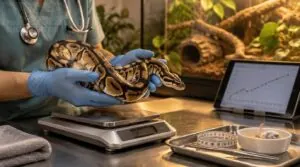
Your snake can’t tell you it’s gaining weight. Your vet can help you catch it.
Book a wellness exam once a year for adults and every six months for juveniles or breeders. Veterinary consultation turns guesswork into a plan. Your vet will check your snake’s body condition score and feel along the spine and tail base for fat.
Bring your records to every visit:
- Monthly weight monitoring logs
- Prey type, size, and feeding dates
- Notes on appetite and activity
- Photos of your snake’s coiled shape
- Questions about enclosure size and handling
Ask about blood work or imaging if obesity is suspected. Fatty liver is common in overweight snakes.
Regular monitoring keeps feeding portion measurement honest. Slow changes beat crash diets.
Frequently Asked Questions (FAQs)
What are 5 ways to prevent obesity?
Match your feeding schedule consistency to your snake’s species and age. Use portion control, sizing prey to body width. Add exercise opportunities with branches and hides. Weigh regularly for body condition monitoring, and see a reptile vet.
How can I tell if my snake is obese?
A healthy body looks like a firm garden hose, not an overstuffed sausage.
Check body condition first. Note scale visibility, soft body texture, and fatty deposits under the skin. Compare girth charts over time, too.
How to tell if a snake is overfed?
Check your snake’s body condition first. Fat folds along the sides, a rounded cylinder shape, and widely spaced scales suggest overfeeding. Track weight monitoring over time, and compare prey size appropriateness and feeding frequency with your vet.
What does an obese snake look like?
Your pet’s body condition tells the story. Look for visible skin between scales, a tiny head-to-body ratio, and soft folds when it bends. Compare against girth charts, and ask your vet about fatty liver disease.
Can certain snake breeds never become obese?
Your rat snake gains fat on weekly rodents. No breed escapes obesity. Species metabolism variation and species-specific needs shape intake, but prey size strategy, metabolic rate regulation, and body condition assessment decide whether you overfeed.
Do obese snakes require special veterinary treatments?
Obese snakes require special veterinary treatments. Veterinary assessment includes body condition scoring, bloodwork, and imaging for visceral fat and liver trouble.
Then your vet sets a slow weight loss protocol, because crash dieting damages livers.
How does snake age affect obesity risk?
Your snake’s metabolism is a bonfire that cools to embers with age. Juveniles need frequent meals, adults don’t.
Cut your feeding frequency as species metabolism variation allows, using body condition scoring and weight trend tracking.
Are there safe weight loss supplements for snakes?
No, there aren’t any safe weight loss supplements for your snake. Skip the risky shortcuts. Fix any overfeeding through careful dietary management, then lean on a reptile-experienced vet for body condition scoring and weight tracking.
When should I consult a reptile veterinarian?
Just a phase? Call a reptile-experienced vet if feeding log tracking shows weeks of refusal, weight tracking shows steady gain, or breathing trouble and lethargy appear.
Veterinary intervention beats guessing. Body condition assessment settles doubts.
Can overweight snakes safely lose weight over time?
Pythons lost 3% of their mass over 168 days, so yes, gradual loss works well.
Set realistic weight loss goals, adjust feeding frequency, keep a proper temperature gradient, add exercise stimulation, and practice regular monitoring.
Conclusion
Picture your snake gliding across a branch, lean and muscled, instead of slumped in the hide like a stuffed sausage roll.
That’s the goal. Knowing how to prevent snake obesity comes down to habits you can repeat: feed on a species-appropriate schedule, match prey to your snake’s girth, and give it room to climb, stretch, and explore.
Weigh it regularly and call your vet when the scale creeps up. Lean snakes tend to live longer.