This site is supported by our readers. We may earn a commission, at no cost to you, if you purchase through links.

I’ve seen ball pythons come into my clinic so padded with fat their scales strained at the seams, owners swearing they only fed "a little extra" once a week. That’s the trap. Snake obesity creeps in slowly, one oversized mouse or skipped basking session at a time, until the damage is done.
Here’s the uncomfortable truth: what causes snake obesity rarely traces back to one bad decision. It’s usually a stack of small habits, feeding schedules, prey choices, tank temps, that quietly work against your snake’s biology.
Understanding those pressure points, and catching them early, makes the difference between a lean, thriving snake and a vet visit you could’ve avoided.
Table Of Contents
- Key Takeaways
- Overfeeding Most Often Causes Snake Obesity
- Fatty Prey Can Add Extra Calories
- Cool Habitats Slow Calorie Burning
- Small Enclosures Limit Snake Movement
- Obesity Worsens Without Weight Tracking
- Frequently Asked Questions (FAQs)
- How to fix an obese snake?
- Can snakes become obese?
- What are the three main causes of obesity?
- Is it true that 60% of cats are overweight?
- Can a snake become obese?
- What are the 5 main causes of obesity?
- How to fix an overweight snake?
- How do I get my snake to lose weight?
- Can certain snake breeds develop obesity more easily?
- How do medications influence snake metabolism rates?
- Conclusion
Key Takeaways
- Overfeeding, whether through too-frequent meals, oversized prey, or powerfeeding, creates a caloric surplus that snakes store directly as fat.
- Fatty or repetitive prey choices, like pinkie-heavy diets or single-species feeding, add unnecessary calories and hidden nutritional gaps even when portions seem normal.
- Cool enclosures and weak thermal gradients slow digestion and metabolism, causing meals to sit longer and calories to convert to fat instead of being burned.
- Regular weigh-ins and body condition scoring are essential because obesity develops gradually and is easy to miss until it becomes a serious health problem.
Overfeeding Most Often Causes Snake Obesity
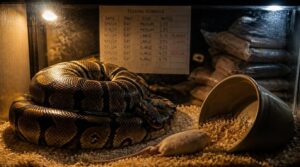
Overfeeding is the single biggest reason snakes pack on excess weight. It doesn’t happen from one bad decision, but from a handful of habits that add up meal after meal. Let’s break down the exact patterns you need to watch for.
If you’re noticing your snake’s midsection thickening or losing its usual taper, this guide on signs of overfeeding in snakes breaks down exactly what steady weight gain is telling you.
Too Frequent Meals
Feed a snake before it’s finished digesting its last meal, and you’re setting up caloric surplus by design. Overlapping digestion disrupts natural metabolic rhythm and skips needed fasting periods.
- Ignored food-seeking cues
- Skipped fasting windows
- Digestion overlap
- Steady fat gain
Maintaining proper intervals can help regulate circadian rhythms and metabolism. Powerfeeding exploits this exact pattern. Dietary regulation isn’t optional—it’s how you prevent gradual, sneaky weight gain.
Oversized Prey Items
Size matters as much as timing. Prey too wide for a snake’s gape limit forces extra jaw strain, longer swallowing sessions, and greater regurgitation risk.
Oversized meals also raise the odds of internal tissue trauma during constriction and repositioning. That prey mass mismatch doesn’t just stress the snake, it packs in surplus calories your snake never needed.
Powerfeeding Risks
Powerfeeding takes the wrong-size problem and multiplies it. Feeding too often, before digestion finishes, forces a caloric surplus your snake stores as fat.
- Faster meals, faster weight
- Improper feeding frequency compounds
- Energy storage shifts to fat
- Rapid weight gain follows
That surplus doesn’t disappear. It sits, quietly, waiting to become a problem.
Excess calories never vanish—they sit quietly, waiting to become fat
Misreading Fast Growth
Growth vs girth confuse a lot of keepers. Your snake gets longer, so you assume it needs more food — but length isn’t the whole story.
| Sign | What It Really Means |
|---|---|
| Rapid length gain | Normal juvenile stage |
| Post-shed size jump | Often misread, not new growth |
| Thicker midbody | Possible hidden internal fat |
| Opportunistic feeding | Not increased need |
Excess Calories Stored as Fat
Every extra calorie has to go somewhere. Once glycogen storage in the liver and muscles fills up, insulin redirects surplus energy toward triglyceride formation instead.
That’s why keeping an eye on portion sizes matters so much—this guide to healthy snake weight and feeding breaks down how to spot early signs of excess fat storage before it becomes obesity.
That’s true whether the calories came from fat, protein, or carbs — macronutrient conversion pathways all lead toward fat deposition when intake outpaces need.
- Fat calories store directly
- Carbs convert to fatty acids
- Protein spares energy for storage
Net energy balance decides the outcome. Chronic overfeeding tips it toward obesity.
Fatty Prey Can Add Extra Calories
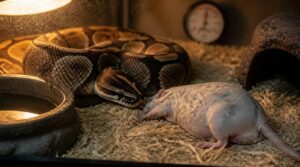
Not all calories are created equal, and that goes double for what’s wriggling around in your snake’s feeding tub. Some prey items pack way more fat than your snake needs, even at the right size and frequency. Here’s what usually tips the scale.
High-fat Feeder Choices
Not all prey are created equal in the fat department. Lipid density comparison matters: some feeder animals carry visible fat and calorie-rich organ tissue that pack more energy per bite, even when portions look identical.
Feed richer prey often enough, and that caloric volume disparity adds up—your snake’s body stores the surplus, not the effort you didn’t ask it to make.
Pinkie-heavy Diets
Pinky mice deserve special scrutiny, since they’re often treated as a default staple rather than an occasional item. High fat content plus frequent feeding frequency creates real caloric density risks, especially when prey sizing overshoots what the snake’s stage actually needs.
The result? Weight gain that mimics growth, until nutrient balance issues catch up with your snake’s waistline.
Treat Insects for Some Species
"Just a treat" is how most owners talk themselves into overfeeding. Insects carry real caloric density, and gut-loading practices can shift their nutrient profile further, adding fat you didn’t account for.
Portion control risks stack up fast: a handful looks harmless but adds real calories. Keep insect treats occasional, not routine, and protect your feeding schedule consistency, or you’re inviting nutritional deficiency alongside weight gain.
Poor Prey Variety
Sticking to one prey type creates a nutritional blind spot. Rats and mice differ in fat, protein, and calcium-to-phosphorus ratios, so repetition means repeated gaps, not balance.
- Undetected nutritional deficiencies despite normal weight
- Prey preference risks that trigger feeding refusal later
- Skewed calcium phosphorus ratios affecting bone health
- Inconsistent caloric density hiding true intake
- Reptile nutrition suffering while the scale looks "fine
Species-specific Diet Needs
A ball python is not a corn snake, and neither eats like the other. Protein and mineral needs shift by species, along with essential fatty acids, vitamin A intake, and digestive enzyme profiles built for specific prey items.
Feeding one generic diet across species ignores that biology. Real reptile nutrition means matching caloric intake and dietary management to the snake in front of you, not a chart written for someone else’s.
Cool Habitats Slow Calorie Burning

Feeding isn’t the only culprit behind a chunky snake. Temperature plays just as big a role in how those calories get used. Here’s where cool habitats quietly work against your snake’s waistline.
Low Basking Temperatures
Turn down the heat, and you turn down your snake’s whole engine.
A cool basking spot slows digestive enzyme activity, leaving meals sitting half-digested and raising regurgitation risk. It also triggers metabolic rate decline, cutting activity and calorie burn.
- Weakens immune function during shedding
- Slows nutrient absorption
- Reduces thermoregulation options
- Lowers daily activity
- Impairs microclimate selection
Your snake’s metabolism runs on heat. Shortchange the basking spot, and fat piles up.
Weak Thermal Gradients
Even a hot basking spot doesn’t help if the rest of the enclosure sits flat and uniform. That’s a weak thermal gradient — minimal temperature difference from hot side to cool side, thanks to high thermal inertia materials or poor sensor placement.
Without real stratification, your snake can’t thermoregulate properly. Heat transfer efficiency drops, digestion slows, and accurate gradient modeling becomes tough to achieve.
Poor Ambient Heat
Room temperature matters as much as basking spot accuracy. Warm ambient air flattens your temperature gradient, pushing your snake’s body temp up even away from the heat lamp.
That triggers real problems:
- Slower heat loss, prolonged elevated metabolism
- Increased respiratory effort at rest
- Humidity spikes that stress shedding
Persistent warmth also shifts circadian activity, dulling thermal regulation instincts your snake relies on to self-correct.
Slower Digestion
Cool ambient temps don’t just stall metabolism, they stretch out gut motility. Hormonal signaling lag delays stomach contractions, so meals sit longer before moving on.
| Effect | Result | Risk |
|---|---|---|
| Extended transit | Higher nutrient absorption | Fat storage |
| Increased gut load | Slower foraging return | Meal overlap |
| Delayed emptying | Prolonged fed state | Chronic weight gain |
That’s a recipe for extra pounds nobody asked for.
Reduced Metabolic Activity
Cold enclosures don’t just slow digestion, they throttle ectothermic metabolism at the cellular level. Thyroid signaling shifts downward, leptin drops, and basal rate reduction follows, all adaptive metabolic changes conserving energy.
Pair that with lack of exercise, and calories pile up unused. Fix your temperature gradient and environmental parameters, or your snake’s furnace stays cold while the fat keeps stacking.
Small Enclosures Limit Snake Movement
A snake’s home does more than shelter it. If the space is too tight, that body just sits there, burning almost nothing. Here’s where enclosure size quietly works against your snake’s waistline.
Limited Roaming Space

Small enclosures shrink a snake’s world down to a few square feet, and that’s a problem.
Less floor space means fewer chances to move between hides, basking spots, and water. Thermoregulation suffers too, since there’s no room to find the right micro-climate. Most snakes end up coiled in one corner, barely shifting position between feedings, burning almost no extra energy at all.
Few Climbing Options
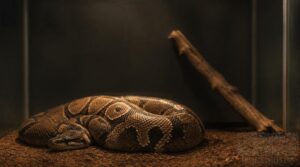
Branches, ledges, vines—if your snake’s enclosure lacks these, you’re capping its world at one dimension.
Vertical space invites climbing, stretching, and new grips your snake won’t get otherwise. Fewer textured surfaces means less locomotion pattern diversity and fewer micro-area exploration opportunities.
The result? A real exercise stimulus deficit. Less climbing simply means less physical activity, and calories pile on without you noticing.
Sparse Enrichment

A bare tank isn’t just boring—it’s a metabolic problem. Fewer enrichment items means less exploratory behavior, fewer microhabitat choices, and weaker thermal zone utilization.
- Fewer visual cues to investigate
- Less exploration between feedings
- Reduced physical activity overall
- Stronger anticipatory feeding cues
Without stimuli, your snake fixates on you as the food source. Add enrichment—it’s cheap insurance against lack of exercise.
Rack System Concerns

Racks and tubs pack more snakes into less space, but the real problem hides in the details. Heat tape placement often creates uneven hot spots, while ambient air stays cool—classic thermal gradient errors.
Add poor airflow limitation risks, spotty tub hygiene cycles, and monitoring visibility issues from stacked opaque bins, and you’ve got husbandry mistakes stacking silently against your snake’s waistline.
Low Daily Activity

A snake that never moves burns barely more than its resting metabolism. Reduced muscle activation means fewer calories used, creating a sedentary energy deficit that stores fat instead.
Without climbing, exploring, or hunting behaviors, there’s limited fat burning. This behavioral inactivity pattern reflects poor environmental enrichment—proper vivarium setup and reptile husbandry should encourage movement, not just contain the animal.
Obesity Worsens Without Weight Tracking

You can’t manage what you don’t measure, and that’s especially true with a snake’s weight. Fat creeps on slowly, hiding in plain sight until it’s a real problem. Here’s where owners often lose track.
Missed Body Condition Changes
How does a healthy snake turn heavy without anyone noticing? Energy storage lag is the culprit — fat builds quietly between feedings. Subtle girth shifts hide behind misleading activity levels, since an obese snake can stay active for months.
The real trap is confusing growth versus fat. That’s why body condition scoring, not just visual checks, catches trouble before it becomes chronic husbandry mistakes.
No Regular Weigh-ins
Eyeballing a snake only tells you so much. Weight Trend Detection requires a scale, not a glance, since body water and meal volume mask true fat gain between checks.
Without weekly numbers, calibrating prey ratios becomes guesswork, and identifying fat plateaus gets nearly impossible. Grab a digital kitchen scale. Log every weigh-in. That spreadsheet is your best defense against creeping obesity in snakes.
Confusing Fat With Health
A chunky snake isn’t a thriving snake — it’s a husbandry mistake in progress. Owners often mistake heft for vigor, ignoring body condition scoring and visible fat rolls near the head or spine.
Health halo thinking sneaks into reptile care too: bigger seems better. But metabolic health depends on:
- Muscle tone, not bulk
- Visible waist definition
- Active movement
- Steady, not excessive, weight gain
Ignoring Species Growth Rates
Every species grows on its own timeline, and feeding it like a generic "snake" ignores that. Juvenile snakes need frequent small meals; subadult snakes require larger prey as growth slows.
Skip the species standard goals, and metabolic rate shifts get missed entirely. Individual variability matters too — one hatchling’s normal growth spurt is another’s warning sign of poor age-based feeding protocols.
Delayed Feeding Adjustments
By the time you notice the problem, it’s often too late to fix it easily. Delayed calorie reduction lets fat accumulate quietly during slow metabolic shifts.
Catch it sooner:
- Weigh monthly
- Track body condition
- Adjust portions early
- Question growth spurts
- Correct diet fast
Waiting invites bigger husbandry mistakes down the road.
Frequently Asked Questions (FAQs)
How to fix an obese snake?
Fixing it means controlled weight loss, not crash dieting. Extend feeding intervals, downsize prey, add climbing enrichment, and correct temperatures for proper metabolism.
Work with an exotic vet for safe dieting protocols and metabolic recovery support—rapid changes can backfire badly.
Can snakes become obese?
Snakes absolutely, definitely become obese, showing rounded body shapes, skin wrinkling, and squishy texture.
Poor husbandry, wrong prey items, weak temperature gradients, and low humidity all fuel this common reptile condition—coelomic distension signals it’s gone too far.
What are the three main causes of obesity?
Overfeeding, fatty prey items, and cool enclosures top the list.
Too much food disrupts energy balance, lipid-heavy diets accelerate fat storage, and low temperature gradients slow metabolic rate—leaving calories stored instead of burned through normal husbandry and activity.
Is it true that 60% of cats are overweight?
Like a foggy mirror, "60%" blurs reality: trained assessments found 45% overweight, owner surveys only 22%. Measurement method matters — prevalence estimates shift with population and scoring approach, so treat round numbers cautiously.
Can a snake become obese?
Yes, absolutely. Fat accumulation shows up as skin stretched between scales and lost head-to-neck definition. Left unchecked, obesity in reptiles brings breathing trouble, liver disease, and real lifespan risks — proof that husbandry and diet truly matter.
What are the 5 main causes of obesity?
Funny how five separate habits — overfeeding, fatty diets, low heat, cramped enclosures, and poor tracking — all funnel into the same result. Each drives a caloric surplus, slows metabolic rate, or masks weight gain until obesity’s already taken hold.
How to fix an overweight snake?
Fixing it means calorie budgeting: smaller prey, longer intervals between feeds, optimized thermal gradients, and enclosure enrichment for movement.
Track progress with body condition scoring and regular weigh-ins—your vet can help build a safe, gradual weight management plan.
How do I get my snake to lose weight?
Slow and steady wins here: extend feeding intervals, downsize prey, boost basking temps, and add climbing enrichment. Track weekly weights for safe weight loss through gradual caloric deficit planning—never crash-diet a snake.
Can certain snake breeds develop obesity more easily?
Boas and pythons show real species metabolism differences, running slower than active colubrids.
Ball python obesity is common, especially with large prey items and low activity.
Genetic obesity predispositions exist, but husbandry, not breed alone, determines whether that tendency becomes a problem.
How do medications influence snake metabolism rates?
Medications muddle metabolic health through drug accumulation risks, especially with organ dysfunction slowing clearance. Temperature-dependent metabolism affects processing speed, while digestion interference and medication-induced lethargy compound organ stress, disrupting weight management—another reason exotic animal medicine demands careful veterinary oversight.
Conclusion
Here’s what your snake can’t tell you: by the time you spot the fat, months of small mistakes already happened. What causes snake obesity isn’t a mystery, it’s math — calories in, activity out, temperature and portions tipping the scale. You control every variable.
Weigh your snake monthly, measure prey against its girth, and keep that thermal gradient honest. Do that, and you won’t just dodge a vet bill. You’ll have a snake built to actually thrive.