This site is supported by our readers. We may earn a commission, at no cost to you, if you purchase through links.
A reptile sitting motionless under a basking lamp isn’t being lazy — it’s running essential biological software. Reptile heat seeking behavior is how cold-blooded animals regulate every critical function in their bodies, from digesting a meal to mounting an immune response against infection. Without adequate heat, those processes don’t slow down; they stop.
Unlike mammals, reptiles generate no metabolic heat internally. The temperature of their environment becomes their physiology. A gecko too cold to digest will rot its food from the inside. A snake denied proper basking can’t produce the enzymes needed to fight a bacterial infection.
Understanding how and why reptiles seek heat transforms how you care for them.
Table Of Contents
- Key Takeaways
- What is Reptile Heat Seeking Behavior?
- How Reptiles Detect and Acquire Heat
- Species Differences in Heat Seeking
- Behavioral Signs of Healthy Thermoregulation
- Creating Safe Thermal Environments at Home
- Frequently Asked Questions (FAQs)
- How do reptiles control their body heat?
- How hot do reptiles get?
- Why do ectothermic reptiles use behavioral thermoregulation?
- How do reptiles cope with fluctuating temperatures?
- What do reptiles do when they get too hot?
- Can snakes detect heat signatures?
- Can reptiles thermoregulate effectively during nighttime hours?
- Do reptiles seek heat differently when gravid or breeding?
- How does altitude affect reptile heat-seeking behavior?
- Can social interactions influence a reptiles thermoregulation choices?
- Conclusion
Key Takeaways
- Reptiles use deliberate movement between warm and cool zones — not instinct alone — to regulate every physiological process, from digestion to immune response, making your enclosure’s thermal gradient a medical necessity, not a luxury.
- When a reptile seeks heat beyond its normal basking routine and refuses cooler hides entirely, it’s likely running a behavioral fever — a genuine self-medication response to infection that your setup must safely accommodate.
- Species-specific thermal tolerances can differ by as little as 4°C, meaning a temperature range that keeps a corn snake healthy can actively suppress a leopard gecko’s immune system.
- A properly designed enclosure requires verified temperature probes across all zones, a thermostat calibrated against an infrared gun, and hides positioned at both ends of the gradient — without these, your reptile simply can’t thermoregulate, no matter how well-intentioned your setup is.
What is Reptile Heat Seeking Behavior?
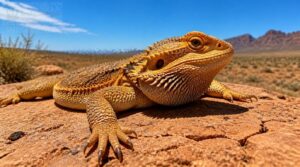
Reptile heat seeking behavior is exactly what it sounds like — your animal actively moving through its environment to find and maintain the right body temperature.
This instinct is closely tied to light cycles too — UV lighting for reptiles supports the natural cues that drive healthy thermoregulatory behavior.
Unlike mammals, reptiles can’t generate their own heat internally, so that search for warmth isn’t optional; it’s survival. Here’s what’s actually driving that behavior and why it matters for how you keep your animal.
Why Reptiles Seek Warmth
Heat isn’t a luxury for reptiles — it’s the engine that runs everything. Without external warmth, metabolic rate drops sharply, slowing digestion, suppressing immune function, and cutting energy production to near zero.
That’s why heat seeking behavior isn’t instinct for comfort; it’s a survival mechanism. A cold reptile can’t fight infection, process food, or move effectively enough to survive seasonal extremes. These ectothermic organisms rely on external heat sources to regulate their bodies.
Ectothermic Biology Explained
Reptiles are ectothermic organisms — their body temperature tracks the surrounding environment directly, not internal biochemistry. Unlike mammals, they generate no metabolic heat internally. Without active thermoregulation, no essential physiological process functions reliably or efficiently.
When temperatures fall below survival temperature minimums, the consequences cascade:
- Digestion halts
- Immune response weakens
- Muscle function declines
- Metabolic rate crashes
- Protein denaturation risk rises sharply
Behavioral Thermoregulation Basics
Understanding the biology is only half the picture. The other half is purposeful movement — deliberate shuttling between thermal zones. Behavioral thermoregulation is how ectothermic species compensate for what physiology can’t deliver: a stable working temperature. Digestion speed, immune function, and muscle performance all hinge on hitting that narrow thermal window. Miss it, and enzymatic reactions stall completely.
| Strategy | Purpose | Metabolic Impact |
|---|---|---|
| Basking | Raises body temperature | Accelerates digestion and enzyme activity |
| Shade shuttling | Prevents thermal maximum breach | Stabilizes metabolic rate |
| Seasonal hibernation | Survives cold periods | Crashes metabolic rate to conserve energy |
How Reptiles Detect and Acquire Heat

Reptiles don’t stumble onto warmth by accident — they’re running a surprisingly expert thermal detection system. The mechanisms behind that behavior range from full-body basking strategies to specialized sensory organs that pick up heat you can’t even see. Here’s how each of those methods actually works.
Some of these instincts connect to unusual snake behavior linked to temperature-seeking, revealing just how finely tuned reptilian thermal instincts really are.
Basking and Thigmothermy
Two mechanisms drive heat acquisition in ectothermic reptiles: radiant heat absorption through basking, and substrate heat transfer through thigmothermy.
Basking puts the animal under direct solar radiation, maximizing surface area exposure to raise body temperature rapidly. Thigmothermy works differently — the animal presses against warm rock or soil, absorbing conducted heat. Nocturnal and crevice-dwelling species rely almost entirely on this contact-based method when sunlight isn’t available.
Infrared Sensing and Pit Organs
Some snakes don’t just feel warmth — they see it. Pit organs, positioned between the eye and nostril, detect infrared radiation and convert it into a thermal image via TRPA1 ion channels:
- Rattlesnakes activate at ~27.6°C
- Rat snakes require a higher 36.3°C threshold
- Bilateral pits sharpen directional accuracy
This somatosensory system evolved independently across Boidae, Pythonidae, and Crotalinae — a textbook case of convergent evolutionary pressure.
Postural and Pigment Adaptations
Your reptile’s body is a precision instrument. Postural adjustments and skin pigmentation changes work together — body flattening, limb spreading, chromatophore shifting — all optimizing solar absorption and substrate contact.
| Adaptation | Thermoregulation Role |
|---|---|
| Lateral flattening | Increases dorsal surface area |
| Dark dorsal patches | Speeds morning warm-up |
| Limb spreading | Maximizes substrate contact |
| Chromatophore shifting | Controls radiant heat intake |
| Low crouch stance | Minimizes heat loss |
Species Differences in Heat Seeking

Not every reptile plays by the same rules regarding heat. Species vary widely in their thermal tolerances, how they physically acquire warmth, and whether they’ve evolved specialized structures like pit organs to sense it. Here’s how those differences break down across the major groups.
Thermal Tolerances by Species
No two species share the same thermal contract with their environment. A desert leopard gecko thrives at 32–34°C, while a corn snake peaks near 28–32°C — a difference that reshapes every husbandry decision you make.
- Narrow tolerances = higher climate vulnerability
- Acclimation plasticity shifts limits by ±4–6°C
- Habitat fragmentation cuts acclimation range
- Broad native climates produce wider thermal safety margins
Aquatic Vs Terrestrial Strategies
Water changes everything. Because water conducts heat 25 times faster than air, aquatic reptiles like softshell turtles can’t rely on quick basking bouts — heat bleeds away too rapidly. They shuttle between depth gradients slowly, exploiting warm surface layers.
Terrestrial species, by contrast, use rapid, opportunistic basking to spike body temperature fast. Buoyancy reduces movement cost in water, but thermal gains are smaller and harder to hold.
Pit Organ Evolution
Pit organs didn’t develop once — they appeared independently in Boidae, Pythonidae, and Crotalinae, a textbook case of convergent evolution. Each lineage developed from ancestral snout depressions through ectodermal invagination, wiring into the trigeminal system to process heat as spatial data. Diet shifts toward endothermic prey drove this adaptation:
- Nocturnal hunting demanded thermal detection
- Pits integrate directly with visual systems
- Strike precision increased dramatically in darkness
Behavioral Signs of Healthy Thermoregulation
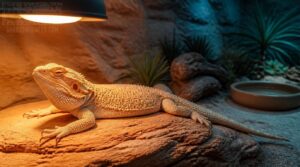
Knowing what healthy thermoregulation looks like is the clearest way to catch a problem before it becomes a crisis. Your reptile’s daily movement patterns tell you more than a thermometer ever could. Watch for these three key behavioral signs that confirm your animal is regulating temperature the way it should.
Shuttling Between Temperature Zones
Healthy thermoregulation looks like deliberate, rhythmic movement — your reptile shuttling between the basking zone and cooler retreats throughout the day. This behavior regulates metabolic rate, aids digestion, and aligns with natural daily activity cycles.
Watch for frequent, purposeful microhabitat selection across the thermal gradient. Substrate heat absorption guides each move. Consistent shuttling confirms your animal is reading its environment correctly and managing body temperature within its preferred range.
Signs of Overheating or Stress
When shuttling stops and your reptile parks itself against cool glass or gapes its mouth open, that’s thermal stress signaling. Rapid breathing, a fast weak pulse, and flushed or mottled skin confirm the body is failing to dissipate heat fast enough.
Coordination deteriorates — expect trembling or an unsteady gait. Appetite suppression and dehydration follow quickly, marked by tacky mucous membranes and feeding refusal.
Behavioral Fever in Reptiles
Not all heat-seeking is routine. When your reptile detects infection, pathogen-induced pyrogens shift its thermal set points upward, driving it toward warmer zones deliberately. This behavioral fever accelerates leukocyte migration and improves enzyme kinetics — your animal is self-medicating through thermoregulation.
When reptiles sense infection, they self-medicate by deliberately seeking heat to trigger a behavioral fever
Recognize these four fever indicators:
- Sustained basking beyond normal duration
- Rejection of cooler hides entirely
- Reduced activity despite warmth access
- Appetite suppression alongside heat-seeking
Make sure your enclosure accommodates this adaptive defense mechanism without thermal risk.
Creating Safe Thermal Environments at Home
Getting your reptile’s thermal environment right isn’t complicated, but it does require the right setup from the start. Every decision you make about heat sources, placement, and controls directly affects your animal’s ability to regulate its own body temperature. Here’s what your enclosure needs to make that possible.
Thermal Gradients in Enclosures
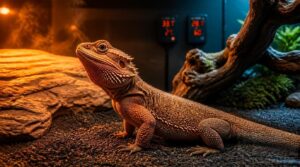
A well-designed enclosure isn’t just a box — it’s a mapped thermal landscape. Your reptile needs a continuum from a warm basking zone down to a cooler refuge, so it can shuttle freely and self-regulate.
Substrate choice shapes this gradient a lot. Darker materials absorb heat, raising local surface temperatures, while lighter substrates reflect it. Place temperature probes across all zones to confirm your targets are actually being met.
Thermostat Use and Burn Prevention

Once your gradient is mapped, keeping it stable is the thermostat’s job. Set your primary heat source to a maximum surface temperature you’ve verified with an infrared temperature gun, not guesswork.
- Never skip thermostat calibration — drift of even a few degrees causes burns
- Inspect cords quarterly for wear
- Use surge-protected outlets only
- Keep heaters 3 feet from flammable materials
- Log temperatures daily to catch device failure early
Placing Hides at Temperature Zones

Hides aren’t decoration — their placement determines whether your reptile can actually thermoregulate. A warm side hide belongs directly adjacent to the heat source, entrance facing inward, with interior surface temperatures between 30–40°C depending on species. The cool zone hide sits at the opposite end, targeting 22–28°C floor contact.
| Hide Type | Placement Priority |
|---|---|
| Warm hide | Adjacent to heat source |
| Cool hide | Opposite end of enclosure |
| Humidity hide | Near moist substrate, away from direct heat |
| Ambient hide | Mid-enclosure, moderate temperature zone |
| Elevated hide | Raised position for height-based microclimate variation |
Substrate moisture inside humidity hides needs weekly checks — standing water invites mold, which is a respiratory hazard. Position hides at varying heights to diversify microhabitat selection and support natural shuttling without obstruction.
Frequently Asked Questions (FAQs)
How do reptiles control their body heat?
Like a thermostat built into muscle and scale, reptiles control body temperature through behavioral thermoregulation — actively shuttling between microclimates, adjusting posture, shifting skin pigmentation, and modulating circulatory blood flow to gain or shed heat as needed.
How hot do reptiles get?
Reptiles reach basking temperatures of 32–42°C (90–108°F), while cooler retreats stay near 22–28°C. Desert species tolerate higher peaks than tropical ones. Straying beyond these limits disrupts digestion, immunity, and movement.
Why do ectothermic reptiles use behavioral thermoregulation?
Being cold-blooded is not a flaw — it’s a strategy. Ectothermic animals use behavioral thermoregulation, including basking and shuttling, to trigger precise metabolic rate adjustment that drives digestion efficiency, muscle performance, immune support, and reproductive timing.
How do reptiles cope with fluctuating temperatures?
Temperature swings trigger behavioral adjustments fast. When cold hits, ectothermic species enter hibernation; when heat spikes, aestivation kicks in. Basking and microclimate selection keep metabolic rate stable across seasonal activity shifts.
What do reptiles do when they get too hot?
The animal built to chase heat will flee from it just as fast. When body temperature climbs too high, reptiles abandon basking, seek shade, and press into cooling microhabitats to drive rapid heat dissipation and prevent hyperthermia.
Can snakes detect heat signatures?
Yes — many snakes can detect infrared heat signatures using specialized pit organs lined with a thermosensitive membrane, converting thermal radiation into neural signals through TRPA1 ion channels for precise prey localization.
Can reptiles thermoregulate effectively during nighttime hours?
Reptiles can, though effectiveness varies. Nocturnal microhabitat selection — choosing rock crevices, burrows, or sun-warmed surfaces after sunset — lets species maintain functional body temperatures without daylight, provided suitable refuges and stable environmental temperatures exist.
Do reptiles seek heat differently when gravid or breeding?
Gravid females don’t simply seek warmth — they pursue it with surgical precision. Embryonic thermal demands narrow the mother’s thermal preference, driving longer gravid basking duration and tightening gestation temperature stability to protect developing offspring.
How does altitude affect reptile heat-seeking behavior?
Altitude thermal gradients force reptiles into longer, more precise basking bouts. Cooler air and transient heat sources mean microhabitat selection becomes critical — a sun-warmed south-facing rock isn’t a preference; it’s a lifeline.
Can social interactions influence a reptiles thermoregulation choices?
Social interactions do influence thermoregulation choices. Communal basking allows individuals to share collective heat gain, reducing solo exposure time.
Conspecific heat cues also trigger earlier entry into warm zones, refining each animal’s thermal regulation strategies.
Conclusion
A reptile that won’t leave its basking spot isn’t being stubborn — it’s keeping itself alive. Reptile heat seeking behavior isn’t instinct for instinct’s sake; it’s precision biology written in movement. Every shuttle between warm and cool zones is a calculated correction your animal can’t make without your help.
Get the gradient wrong, and digestion stalls, immunity collapses, healing stops. Build it right, and you’ve handed your reptile the one tool it can’t survive without: functional warmth.