This site is supported by our readers. We may earn a commission, at no cost to you, if you purchase through links.
That hiss isn’t random. It’s a warning shot, air forced hard through the glottis to tell you exactly where things stand. Coiled tight, head raised, tongue flicking fast, an agitated snake is already telling you what it plans to do next.
Most bite incidents happen because someone missed these signals or reached in with bare hands. A hook changes that equation entirely.
Learning how to handle an aggressive snake with a hook comes down to reading body language, choosing the right tool, and moving with calm, deliberate control. Get those pieces right, and even a defensive snake becomes manageable.
Table Of Contents
- Key Takeaways
- Read Defensive Body Language First
- Choose The Right Snake Hook
- Prepare a Calm Handling Area
- Handle With Slow Hook Movements
- Control Without Hurting Your Snake
- Reduce Aggression Through Hook Training
- Respond Safely to Bites
- Frequently Asked Questions (FAQs)
- How to handle an aggressive snake?
- Can snakes hear yelling?
- Do snake hooks hurt snakes?
- What is a snake’s worst enemy?
- How long do snakes take to fully desensitize?
- Can multiple handlers work with one aggressive snake?
- What age should a snake be before handling?
- Should sick or shedding snakes be handled differently?
- How do you tell venomous snakes apart safely?
- Conclusion
Key Takeaways
- Read defensive signals like hissing, S-shaped coiling, raised heads, and rapid tongue flicking before attempting to handle a snake with a hook.
- Choose a ball-ended hook sized to the snake, keep it clean between uses, and inspect it regularly to avoid injury or cross-contamination.
- Handle slowly and predictably by approaching from the side, tapping gently before lifting, and supporting one-third to one-half of the snake’s body to prevent thrashing.
- If a bite occurs, stay calm, contain the snake, identify the species, and call emergency services immediately if venom is suspected.
Read Defensive Body Language First
Before you ever pick up a hook, you need to know what the snake is telling you. Every hiss, coil, and stare carries a message about how stressed or ready to strike it really is. Here are the five signs worth watching before you make your first move.
If you spot an S-shaped coil or hear that telltale hiss, it’s worth pausing to review these common snake strike triggers to avoid before reaching in again.
Hissing and Coiling
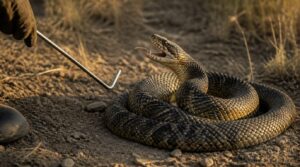
That hiss is air forced hard through the glottis, a warning built to carry, not a bluff. Coiling comes next: it shields the head and vitals while keeping options open for a fast retreat.
Read both signals as one threat display. When you hear it and see the coil tighten, back off before reaching for your hook.
S-shaped Strike Posture

Once the coil tightens, watch the spine curl into a subtle S. This spine curvature shortens striking distance while priming central power transfer from hips to head.
You should also watch for pre-strike body language like rapid tongue flicking or hissing.
Weight settles low and centered, fueling the coming strike acceleration phase. It’s compact, efficient defensive posturing — a snake loading its spring before you ever lift your snake hook.
Raised Head Signals

Once the S-coil sets, watch the head lift above shoulder level, eyes locked on you. That’s threat triangulation in action — your snake judging distance before deciding what’s next.
Neck muscles tighten visibly. This posture varies by species, so don’t rely on it alone:
- A held gaze that won’t break
- Slight tilts tracking your movement
- Narrowed eye slits
- Tense shoulder muscles
- Rising stress arousal levels
Fast Tongue Flicking

That tongue isn’t just for show — it’s sampling the air, feeding scent molecules to the vomeronasal organ for processing. Slow, lazy flicks mean curiosity. Rapid, erratic flicking signals heightened alertness, often paired with tighter olfactory sampling bursts as your snake reads you as a threat.
Watch the rhythm, not just the speed. A snake locked in defensive mode flicks faster, shorter, and more often.
Common Stress Triggers

Rarely does defensive behavior appear without a trigger. Sudden movement triggers top the list, followed closely by loud noise impact and direct eye contact.
- Sudden movement triggers
- Direct eye contact
- Loud noise impact
- Unpredictable environmental shifts
- Physical contact sensitivity
Any of these can spike snake anxiety fast, so watch for early stress signals before handling begins.
Choose The Right Snake Hook

Once you’ve read the snake’s body language, your next move is picking the right tool for the job. Not every hook works for every situation, and the wrong one can put you both at risk. Here’s what to look for before you reach for one.
Match Hook to Snake Size
Grab a hook that matches your snake’s size, not the biggest one you own. Small snakes under 4 feet need a 12 to 14 inch hook; medium ones want 14 to 18 inches; large constrictors over 6 feet demand 18 to 24 inches for real control.
Match shaft diameter too: thin for small snakes, heavier steel for powerful ones needing rigidity.
Use Ball-ended Hooks
A rounded tip does more than look gentle — it prevents scale damage while giving a stressed snake a safe escape mechanism if it wants to pull away.
Ball-ended hooks reduce defensive behavior triggers during handling, since the smooth contact point won’t snag or startle.
This gentler approach also matters when checking healing bite wounds, since understanding what a ball python bite actually feels like can help you stay calm while changing bandages and watching for redness or swelling.
Choose stainless steel for durability and rust resistance; the extra cost pays off across years of snake handling.
Avoid Feeding-tool Confusion
A snake that expects food and gets a hook instead may strike fast and hard. That’s why color-coded equipment matters — feeding tools in one shade, handling tools in another, stored in a labeled staging area with pictograms for quick recognition.
Run tool audits often. Mixing up tongs and feeding tongs isn’t just embarrassing; it’s how bites happen during routine snake handling.
Inspect Grip and Shaft
Before every job, run your hands down the shaft and grip. Preventing grip slippage starts here — check for cracking, dead spots, or loose ferrule connections between hook and pole. Steel shafts shouldn’t show rust; graphite ones shouldn’t feel rough or delaminated.
Any bend, crack, or wobble means identifying structural damage early, before you’re relying on that snake hook mid-lift.
Clean Between Snakes
One hook, many snakes, one shared risk: cross-contamination. Wipe the shaft and ball end with a reptile-safe cleaner, respecting its disinfectant dwell time before drying it off.
Log each cleaning in your equipment maintenance log. Keep your sanitation station organized — separate tools for cleaning versus handling keep parasites and bacteria from hitching a ride to your next snake.
Prepare a Calm Handling Area

Before you ever pick up the hook, the room itself needs work. A stressed snake reads chaos in its surroundings just as fast as it reads your movements. Here’s what to check before handling begins.
Reduce Noise and Movement
Quiet spaces put snakes at ease. Soft flooring dampens vibration, and rubberized tool grips cut the metallic clicks that startle sensitive reptiles.
Move slowly. Sudden footsteps or scraping chairs read as threats. Synchronized, gradual movements with your hook keep the snake calm, letting it track you without triggering that defensive coil or hiss you’re working hard to avoid.
Dim Harsh Lighting
Light matters as much as sound. A single bare bulb creates harsh glare and washing shadows that spike stress in an already jumpy snake.
Swap it for diffused lighting or dim the room. Warmer color temperatures feel gentler than cool white, and smart dimming controls let you soften brightness fast—no fumbling with lamps mid-handling.
Secure Doors and Gaps
Once dim lighting settles the mood, check the room’s exits. A gap under the door is an open invitation for an escape-minded snake.
Run a flashlight along the threshold and edges—light leaks mean a snake could slip through too. Worn thresholds or missing door sweeps need fixing before you handle. A tight seal isn’t just for reptile safety; it keeps everyone calm.
Remove Loose Pets
Dogs and cats deserve their own pet-free zone before you touch a snake hook. Bolt them behind a closed door in another room—curiosity plus a hissing snake is a bad mix.
A quick pre-start check confirms every barrier holds. Fewer distractions means calmer snake behavior and safer tongs work, since bystanders and loose pets both raise your risk during handling.
Prepare Containment Tools
Before you reach for the snake, line up your containment tools: corrosion-resistant hooks, labeled tongs, biteproof gloves, and snake bags. Make sure everything is clean—use ethanol or bleach, then dry and log each item. Check grips for texture and integrity. Keep this kit organized:
- Hooks and tongs
- Snake bags
- Protective gloves
- Containment case
Handle With Slow Hook Movements
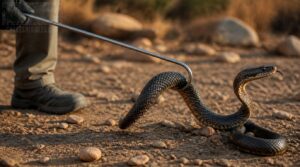
When you’re ready to handle the snake, moving the hook slowly is your best defense against sudden reactions. By starting with gentle, deliberate motions, you show the animal that you’re not a threat. Here’s how to use your hook for safe, steady control.
Approach From The Side
Think of your first move as setting the stage for calm. By approaching from the side, you allow the snake to track your presence without feeling cornered. Stand at its midline, feet shoulder-width for stance stability. Keep your hook level and your body angled, minimizing eye contact. Always check the escape route so the snake won’t surprise you—or vice versa.
Before you even reach for your hook, reviewing safe pet snake handling techniques can sharpen your instincts and help you read the snake’s body language more accurately.
Tap Gently Before Lifting
Deliver a gentle tap with your hook to the snake’s mid-body, coming from the side—not above. This simple signal helps orient the animal and lowers the chance of a strike. Wait a moment, watching for calm breathing and relaxed posture. Before lifting, confirm:
- No rapid tongue flicks
- Stable mid-body position
- No defensive hissing
Slide Under Mid-body
Once the snake settles, angle your snake hook at a shallow tilt and slide it gently under the mid-body. Aim for contact with the ventral scales, not the skin, to avoid abrasion.
By distributing lifting force across the center, you support the snake’s weight and maintain its center of gravity. This reduces thrashing and keeps handling safe and predictable.
Support One-third to One-half
Where’s the sweet spot for best weight distribution? Aim to support one-third to one-half of the snake’s length with your hook. This balances the animal’s center of gravity and keeps it from slipping or thrashing.
- Position the hook one-third from the head
- Steady the mid-body for balance
- Secure hook placement prevents sudden drops
Lift Smoothly and Low
How do you keep both calm and control when lifting? By lifting smoothly and low, you prevent sudden shock to the snake and yourself. Use a controlled vertical rise, keep the hook close to the ground, and maintain a horizontal posture. Pause briefly to reassess. Here’s a quick reference:
| Step | Why It Matters |
|---|---|
| Controlled rise | Reduces startle reactions |
| Low lift | Maintains stability |
| Horizontal posture | Protects spine |
| Pause at stance | Checks stress level |
| Minimize jerks | Prevents defensive moves |
Control Without Hurting Your Snake

Handling an aggressive snake safely means staying in control without causing harm or stress. You’ll need to balance firmness with gentle technique every step of the way. Here’s what you should focus on to make sure your snake stays safe and secure during handling.
Avoid Pinning The Head
Skip pinning the head. That concentrated force risks skull injury and irritates soft tissues, escalating aggression. When you press near the head, you lose the snake’s center of gravity, making sudden movement more likely. Support the body instead—let the snake breathe and respond naturally. By focusing on body support alternatives, you’ll avoid stress responses and maintain safer control.
- Injury is preventable
- Stress stays lower
- Aggression won’t escalate
- You build trust
Never Squeeze With Tongs
When you handle with tongs, never squeeze. Too much pressure can crush vertebrae, compress muscles, and damage scales. Ball-ended hooks distribute force, letting the snake move naturally. Gentle restraint means slow, steady grip—never pinching or clamping. Compare: hooks provide balanced support; tongs risk injury if misused. Here’s a quick guide:
| Tool | Pressure Risk | Recommended Use |
|---|---|---|
| Tongs | High | Direction only |
| Ball Hook | Low | Body support |
| Gloves | None | Personal safety |
Support Heavy-bodied Snakes
Heavy-bodied snakes need full underbody support to stay calm and avoid injury. Drape them across both forearms and your chest—never let them hang.
Bring in a second handler for the tail, which keeps the snake from twisting or sagging.
Always use a ball-ended hook that matches the snake’s size, and keep a static, steady posture throughout.
Keep Movements Predictable
If you’re aiming for mastery, consistent approach patterns are your foundation. Sudden jerks, shifting grip, or an unsteady pace will set the snake on edge. By maintaining a steady pace and controlling hand tremors, you reduce risk. Minimize visual distractions—pets, waving tools, or shiny gloves. Predictability gives your snake confidence, and keeps you firmly in control.
- Repeat movements
- Steady hands
- Calm pace
- Clear workspace
Watch for Slipping
Slipping usually starts small—a slight twist, a shifted grip—before it becomes a real problem.
Watch surface traction closely: smooth glass or wet flooring invites trouble.
Keep the snake’s center of gravity close to your torso, move slowly, and check your hook shaft for burrs.
Cold snakes turn sluggish and slip more, so mind ambient temperature too.
Reduce Aggression Through Hook Training

An aggressive snake isn’t a lost cause—it’s a training opportunity. With patience and the right hook technique, you can turn defensive strikes into calm cooperation. Here’s how to build that trust step by step.
Keep Sessions Short
Fifteen minutes is your ceiling, not your target. Attention drifts fast in both of you, so cap sessions between 5 and 20 minutes based on responsiveness.
- Set a fixed end time before you start
- Watch tongue flicking and posture for stress
- Stop early if warning signs appear
- Log duration and outcome afterward
Short sessions prevent escalation and keep fatigue from clouding your judgment.
Practice Two Weekly Sessions
Twice a week beats daily drilling for aggressive snakes—biweekly pacing lets stress hormones settle between sessions.
| Schedule | Result |
|---|---|
| Twice weekly | Steady progress, low fatigue |
| Daily | Overstimulation, slower gains |
| Once weekly | Skills fade between sessions |
Track each session against last week’s goal. If tongue flicking slows and coiling eases, you’re building real tolerance—not just logging hours.
Reward Calm Behavior
Calm behavior deserves a payoff. Once your snake settles—body relaxed, tongue still—offer habitat access rewards like extra basking time. Pair this with a consistent verbal calm cue, so the snake links your voice to safety.
Rotate rewards to keep them meaningful. Log each response in your tracking notes; consistent routines build trust faster than sporadic praise ever could.
Stop Before Escalation
Every session has a ceiling, and you decide it before you start. Watch for elevated tongue flicking, tightened coils, or a stare that locks on—these are arousal cues telling you to pause, not push through.
When they show up, stop the interaction. Withdraw the hook slowly, keep your 1.5-meter buffer, and let your exit route do its job. Ending early beats forcing a strike.
Build Trust Gradually
Trust isn’t a switch you flip—it’s built session by session. Stick to a consistent routine, same time, same handler, same handling area, so the snake learns what to expect.
Trust isn’t a switch you flip, it’s built session by session through the same routine, time, and handler
Track tolerance with simple notes: slower tongue flicks, looser coils. Pair calm behavior with positive reinforcement, like favorable positioning. Extend session length only after several clean sessions in a row. Rushed trust breaks faster than it forms.
Respond Safely to Bites

Even careful handlers get bitten sometimes, and that’s okay. What matters most is what you do in the next few minutes. Here’s exactly how to respond, step by step.
Understanding safe snake handling techniques to avoid defensive bites can help you stay calm and confident, which actually reduces the chances of a bite in the first place.
If your snake is a captive with recurring stress, it helps to understand why snakes bite their own tails and how to prevent it before another episode happens.
Stay Calm and Contained
If a bite happens, your first job isn’t the wound, it’s your composure. Stay still, breathe steady, and get to a secure space away from the snake.
Panic invites mistakes. Contain the animal safely in a bag or tub, seal escape routes, and set tools aside before tending to anything else.
Identify The Species
Once contained, take a photo through the bag or tub if you can do it safely.
Note head shape, pupils, and banding patterns—these details matter more than memory once adrenaline kicks in. Snake identification relies on scale pattern recognition and coloration, and responders use these traits alongside geographic range to narrow down venomous species identification fast.
Wash Minor Bite Wounds
Once you’ve confirmed it’s a minor, non-venomous nip, get the wound under clean running water right away to flush out dirt.
Follow with mild soap, washing gently without scrubbing. Remove any visible debris carefully, then apply an antiseptic like iodine.
Cover with a sterile bandage, and change it daily while watching for redness or swelling.
Call Emergency Care
Suspecting venom changes everything — dial 112 immediately. Once the emergency is handled, brushing up on safe nocturnal snake handling techniques can help you avoid risky encounters in the future.
Give dispatch your exact address, describe symptoms (swelling, pain, breathing trouble), and mention the suspected species if known. Stay on the line.
Quick checklist:
- Call 112 without delay
- State precise location and landmarks
- Describe bite symptoms clearly
- Follow dispatcher instructions until help arrives
Accurate reporting speeds antivenom treatment and proper emergency medical response.
Avoid Venomous Handling
Once you suspect venom, put the hook down and step back — this isn’t a job for improvised grips or bare hands.
Maintain safe distance, keep an exit route open, and let tongs or a hook do all the work.
| Do | Don’t |
|---|---|
| Use snake hooks/tongs | Grab by hand |
| Watch stress signals | Corner the snake |
Respecting warning signs keeps everyone safer.
Frequently Asked Questions (FAQs)
How to handle an aggressive snake?
Picture a coiled spring, tension held in silence — that’s your snake right now.
Read defensive posture first, watch tongue flicking speed, then use a snake hook with slow, deliberate movements to guide, never grab, until it calms.
Can snakes hear yelling?
Yes, but not the way you’d expect. Snakes lack external ears, relying on low frequency perception through jaw-bone vibration. Yelling registers as muffled pressure, not words—loud enough to trigger stress, yet inconsistent as a deterrent during handling.
Since snakes can’t hear tone of voice, keeping their environment stable—like the incubation and humidity levels outlined in this guide to bumblebee ball python care and breeding—does more to reduce stress than any amount of talking ever will.
Do snake hooks hurt snakes?
A gentle handshake versus a rough shove—same contact, different outcomes.
Good hook design safety matters: smooth, ball-ended tips prevent rib injuries and scale abrasions, avoid joint strain, and lower cortisol, keeping snake handling humane rather than harmful.
What is a snake’s worst enemy?
Honestly, humans top the list — through habitat destruction, road mortality, and fear-driven killing. Add hawks, mongooses, and rival kingsnakes hunting from above and below, and you’ll understand why sharp threat assessment matters before you ever reach for your hook.
How long do snakes take to fully desensitize?
Think of it like thawing ice: slow and steady, not instant. Most snakes need 4–12 weeks for real progress, though individual temperament and species pacing mean some take 3–6 months to fully acclimate.
Can multiple handlers work with one aggressive snake?
Two handlers is the safest baseline: one controls the head with a snake hook, the other holds the body. Larger constrictors need handler ratio scaling—three or more people, clear roles, and coordinated movement drills to prevent uncontrolled strikes.
What age should a snake be before handling?
Rushing a hatchling into handling is like tossing a toddler into a marathon—disaster waiting to happen. Wait for hatchling feeding stability, steady weight gain, and calm tongue flicks. Skip handling during shedding, and let species temperament guide your timeline, not the calendar.
Should sick or shedding snakes be handled differently?
Yes. During the blue eye phase or illness, slower reflexes and hydration risks raise handling danger. Use gentler snake hook contact, shorter sessions, and clean gear after each snake to prevent cross-contamination between animals.
How do you tell venomous snakes apart safely?
No single trait guarantees safety—mimicry fools even experts. Combine head shape clues, pupil shape, and aposematic color patterns, then check regional species context.
When any indicator suggests venomous snakes, keep your distance and reach for snake hooks instead.
Conclusion
A "strong personality" is just a snake telling you to slow down. Once you accept that, how to handle an aggressive snake with a hook stops feeling like a fight and starts feeling like a conversation.
Read the body language. Choose the right tool. Move with quiet confidence. Your hook isn’t a weapon — it’s a translator. Snakes don’t hold grudges, but they remember bad handling. Give them steady hands, and even the hissiest ones settle down eventually.