This site is supported by our readers. We may earn a commission, at no cost to you, if you purchase through links.
That papery cuff clinging to your snake’s tail tip isn’t cosmetic. It’s a warning sign. When ecdysis stalls at the last few centimeters, you’re looking at a circulation risk, not a minor grooming issue.
Left alone, retained skin can constrict like a tourniquet, cutting blood flow to healthy tissue beneath it. Snake shedding stuck on tail problems usually trace back to one of five culprits: humidity, texture, stress, illness, or nutrition, and each leaves distinct clues if you know where to look.
Get the diagnosis right, and removal becomes simple and safe.
Table Of Contents
- Key Takeaways
- Why Shed Sticks to Snake Tails
- Check The Retained Tail Shed
- Safely Remove Stuck Tail Shed
- Prevent Future Tail Shed Problems
- When Tail Shed Needs Veterinary Care
- Frequently Asked Questions (FAQs)
- How to unstick a snake shed?
- How long should you soak a snake with a stuck shed?
- Can a stuck shed hurt a snake?
- What are signs of stress in a snake?
- Can I use oil or lotion on stuck shed?
- Is stuck tail shed painful for the snake?
- Will stuck shed fall off on its own eventually?
- Does species affect how often tail shed sticks?
- Can stuck shed happen even in healthy snakes?
- Conclusion
Key Takeaways
- A stuck tail shed isn’t just cosmetic—it can act like a tourniquet, cutting off blood flow and risking tissue death if left too long
- Low humidity is the most common cause, so keeping your enclosure moist and adding rough surfaces like bark or rock helps skin release naturally
- Soak the tail in lukewarm water for 15-20 minutes and only remove skin that lifts freely—never pull or use tools on skin that’s still attached
- Call a vet if the tail tip turns cold, dark, or swollen, if retention lasts beyond two weeks, or if your snake stops eating or seems lethargic
Why Shed Sticks to Snake Tails
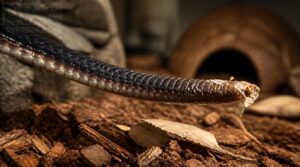
The tail is often the last part of a snake to shed, which makes it the first place trouble shows up. When the process stalls, it’s rarely random — something in the enclosure or the snake’s own condition is working against it. Here’s what actually causes that stuck patch at the tip.
Low humidity is usually the main culprit, and understanding how humidity levels affect a snake’s shedding cycle can help you catch the problem before that retained shed tightens into a real threat.
Normal Tail Shedding Process
Freedom from old skin starts at the tail. A healthy shedding cycle runs 9-14 days: head separates first, body follows like peeling a sock, and the tail tip presses against rough surfaces for final release. During this process, opaque eyes signal active shedding, making them one of the most reliable indicators to watch for.
- Tail skin elasticity stretches skin 10-20% longer than body length
- Skin separation mechanics rely on inside-out release
- Epidermal renewal completes in 24-48 hours
- Post-shed behavior returns fast, appetite and confidence restored
Low Enclosure Humidity
That smooth exit depends on one thing above all: moisture. Below 50% ambient humidity, the outer layer dries faster than the inner layer separates, so retained skin clings hardest at the tail tip. Dehydrated scales turn brittle fast.
Fix it with humidity adjustment: mist twice daily, place water dishes near the warm end, and use digital hygrometers, not stick-on strips, for accurate readings.
Missing Rough Shedding Surfaces
Humidity gets your snake halfway there, but moisture alone won’t tear that skin loose. Wild snakes rely on rough surfaces, bark, rock, leaf litter, for that first important snout tear. Skip textured elements and you’re asking smooth vinyl to do a rock’s job.
Add these to any shedding box:
- Cork bark panels
- Stacked river rocks
- Coconut husk substrate
- Climbing branches
- Rough stone slabs
Stress, Mites, and Illness
Texture solves mechanics, not physiology. Your snake’s body has to cooperate too.
Chronic stress spikes corticosterone, disrupting the hormonal cascade behind shedding. Mites burrow into old skin, weakening separation. Illness diverts energy elsewhere.
| Factor | Effect | Recovery |
|---|---|---|
| Stress | Hormonal imbalance | 3-4 weeks |
| Mites | Skin weakening | 2-3 weeks |
| Illness | Tissue adhesion | 1 cycle |
Watch for hiding, appetite loss, or rubbing.
Nutrition and Hydration Problems
When your snake’s diet lacks whole prey, Vitamin A deficiency follows, weakening skin separation at the tail. Add dehydration risk, and fluid balance collapses too.
If your snake’s tail tip stays stuck after shedding, check out this guide on fixing incomplete sheds and retained skin for practical fixes.
That’s why hydration monitoring and mineral supplements matter. Whole-prey diets restore protein balance and prevent nutritional deficiencies. Regular micronutrient screening catches problems before hydration therapy becomes necessary.
Check The Retained Tail Shed
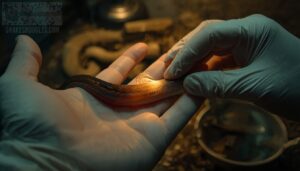
Before you touch that tail, you need a clear picture of what you’re actually dealing with. Not every retained shed is an emergency, but some warning signs mean you can’t afford to wait. Here’s exactly what to check, in order, before you decide on your next move.
Confirm Skin is Still Attached
Run your finger down the tail: does it slide freely, or drag against a stiff seam? Retained skin feels rubbery, resists movement, and stays cooler than living tissue. A quick five-point gut check:
- Firm, rubbery texture under gentle pressure
- Skin that won’t slide over new layers
- A distinct separation line along the tail
- Cooler patches from reduced blood flow
- Elasticity that snaps back when pinched
Inspect The Tail Tip
The very tip deserves its own close look, since this is where constriction turns dangerous fastest. Check tail tip texture: does it feel harder than surrounding scales? Note tail tip temperature against the base, a cold tip signals poor circulation. Look for swelling rings tightening around retained skin.
Untreated constriction beyond two weeks risks tail necrosis.
Check Color and Swelling
Color tells you more than you’d think. A dark purplish or black tail tip that stays dull after the rest brightens means retained skin. Look for:
- Pattern loss or fading
- Puffiness around the tip
- Firm, swollen tissue
- Foul odor (infection risk)
- Rapid swelling within 24 hours
Catch tissue constriction early, necrosis moves fast.
Watch Behavior and Appetite
A snake dragging retained tail shed often acts like it’s carrying a splinter it can’t shake. Watch for reduced movement, stiff exploration, and defensive strikes from normally calm animals.
| Behavior Sign | What It Means |
|---|---|
| Hiding most of the day | Stress from stuck shed |
| Refusing scented prey | Appetite loss, discomfort |
| Constant surface rubbing | Attempting self-removal |
Feeding refusal beyond 48 hours warrants closer attention.
Note How Long It Remains
The clock matters as much as the color. Critical retention periods follow a strict timeline:
- 48 hours: discoloration signals retained shed
- 72 hours: necrosis risk climbs sharply
- 96 hours: skin hardens, removal gets riskier
- 7 days: vet care becomes necessary
- 10 days: abnormal for most species
Track duration daily. Tail tip constriction worsens fast, so don’t gamble on "it’ll fall off eventually.
Safely Remove Stuck Tail Shed
Once you’ve confirmed the shed is stuck, you can’t just pull it free and hope for the best. Safe removal follows a specific sequence, and skipping a step raises your risk of tearing scales or damaging the tail tip. Here’s exactly how to do it right, one stage at a time.
Raise Humidity Before Handling

Before you touch that tail, raise humidity to 90-95% using a humid hide with damp sphagnum moss. Dry skin won’t budge, and forcing it risks necrosis.
Mist the enclosure, then monitor with a hygrometer until levels hold steady. This pre-soak prep softens the retained shed, setting you up for safe, gentle removal next.
Prepare a Lukewarm Soak
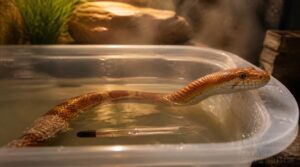
Once humidity’s up, grab a shallow container deep enough to cover the body but not the head. Fill with water temperature between 84-93°F, checking with a thermometer since guesswork risks scalding.
Soak 15-20 minutes max. If retained skin won’t budge, wait 24-48 hours before repeating; never exceed 30 minutes total across sessions.
Use a Damp Towel
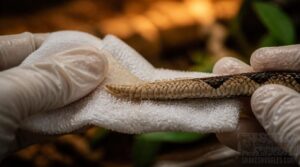
If soaking alone didn’t loosen things, follow up with a damp towel technique on the tail tip. Use clean cotton, wrung damp, warmed to 85-90°F, never dripping. Wipe head-to-tail with the scale direction, replacing towels every 10-15 minutes. Cap total application under an hour, and watch for stress signs like rapid breathing.
Remove Only Loose Skin
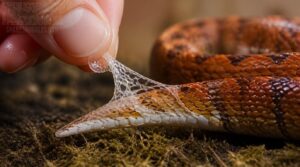
After the towel work, check what’s actually ready to come off. Only remove skin that lifts freely with light pressure, using your fingertips for gentle manual removal of loose fragments along the tail tip.
If retained skin resists at all, stop. Forcing fragment removal risks tearing live tissue underneath, undoing everything humidity and soaking accomplished.
Never Pull or Use Tools

Reaching for scissors or tweezers might feel productive, but sharp tools near fused tail vertebrae risk permanent spinal damage. Never force attached skin: tearing invites infection within 48 hours and stress that suppresses appetite for a week.
Stick to gentle manual removal, patience, and trust in the snake’s natural shedding priority. Your restraint protects what pulling destroys.
Patience protects a snake’s tail; pulling only destroys what gentle restraint could have saved
Prevent Future Tail Shed Problems
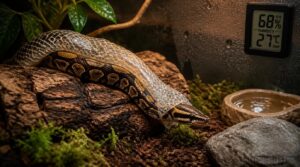
Once you’ve cleared a stuck shed, your real job starts: making sure it doesn’t happen again. Dysecdysis is almost always preventable when your enclosure setup matches your snake’s biological needs. Here’s what you need to get right, starting with the environment itself.
Maintain Species-Appropriate Humidity
Every species has its own comfort zone, and guessing gets you nowhere. Ball pythons need above 60%, corn snakes 65-75%, Burmese pythons 50-70%. Match your species-specific ranges exactly.
After shedding, use this snake shed inspection guide to check that both eye caps are intact and hole-free.
If you do spot retained eye caps, follow the safe snake bathing techniques for stuck shed to loosen and remove them without causing injury.
Set up a gradient with moisture-retaining substrate on one side, drier on the other. Calibrate hygrometers weekly. Bump humidity to 70% during blue-eye phase, holding it 7-10 days before dropping back down.
Add a Humid Hide
When ambient humidity alone can’t cut it, a humid hide setup gives your snake a direct moisture source. Line a small hide with damp sphagnum moss, squeezed until it’s damp but not dripping. Place it where your snake can access it freely.
Check for condensation on the container walls, that’s your cue the microclimate’s working.
Provide Textured Shedding Surfaces
Smooth glass won’t grip a shed. Add reptile-safe cork bark or rough stone along common travel routes, creating shedding lanes where skin catches and peels naturally.
This mechanical shedding aid works alongside your humidity hide, not instead of it. Mix multiple texture types for different body angles, and swap smooth, worn pieces before they turn into slip surfaces.
Balance Warm and Cool Zones
Heat and humidity work as a pair, not rivals. Set your basking zone to 85-90°F and cool side to 75-80°F, then push humidity 65-70% during active sheds.
Vapor pressure climbs with temperature, so without matching moisture, that warmth pulls water straight out of retained skin. Check both zones twice daily with calibrated sensors.
Track Every Shed Cycle
Data beats guesswork every time. Log each shed cycle’s start date, duration, and outcome, complete, partial, or retained tail tip, alongside daily humidity levels.
Snap photos during skin inspection and note appetite changes; postshed feeding refusal often flags trouble. Healthy adults shed 4-12 times yearly. Patterns in your log catch a stuck shed trend before it becomes a crisis.
When Tail Shed Needs Veterinary Care
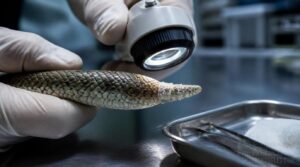
Most stuck tail shed resolves with humidity and patience, but some cases cross a line you shouldn’t manage alone.
Certain warning signs point to circulation loss or infection setting in beneath that retained skin, and waiting too long raises the risk of tissue damage.
Here’s what tells you it’s time to call your vet.
If you’re unsure where to start, these practical tips for calming a nervous snake can help you assess your pet’s stress levels before deciding whether a vet visit is necessary.
Dark or Cold Tail Tip
A tail tip running cold or turning dark isn’t something you wait out. Vascular compromise starts quietly: tissue temps drop below 75°F before color changes appear.
- Cold, pale, or bluish tip
- Uniform dark brown/black skin
- No capillary refill
- Dry, flaky texture
- No pain response
Beyond 48 hours of humidity therapy without change, necrosis risk demands immediate veterinary evaluation.
Redness, Swelling, or Discharge
Cold tissue is one warning sign. Redness, swelling, or discharge at the shed line is another, signaling bacterial colonization under trapped skin.
| Sign | Looks Like | Risk |
|---|---|---|
| Redness | Flushed, irritated band | Early inflammation |
| Swelling | Puffy, shiny scales | Fluid buildup, necrosis risk |
| Discharge | Yellow-white, foul-smelling | Active infection |
Any combination warrants same-week veterinary evaluation, not a wait-and-watch approach.
Retention Beyond Two Weeks
Two weeks is the line you don’t cross. Beyond it, constriction risks permanent tail loss, so schedule veterinary removal now.
- Necrosis risk climbs sharply
- Chronic constriction damages tissue
- Secondary infection spreads fast
- Home soaking won’t fix it
- Tissue regeneration becomes unlikely
Vets combine soaking with gentle separation, then monitor for long-term recovery.
Repeated Incomplete Tail Sheds
One fix doesn’t hold? That’s your body’s way of flagging something systemic, not bad luck.
| Cycle | Likely Culprit | Action |
|---|---|---|
| 1st | Low humidity | Raise to 70-80% |
| 2nd | Missing texture | Add rough surfaces |
| 3rd+ | Parasites/nutrition | Vet workup needed |
Track each cycle. Patterns beat guesswork every time.
Lethargy or Appetite Loss
Watch how your snake behaves once the tail shed lingers. Anorexia and lethargy signal your snake isn’t just annoyed by retained skin, it’s fighting something bigger. Reduced activity, ignored prey, low energy: these compound nutritional status fast.
Don’t wait this out. Persistent appetite loss paired with sluggish behavior warrants veterinary help immediately, before dehydration and malnutrition dig in deeper.
Frequently Asked Questions (FAQs)
How to unstick a snake shed?
Set up a humid soak at 90-95°F for 15-20 minutes, then gently rub loosened skin with a damp cloth. Never pull dry retained skin. Boost enclosure humidity and add textured surfaces to prevent repeat sticking.
How long should you soak a snake with a stuck shed?
Think of it as coaxing a stubborn lock, not forcing it. Soak your snake in lukewarm water (26-30°C) for 15 to 20 minutes, shallow depth only, then follow with humidity support to finish loosening the retained shed.
Can a stuck shed hurt a snake?
Yes. Retained shed acts like a tourniquet, risking tail necrosis within days. It also breeds infection, invites injury from manual removal, and triggers stress-induced appetite loss.
So correct humidity levels and gentle soaking matter for lasting tail health.
What are signs of stress in a snake?
A snake yanked into daily handling for photos often goes rigid, hides for hours, and skips meals. That’s chronic stress: rigid posture, erratic movement, appetite loss, abnormal breathing, elevated corticosterone. Minimize handling, and shedding often improves too.
Can I use oil or lotion on stuck shed?
Only after a soak, and only mineral oil, never lotion. Apply 2-3 drops to softened skin, massage briefly, wipe excess. Skip it on dirty skin: trapping bacteria risks worse dysecdysis than the stuck shed itself.
Is stuck tail shed painful for the snake?
Absolutely, and vets treat it that way. Retained skin acts like a constricting tourniquet, causing ischemic pain, tissue damage, and behavioral indicators like lethargy or defensive strikes when the tail’s touched.
Will stuck shed fall off on its own eventually?
Given time, it often works itself out. Most retained tail pieces detach naturally within two to four weeks, especially with humidity above 50%, textured surfaces, and normal movement, though thin fragments can fall off in just 48 hours.
Does species affect how often tail shed sticks?
Yes, absolutely. Species variation drives everything here: thick-skinned, arid-dwelling species produce stickier, more viscous shed that clings longer, while humid-habitat species with thinner skin release tail sheds cleanly, needing far less intervention from you.
Can stuck shed happen even in healthy snakes?
Funny enough, a snake can eat well and act perfectly normal and still end up with stuck shed. It’s usually enclosure conditions, especially humidity levels, driving incomplete shed rather than any hidden illness.
Conclusion
Think of a snake’s tail like a river narrowing behind a dam: pressure builds quietly until something gives. That’s what snake shedding stuck on tail really represents, a small blockage with outsized consequences.
You don’t need to panic. You need to observe, hydrate, and act within days, not weeks. Master the humidity, texture, and timing, and you remove the risk before it removes tissue.
Precision beats guesswork every time your snake sheds.