This site is supported by our readers. We may earn a commission, at no cost to you, if you purchase through links.
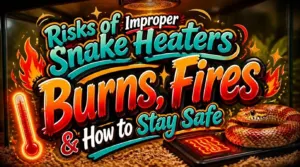
A snake can rest against a heat rock for an hour and look perfectly fine. Days later, the skin darkens, then the tissue underneath dies. That’s how thermal burns work, and most keepers miss them until the damage is done.
So what are the risks of using improper heaters for snakes? Burns top the list, followed by dehydration, stalled digestion, and house fires. A heat mat buried under bedding or a heater running without a thermostat can push surfaces past 130°F.
Every one of these injuries is preventable. The fixes come down to the right equipment, correct placement, and a few weekly checks.
Table Of Contents
- Key Takeaways
- How Can Improper Heaters Harm Snakes?
- Unsafe Snake Heaters and Installation Mistakes
- Thermostats and Temperature Checks Prevent Heating Injuries
- Improper Heaters Create Fire and Electrical Hazards
- Routine Inspections and Emergency Plans Protect Snakes
- Frequently Asked Questions (FAQs)
- Conclusion
Key Takeaways
- Burns, dehydration, stalled digestion, and fires are the main dangers of improper snake heaters, and burns often look minor until the tissue dies days later.
- Never run a heater without a thermostat or bury a heat mat under bedding, because surfaces can spike past 130°F, and a mat should cover only one-third to one-half of the floor so your snake can always reach a cool zone.
- Match temperatures to your species, with ball pythons needing a warm side of 88–92°F and corn and king snakes 82–88°F, and verify them with an infrared thermometer for surfaces and a digital probe for air, since a cold snake can’t digest its meal.
- Protect your home by avoiding overloaded outlets, using GFCI outlets, replacing any hot plug, and inspecting cords and probes regularly, and call a reptile vet right away for blistered scales, regurgitation, or signs of distress.
How Can Improper Heaters Harm Snakes?
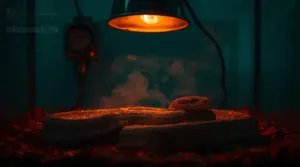
The wrong heater can hurt your snake in ways you won’t spot until the damage is done. Some problems show up fast, and others build quietly over weeks. Here are the three main dangers to know, so you can catch trouble early and act.
Heat injuries often start with a faulty pad or an unreliable thermostat, so this guide to snake skin problems and heat injuries shows what burns look like and how to prevent them.
Burns, Overheating, and Dehydration
Skipping a thermostat turns a heat source into a hazard. Thermal burns start when a snake rests against a bare heat rock or ceramic emitter, and they often look minor until the tissue dies days later.
Overheating hits faster, and without a cooler zone, your snake can’t escape. Dehydration follows, and sunken eyes and stuck shed are your warning signs.
If a burn does happen, fluid loss through damaged skin is the main immediate danger, so move the snake off the heat source and get to a vet quickly.
Poor Digestion From Inadequate Warmth
Too little heat causes a different kind of harm, and it’s easy to miss. A cold snake can’t digest its meal.
Without enough warmth, food sits and rots, and your snake may regurgitate it. Follow these steps after every feeding:
- Keep the warm side in your species’ range.
- Skip handling for 48 hours.
- Check temperatures with a probe.
Even a sudden temperature drop can ruin a meal.
Steady temperatures are only part of the picture, so it’s worth exploring other ways of improving your snake’s digestion naturally.
When to Contact a Reptile Vet
Regurgitation after a heat or cold event isn’t something to wait out. Call a reptile vet right away if your snake gapes, thrashes, can’t right itself, twitches, or goes limp.
Blistered or crusted scales also need prompt care. Even if your snake seems fine, organ damage can hide, so book a follow-up exam. A reptile vet can check bloodwork and your setup.
Unsafe Snake Heaters and Installation Mistakes
Most of that harm comes from unsafe snake heaters and installation errors you can fix today.
Don’t bury a heat mat under substrate inside the enclosure. Heat gets trapped with no airflow, and the bedding can scorch or ignite. It’s like leaving a heating pad wrapped in a pillow.
Never run a heater without a thermostat. Temperatures can spike past 130°F, which burns skin and fries equipment.
Keep every heat source out of your snake’s reach. Snakes coil against hot surfaces looking for warmth, and direct contact burns them.
Cover no more than one-third to one-half of the floor with a mat. Otherwise the cool zone vanishes and your snake can’t escape the heat.
Check your wiring as well. Undersized cords and overloaded outlets melt insulation and start fires.
Thermostats and Temperature Checks Prevent Heating Injuries

Every heat source in your snake’s enclosure needs a thermostat, no exceptions. A thermostat alone isn’t enough, though, because you still have to check the real temperatures yourself.
Below, you’ll find how to pick the right thermostat and place its probe, measure surface and air temperatures on your own, and set the correct temperatures and gradient for your species.
Compatible Thermostats and Secure Probes
A heater without a thermostat is a stove burner with no knob. Match the controller to the heat source: on/off for ceramic emitters and heat mats, a dimming unit for basking bulbs. Never use a rheostat or dimmer switch alone, because it can’t sense temperature.
Tape the probe flat against the basking surface, then check it weekly.
Independent Surface and Air Measurements
While a basking rock might read 110°F on its surface, the air a few inches above it can sit twenty degrees cooler. One reading never tells you both, so use two tools.
Aim an infrared thermometer at the rock or hide for surface heat. Then mount a digital probe at snake level, shaded from the lamp and clear of décor.
Species-specific Temperatures and Thermal Gradients
A ball python kept on a corn snake’s 82°F warm side can’t digest its meal.
Match the setup to your species:
- Ball pythons: warm side 88–92°F.
- Corn and king snakes: warm side 82–88°F.
- Cool side: 72–80°F, depending on species.
- Warm only one-third of the floor.
- Check substrate temperature with a probe.
Always offer a thermal gradient so your snake chooses.
Improper Heaters Create Fire and Electrical Hazards

What’s the quickest way to turn a warm snake room into a fire scene? Plug too much into one outlet. A power strip overload is how many reptile room fires start, and the cause is rarely dramatic. Add up the wattage of every heater on a circuit. Electrical overload warms cords and plugs long before a breaker trips.
Check the fixture rating on every lamp socket. Halogen bulbs belong in ceramic, never plastic. Choose thermostats with a thermal cutoff, so a popped probe can’t send a heater past 120°F.
Run every heater through a GFCI outlet, especially near misting systems or water bowls. Basements make this more urgent, since cold concrete tempts people to add extra mats, so check this guide to reptile heating mats for basement setups for wattage that fits your tank.
Touch each plug faceplate weekly. If it’s hot, unplug it for good. A new cord costs a few dollars, and a house fire costs you everything.
A warm plug is a warning, so retire it at once, because replacing a cheap cord beats losing your whole home
Routine Inspections and Emergency Plans Protect Snakes
A heater that worked fine yesterday can fail tonight. Don’t wait to find out which night that is.
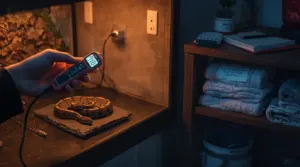
Do a monthly inspection of every heating setup. Check cords for cracks, plugs for discoloration, and thermostat probes for secure placement. Then confirm the readings with a digital thermometer at both the warm and cool ends. Add GFCI protection and a dedicated circuit if your outlets can’t handle the load.
Write your power outage protocol down before you need it. Keep reptile-specific heat packs, towels to wrap them in, and a travel container ready for each snake. Put temperature monitoring on a 30 to 60 minute schedule and log every reading.
Afterward, call a reptile vet. Delay feeding until they say it’s safe.
Frequently Asked Questions (FAQs)
Are heating pads or lamps better for snakes?
Neither wins outright, because your species decides it. Heat mats warm a hide from below and suit fossorial or nocturnal snakes. Lamps heat the air and give basking spots for arboreal snakes. Both need thermostats.
Can you leave a heat lamp on all night for snakes?
No, don’t leave a heat lamp on all night. Constant light wrecks your snake’s day/night cycle and dries the air. Use a thermostat-controlled ceramic heat emitter instead, and only if nighttime temperatures drop below your species’ safe range.
Can snakes get respiratory infections from poor heating?
Yes, they can, and poor heating is the most common cause. Cold weakens your snake’s immune system, so bacteria in the airways multiply freely. Infections often show up one to three weeks after a cold spell.
What wattage heater suits my snakes tank size?
Wondering which wattage heater fits your tank? Base it on your enclosure setup and the coldest room temperature, not today’s.
Bigger gaps need more watts. Pair it with a thermostat, and check species specific needs.
How often should I replace snake heating equipment?
Your heater won’t survive until the end of time, so stop treating it like it will. Swap ceramic emitters every 10,000 to 15,000 hours.
Replace anything discolored, melted or loose now, before equipment failure strikes.
Conclusion
Safe setups start simple. So, what are the risks of using improper heaters for snakes? Burns, dehydration, stalled digestion, and fires, and every one is avoidable.
Buy a thermostat-controlled heater, secure the probe, and verify temperatures with a separate thermometer. Check cords, surfaces, and gradients weekly. A thermostat costs less than one emergency vet visit, and far less than a burned snake or a burned house.
Your snake can’t say it’s burning, so you must.