This site is supported by our readers. We may earn a commission, at no cost to you, if you purchase through links.

No snake has true blue pigment. Not one. That icy glow on a blue-eyed leucistic ball python or the soft gray-blue blotches on a lavender corn snake comes from tiny crystal-like plates in the skin that bounce blue light back at you.
It’s why the color shifts as the snake moves, and why blue pet snakes feel so magical in person. A few look like glossy sapphire jewels. Others, like the venomous blue coral snake, belong strictly in the wild.
Here’s how to tell the difference, set up the right habitat, and bring home a healthy, legally sourced snake.
Table Of Contents
Key Takeaways
- Your blue snake has no blue pigment at all, because tiny crystal-like plates in its skin bounce blue light back at you, which is why the shimmer shifts as it moves.
- The blue snakes you can safely keep, like blue-eyed leucistic ball pythons and lavender corn snakes, are gentle non-venomous constrictors, while blue coral snakes and blue-morph pit vipers belong strictly in the wild.
- You’ll need to keep the habitat steady at 75°F to 85°F with a 90°F basking spot, 40% humidity for corn snakes, a heavy soaking bowl, and frozen-thawed prey sized to the snake.
- You should buy a captive-bred snake from a reputable breeder with clear lineage records, check your state’s permit rules first, and be ready for a 12 to 30 year commitment and prices from $300 to over $1,000.
Blue and Blue-Tinted Snakes Kept as Pets
A handful of blue snakes can live happily in your home, and each one is a stunner. Blue-eyed leucistic ball pythons glow white with icy eyes. Lavender corn snakes wear soft blue-gray blotches. Green tree pythons hatch bright blue, though they don’t stay that way.
If you want to tell a true blue eye from a look-alike, this guide to snakes with blue eyes shows how leucistic ball pythons compare to other blue-toned snakes.
Then there’s the blue racer, a slim, slate-colored colubrid, and the eastern indigo snake, a glossy giant that reaches 84 inches. Both are showstoppers, but they demand serious snake husbandry and legal checks.
Plan carefully.
What Gives Some Pet Snakes a Blue Hue
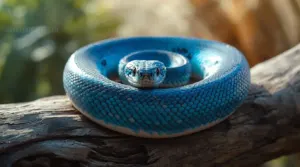
Here’s the surprise: your blue snake has no blue pigment at all. Reptiles can’t make it. What you see is structural coloration, light bouncing off tiny structures in the skin.
A blue snake carries no blue pigment, only microscopic skin structures that scatter light into that dazzling shade
Iridophore cells hold crystal-like plates that reflect blue wavelengths, and the shine shifts as you move.
Together with melanophores and xanthophores, these layered pigment cells explain the striking range of carpet python color variations seen across different morphs.
Genetics sets the stage. A genetic mutation such as axanthic strips away yellow and red, so blue dominates. Hypomelanism thins the dark melanin.
Bright light makes the blue pop. Dim light mutes it.
Watch for a pre-shed haze, too. It’s temporary.
Venomous Blue Snakes That Aren’t Pets

Not every blue snake belongs in a tank. Some are venomous blue snakes, and you’ll meet them only in the wild.
The blue coral snake of Southeast Asia is the showstopper. It has a vivid blue body with a red head and tail, and its neurotoxic venom can cause rapid paralysis. Rare blue morphs of a pit viper turn up. The color is a quirk, and the venom stays potent.
Keepers don’t breed these animals, and laws strictly restrict them.
In practice, no state bans spider ball pythons, and this guide to spider ball python legality notes New York City is the main exception.
Care Needs of Blue-Tinted Pet Snakes
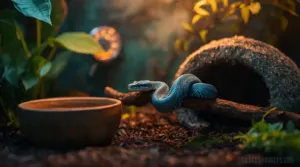
Thankfully, the blue snakes you can actually keep are far gentler on your nerves. Their needs are simple once you know them.
Build the enclosure around temperature regulation: 75°F to 85°F, with a 90°F basking spot. Keep humidity near 40% for blue corn snakes, higher for tree pythons.
- Offer frozen-thawed rodents no wider than 1.5 times the snake’s mid-body diameter.
- Provide a heavy water bowl big enough for soaking.
- Add two secure hides for ball pythons, one at each end.
Buying a Blue Pet Snake Responsibly
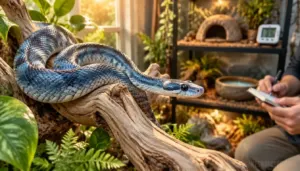
That shimmering blue color is easy to fall for, so slow down before you buy. Two things shape a smart purchase: what the snake will cost you and where it comes from. Here’s what to know about each one.
What Affects The Purchase Price
Why does one blue hatchling cost $300 and another top $1,000? Genetics and patience, mostly.
Recessive blue traits need both parents to carry the gene, so fewer eggs produce the color you want. A reputable breeder spends years refining pigment and keeping bloodlines separate.
| Factor | Effect on cost |
|---|---|
| Proven bloodline | Higher |
| Vivid, even blue | Higher |
| Faded or patchy color | Lower |
| Unproven adult | Lower |
Hatchlings often shift color as they grow, so established adults cost more, and waitlists keep prices firm.
Captive-Bred Sources and Permit Rules
A reputable breeder is your best route to a blue snake, and it protects wild population protection efforts too. Look for these signs:
- Calm, clean enclosures glowing with sky-blue and slate-tinted scales
- Clear lineage records and health histories
- Receipts and transfer papers in your hand
Check your state’s rules before you buy. Many require a possession permit, and some ban certain species outright, even captive-bred ones. Crossing borders can add health certificates, and the Lacey Act punishes moving illegally held wildlife. Keep every document.
Frequently Asked Questions (FAQs)
Are blue pet snakes safe around young children?
Think of a snake as a living tool, not a toy. Blue ones are non-venomous constrictors, but safety depends on behavioral temperament and supervision. Keep handling adult-only, and wash hands afterward, because reptiles can carry salmonella.
How long do blue pet snakes typically live?
Here’s the funny thing about a snake that looks like a tiny jewel: it might outlast your car, your couch, and maybe your next three jobs. Blue beauty snakes live 12 to 20 years, blue-phase corn snakes 15 to 20, and ball python blue morphs often reach 20 to
Will a blue snakes color fade with age?
Age-related fading is documented in zero common blue snakes.
Your snake’s color stabilizes after maturity, so don’t panic over dullness. It’s usually just a shedding phase or stress.
Blue racers start out gray-brown, then deepen.
How do I find a reptile-savvy veterinarian?
Picture a bright blue snake coiled on a branch, then picture it sick and silent. Exotic-trained DVMs are your safety net. Check clinic websites for reptiles, look for ARAV membership, and ask which snakes they treat monthly.
How often do blue-tinted snakes shed their skin?
Think of shedding as a snake’s quiet renewal, a fresh coat for a growing body. Young blue-tinted snakes shed every 4 to 6 weeks. Adults slow to roughly every 1 to 3 months, and growth sets the pace.
Before each shed, a hormone loosens the bond between the old and new skin, which is why a snake’s eyes turn milky blue before shedding.
Conclusion
Choose the right species. Build the right habitat. Buy from the right breeder. Do those three things, and blue pet snakes reward you for years with shimmering color and calm companionship.
Remember, that glow is light, not pigment, so it’s a living optical trick you get to watch every day. Skip the venomous look-alikes, ask for captive-bred papers, and check your local permit rules first. Then bring your snake home and let the shimmer begin.