This site is supported by our readers. We may earn a commission, at no cost to you, if you purchase through links.

A 40-gallon tank gives your ball python barely 4 square feet of floor space. An adult needs closer to 8, plus about 24 inches of height, which means the number on the label tells you far less than the tape measure does.
That gap is why so many keepers end up buying twice. The right enclosure also holds humidity near 60%, keeps the warm side at 88-92°F, and stays escape-proof, whether it’s PVC, glass, or acrylic.
Here’s how the best 40 gallon ball python tank options compare on size, humidity, access, and cost, so your first purchase is the one that lasts.
Table Of Contents
- Key Takeaways
- 5 Best 5-Gallon Tanks for Ball Pythons
- Is a 40-Gallon Ball Python Tank Enough?
- Tank Materials and Ventilation for Humidity Control
- Door Access, Escape Prevention, and Cleaning
- Ball Python Tank Heating and Lighting Compatibility
- Total Setup Costs and Long-Term Value
- Frequently Asked Questions (FAQs)
- Conclusion
Key Takeaways
- A 40-gallon tank gives you only about 4 square feet of floor space, so judge any enclosure by its measured footprint (aim for 8 square feet and 24 inches of height for an adult) rather than the gallon label.
- Every 40-gallon option here suits a juvenile, but you’ll likely need a 4x2x2 ft enclosure within a year or two, so start a young snake in a cheap tub and delay the bigger purchase.
- Glass and mesh lids lose heat and humidity fast, while PVC holds a steady 60% humidity and 88-92°F on the warm side, so match your material to the gear and ventilation you plan to use.
- Choose a key lock, seal every gap with silicone, and put your heat on a thermostat, because escapes and unregulated heat are the biggest safety risks, and a PVC enclosure’s higher price often pays off within three years.
5 Best 5-Gallon Tanks for Ball Pythons
Choosing your ball python’s home is one of the biggest decisions you’ll make, so it helps to know what you’re comparing.
Because snakes outgrow their enclosures as they age, this recommended terrarium size for a ball python is a helpful starting point for comparing your options.
Below, you’ll find five enclosures worth considering, each picked for how well it helps your snake’s safety and your control over the setup.
Read through them with your space, budget, and snake in mind, and the right fit will stand out.
1. Northern Enclosures 40 Gallon PVC Reptile
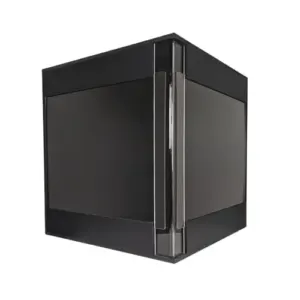
The Northern Enclosures PVC tank gives you great insulation, so heat and humidity stay steady without much effort. Its black, non-reflective walls also help your snake feel secure, and the sliding clear acrylic doors let you check in without lifting a lid. Assembly takes one person about 15 minutes, and the whole unit weighs just 5 pounds.
At 20.25 x 20.25 x 21.75 inches, the footprint is compact, so keep it for juveniles. Plan your cord holes and heating equipment.
| Best For | Keepers of active juvenile reptiles, like young snakes, who want a lightweight, well-insulated enclosure that holds heat and humidity. |
|---|---|
| Dimensions | 20.25 x 20.25 x 21.75 in |
| Capacity | 40 gallons |
| Main Material | Black PVC |
| Door Style | Sliding acrylic doors |
| Ventilation Top | N/A |
| Weight | 5 pounds |
| Additional Features |
|
- Strong insulation keeps heat and humidity steady with little effort.
- Black, non-reflective walls help your animal feel secure, and the sliding clear acrylic doors let you check in without lifting a lid.
- One person can assemble it in about 15 minutes, and it weighs only 5 pounds.
- It is limited to active reptiles, so it won’t suit every species.
- The compact 20.25 x 20.25 x 21.75 inch footprint is best kept for juveniles.
- The cord holes mean you need to plan your heating equipment and how you’ll reach it.
2. Vabches 40 Gallon Reptile Terrarium
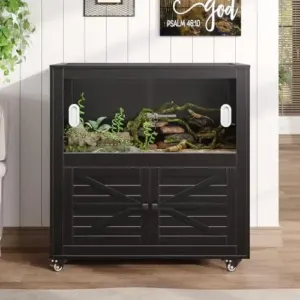
If you’d rather see your snake at a glance, this one gives you full visibility through non-toxic acrylic walls with sturdy locks, so escapes aren’t a worry. At 35 inches wide, 16 deep and 37 tall, it’s also taller than it is long, so it suits a juvenile better than a full-grown female.
The ventilated metal mesh top holds your UV and heat lamps and keeps air moving. A lockable storage cabinet sits below on four swivel wheels, and an adjustable RGB strip adds lighting.
Reviews on assembly and sturdiness are mixed, so build it carefully.
Once it’s together, check the footprint against this corn snake enclosure size guide for adults so the space actually suits your snake.
| Best For | Reptile keepers with a juvenile snake or other small reptile who want a see-through enclosure with built-in storage and lighting. |
|---|---|
| Dimensions | 35 x 16 x 37 in |
| Capacity | N/A |
| Main Material | Acrylic |
| Door Style | Locking acrylic walls |
| Ventilation Top | Metal mesh top |
| Weight | N/A |
| Additional Features |
|
- Non-toxic acrylic walls with sturdy locks give full visibility while preventing escapes.
- The ventilated metal mesh top supports UV and heat lamps and keeps air moving.
- The lockable storage cabinet on four swivel wheels, plus an adjustable RGB LED strip, adds convenience and flexibility.
- Customer feedback on sturdiness and assembly difficulty is mixed.
- At 37 inches tall and 16 inches deep, it is taller than it is long, so it is a better fit for a juvenile than a full-grown snake.
- It cannot hold water and is limited to indoor use.
3. Vabches 40-Gallon Reptile Tank Cabinet
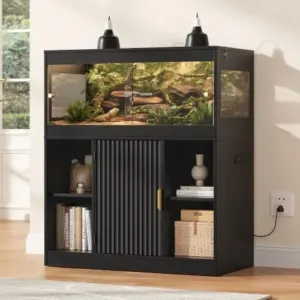
This cabinet-style tank keeps your gear organized and within reach. Its left-side power station gives you four outlets with switches, so your heat and UVB lamps plug in right beside the enclosure. Like the previous pick, it needs manual assembly, so follow the labeled instructions closely.
The tempered glass sliding door seals with dual silicone strips and a central latch, so keep its deepened track clean. Cover most of the mesh top with foil to hold humidity, and use thermostats.
| Best For | Owners of corn snakes, leopard geckos, or other medium reptiles who want an indoor enclosure that also stores their pet supplies. |
|---|---|
| Dimensions | 35.4 x 18 x 39.8 in |
| Capacity | 40 gallons |
| Main Material | Engineered wood |
| Door Style | Sliding glass door |
| Ventilation Top | Stainless steel mesh |
| Weight | 80.7 pounds |
| Additional Features |
|
- The left-side power station has four switched outlets, so heat and UVB lamps plug in right beside the enclosure.
- The removable stainless steel mesh top works with UVB lamps and humidifiers.
- Adjustable shelves and open compartments keep pet supplies organized and within reach.
- It is made for indoor use only.
- It needs manual assembly, so you have to follow the labeled instructions closely.
- The deepened door track must be kept clean to prevent material from getting in.
4. WACOOL 40 Gallon Tempered Glass Reptile Tank
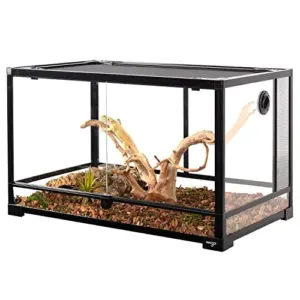
Unlike the cabinet’s sliding door, this tank has two hinged front doors that open separately, so you can feed on one side while you rearrange decor on the other.
Pairing a tank like this with heating and substrate adds up quickly, so this snake housing cost breakdown helps you budget the whole setup.
The tempered glass model measures 30 x 18 x 18 inches, which suits a juvenile well, though some buyers say the 40-gallon label overstates the volume.
A raised bottom frame leaves room for a substrate heater, and the lid’s cable pass keeps wires tidy. Note that the background panel isn’t included.
| Best For | Keepers of a juvenile bearded dragon, gecko, or similar small reptile who want a glass tank with easy front access and good heater and wiring options. |
|---|---|
| Dimensions | 30 x 18 x 18 in |
| Capacity | 40 gallons |
| Main Material | Tempered glass |
| Door Style | Two hinged glass doors |
| Ventilation Top | Wire screen top |
| Weight | 18.98 kg |
| Additional Features |
|
- Two hinged front doors open separately, so you can feed on one side while rearranging decor on the other.
- A raised bottom frame leaves room for a substrate heater, and the lid’s cable pass keeps wires organized.
- The top wire screen lets in ventilation and UVB and infrared light, and the full glass sides make it easy to watch your pet.
- Some buyers say the 40-gallon label overstates the actual volume.
- Customer feedback on durability is mixed, with some units breaking during use.
- The background panel is not included in the package.
5. Phailozoo 50 Gallon Reptile Enclosure
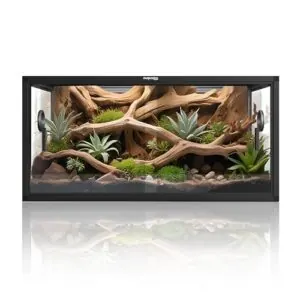
A name like "50 gallon" can mislead you, so check the numbers before you buy. This enclosure measures 36" L x 18" W x 18" H outside, which gives you a true 40-gallon interior, a fine size for a juvenile or a smaller adult male.
Its sliding glass door makes feeding and cleaning easy, and the steel mesh top takes care of ventilation. The silicone seal isn’t leakproof, though, so add your own silicone before setting up a humid, bioactive habitat.
| Best For | Reptile keepers with a geckos, snakes, or juvenile bearded dragons who want a stackable, easy-to-clean indoor enclosure and don’t mind adding their own silicone for humid bioactive setups. |
|---|---|
| Dimensions | 36 x 18 x 18 in |
| Capacity | 40 gallons |
| Main Material | Aluminum |
| Door Style | Sliding glass door |
| Ventilation Top | Steel mesh top |
| Weight | 23.1 pounds |
| Additional Features |
|
- The front sliding glass door makes feeding and cleaning easy, with no suction cup issues.
- The steel mesh top provides good ventilation, and the stackable design works with separate spacer cabinets for vertical setups.
- The pre-built bottom and top sections keep assembly quick, and at 23.1 pounds the tank is light for its size.
- The silicone seal is for structural strength only, so the tank is not leakproof.
- The "50 gallon" label refers to the outside dimensions, and the real interior holds only 40 gallons.
- You’ll need to add your own silicone to hold moisture reliably in a bioactive habitat.
Is a 40-Gallon Ball Python Tank Enough?
A 40-gallon tank can work well for a ball python, but it depends on your snake’s age and size.
Before you compare the options below, keep in mind that a snake’s length and the tank’s floor space matter more than the gallon label. Use that as your guide, and you’ll know which setups fit now and which ones you’ll want to plan for later.
Juvenile Suitability and Adult Upgrade Needs
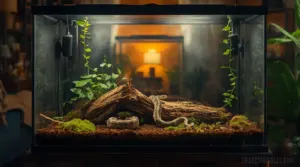
A 40-gallon tank works well for a juvenile ball python, as long as you fill it with hides, clutter, and side-blocking so it feels secure. Ball pythons are terrestrial ambush predators that do most of their activity on the floor, so floor space matters more than height.
Plan ahead, though. Given the snake growth potential, most keepers outgrow this size within a year or two. Once your male hits 3 feet, or your female nears adulthood, move to a 4x2x2 ft enclosure.
Floor Space Versus Gallon Labels
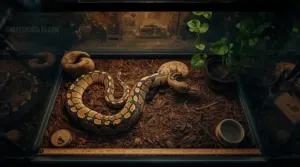
A gallon label tells you how much water a tank holds, but your snake lives on the ground, not in the water. A 40 gallon tank offers barely more than 4 sq ft of floor space. Check these:
Your snake crawls across the floor rather than swimming through the water, so what matters is the ground space it can actually use
- Measure your usable interior dimensions.
- Match length to your snake.
- Aim for 8 sq ft as an adult.
- Prefer a 24-inch height.
Tank Materials and Ventilation for Humidity Control
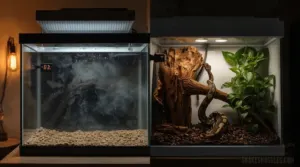
Picture two keepers with identical 40-gallon setups and identical misting routines. One uses a screen-top glass tank and watches the hygrometer sink to 40% by lunchtime. The other uses PVC and holds a steady 60% all day. The difference comes down to tank materials.
Glass loses heat and moisture quickly, especially through a mesh lid, so you’ll mist often or cover 80 to 90% of the top with aluminum foil tape. PVC traps both, which makes humidity control far easier. Acrylic behaves similarly but scratches more easily.
Aim for cross-ventilation, with openings low on one side and high on the other, so air moves through without drying everything out. Check conditions with a digital hygrometer, since dial gauges often mislead.
Door Access, Escape Prevention, and Cleaning
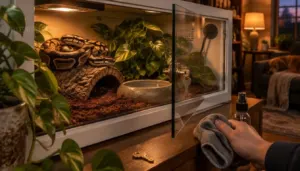
Your ball python only needs one weak spot to turn a quiet evening into a search party.
Front sliding doors give you easy access and keep active eaters from lunging out, but their tracks collect substrate and leave gaps. Hinged doors skip the track maintenance, though they need a proper lock.
- Choose a key lock, since snakes push open unlatched doors.
- Seal PVC joints, bottom edges, and cord entries with silicone.
- Inspect vents and lid seals weekly for escape proofing.
- Spot clean within an 8-10 inch radius to keep familiar scent.
For deep cleans every 90 days, move your snake to a separate container, remove everything, and disinfect with 5-10% bleach for 15 minutes. Rinse thoroughly, because fumes bother reptiles.
Ball Python Tank Heating and Lighting Compatibility
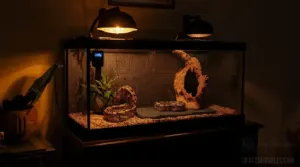
Your tank’s material decides which gear actually works. Glass lets heat build up under heat mats, so a ceramic heat emitter mounted outside is the safer choice, while PVC and wood hold warmth well and need less wattage. Whatever you pick, connect it to an intelligent thermostat, because unregulated heat can cause burns or fire.
Aim for a warm zone of 88-92°F and a cool side of 74-80°F, and verify both with digital probes before your snake moves in.
Don’t mount UVB lighting above solid glass or plastic, since it can’t pass through. A 22-inch T5 HO tube over screen mesh, 10-14 inches away, gives safe output. Run it 12 hours daily and replace it every 6 to 12 months. Since UVB needs differ by species, a guide to UVB lighting systems for desert reptiles can help you match fixture type and distance to your animal.
Total Setup Costs and Long-Term Value
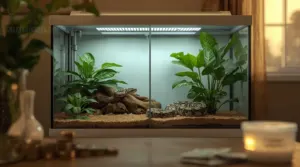
All that gear adds up, so it helps to see the full picture before you buy. A 40 gallon tank runs from about $170 for the Vabches acrylic cabinet model to $275 for the Northern Enclosures PVC unit. Add heating, a thermostat, and UVB, and your initial setup investment usually lands between $175 and $400.
Cheaper isn’t always better. A $150 glass tank needs replacing every 10 to 15 years and costs more to heat, so it often passes PVC within three years. A PVC enclosure lasts 20 years or more.
After setup, expect $180 to $540 yearly, mostly feeding at $10 to $30 monthly plus substrate. Start your juvenile in a $20 to $60 tub, and you can delay the adult enclosure purchase.
Frequently Asked Questions (FAQs)
How many hides should a ball python tank have?
Two hides might seem like plenty, but you’ll want three. Put hides on both sides of the gradient, then add a humid hide packed with damp sphagnum moss, and fill the gaps with extra clutter.
What humidity level helps a ball python shed properly?
Aim for 70% to 80% humidity once your ball python goes dull and its eyes turn milky. Keep the baseline at 50% to 60% beforehand, since dropping lower invites stuck-shed patches.
How often should I replace the substrate?
Your substrate will outlast a thousand mood swings, but not forever. Plan on a full swap every 1 to 3 months for most loose materials, weekly for aspen, and twice yearly if your setup is bioactive.
Which cleaning products are safe for reptile enclosures?
Stick with F10 veterinary disinfectant at 1:250, diluted chlorhexidine, or isopropyl alcohol, which evaporates without residue. Scrub first with Dawn and hot water. Skip ammonia and phenol cleaners like Pine-Sol, and let everything dry completely.
Conclusion
Ready to stop guessing and start measuring? The best 40 gallon ball python tank is the one that gives your snake real floor space, steady humidity near 60%, and a secure latch you can trust.
Check the footprint first, then ventilation, door access, and heat compatibility. If a juvenile fits comfortably today, plan for the larger adult-sized enclosure it’ll need within a couple of years, so your budget stretches further.
Measure twice, then buy once.