This site is supported by our readers. We may earn a commission, at no cost to you, if you purchase through links.

Your snake just ignored a perfectly good water bowl, and now you’re eyeing a trickling fountain online. Slow down.
Most snakes don’t need running water. A clean, full bowl covers their basic hydration, and snakes drink by pulling water up through tiny grooves in their jaw, no splashing required. Still, some picky drinkers hold out for something that moves, and a poorly kept feeder can spread germs faster than a forgotten bowl.
So do snakes need running water feeders? Here’s how to pick the right bowl, choose safe water, and decide whether a feeder earns a spot in your enclosure.
Table Of Contents
Key Takeaways
- Most snakes don’t need running water, because a clean, full, heavy bowl on the cool side of the enclosure covers their hydration needs.
- Snakes drink by pulling water up through tiny grooves in their jaw, so what they need is calm, easy access to fresh water that you change daily.
- If your snake refuses still water, a running feeder is worth a try, but a dirty filter or splashing onto the substrate can spread germs and cause mold or respiratory problems.
- Tap water is usually fine once the chlorine fades, distilled or softened water should be skipped, and keeping the bowl or feeder spotless matters more than fancy gear.
Do Snakes Need Running Water Feeders?
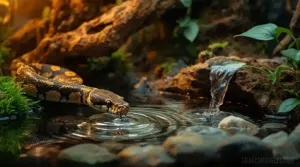
Why do so many snake keepers wonder about running water?
Short answer: no, most snakes don’t need it. A clean, full water bowl covers their basic needs, and plenty of healthy snakes live happily with nothing fancier.
Since spills can leave the substrate damp and moldy, a quick routine for keeping your snake’s water bowl clean goes a long way.
That said, some snakes are picky. A few refuse to drink from still water, and arboreal species may prefer mist or rain over any dish. If your snake seems dehydrated, a moving water source might be worth a try.
Many reptiles avoid stagnant water by instinct, so providing fresh water regularly every 2-3 days, or daily when possible, can encourage drinking.
Think of it like a drinking fountain for a cat. Not required, but sometimes it gets a fussy drinker interested.
What matters most is constant access to clean water. Either way, keep the feeding area tidy and trust your snake’s behavior over fancy gear.
How Snakes Drink and Stay Hydrated
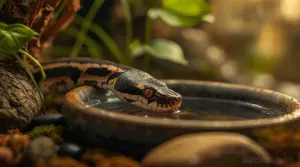
Here’s the fun part: your snake doesn’t sip like you do. No slurping, no lapping, no straw.
Instead, your snake drinks by pulling water in through its mouth, which is why a snake water bowl placed on the cool side of the enclosure keeps drinking easy and the water fresh.
Instead, it uses capillary action. Tiny grooves between the scales on the lower jaw pull water in, almost like a paper towel touching a spill. Then spongy folds inside the mouth squeeze that water toward the throat.
Picture it like this:
- Grooves along the jaw soak up water.
- Soft folds in the mouth act like a sponge.
- Slow, steady muscle squeezes carry it uphill.
Boas add a pump-style motion too.
Why does that matter for you? Because slow sipping means your snake needs calm, easy water access. Keep the drinking water source clean and reachable, and reptile hydration mostly takes care of itself.
Choosing Water Bowls for Pet Snakes
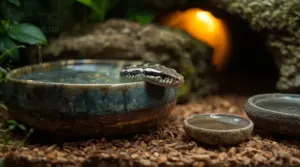
Slow sippers need an easy setup, so the bowl matters more than you’d think. Which one should you pick?
If you’re not sure where to start, this guide to water bowls for beginner snake owners walks through which sizes and styles suit slow, steady drinkers.
Start with size. Corn snakes do well with a bowl 8 to 10 inches wide and 2 to 3 inches deep. Adult ball pythons need 10 to 14 inches wide and 3 to 4 inches deep. Hatchlings need something small and shallow.
Here’s what to check before you buy:
- Heavy material: ceramic or stone won’t tip.
- Smooth finish: easy to disinfect, no flaking.
- Gentle exit: a slope or flat stone helps juveniles climb out.
- Cool-side spot: keep it away from heat lamps.
Water shouldn’t rise past your snake’s chin. Skip any chipped water bowl, because cracks hide bacteria. Pretty simple, right?
Safe Drinking Water for Pet Snakes
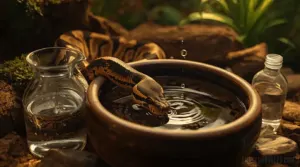
A great bowl is only half the job. What goes in it counts too.
Good news: if your tap water is safe for you to drink, it’s usually fine for your snake. Chlorine and chloramines can be a worry, though. Let a filled container sit for 24 hours and the chlorine fades on its own. Not sure about your local tap? Bottled spring water with no additives is a safe backup.
Skip distilled or softened water. It lacks the minerals your snake needs, and over time it can throw off the body’s balance.
Change the water daily. Snakes often refuse anything stale or grubby, and a thirsty snake is a stressed one. Fresh water also helps with shedding and keeps kidneys healthy.
Running Water Feeders: Benefits and Risks
Why do some snakes ignore a perfectly good water bowl but drink right away when a stream trickles nearby? Instinct. Moving water signals "fresh and safe" to a snake, so a running feeder can boost how much your pet drinks. The sound and ripples grab its attention, and constant circulation helps keep bacteria and slime from settling in.
Sounds like a no-brainer, right? Not quite.
A feeder with a dirty filter can spread germs faster than a neglected bowl ever could. Skip the upkeep, and you’ve built a bacteria pump.
A running water feeder that’s never cleaned turns into a germ spreader, circulating bacteria rather than keeping your snake’s drinking water fresh
Splashing is the other catch. Water that sprays or drips onto the substrate turns it soggy, and damp enclosures invite fungus and respiratory infections. Place the feeder carefully, watch for wet spots, and check the setup daily.
Keeping Snake Bowls and Feeders Clean
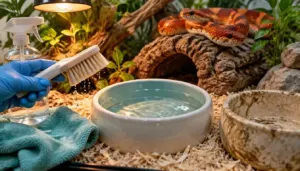
Dirty water bowls cause more trouble than most keepers expect. Slime, algae, and leftover waste turn a simple drink into a bacteria party, and your snake is the guest of honor.
Start with a daily routine. Scoop out waste and uneaten food right away, then rinse the bowl with warm water and refill it. Take a quick sniff and look while you’re at it. Cloudy water or a funky smell means it’s time to scrub.
For a deeper clean, try a 1:10 vinegar solution to loosen algae and mineral crust, then rinse well. Need real disinfecting? Diluted bleach at 1:32 works, but rinse thoroughly and let everything air dry.
Replace any bowl that’s scratched or permanently stained. Those marks hide germs no scrubbing can reach.
Frequently Asked Questions (FAQs)
Why does my snake soak in its bowl?
Is your snake absorbing water through its skin? Not really.
This soaking behavior usually means shedding is coming, humidity is too low, or mites are itching. Check your humidity requirements and inspect for tiny black specks.
Can snakes drown in their water bowls?
Yes, they can, but it’s rare. Drowning risk jumps when a bowl is deeper than 2-3 inches, tips over, or a sick snake can’t lift its head. Pick a heavy, stable bowl and keep water shallow.
Should baby snakes have different water setups?
Think of a baby snake as a tiny sponge. It dries out fast. Yes, give it a different setup: a shallow water bowl on the cooler area of the enclosure, fresh daily, with higher humidity levels.
Do snakes drink more before shedding or after eating?
Think of shedding as a snake changing coats, with a little fluid tucked between the old layer and the new. Before a shed, you may see more bowl visits. After a meal, there’s no clear pattern.
Conclusion
So, do snakes need running water feeders? Usually not. A clean, full bowl does the job for most snakes, and that’s good news for your wallet and your routine.
If your snake turns up its nose at still water, a feeder is worth a try. Just keep it spotless, because clean water beats fancy gear every time. Change the water often, and watch how your snake drinks. Your snake will tell you what it needs.