This site is supported by our readers. We may earn a commission, at no cost to you, if you purchase through links.

A snake can sit in a bowl of water for hours and still end up dehydrated. Most owners never see it coming.
Water looks like the easy part of reptile care. Fill a dish, walk away. But a bowl that’s too deep for a hatchling, too close to the basking bulb, or changed too rarely can quietly cause stuck shed, respiratory trouble, and kidney damage. Your boas and corn snakes water needs guide starts with a simple fact: the right bowl, placement, and routine matter more than the water itself.
Here’s how to size the bowl, hold humidity steady, spot trouble early, and know when a vet visit can’t wait.
Table Of Contents
- Key Takeaways
- Choose Boa and Corn Snake Water Bowls
- Balance Water Bowl Placement and Enclosure Humidity
- Keep Drinking Water Safe and Bowls Clean
- Drinking Habits of Boas and Corn Snakes
- Interpret Soaking Behavior Before Offering Baths
- Recognize Dehydration and Seek Veterinary Care
- Frequently Asked Questions (FAQs)
- Conclusion
Key Takeaways
- Size your bowl to your snake, about 15 to 20 cm wide and 4 to 5 cm deep for adults and around 2.5 cm of water for juveniles, and choose a wide, stable base so it can soak without tipping.
- Keep the bowl on the cool side away from the basking bulb, since heat drives evaporation, and aim for 55 to 75 percent humidity for boas and 40 to 50 percent for corn snakes.
- Check the water daily and dump, scrub, and refill it whenever it’s soiled instead of topping it off, because warm, stagnant water breeds bacteria.
- Treat soaking after meals or before a shed as normal, but call a reptile vet if you see sunken eyes, tented skin, lethargy, or no improvement within a week, since lasting dehydration can damage the kidneys.
Choose Boa and Corn Snake Water Bowls
A good bowl starts with size. For an adult, water bowl size should run 15 to 20 cm across and 4 to 5 cm deep, so the snake can soak its whole body. Juveniles need shallower water, about 2.5 cm, so they can climb in and out safely. Whatever the size, the bowl should always hold clean water, and it should be emptied, cleaned, and refilled at least twice a week or immediately when soiled.
Bowl material safety matters too. Ceramic, plastic, and stainless steel all work when you keep them clean. Skip anything containing copper, because it can leach toxins and harm your snake’s health. Stainless steel is easy to sanitize and controls heat well.
If you’re still deciding between materials, this guide to the safest type of water bowl for snakes also covers sizing it for soaking and keeping it clean.
Pick a wide, flat base. A low center of gravity cuts tipping risk considerably. A silicone mat or non-slip bottom adds grip when your snake climbs in. Heavy ceramic stays put.
Balance Water Bowl Placement and Enclosure Humidity
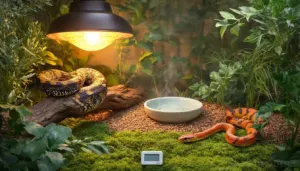
Size isn’t the only thing that sets how humid your enclosure gets. Water bowl placement matters just as much. Put the bowl on the cool side, away from the basking bulb. Heat speeds evaporation and creates humidity spikes in the zone your snake uses for thermoregulation behavior.
Aim for ambient humidity of 55 to 75 percent for your boa and 40 to 50 percent for your corn snake. Check with a digital hygrometer, with the probe in the middle of the enclosure.
If readings run low, move up to a larger bowl. If they run high, shrink the bowl or add airflow. Never cover the screen top to hold moisture in. Stagnant air invites respiratory trouble, especially in corn snakes.
Keep Drinking Water Safe and Bowls Clean
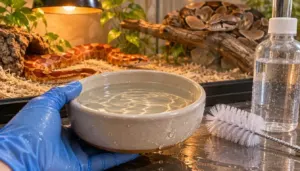
A well-placed bowl only helps if the water in it is clean. Snakes often defecate in their water, so check it every day.
If you spot waste, clean the bowl right away with a reptile-safe cleaner or diluted white vinegar, and see this snake health care guide for beginners for more daily habits.
Change the water daily, even when it looks fine. Warm, stagnant water breeds bacteria like Pseudomonas. If it’s soiled or cloudy, replace it right away. Never top off old water. Dump, clean, and refill.
Fresh water every day keeps bacteria away, so always empty, scrub, and refill the bowl instead of adding more to old water
Once a week, scrub the bowl and soak it in diluted chlorhexidine or unscented bleach (1 tablespoon per gallon) for 10 to 15 minutes. Rinse two or three times. Skip soap.
For water quality, use filtered or bottled water for both species. Avoid distilled and softened water. If you use tap, add reptile-safe water conditioners. Keep one brush for bowls and disinfect it.
Drinking Habits of Boas and Corn Snakes
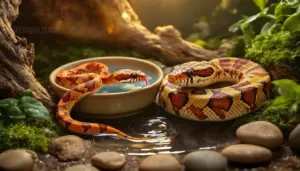
Boas and corn snakes don’t drink the same way, and their needs shift with size and shedding. Knowing what’s normal helps you spot a problem early. Here are the two points to understand: water intake by age and size, and how drinking changes during a shed.
Water Intake by Age and Size
A snake under 3 feet needs a bowl holding about 0.5 liters. Water consumption by age and size shifts as your snake grows:
- Hatchlings: keep water shallow, about 1 inch deep.
- Offer fresh water daily, even if you never see drinking.
- Change adult bowls at least twice weekly.
- Adults over 4 feet need 1-2 liters.
- Match bowl width to body.
Drinking Changes During Shedding
Before the blue phase, many snakes drink more. That’s a normal pre-shed hydration increase, so keep the bowl full and fresh. Once the eyes turn cloudy, some snakes drink less and absorb moisture from humid air instead.
Don’t panic if the bowl stays untouched. Watch for lethargy plus refusal to drink, and call your vet right away if that happens.
Interpret Soaking Behavior Before Offering Baths
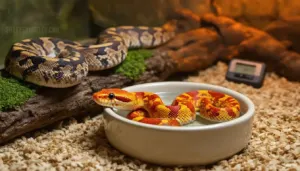
Your snake sitting in its water bowl doesn’t always mean it needs a bath from you. Soaking is often normal, but sometimes it points to a problem you should fix first. The two points below cover normal soaking versus warning signs and when a supervised soak actually helps.
Normal Soaking Versus Warning Signs
A snake in its water bowl isn’t always a problem. Occasional soaking behaviour is normal, especially after meals or before a shed.
Watch for these red flags:
- Days spent coiled in the bowl
- A limp, lethargic body
- Meals ignored again and again
- Tiny mites floating on the surface
- Heat-stressed gaping near the warm hide
Check temperatures, then call a vet.
When Supervised Soaking is Appropriate
Say your boa shed last week, but a stubborn eye cap is still stuck. That’s a good time for supervised soaking. Use warm water, 85-90°F, for 15-20 minutes, then gently wipe the loosened skin away.
Soak only with a clear goal, like retained shed, dehydration, or mite support. If symptoms persist afterward, call a reptile vet.
Recognize Dehydration and Seek Veterinary Care
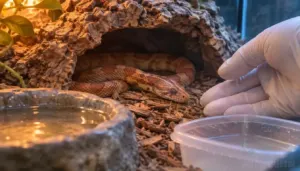
Picture a corn snake who hasn’t eaten in two weeks. Her last urate came out chalky and orange, not white, and she’s barely moved from her hide.
Check for these signs of dehydration:
- Skin that stays tented after a gentle pinch, the classic skin turgor test
- Sunken eyes or dented eye caps
- Dry mouth with thick, stringy saliva
Dehydration symptoms in snakes can start small, so act early. Offer fresh water and an electrolyte soak, then watch closely.
Call a reptile vet if you see lethargy, tacky mouth, or no improvement within a week. Persistent dehydration can damage the kidneys and lead to gout, and a vet can give fluids safely. Don’t wait it out, because early care is easier.
Frequently Asked Questions (FAQs)
Do snakes need water while I travel?
Healthy adult snakes can survive one to two weeks without water, but yes, they still need it. Change the water right before you leave, and give them a heavy, tip-resistant bowl of fresh clean water.
Why does my snake poop in its water?
Water is a snake’s mirror, and sometimes it reflects relief. Warmth from soaking stirs digestion, so your snake goes right there. Check water bowl placement and humidity, then change the water promptly after every mess.
Is it safe to give snakes ice water?
You might think a cold drink helps on a hot day, but snakes don’t work that way. No, ice water isn’t safe. Sudden chill can trigger thermal shock, so offer room temperature water instead.
Conclusion
Steady, shallow, spotless water keeps snakes healthy. That’s the heart of any boas and corn snakes water needs guide, and it’s easier than it sounds.
Pick a properly sized bowl, place it away from direct heat, and refresh it often. Watch how your snake drinks and soaks, because behavior tells you more than any gadget. Most dips are normal. Sunken eyes, wrinkled skin, or stuck shed aren’t. Call a vet when they appear. Stay consistent.