This site is supported by our readers. We may earn a commission, at no cost to you, if you purchase through links.

A snake cave looks clean right up until it isn’t. Hidden urates, shed skin, and a damp corner of moss can breed bacteria and ammonia while your snake sleeps just inches away.
That’s why cleaning and maintaining snake caves matters more than most keepers realize. One harsh cleaner left on porous surfaces can irritate your snake’s lungs, and one skipped rinse can undo an hour of scrubbing.
You don’t need a complicated routine. You need the right schedule, snake-safe supplies, and a clear order of steps, from the first scrub to the final humidity check before your snake moves back in.
Table Of Contents
Key Takeaways
- Spot clean daily by removing waste, urates, and shed skin as soon as you see them, and plan a full deep clean every four to six weeks.
- Stick to reptile-safe disinfectants like chlorhexidine or F10, scrub with dish soap first, and skip pine oil, phenols, ammonia, and scented cleaners that can irritate your snake’s lungs.
- Scrub off waste, let the disinfectant sit for 10 to 15 minutes, rinse until no chemical smell or slick feel remains, and dry the cave for at least 24 hours before it goes back in.
- Keep humid hides damp but never dripping, replace the moss every four to six weeks, and recheck temperature and humidity before your snake moves back in.
Set a Snake Cave Cleaning Schedule
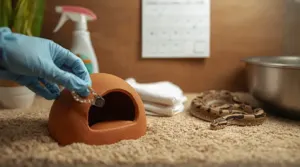
How often should you clean your snake’s caves? Start with daily spot cleaning. Remove feces, urates, and shed skin the moment you see them, since waste breeds bacteria and ammonia. Check inside each cave, because hidden waste collects there.
For a step-by-step routine that keeps every hide and corner fresh, this guide to cleaning a corn snake cage is worth a look.
Plan a full deep clean every four to six weeks, or monthly for most snakes. Clean more often for liquid urine producers like blood pythons, and more gently for desert species. Bioactive setups with healthy cleanup crews need only one or two deep cleans a year. Some keepers who spot clean consistently stretch their deep cleaning intervals to about every two months, with full substrate removal and disinfection each time.
Choose Snake-Safe Cleaning Supplies
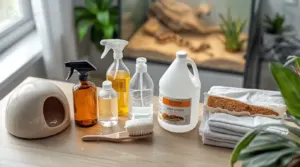
Your supplies matter as much as your schedule, because harsh products can irritate a snake’s respiratory system. Stock a short kit and keep it away from the enclosure.
- Pick a reptile-safe disinfectant, such as chlorhexidine, F10SC, or stabilized hypochlorous acid.
- Keep dish soap like Dawn for scrubbing off organic matter.
- Have a diluted bleach solution (1:32) as a backup, rinsed thoroughly.
Skip pine oil, phenols, ammonia, and scented cleaners. They’re risky for snakes. Avoid undiluted vinegar too, since it irritates.
For a gentler alternative, these reptile-safe cleaning sprays for small apartments are fragrance-free and ready to use, so you can keep your snake’s enclosure clean without harsh fumes.
Clean and Disinfect Snake Caves Safely
Cleaning a snake cave takes two stages, and each one protects your snake in a different way. First you’ll remove waste and scrub the surfaces, then you’ll disinfect, rinse, and dry everything completely. Follow both steps below in order, and you’ll keep the cave safe without stressing your snake.
Choosing one of these easy-to-clean snake habitats can make both the scrubbing and the drying stages much quicker.
Scrub away the waste first, then disinfect, rinse, and dry completely, and your snake’s cave stays safe without any stress
Remove Waste and Scrub Surfaces
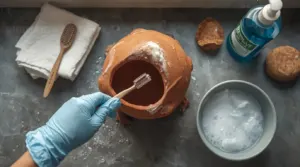
Pull the cave, scoop the mess, and scrub the surfaces. Start by taking it out of the enclosure, then remove all décor nearby so you can reach hidden waste along the walls and under platforms.
Clear feces, urates, shed skin, and any soiled substrate stuck inside the cave. Waste hides in corners, so check every nook.
Dip a scrubber brush or old toothbrush in hot water with Dawn dish soap. Scrub the floor, walls, seams, and entrance, working into grooves where residue clings. Soap loosens oils and organic matter that disinfectants can’t cut through alone.
Once everything is rinsed and fully dry, a reptile care starter kit makes it easier to keep the right cleaning supplies and habitat basics within reach.
Wipe away all soapy water with a cloth or paper towels so the surface is clean and ready.
Disinfect, Rinse, and Dry Thoroughly

Once the cave is soap-clean, spray or soak it with a reptile-safe disinfectant solution such as diluted bleach or F10. Leave it wet for 10 to 15 minutes, since shorter contact won’t kill pathogens.
Rinse next. Use a separate bucket of clean water so you don’t carry disinfectant back onto the cave. Rinse several times until you can’t smell any chemical or feel any slickness. Leftover residue can harm your snake.
Dry it for at least 24 hours in a well-ventilated spot so moisture and fumes clear. Heat-tolerant caves can soak in 131°F (55°C) water for 20 minutes instead.
Maintain Humid Hides Between Deep Cleans
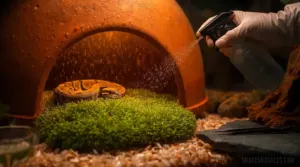
Feel your humid hide’s moss every two to three days, and re-wet it whenever the top feels dry. Use dechlorinated or filtered water, and aim for damp, never dripping. Screen-top enclosures can dry the moss within 24 to 48 hours, so check those daily.
Pull out waste, shed skin, and debris every day or two. This simple habit helps substrate hygiene and keeps bacteria from building up.
Replace the moss every four to six weeks, even if it looks fine.
Return Caves and Recheck Habitat Conditions
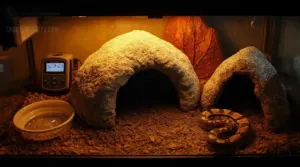
You can put the caves back once every surface is bone-dry and no chemical smell lingers. Set them securely so hides don’t shift or tip.
Before the snake goes in, check temperature and humidity levels with your thermometer and hygrometer. Confirm the warm and cool zones match your species, the heating elements work, and the lid is fastened. Add fresh water on the cool end.
Then watch your snake for the first 30 minutes, looking for stress. Recheck humidity after two hours, and monitor eating and drinking for 24 to 48 hours.
Frequently Asked Questions (FAQs)
What should I do if mold appears on a cave?
Pull the cave out right away, wearing gloves and a mask. Scrub it with a 1:1 vinegar-water mix, skip bleach, then disinfect with chlorhexidine, rinse well, and air dry completely for 24 to 48 hours.
Should I replace caves that are cracked or worn?
Yes, replace them. Cracks wider than 2mm trap waste you can’t scrub out, and sharp edges can cut your snake during shedding. If a cave crumbles, holds moisture, or keeps its odor after cleaning, swap it.
How do I remove stubborn mineral deposits from caves?
Reverse osmosis water cuts mineral input by roughly 90%. To clear deposits, soak the cave in diluted white vinegar for 10 to 30 minutes, scrape gently with a nylon brush, then rinse and dry fully.
Can I use natural rocks or driftwood as caves?
Yes, you can, if you pick and prep them carefully. Choose granite, slate, quartz, or obsidian without metallic flecks, and use only fallen driftwood. Sterilize everything first, then dry it completely before it goes into the enclosure.
How many hides does my snake need in total?
Picture a snake pressed into a snug shelter on one end of its enclosure, warm and hidden, while the far end offers another retreat where it can cool off. You need at least two hides.
Conclusion
Scrub the waste. Rinse the residue. Dry every corner. Those three habits protect your snake far better than any product on the shelf. Cleaning and maintaining snake caves isn’t about flawlessness, it’s about rhythm: a set schedule, safe supplies, and a thorough rinse each time.
Stick with that rhythm, and the cave stops being a hidden risk. It becomes what it was always meant to be, a clean, secure retreat your snake trusts every night.