This site is supported by our readers. We may earn a commission, at no cost to you, if you purchase through links.

Your corn snake sniffs the thawed mouse, turns away, and slides back into her hide. Night after night, the same thing happens.
When a corn snake refuses frozen thawed prey, it feels like a failure. It rarely is. Most refusals trace back to a few fixable things: a cool basking spot, a shed in progress, shorter fall days, or a mouse that doesn’t feel warm enough to look alive.
Your snake isn’t being stubborn. She’s reading signals you can change. Start with the setup, then the thawing, then the way you present the meal.
Table Of Contents
- Key Takeaways
- Husbandry Problems Behind Corn Snake Food Refusal
- Shedding and Seasonal Changes Can Reduce Appetite
- Safe Thawing and Warming of Frozen Mice
- Low-Stress Ways to Offer Frozen-Thawed Mice
- Transitioning Corn Snakes From Live to Frozen-Thawed Prey
- When Corn Snake Feeding Refusal Needs Veterinary Care
- Frequently Asked Questions (FAQs)
- Conclusion
Key Takeaways
- Most refusals come from fixable setup problems, so check that the cool side stays at 75°F or higher, the basking spot sits near 90°F, humidity runs 40% to 65%, and your snake has several hides.
- Don’t offer food while your snake is shedding, and expect a lower appetite in fall and winter, since both are normal and pass on their own.
- Thaw the mouse in the fridge or in sealed cold water, then warm it to 98 to 100°F just before feeding, and never use hot water or a microwave, or refreeze leftovers.
- Offer the mouse calmly in the evening with tongs, moving it gently to mimic live prey, and call a reptile vet if she refuses food for weeks, loses visible weight, wheezes, or regurgitates.
Husbandry Problems Behind Corn Snake Food Refusal
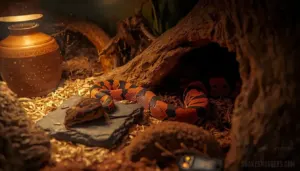
Often, a corn snake that turns down frozen mice isn’t being picky at all. The setup is usually the culprit. Getting proper snake husbandry right is the number one factor in a successful switch to frozen-thawed meals.
Start with temperature. Keep the cool zone at 75°F or higher and the basking spot near 90°F. Nighttime drops below 75°F can also dull appetite, so verify readings with a probe.
Keeping the cool side near 78–80°F and the basking spot at 88–90°F is easier with these tips on regulating boa constrictor heat.
Next, look at space. An adult needs at least a 40-gallon footprint so it can move between warm and cool areas. Add several hides. A snake without cover feels exposed and won’t eat.
Humidity matters. Aim for about 40% to 65%. Air that’s too dry or too damp suppresses appetite, and damp air invites respiratory infections.
Check for mites and wheezing. Either means a vet visit comes first.
Shedding and Seasonal Changes Can Reduce Appetite
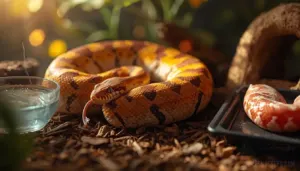
If your setup checks out, look at the calendar next. Shedding cycles are a common reason a healthy corn snake skips meals.
Watch for dull skin and cloudy, bluish eyes. Your snake may hide more and act jumpy. Don’t offer food until the eyes clear and the old skin comes off. A stressed snake may strike or regurgitate.
Seasonal anorexia is also normal. Shorter days in fall and winter can slow appetite, and some corn snakes go into mild brumation. Keep temperatures steady and water fresh.
Here’s what you may feel during this wait:
- The worry of watching an empty food dish week after week
- The doubt that you’re doing something wrong
- The relief when your snake finally strikes again
Safe Thawing and Warming of Frozen Mice
Once your snake is out of shed and ready to eat, the prey itself matters. A badly thawed mouse can turn a willing eater into a refuser.
Thawing and warming frozen mice properly, as shown in this step-by-step guide to preparing frozen mice for your snake, helps make every meal more appealing and easier to digest.
Thaw it in the fridge overnight. Larger mice may need 12 to 24 hours. If you’re short on time, seal the mouse in a leak-proof bag and submerge it in cold water. Change the water every 20 to 30 minutes. Hoppers take 1 to 2 hours, and adult mice take 4 to 6.
Just before feeding, warm the mouse to 98 to 100°F in a sealed bag in warm water. This mimics live prey and triggers a strike. Never use hot water, a microwave, or direct heat. It can cook the mouse and hurt your snake.
Skip room-temperature thawing. It breeds bacteria and can leave a frozen center. Discard any leftovers, and never refreeze them.
Low-Stress Ways to Offer Frozen-Thawed Mice
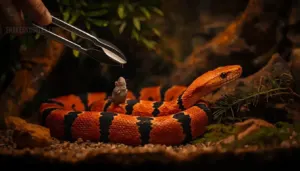
Once the mouse is warm, set the scene. Your snake should feel safe, not hunted.
Wait until evening, when corn snakes are most active. Dim the lights and keep the enclosure at 75 to 85°F. Move slowly and avoid sudden shadows over the tank.
Here’s a simple routine to follow:
- Dry the warmed mouse with a paper towel so it doesn’t feel slippery.
- Grip it by the hindquarters with long feeding tongs.
- Lower it near the snake’s head, facing forward, and hold still.
- Give a slow, gentle wiggle, then wait.
Good feeding tongs technique is calm and patient. Don’t poke or tap your snake’s head. If nothing happens after 10 minutes, leave the mouse in the enclosure and step away.
Transitioning Corn Snakes From Live to Frozen-Thawed Prey
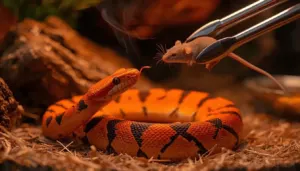
Switching a corn snake from live to frozen-thawed prey takes patience, but most snakes adapt. Your snake has learned to link food with movement, so the change can feel strange at first.
The two points below cover how to mimic live prey and which common slip-ups can slow the switch.
Movement and Scenting Strategies
A still mouse looks like a dead one, so give it life. Use tongs to bob it gently or sway it side to side. Scent the prey too, since smell often matters more than sight.
| Cue | Method | Best for |
|---|---|---|
| Motion | Small bobs | Active snakes |
| Smell | Shed skin | Picky eaters |
Braining can help stubborn hatchlings. Keep every session short and calm.
Feeding Mistakes That Delay Acceptance
You can fix most feeding refusal once you spot the habits behind it. A few small errors keep a snake from trusting frozen-thawed prey:
- Leaving rejected mice in the enclosure
- Feeding again too soon after a shed
- Pushing food at a reluctant snake
- Handling your snake around mealtime
Keep your feeding routine calm and predictable. Remove refused prey right away.
When Corn Snake Feeding Refusal Needs Veterinary Care
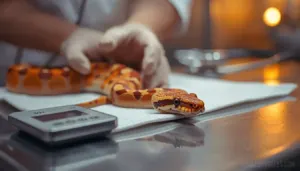
Picture a corn snake that hasn’t eaten in six weeks. Her spine now shows along her back, and her eyes look a little sunken. That’s not a wait-and-see situation. Call a reptile veterinarian right away.
A corn snake whose spine shows and eyes sink after weeks of refusing food needs a reptile vet immediately, not more waiting
Other red flags need the same quick action. Open-mouth breathing, wheezing, or bubbles at the nose or mouth can point to pneumonia. Cheese-like discharge in the mouth suggests mouth rot. If your snake regurgitates a meal, stop feeding and call.
Also watch for stuck shed on the eyes or tail, a limp body, or trouble righting herself.
A slow, steady weight drop over two to four weeks deserves an exam too. Track her weight weekly. Bring those notes to the appointment.
Frequently Asked Questions (FAQs)
How often should corn snakes eat frozen-thawed mice?
Adult corn snakes need just one meal every 10 to 14 days. Feeding frequency shifts with age, though.
Hatchlings eat every 5 to 7 days, juveniles weekly. Offer frozen-thawed prey sized to your snake’s girth.
What size mouse should I feed my corn snake?
Match the mouse to your snake’s widest body section. It should be about 1 to 5 times that width. Prey weight should land near 10 to 15 percent of your snake’s empty body weight.
Can frozen mice be refrozen after thawing?
A thawed mouse sitting on the counter turns soft, damp, and risky. Don’t refreeze it. Bacteria multiply while it thaws, and the freezer won’t undo that. Toss it after feeding, then use a fresh one.
How long can frozen mice be stored safely?
Wondering how long that bag in your freezer will last? For best quality, use frozen mice within 6 to 12 months if they’re vacuum-sealed and kept at 0°F or colder. They stay safe longer, but quality slips.
Can corn snakes eat frozen-thawed rats instead of mice?
Picture a hatchling’s mouth next to a fat adult rat. That gap tells the story. Yes, adult corn snakes can eat frozen-thawed rats if prey size matching is right. Pick one no wider than your snake’s thickest midsection.
Conclusion
Picture a yearling named Juniper who ignored three mice in a row. Then her keeper raised the warm hide to 88°F, rewarmed the mouse, and tried again. She struck instantly.
When your corn snake refuses frozen thawed prey, the answer is usually small and fixable. Check heat, rule out shedding, warm the mouse, and offer it calmly. If weeks pass with weight loss, call a vet. Your snake wants to eat. You’re learning her language.