This site is supported by our readers. We may earn a commission, at no cost to you, if you purchase through links.
A boa constrictor’s respiratory infections rarely start with bad luck—they start with a thermostat set two degrees too low and a humidity gauge nobody trusted. Boas evolved in Central and South American rainforests and grasslands, where warmth and moisture stay locked in tight, predictable bands. Drop below those bands for even a few weeks, and you’ll see retained shed, labored breathing, or worse.
Getting the numbers right isn’t guesswork. It’s measurable, repeatable, and forgiving once you understand the targets.
Here’s how to regulate boa constrictor humidity and heat with the precision your snake’s health depends on—gradient by gradient, tool by tool.
Table Of Contents
- Key Takeaways
- Regulate Heat and Humidity With Gradients
- Install Thermostat-Controlled Heat Sources
- Build a Moisture-Retaining Enclosure
- Monitor and Adjust Conditions Daily
- Prevent Humidity and Heating Problems
- Frequently Asked Questions (FAQs)
- What is too hot for a boa constrictor?
- Is 40% humidity ok for a ball python?
- What temperature and humidity should a boa be at?
- How to make a snake enclosure less humid?
- How often should I replace enclosure substrate completely?
- What causes sudden humidity drops during winter months?
- Can wrong humidity levels shorten a boas lifespan?
- How do I disinfect water bowls safely and effectively?
- Whats the best hygrometer brand for accurate readings?
- Conclusion
Key Takeaways
- Keep your boa’s enclosure split into a hot side (88–90°F), cool side (78–80°F), and nighttime range (75–78°F) so your snake can move between zones and regulate its own body temperature.
- Maintain humidity between 60–75% year-round, spiking to 80–85% during shedding to help old skin come off cleanly instead of sticking near the eyes and tail.
- Use a thermostat with safety cutoffs (around 92°F high, 74°F low), proper wiring and GFCI protection, and a burn guard on heat emitters to prevent overheating or fire hazards.
- Check your setup daily with correctly placed digital probes, calibrate hygrometers and thermostats monthly, and watch for warning signs like condensation, mold, retained shed, or skin tenting before they become bigger problems.
Regulate Heat and Humidity With Gradients
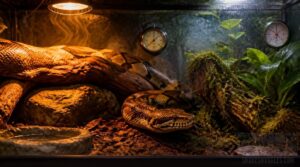
Your boa’s enclosure isn’t one climate, it’s several, and getting the balance right means treating each zone on its own terms. A gradient gives your snake the freedom to choose exactly what its body needs at any given moment, whether that’s warming up, cooling down, or riding out a shed.
If shedding seems to be dragging on or coming out patchy, small tweaks like these tips for creating the ideal shedding environment can make the whole process go noticeably smoother.
A boa’s enclosure isn’t one climate but several, letting your snake choose exactly what it needs
Here’s what those target numbers look like, zone by zone.
Hot Side: 88–90°F
Since boas thermoregulate rather than generate their own heat, your hot side needs to hold 88–90°F consistently. Use a ceramic heat emitter or heat lamp on a thermostat, positioned a few inches from the basking spot.
Place your digital probe near the perch for accurate readings. Watch heat source distance closely — drift above 90°F risks heat stress.
Cool Side: 78–80°F
The cool end of the enclosure balances that basking spot, holding 78–80°F so your boa can retreat and regulate. This gradient helps digestion without overheating risk.
Pair it with 60–75% humidity for shedding balance. Even posture and steady movement signal a healthy gradient — restlessness often means drift. Check thermometer hygrometer readings here daily.
For ideal reptile care, understanding warm temperature ranges helps maintain safe thermal gradients.
Nighttime: 75–78°F
Once the lights go off, don’t let that temperature gradient collapse. Hold the enclosure at 75–78°F overnight to support thermal stability and slower metabolic function during rest.
- Deeper sleep quality
- Steady digestion patterns
- Reduced restlessness
Keep the basking spot’s heat source thermostat-regulated so it doesn’t drift upward, and check readings with a digital hygrometer before you turn in.
Humidity: 60–75%
Air moisture matters just as much as temperature. Keep the enclosure between 60-75% humidity, tracked with a reliable hygrometer rather than cheap stick-on gauges.
Support that range through damp substrate, correct water bowl placement, a humid hide on the cool end, and a light misting schedule. Together, these tools stop dehydration and rough sheds before they start.
Shedding Spikes: Up to 85%
Every few weeks, your boa’s cycle demands a temporary boost: push humidity to 80-85% right as shedding begins. This humidity spike loosens old skin evenly, preventing stuck patches near the eyes or tail tip.
Since misters and foggers run more during this spike, double-check GFCI coverage and cord placement using this guide to setting up a safe, humidity-controlled snake enclosure.
Lean on your humid hide, a light misting system, or damp sphagnum moss for shedding assistance. Once the old layer’s off, drop back to baseline—sustained high moisture invites mold.
Install Thermostat-Controlled Heat Sources
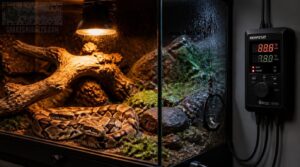
Once your gradients are mapped out, the next step is choosing the equipment that actually holds them steady. A thermostat isn’t optional here since it’s what stands between a stable basking spot and a burned or overheated boa. Here’s what you need to know about picking, placing, and wiring your heat sources correctly.
Compare Safe Heating Options
Not every heat source suits a boa’s enclosure. Electric resistance heaters run near 100% efficiency but cost more long-term.
Heat pumps hit a COP of 3-5, trimming bills in stable climates. Infrared panels warm bodies directly with quick response.
Hydronic mats offer gentle floor-level comfort. Combustion heaters heat fast but demand CO detectors and careful venting for safety.
Position The Basking Source
Where you mount the basking source matters as much as which one you buy. Place it on the warm side, roughly 88–90°F, with unobstructed gradient access points so your boa can retreat freely.
Add a burn prevention guard over any quartz heat emitter—basking surface safety depends on it. Non-slip footing completes safe heat placement.
Connect Every Heater Properly
A quartz heat emitter is only as safe as its wiring. Give each heater its own dedicated circuit with proper circuit protection, sized breakers, and GFCI where humidity’s involved—damp enclosures demand it.
Follow wiring safety essentials: tight, insulated connections, heat-rated cable, correct grounding and GFCI setup. Confirm proper heater-thermostat pairing and matched power supply guidelines before powering anything on.
Set Thermostat Safety Limits
A thermostat without safety limits is just a suggestion. Set a high limit near 92°F and a low limit around 74°F, forcing shutdown or cooling before harm occurs.
Run safety limit testing by simulating temperature swings, check sensor accuracy monthly, and confirm alert system configuration reaches your phone—your thermal gradient depends on limits that actually hold.
Maintain Safe Ventilation
Heat without airflow just cooks stagnant air. Install high and low vents so cool air enters low, warm air exits high, creating gentle airflow balance without drafts over the basking spot.
Vent placement near ground level and the warm zone prevents pockets from forming. Check for condensation—it signals poor circulation—and pair vents with your hygrometer to keep humidity between 60-75% while your temperature gradient stays intact.
Build a Moisture-Retaining Enclosure
Heat sources only do half the job if the enclosure itself dries out too fast to hold onto that warmth’s moisture. Your substrate, water bowl, and hide placement work together to trap humidity right where your boa needs it. Here’s how to set up each piece correctly.
Choose Humidity-Friendly Substrate
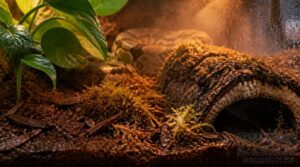
Substrate is your humidity engine, not just bedding. Coconut fiber holds moisture 24-48 hours, buffering swings between mistings. Cypress mulch retains steadily too, while sphagnum moss boosts surface humidity near hides.
Skip aspen shavings—they dry fast, offering poor retention. Choose blends with drainage and airflow to prevent mold, keeping your enclosure’s humidity stable without sacrificing ventilation.
Moisten Substrate Without Saturating

Getting the mix right means testing it by hand: grab a fistful and squeeze. It should cling without dripping. Target 25-40% moisture content, mixed evenly so no dry pockets remain.
Mist mornings for gradual hydration, letting daytime evaporation prevent soggy pockets. Layer moss over cypress mulch for a stable gradient—damp, never muddy.
Position The Water Bowl
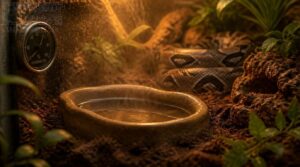
Once your substrate holds moisture evenly, the water bowl becomes your next humidity lever. Place it on the warm side, away from direct heat, using a shallow 200–400 ml dish. This raises ambient humidity by 5–15 percentage points.
Refill daily, clean weekly, and let your hygrometer confirm the boost before adjusting misting schedules.
Add a Humid Hide
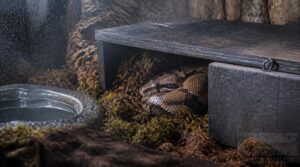
A water bowl raises ambient humidity, but your boa needs a private spot to soak in it. Line a hide with damp sphagnum moss or coconut fiber on the cool end.
This microclimate holds moisture longer than open substrate, supporting sheds without soaking the whole enclosure. Re-dampen weekly, or sooner if it dries out.
Partially Cover Screen Lids
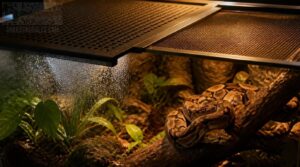
Since a fully open screen lid can vent away hard-won humidity, partially covering it creates a microclimate pocket while keeping at least 20% open for airflow.
- Use non-absorbent mesh or rigid perforated plastic
- Position cover toward the cool side
- Adjust gap width to control drafts
- Clean weekly to prevent mold buildup
This balances condensation control with steady humidity, no soggy enclosure required.
Monitor and Adjust Conditions Daily
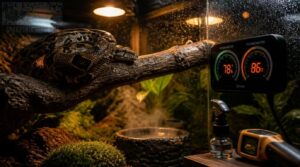
Building the right setup only gets you halfway there, since humidity and heat shift constantly with the seasons, your home’s climate, and even the time of day. You’ll need a daily routine to catch those changes before your boa does. Here’s exactly what that routine should include.
Place Digital Probes Correctly
Where you mount a digital probe matters as much as the reading itself.
Place each sensor 6 inches above substrate, angled toward the enclosure’s center, at chest height for accurate air readings. Keep cables external, away from decor and water sources.
Calibrate monthly against a known standard, and wipe housings weekly with a dry microfiber cloth to prevent drift.
Check Both Enclosure Zones
A single reading tells you little; Thermal Gradient Balance demands both zones checked together. Confirm the warm side holds 88–90°F and 60–75% humidity, while the cool zone sits at 78–80°F and 55–65%.
Pairing accurate gradient readings with visual checks helps too, so browse this ball python morph identification photo guide to spot healthy coloration at each temperature zone.
Watch Behavioral Zone Usage—does your boa move freely through Zone Change Paths? Frequent migration confirms your enclosure setup and humidity gradients are working as intended.
Calibrate Gauges Monthly
Trust erodes silently when gauges drift. Calibrate gauges monthly using a certified reference standard, comparing hygrometer and thermostat readings at set points. Log instrument ID, technician, zero/span readings, and any offset—documenting tolerance limits clearly.
Your Zoo Med Digital Thermometer/Hygrometer and data logger need this same scrutiny. Tracking drift patterns quarterly catches failing sensors before humidity monitoring fails your boa.
Mist or Fog Carefully
A quick burst beats a heavy soak every time. Keep mist duration control tight—10 to 20 seconds—using fine droplet sizes of 5-20 microns from a cool mist fogger or Mistking system.
Never mist near heat sources or a basking boa. Ventilate afterward, watch substrate saturation limits, and confirm your hygrometer shows humidity monitoring back at 60-75% within 30 minutes.
Automate Alerts and Schedules
Why check gauges by hand when a data logger with WiFi connectivity can watch for you? Set alert threshold customization for humidity dips or heat spikes, enable night mode activation for safe overnight drops, and let shedding-based humidity adjustment fine-tune targets automatically.
Pair a timer-driven automatic misting system with webhook notification triggers and mobile app connectivity, so schedule ramp duration changes never catch you off guard.
Prevent Humidity and Heating Problems
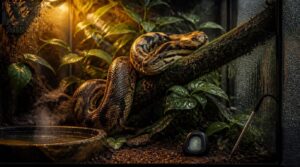
Even with careful setup, small issues can creep in and throw off your boa’s environment before you notice. Condensation, mold, overheating, and dehydration all show warning signs early, and catching them fast is what separates a healthy enclosure from a risky one. Here’s what to watch for and how to handle each problem before it takes hold.
Reduce Excess Condensation
When beads of water form on glass or acrylic walls, your enclosure’s humidity levels have tipped too high for the airflow to keep up. Improve ventilation techniques with a small exhaust vent, position the water dish away from heat sources, and let wicking substrate pull moisture outward.
Daily condensation monitoring catches problems before mold takes hold.
Stop Mold and Mildew
Condensation left unchecked invites mold, mildew, and fungi within days. Fix leaks fast, dry surfaces within 24 hours, and keep a strict disinfection routine for bowls and hides.
- Wipe walls with reptile-safe disinfectant weekly
- Seal baseboard gaps to block condensation
- Swap damp substrate before it sours
- Run drying cycles after every misting session
- Check hidden corners for musty odors
Avoid Overheating and Burns
Mold prevention keeps skin healthy, but heat mistakes burn it.
Keep basking spots at 88–90°F, never above 95°F, using a thermostat-controlled heater with a 92°F cutoff. Mount emitters away from substrate and water. Wire guards prevent direct contact.
If skin touches a hot surface, cool it with running water for 10–15 minutes and call your reptile vet.
Recognize Dehydration Warning Signs
Burns aren’t the only threat—dehydration sneaks up quietly. Watch for:
- Skin tenting: pinched skin stays raised over two seconds
- Sunken, dull eyes with reduced tongue flicking
- Weight loss past 5% in a week
Dry, tacky mouth tissue and lethargy signal trouble too—both raise the risk of poor shedding, respiratory infections, and skin problems if ignored.
Clean Bowls and Substrate
Bacteria thrive in stagnant water bowls, so sanitize weekly with hot water and reptile-safe disinfectant, checking for cracks that harbor grime. Position bowls away from direct heat to prevent rapid drying.
Replace substrate every 2-3 months, squeezing a handful to test moisture without saturation. Refresh humid hides regularly, and if you’re running a bioactive setup, let cleanup crews handle waste while you monitor overall humidity levels.
Frequently Asked Questions (FAQs)
What is too hot for a boa constrictor?
Like a stovetop left on high, your boa’s warm side turns dangerous past 90°F. Sustained heat above that risks organ strain, while any spot over 95°F can cause burns or severe dehydration.
Is 40% humidity ok for a ball python?
Not really. Ball pythons need 50-60% relative humidity for healthy shedding. At 40%, you risk dry skin, retained eye caps, and stuck shed—use a hygrometer, humid hide, and light misting to keep levels balanced.
What temperature and humidity should a boa be at?
Aim for a basking zone of 88–90°F, cool zone at 78–80°F, and nighttime drops to 75–78°F. Keep humidity between 60–75%, spiking toward 85% during shedding. Consistent gradients and ambient humidity prevent stress, dehydration, and shedding complications.
How to make a snake enclosure less humid?
Add ventilation adjustments with extra vents for airflow management, swap in low-retention substrate like aspen, shrink water bowl placement for evaporation control, skip misting systems, and run a small dehumidifier if humidity levels stay stubbornly high.
How often should I replace enclosure substrate completely?
Full substrate lifespan runs 6 to 12 months, but watch for replacement indicators like compaction, foul odor, or fungal growth. Moisture-retentive types need swapping every 3 to 6 months to protect moisture balance and prevent bacterial buildup.
What causes sudden humidity drops during winter months?
Cold air infiltration and heating system drying pull moisture out fast, since ventilation heat loss and reduced indoor moisture combine—offset with misting systems, damp substrate moisture, and water evaporation rather than poor humidifier use.
Can wrong humidity levels shorten a boas lifespan?
Yes. Chronic dehydration, respiratory stress, and disrupted shedding cycles from wrong humidity levels wear down a boa over time. Combined with humidity extremes and growth retardation, these stressors quietly shorten lifespan and immune strength, even when UVB lighting and diet stay perfectly balanced.
How do I disinfect water bowls safely and effectively?
Scrub your stainless steel or ceramic bowl with soap, then soak in diluted bleach or F10SC, rinse with distilled water, and air-dry on a dedicated cloth—daily cleaning, weekly deep disinfection.
Whats the best hygrometer brand for accurate readings?
Precise sensors, honest numbers, steady trust: that’s what separates good hygrometers from bad ones. SensorPush HT.w (±2% RH) and the Zoo Med Digital Thermometer/Hygrometer lead for accuracy, data logging, and reliable relative humidity tracking in boa enclosures.
Conclusion
You might think a thermostat and two thermometers sound excessive for a snake that survives fine in the wild. But your boa isn’t in the wild—it’s in a glass box you control entirely, gradient by gradient.
Mastering how to regulate boa constrictor humidity and heat isn’t about chasing flawlessness; it’s about consistency your snake can trust. Hit those numbers daily, and retained shed becomes a rare surprise instead of a monthly headache. That’s the real payoff: a calm, thriving animal.