This site is supported by our readers. We may earn a commission, at no cost to you, if you purchase through links.
I still remember the first time I saw a Lavender Albino in person, glowing pink and purple under a basking light like something out of a fantasy movie. That’s the moment ball pythons hooked me for good. With over 7,000 documented morphs floating around the hobby, picking a favorite feels impossible.
That’s exactly why ball python morph pictures matter so much. Photos let you compare head stamps, eye color, and pattern contrast side by side before you ever commit to a snake. Whether you’re chasing a Piebald’s bold white patches or a Stormtrooper’s stark black-and-ivory look, you’re about to see the morphs that make this hobby endlessly addictive.
Table Of Contents
- Key Takeaways
- Popular Ball Python Morph Pictures
- Ball Python Morphs by Appearance
- Rare and Designer Morph Pictures
- How to Identify Ball Python Morphs
- Morph Genetics, Health, and Pricing
- Frequently Asked Questions (FAQs)
- How do lighting conditions affect morph photography?
- What camera settings work best for snake photos?
- Can morphs change appearance as they age?
- How do you photograph shy or defensive pythons?
- What backgrounds showcase ball python colors best?
- When did ball python morph breeding first begin?
- Are certain morph combinations considered unethical to breed?
- What temperature and humidity do breeding morphs require?
- Which morphs have unknown or unconfirmed genetic inheritance patterns?
- Why do some morphs cost far more than others?
- Conclusion
Key Takeaways
- Photos are your best tool for comparing head stamps, eye color, and pattern before you commit to a snake, since traits like recessive genes (Albino, Piebald) versus dominant ones (Spider, Pinstripe) all show up differently in person.
- Price swings hard based on rarity and genetics: common morphs run $40-$100, while designer combos like Sunset or lavender albino lines can hit thousands, even $70,000 for top-tier lineage.
- Not every flashy morph is risk-free, so ask about health trade-offs like wobble head in Spider lines or extra care needs for scaleless snakes before you buy.
- Your snake’s colors will shift as it matures, so always confirm parentage and lineage paperwork rather than judging a morph purely by its hatchling photos.
Popular Ball Python Morph Pictures
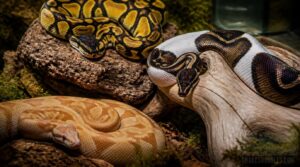
Ball pythons come in more colors and patterns than most folks realize, and pictures make that clear fast. You’re about to see some of the hobby’s biggest favorites, from classic yellows to sharp black-and-white contrast. Let’s start with the morphs that got this whole obsession going.
Before you fall for a flashy morph, it’s worth knowing that certain genetic combinations carry health issues linked to specific ball python morphs that responsible breeders will openly discuss.
Albino and Lavender Albino
Once you spot true albino ball pythons, you’ll never mistake that glow again: bright yellow, snowy white, pink eyes. First bred in 1992, they kicked off the recessive morph craze.
Lavender Albinos add lavender-purple pigmentation and vivid red eyes, thanks to reduced melanin. That eye contrast? Your best identifier, staying sharp for life. This reduced ocular pigment also causes heightened sensitivity to bright light, a physiological trait common among albino morphs.
Banana and Coral Glow
Where albino brings the shock factor, Banana and Coral Glow bring the sunset.
Banana morphs paint on pale, creamy yellow flank stripes, a genetic mutation that softens the pattern into something dreamy.
Coral Glow layers orange-red heat over that base, creating true color variation that deepens with age and lighting. Both stay codominant, with no wobble concerns tied to either gene.
Piebald and Blue-Eyed Leucistic
After all that warm color, Piebald flips the script entirely with bold white patches breaking up the pattern.
Blue-Eyed Leucistic takes it further: nearly solid white with striking blue eyes, though success rates stay under 25%.
Why breeders chase these:
- Jaw-dropping contrast
- Unique head stamps
- One-of-a-kind patch placement
- Trophy-worthy display appeal
Pastel, Enchi, and Mojave
Ditch the white and gold for warmer tones. Pastel gene brightens the base with cream highlights and a pale head stamp.
Add Enchi gene for tighter pattern and copper flaked edges.
Toss in Mojave and watch color intensity shift toward burnt orange, smoother contrast, gold-tinted eyes. This trio’s pattern complexity makes each snake genuinely one-of-a-kind.
Clown, Spider, and Pinstripe
When genetics gets playful, Clown, Spider, and Pinstripe deliver serious visual payoff. Spider pattern reduction creates thin webbing; Clown Pinstripe mix softens contrast into cream saddles.
- Clown: pale yellow base, bold head stamp
- Spider: web-like markings, elongated stamp
- Pinstripe: slim dorsal lines, brighter base
- Clown Spider traits: diffuse pattern, mild wobble
- Morph combination tips: expect smoother color transitions
Ball Python Morphs by Appearance
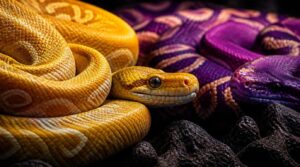
Sometimes the easiest way to find your morph isn’t by name, it’s by color. You already know what catches your eye, whether that’s bold yellows or moody purples. Let’s sort them by look, starting with the sunniest end of the spectrum.
For a closer look at how those golden hues stack up against other shades, this visual guide to comparing popular snake morphs breaks down the differences side by side.
Yellow and Orange Morphs
Sunshine in scale form, that’s what yellow and orange morphs bring to the table. Banana and Coral Glow lead the pack, pulling vivid carotenoid hues from the skin.
Pastel derivatives boost Color Saturation Levels while trimming black contrast. Lemon Blast and Fire add Hue Shifting Traits, and Bumblebee pairings show how Genetic Lineage Quality drives Market Price Variability.
White and Cream Morphs
Pale snakes practically glow under enclosure lighting, and that’s the draw. Cream base tones with subtle yellow undertones define Albino and Lavender Albino, while Piebald and Blue-Eyed Leucistic push toward near-pure white highlights.
- Ivory or tan base with light scale contrast
- Pink or peach eye rims
- Smoother scale texture from melanin loss
- Creamy undercoat beneath dark patches
- Crisp head stamps against pale backgrounds
Black and Silver Morphs
Think chrome dipped in shadow. Black and Silver morphs bring that dark base contrast, with platinum accent scales flashing along the sides like polished metal.
The silver banding pattern sharpens with every shed, giving you that true monochrome aesthetic breeders chase. Similar to Axanthic, Lesser, or Butter lines, age-related shading keeps these snakes looking sharper each year.
Lavender and Purple Morphs
Purple and Lavender morphs bring a soft, smoky elegance you won’t find anywhere else. That lavender-gray base pairs with cream highlights, while Purple lines push deeper dorsal tones and sharper edges.
Lavender Albino blends push things further, mixing amelanistic genetics for pastel pink hues. Purple Passion and Coral Glow pairings show off this recessive trait beautifully, and premium pricing reflects their designer morph status among collectors chasing that unique hue.
High-Contrast Pattern Morphs
Some morphs just grab your eye and won’t let go. Bold body markings on Pinstripe and Piebald pop hard against pale backgrounds, while Spider’s thin banding creates striking sickle patterns down the spine.
Mojave and Champagne add crisp head stamps and dapple effects with clean edges. Sharp eye contrast seals the deal, pupils framed against vivid irises for that "wow" factor collectors chase.
Rare and Designer Morph Pictures
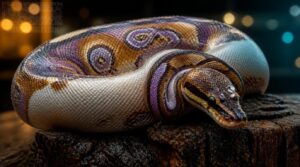
Now for the morphs that turn heads at every expo. These are the ones bred by mixing genes, chasing rare mutations, or just getting lucky with a wild genetic fluke. Here’s a look at some of the most jaw-dropping designer and rare morphs out there.
Dreamsicle and Purple Passion
When you want a morph combination built for color balance, Dreamsicle and Purple Passion deliver. Dreamsicle brings creamy orange with cream-yellow highlights; Purple Passion layers lavender-purple over cream bases. Both show moderate pattern variation, dark eyes, and steady growth tracking to 3-5 feet.
Always confirm genetics with breeder paperwork before buying, since these visual traits depend on specific allelic lines.
Bumblebee and Combination Morphs
Base Bumblebee already brings yellow-and-black brightness, but combo lines take it further. Albino Bumblebee glows orange-yellow with pink eye halos. Lavender Bumblebee softens things with pastel purple tones. Piebald Bumblebee throws in white patches for patchwork drama.
- Banana Bumblebee: saturated yellow, checkered belly
- Clown Bumblebee: crisp head stamp, bright ground
- Piebald Bumblebee: irregular white, high contrast
Every morph combination hinges on genetic order, so document your breeding project carefully.
Scaleless Ball Pythons
Combos get all the buzz, but nothing turns heads like scaleless skin. No dorsal scales means a smooth, almost velvety feel, with colors popping crisper than usual.
Care isn’t casual though: precise humidity prevents shed trouble, and rough décor risks skin injury. Breeders pair scaleless head lines carefully. Rarity keeps prices steep.
Stormtrooper Ball Pythons
Skip the smooth skin, and picture snow and shadow instead. Stormtrooper is the Axanthic Pastel Combination, a designer morph pairing that strips color down to pale ivory and jet black.
Visual Contrast Analysis shows crisp linear saddles, tight head stamps, and true Pattern Reduction Traits. Morph inheritance runs codominant or recessive by pairing, so confirm genetics, expect steep morph rarity, and follow standard Care Requirements Overview basics.
Sunset and High-End Morphs
Fire meets dusk in the Sunset morph, with amber-to-orange bands and lavender hints near the tail. Color gradient analysis reveals bold dorsal intensity fading toward the belly.
Head stamp variation stays crisp on top-tier lines. With verified genetic lineage tracking, price stability holds strong, some fetching $70,000, proving morph rarity still commands serious money.
With crisp head stamps and verified lineage, top-tier morphs can fetch up to $70,000
How to Identify Ball Python Morphs
So how do you actually tell one morph from another without guessing? It comes down to training your eye on a few key details, not memorizing every gene combo out there. Here’s exactly what to look for.
Compare Color and Contrast
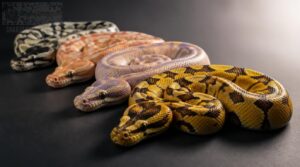
Your eyes catch color before anything else, so train them first.
Luminance thresholds matter most: a 20% brightness gap separates morphs clearly. Watch simultaneous contrast, backgrounds shift how a Coral Glow’s yellow-orange reads.
Saturation effects make Banana’s vivid yellow pop. Complementary pairs like lavender-and-yellow (think Lavender Albino) create striking visual separation, key for morph comparison in any visual guide.
Examine Patterns and Head Stamps
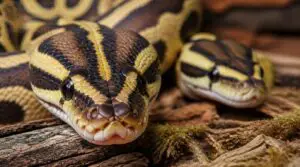
The head stamp is basically a morph’s signature. Pinstripe, Spider, and Clown lines each carry distinct facial banding trends and rostral ridges that stay fairly consistent within a bloodline.
Check for head stamp symmetry first, then look closer. Scale pattern analysis on Mojave or Cinnamon offspring often reveals pattern inheritance clues, siblings with matching stamps usually confirm stable genetics.
Check Eyes and Markings
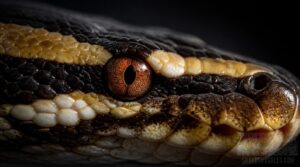
A snake’s eyes tell you more than most folks realize. Pupil shape stays round and clear in healthy animals, while iris texture and eye color variation (think red in Albinos, amber in Banana morphs) narrow down genetics fast.
Check these four things:
- Eyelid marking patterns near piebald patches
- Pupil clarity and shape
- Head stamp symmetry around the eye ring
- Iris tone against base color
Account for Age Changes
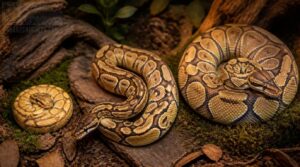
That gorgeous baby Pastel won’t look the same at three years old, and that’s not a bad thing.
Color fading and darkening both happen naturally as morphs mature.
| Age Stage | Typical Change |
|---|---|
| Juvenile | Bright, high-contrast colors |
| Sub-adult | Pattern contrast sharpens |
| Adult | Slight color fading, amber eye shift |
| Mature adult | Stable coloration, bigger body proportions |
Molting frequency slows too, giving that phenotype time to settle.
Confirm Genetics Before Buying
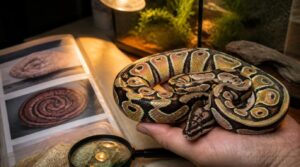
Photos only get you so far. Before money changes hands, dig into parentage confirmation and ask for lineage documents.
Quick checklist:
- Verify both parents carry the trait
- Request health guarantee terms
- Check breeder reputation on forums
- Review documentation on shed history
A recessive trait needs proof, not guesswork, especially with captive breeding claims that sound too good to be true.
Morph Genetics, Health, and Pricing
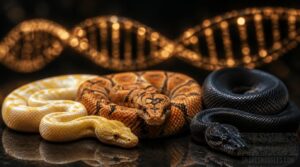
Pretty morphs are only half the story. Behind every color and pattern is a genetic code, and some of those codes come with real health trade-offs and price tags to match. Let’s break down what’s actually driving what you pay and what you should watch for.
Dominant and Codominant Morphs
Dominant and codominant genes are the workhorses of morph breeding. One copy of the allele is all it takes for allele expression, and that heterozygote look stays consistent for life.
Pastel and Mojave combine into unique codominant blends, while Spider and Pinstripe show dominant traits outright. Cinnamon works the same way.
Track genotypes carefully, that’s how you predict litters accurately.
Recessive Morphs
Recessives play a whole different game. You need two copies of the gene to see the trait, so a single-gene carrier looks totally normal. Breeding two carriers together gives roughly 25% visible odds.
Albino, Axanthic, Piebald, and Ghost all follow this pattern. DNA testing confirms homozygous status before you bet on results.
Designer Morph Inheritance
Now stack a codominant gene with a recessive morph, and things get fun. Bumblebee (Pastel × Spider) shows instantly, while Dreamsicle needs three recessive alleles paired up before that lavender-orange payoff appears.
Allele interaction effects drive composite pattern formation, so genetic outcome prediction takes real recordkeeping. Selective breeding across generations stabilizes the look you’re chasing.
Wobble and Scaleless Concerns
That designer combo excitement comes with a flip side breeders need to talk about honestly. The Spider gene causes wobble head, a lifelong balance issue, while Super Spider pairings are lethal. Scaleless morphs need careful humidity control for skin health.
- Track neurological symptoms over time
- Monitor skin abrasions in scaleless snakes
- Regulate temperature to reduce stress
Ethical breeding debates continue across the hobby.
Rarity and Price Ranges
Money talks, and in this hobby it whispers genetics first. Common morphs stay budget-friendly at $40-$100, but lavender albino combos with clean lineage hit $3,500-$8,000. Piebald and blue-eyed leucistic pairs swing $3,000-$12,000 based on pattern clarity.
Rarity factors like proven stability and traceable pedigree drive real market value, sometimes past $10,000 at breeder showcases.
Frequently Asked Questions (FAQs)
How do lighting conditions affect morph photography?
Picture golden scales catching soft light, every fleck visible. Diffuse lighting and warm color temperature bring out yellows and oranges, while proper lighting angles cut specular highlights and shadows, keeping pattern visibility and scale morphology sharp and true.
What camera settings work best for snake photos?
Aim for 1/500 shutter speed, aperture f/6-f/8, and ISO 100- Use single-point autofocus on the eye, custom white balance for accurate morph expression, and RAW capture to nail true scale morphology and color detail.
Can morphs change appearance as they age?
Your snake really is a work in progress. Color fading and pattern shifts happen as scales change, yellows deepen, contrast softens, and head stamps blur, so that stunning hatchling look keeps evolving well into adulthood.
How do you photograph shy or defensive pythons?
Give shy pythons an escape route, shoot from a distance with soft light, and pause the moment you spot coiling or hissing. Calm handling and stress recognition matter more than the perfect shot.
What backgrounds showcase ball python colors best?
Neutral backdrops win every time. Dark charcoal contrast makes yellows and oranges glow, navy blue separation flatters whites and creams, and neutral gray balance keeps every ball python morph’s true color and pattern honest for identification.
When did ball python morph breeding first begin?
Like a spark igniting a whole industry, it started with the 1992 Albino Advancement, when Bob Clark’s captive breeding project proved recessive traits could be reproduced, launching modern morph history and decades of herpetology-driven innovation.
Are certain morph combinations considered unethical to breed?
Yes. Spider and Champagne carry wobble head risk, and stacking them into Super morphs or designer combos raises neurological concerns, reduces genetic diversity, and crosses ethical breeding boundaries many hobbyists refuse to cross.
What temperature and humidity do breeding morphs require?
Aim for an 88-90°F warm side, 76-78°F cool side, with 60-70% humidity. Use a thermal gradient setup and humidity monitoring tools; stable ranges support morph stability, proper shedding, and healthy breeding season adjustments any breeder can trust.
Which morphs have unknown or unconfirmed genetic inheritance patterns?
It’s a bit of a wild card: Mota, Joppa, Stormtrooper, and Dreamsicle carry unconfirmed inheritance patterns, since limited genetic testing and background dependent inheritance leave breeders guessing at true designer morph ambiguities.
Why do some morphs cost far more than others?
Price boils down to genetic rarity and breeding complexity. Recessive combos take years to stabilize, limiting availability. Add strong market demand for vivid colors, and designer morphs like Sunset can hit $70,000 while common ones stay under $
Conclusion
Funny thing about a hobby built on genetics: the more morphs you learn, the more you realize you’ll never see them all. That’s the beauty of it.
Ball python morph pictures won’t make you an expert overnight, but they train your eye to spot contrast, pattern, and quality before you spend a dime. Study them closely. Trust your instincts.
Your next snake is waiting, glowing under the light, ready to hook you like that first Lavender Albino hooked me.