This site is supported by our readers. We may earn a commission, at no cost to you, if you purchase through links.
Two Pastels walk into a breeding rack, and one in four of their eggs hatches a Super Pastel. That’s the kind of math that makes a morph geneticist grin.
Super morph combination pairings reward you with bold, intensified animals, but they also hide traps. Pair two Champagnes and a quarter of your clutch is lethal. Cross a Spider with anything unfamiliar and you could hatch a snake that wobbles for life.
You can predict every one of these outcomes before you set up a pairing. The ratios, the allelic look-alikes, and the combinations to avoid all follow clear rules you can learn today.
Table Of Contents
- Key Takeaways
- How Ball Python Super Morph Pairings Work
- Super Morph Pairings and Predicted Offspring
- Allelic Pairings Versus True Super Morphs
- Risky Super Morph Pairings to Avoid
- Choosing Healthy, Genetically Diverse Super Morph Pairings
- Frequently Asked Questions (FAQs)
- Are there any unethical ball python morphs?
- What are the different morphs?
- What ball python morphs have neurological issues?
- Which ball python morphs have known issues?
- How long until a super morph reaches breeding size?
- Can two different super morphs be bred together?
- Do super morphs cost more than single-gene morphs?
- How can you confirm a snake is truly homozygous?
- What is the best way to record clutch genetics?
- Conclusion
Key Takeaways
- A true super morph comes from pairing two copies of the same codominant gene, so two Pastels will give you about 25% Super Pastel, 50% Pastel and 25% Normal, while a Super Pastel bred to a Normal gives you 100% Pastel.
- You can tell a true super from an allelic lookalike by outcrossing it to a normal: one phenotype in the clutch means a true super, and two phenotypes with no normals means it’s allelic.
- You’ll want to avoid pairing two Champagnes, since a quarter of the clutch is lethal, and never pair two Spiders, because the homozygous form is lethal and every Spider already carries the wobble.
- You’ll raise healthier animals by buying from breeders with documented lineage, mixing in different bloodlines, screening every hatchling for problems like kinking, and keeping detailed records of each pairing.
How Ball Python Super Morph Pairings Work
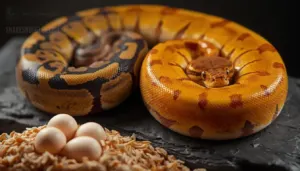
A super morph is what you get when two copies of the same incomplete dominant allele meet in one snake. That’s it. Simple, and stunning when it works.
Unlike a single-copy dominant, a super morph shows its full effect only with two copies, which is why it helps to understand how visual and het corn snakes differ genetically before planning your pairings.
Genetic inheritance starts with each parent handing over one allele per gene. With codominant traits, one copy shows a visible change, and two copies push that look further. Brighter color, cleaner pattern, bolder results.
Don’t mix this up with homozygous recessive morphs like Clown or Albino. They need two copies too, but breeders don’t call them supers. The label belongs to codominant and incomplete dominant genes only.
Pinstripe is another case. One copy and two copies look identical, so there’s no true super.
Smart breeding strategies begin with knowing your gene type.
Super Morph Pairings and Predicted Offspring
Ready to see what your pairings will actually produce? Below, you’ll find four classic crosses, each with the predicted offspring ratios you can count on. Use them to plan your next clutch with confidence.
Pastel × Pastel: 25% Super Pastel
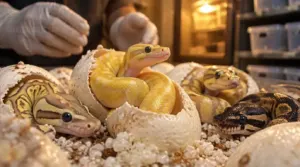
Each time you pair two Pastels, genetic probabilities stay the same: 25% Super Pastel, 50% Pastel, 25% Normal. Pastel isn’t homozygous recessive; two copies just intensify your Pastel morph. Super forms like this behave much like ALS combinations, since both result from alleles pairing at the same locus. Stack Enchi on top and a Super Pastel Enchi delivers wild Super form intensity.
Picture opening that clutch:
- Racing, held-breath anticipation
- Overflowing hatchling pride
- Crushing missed-odds disappointment
- Giddy relief, healthy babies
Super Pastel × Normal: 100% Pastel
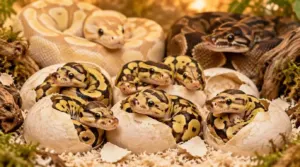
Pair a Super Pastel with a Normal and you can skip the guesswork. Mendelian genetics hands you 100% Pastel, always.
Each of those offspring carries one copy of the Pastel gene, and you can see how it shows up alongside other co-dominant ball python morph traits when planning your next pairing.
Here’s why. Your Super carries two copies of one of the dominant genes, so it can only pass one down. The Normal adds a normal copy. A good ball python breeding guide book can help you map out how these inheritance patterns play out in other morph pairings.
Every hatchling shows the Pastel morph’s visual traits: brighter yellows, crisp patterns, lighter heads.
Super Pastel × Pastel: 50% Supers
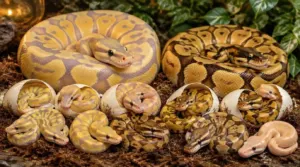
Now bring a Pastel into the mix and the math gets fun. Genetic inheritance splits your clutch evenly: half Super Pastel, half Pastel.
- Super Pastel Enchi pairings stack two projects.
- Pastel Banana adds a fresh twist.
- Expect zero normals in the clutch.
- Track every hatchling’s genotype.
- Plan breeding strategies seasons ahead.
Your Supers keep coming, and your plans stay wonderfully predictable.
Yellow Belly × Yellow Belly: Ivory
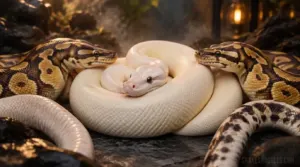
The Ivory is your reward when you pair two Yellow Belly ball pythons. Yellow Belly is one of the Codominant traits, so two copies create the Super form morph. Expect roughly 25% Ivory, 50% Yellow Belly and 25% normal.
Here’s your breeding roadmap: pair them, then sort the clutch by belly pattern. Ivories have clean, patternless bellies. Others show checkering.
Before the eggs arrive, set up a reptile egg incubator tray to keep each egg labeled, so you can track which hatchlings turn out Ivory.
Allelic Pairings Versus True Super Morphs
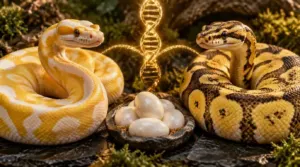
Many Super Morph Combination Pairings look identical on the surface, but the genetics underneath tell different stories. That’s the heart of Allelic Pairings Versus True Super Morphs.
A true super is a super form morph with two copies of one gene. Allelic combos, like Yellowbelly-Spector, carry two different genes at one locus. Both can show dramatic, eye-catching color. Only one can reproduce itself.
A true super carries two copies of one gene, while allelic lookalikes carry two different genes and only one can reproduce itself
Here’s how to tell them apart:
- Outcross the animal to a normal.
- Count the phenotypes in the clutch.
- One phenotype means a true super.
- Two phenotypes, no normals, means allelic.
Codominant traits can fool you, so test before you sell. Genetic compatibility at the locus decides everything, and a test breeding always gives you clear, honest proof.
If you want to understand why allelic pairings behave this way, a ball python genetics book can walk you through locus-by-locus inheritance.
Risky Super Morph Pairings to Avoid
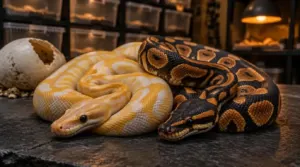
Not every super morph pairing is worth your time, and a few can put your animals at real risk. Below, you’ll find three risky pairings to avoid, each with a clear reason why. Know them now, and you’ll plan your clutches with confidence.
Super Champagne and Lethal Combinations
Ever heard of a jackpot that pays out nothing? That’s the Super Champagne. Lethal combinations start here: 25% of eggs should be Supers, yet none survive.
| Pairing | Result | Outcome |
|---|---|---|
| Two Champagnes | 25% Super Champagne | Lethal |
| Champagne and Spider | Neurological defects | Lethal |
| Champagne and Hidden Gene Woma | Embryonic failure | Lethal |
Outcross your Champagne morph, avoid genetic defects, put breeding safety first.
Super Cinnamon and Super Black Pastel
Two jet-black snakes, one stunning pairing, and a hidden catch. That’s Super Cinnamon x Super Black Pastel, and it’s a perfect example of why looks don’t equal health.
Both parents are homozygous, so every baby is a solid 8-Ball. You’ll see:
- No super offspring
- Dark, near-patternless coats
- Fewer genetic defects
Still, your parents carry duckbills, kinking and bug eyes. Screen them carefully.
A good reptile health check kit with a magnifier, gentle scale and gloves makes it easier to spot early kinking or facial deformities in hatchlings.
Spider Combinations and Neurological Welfare Concerns
Pairing two spiders? Don’t. The homozygous form is lethal, so you’d get nothing viable.
Spider wobble syndrome stems from inner ear defects, and every spider you hatch carries it. That’s why genetic compatibility and ethical breeding matter, along with inbreeding risks and neurological issues.
| Pairing | Outcome |
|---|---|
| Spider and Spider | Lethal |
| Spider and Champagne | Amplified wobble |
| Spider and Normal | Half wobble |
Choosing Healthy, Genetically Diverse Super Morph Pairings
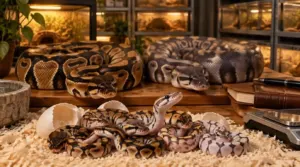
Want eye-catching babies that grow up healthy too? You can have both. It just takes planning.
Ethical breeding starts before you pair a single snake. Check morph compatibility first, since some combinations carry real welfare risks. Then protect genetic diversity by pairing animals from different lineages. That’s your best inbreeding avoidance tool.
Here’s a simple routine to follow:
- Buy from reputable breeders with documented lineage.
- Keep parent health records and use heterozygous carriers to add variety.
- Run health screening on every hatchling, watching for corkscrewing, poor righting, and feeding or shedding problems.
Good records make it easy. Log every pairing and result. You’ll spot trouble early and plan smarter. Healthy snakes are your best advertisement. Build one you’re proud of.
Frequently Asked Questions (FAQs)
Are there any unethical ball python morphs?
Wondering where ethical lines sit? Yes, some morphs worry us. Your Spider morph carries Spider wobble syndrome, causing neurological issues. Ethical breeding means avoiding lethal pairings and inbreeding risks. Then you’ll truly protect your animals.
What are the different morphs?
Sure, "normal" is the one morph nobody breeds for.
Morphs come in three genetic types: dominant, codominant, and recessive. Wookie x Wookie gives you a homozygous Super Wookie, a codominant phenotype expression you can see.
What ball python morphs have neurological issues?
Wondering which morphs carry neurological issues? Spider tops the list, with 100% wobble. Champagne and Woma lines follow. These genetic traits, tied to risky inheritance patterns, create breeding challenges, so check genetic compatibility before pairing.
Which ball python morphs have known issues?
Stunning morphs can be quietly miserable.
Spiders carry neurological issues, Super Cinnamons kink, Desert females face breeding challenges, and BEL supers get tiny eyes. These genetic mutations threaten snake health, and inbreeding risks magnify them.
How long until a super morph reaches breeding size?
Hatchlings gain 20–50 grams a month, and a super form morph is no exception. Genetic traits don’t speed up growth. Males hit breeding age at 12–18 months, while females need 1200–1500 grams, usually 2–3 years.
Can two different super morphs be bred together?
Yes, you absolutely can. Pair two supers from different loci, like Super Pastel and Super Pinstripe, and every baby is a double heterozygote carrying both mutations. Just skip supers from the same allelic complex.
Do super morphs cost more than single-gene morphs?
Super morphs cost a mountain of cash compared to single-gene morphs, and you’ll feel it at checkout. Lower production odds mean tighter supply, so combination morph value climbs fast, especially for females.
How can you confirm a snake is truly homozygous?
Just look at it," you might say. Don’t. Looks can fool you, since homozygous and het snakes often match. Genetic testing gives true genotype accuracy, while breeding to normals gives het claim verification: all offspring show the trait.
What is the best way to record clutch genetics?
Pastel pairings yield 25% supers, so genetic records matter. Log each clutch in genetic tracking software, run Punnett Squares for clutch prediction, then compare hatchlings to boost genotype accuracy. You’ll spot errors fast every time.
Conclusion
Imagine this: you pair two Pastels this spring, and by summer a Super Pastel cracks out of its egg, right on the 25% schedule you predicted. That’s the payoff of learning your genetics first.
Smart super morph combination pairings start with the math, then check for lethal traps like Champagne and wobble risks like Spider. Run the ratios, respect the red flags, and keep your bloodlines diverse. Do that, and every clutch proves your prediction.