This site is supported by our readers. We may earn a commission, at no cost to you, if you purchase through links.
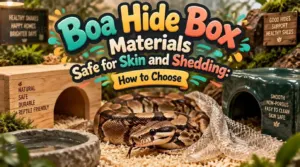
A boa can spend 20 hours a day inside its hide. That’s 20 hours of skin pressed against whatever you chose, and one bad pick shows up fast as rubbed scales, stuck shed, or a chemical rash.
The right hide box materials safe for boa constrictor skin and shedding are smooth, nonporous, or properly prepared. Pressure-treated lumber can leach copper or arsenic. Cedar and pine release oils and terpenes that irritate scales. Painted wood gives off VOCs.
You control every surface your snake touches. Here’s how to pick materials, size the hide, and set up a humid hide that keeps shedding clean.
Table Of Contents
- Key Takeaways
- Choose Skin-Safe Materials for Boa Hide Boxes
- Avoid Abrasive and Chemically Treated Hide Materials
- Size Boa Hides for Snug, Safe Access
- Set Up Humid Hides for Easier Shedding
- Build DIY Boa Hides Without Sharp Edges
- Clean and Replace Boa Hides Safely
- Frequently Asked Questions (FAQs)
- Conclusion
Key Takeaways
- Choose hides made from smooth, nonporous, non-toxic materials like PVC, sealed plastic, untreated cork bark, or fully cured reptile-safe resin, and skip pressure-treated, cedar, pine, or painted wood, which can leach chemicals or irritate your boa’s scales.
- Size each hide so your boa touches the walls on several sides when coiled, which usually means 12 to 18 inches long, 8 to 12 inches wide, and 4 to 6 inches tall for an adult, with two or three hides spread across the warm and cool zones.
- Keep one humid hide on the cool end with damp sphagnum moss at 70-80% humidity, and replace the moss every few days (or immediately if it smells or looks moldy) so your boa sheds cleanly.
- Sand every cut edge until it’s glassy, disinfect plastic with a reptile-safe cleaner and soak cork in a stronger solution, and replace any hide that’s cracked, rough, or contaminated.
Choose Skin-Safe Materials for Boa Hide Boxes
Your boa’s hide touches its skin every day, so the material matters. Pick a surface that’s smooth, nonporous, and non-toxic, and you’ll cut the risk of irritation and stuck sheds. Here are three options that meet that standard.
Nonporous Plastic and Smooth PVC
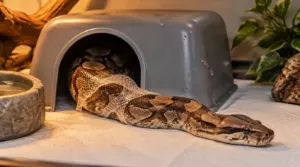
A hide made from nonporous plastic gives your boa the safest surface for shedding. Smooth PVC won’t snag scales or soak up moisture, so it stays clean. PVC also resists moisture and mold, which keeps it durable and easy to wipe down over time.
Look for these traits:
- Smooth, rounded edges that won’t catch skin
- Nontoxic materials with no odor
- Sealed plastic that dries fast
- Reptilesafe coatings, if any are applied
Avoid painted or glossy finishes entirely.
Since bare, matte surfaces are easier to keep clean, it also helps to browse beginner-friendly boa constrictor morph types before deciding which snake will suit your 6-by-3-by-3-foot enclosure or larger.
Untreated Cork Bark
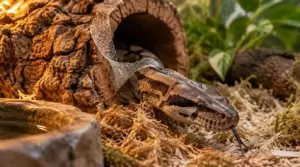
Plastic isn’t your only safe option. Untreated cork bark gives your boa a rough but non-sharp surface that helps skin catch and peel back during a shed. It’s also nontoxic, moisture-resistant, and free of resins or oils.
Buy from reptile-specific suppliers. Sand down any cut lines, and bake it at 250°F for 1-2 hours before use.
If you’re still deciding which material suits your clutch, this guide to the best substrate for snake egg incubation compares options and explains how each holds moisture.
Reptile-Safe Resin With Smooth Interiors
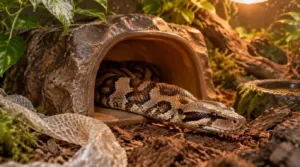
Cork isn’t your only option. Reptile-safe resin gives you a molded look with a smooth interior that won’t snag skin.
Look for these traits:
- Nontoxic materials that are fully cured
- Rounded edges at the entrance
- Walls as nonporous as sealed plastic
- Easy to clean surfaces
Let the sealant cure for a full week before you add it to the enclosure.
Avoid Abrasive and Chemically Treated Hide Materials
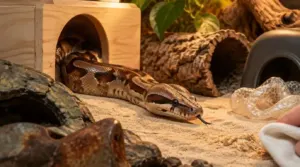
Not every hide is safe, even if it looks natural. Some materials scrape scales or leach chemicals, and both problems show up during a shed.
| Material | Risk | Verdict |
|---|---|---|
| Pressure-treated wood | Copper or arsenic leaching | Avoid |
| Cedar or pine | Oils and terpenes irritate scales | Avoid |
| Rough resin or plastic | Seams and flash abrade skin | Sand or replace |
| Painted or stained wood | VOCs irritate skin | Avoid |
Stick with untreated wood, cork bark, and sealed plastic. Skip anything painted, stained, or sold without a clear material label. Wood needs sanding, then a thorough wipe-down, because leftover dust embeds in fresh skin.
If you’re setting up a corn snake enclosure, this guide to safe climbing branches for corn snakes explains how many perches to add and how to arrange them.
Mosslined hides work when the container is smooth inside and moss stays clean. Choose nontoxic materials, and when you’re unsure, skip it.
Size Boa Hides for Snug, Safe Access
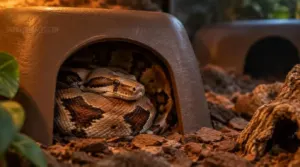
A properly sized hide lets your boa feel secure, and snugfitting entrances are the reason. Your snake should touch the walls on several sides at once, so the box needs room for its full body length coiled, not stretched.
For adult boas of 6 to 8 feet, use these dimensions:
- Length: 12 to 18 inches
- Width: 8 to 12 inches
- Height: 4 to 6 inches
- Entrance size: match your boa’s widest girth
- Interior: smooth, with no gaps
Skip oversized boxes. Your boa won’t feel hidden, and it’ll stop using them. Offer two or three safe retreat options across the warm and cool zones. Choose sturdy builds, because hide durability and longevity matter when a heavy boa pushes against the walls.
Set Up Humid Hides for Easier Shedding
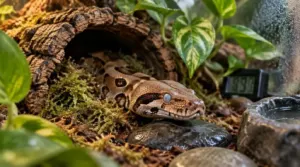
You’ll want a humid hide in every boa enclosure, because it works as a reliable shedding aid when your snake’s eyes turn milky. Place it on the cool end so the gradient encourages use.
Fill a mosslined hide with damp sphagnum moss, and use distilled or dechlorinated water to moisten it. Aim for 70-80% humidity inside the hide. Keep ambient levels at 55-75%, raising them to 75-85% pre-shed.
Humidity control takes daily checks. Put a digital hygrometer at snake level and watch the numbers. Good ventilation keeps air from going stagnant and causing respiratory problems.
Refresh the moss every 2-3 days. Toss it immediately if it smells foul, looks moldy, or packs down. In bioactive hides, check moisture more often.
Build DIY Boa Hides Without Sharp Edges
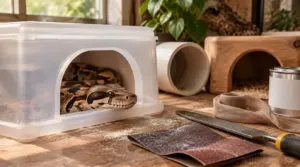
Picture a 6-foot boa that rubs her nose raw on a plastic tote someone cut with tin snips. The jagged rim looked fine. Her scales said otherwise.
A jagged rim can look perfectly fine to you while your boa’s raw nose tells the real story
You can avoid that. Start with a foodgrade plastic tub or a section of PVC pipe. Cut a doorway just wide enough for a snug fit, since she should touch the walls when she’s inside.
Next comes edge sanding technique. File every cut edge at 45 degrees. Then sand with 120-grit, followed by 220-grit, until the rim feels glassy.
Wooden hides need a round-over bit on the interior. If you add sealant application, use water-based polyurethane or aquarium silicone, and let it fully cure.
Drag a nylon stocking across every surface. If it snags, sand again.
Clean and Replace Boa Hides Safely
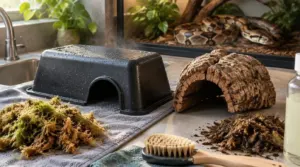
A dirty or damaged hide can undo every good choice you’ve made so far. You’ll use different cleaning methods for plastic and porous materials, and you’ll need to know when to swap out moss or toss a worn hide. The two points below show you how to handle each one.
Disinfecting Plastic Versus Porous Materials
Plastic and cork don’t clean the same way. Smooth PVC and ABS hold contaminants on the surface, so wipe them with a reptile safe disinfectant, like 1:50 bleach or F10SC, and wait 10 minutes.
Cork bark absorbs liquid, so soak it in a 1:10 solution.
Rinse everything well, then air-dry completely. Damp seams breed mites and keep hides from staying mold and bacteria resistant.
Replacing Moss and Damaged Hides
Your mosslined hide needs a schedule. Stick to a moss replacement interval of two to four weeks, shorter during shedding.
- Squeeze the moss: damp, never soaked.
- Sniff for mold or sourness.
- Check the shell for cracks or rough edges.
Cleaning and maintaining boa hides includes replacing worn or damaged hides. Toss contaminated cork immediately. Bioactive hides need the same inspection.
Frequently Asked Questions (FAQs)
How many hides does a boa need?
Your boa needs at least two hides, one on the warm side, one on the cool side of the thermal gradient.
Add a third for humidity and security, so your boa never crosses open ground.
Can boas shed without any hide available?
Yes, your boa can shed without a hide, but it’s not ideal. Keep humidity at 60-80%, add rough branches or bark to rub against, and maintain a proper thermal gradient. Expect more stress and a higher risk of retained eyecaps.
Should hides be placed near the water bowl?
Picture your boa gliding along the wall, tongue flicking, then sliding into a hide an inch from fresh water. That’s the setup you want.
Yes, place a hide beside the bowl, never over it, for steadier humidity control.
How can I tell my boa dislikes its hide?
A hiding boa isn’t always an unhappy boa. Judge the boa constrictor hide by behavior instead. Stress reduction starts there: constant hiding without exploring, hissing, throat puffing, or refusing to enter signals poor material safety.
Do boas prefer dark hides over clear ones?
Yes, your boa prefers dark hides every time. Clear hides let light flood in and keep your snake on edge, while dark hides mimic the burrows boas use in the wild. Offer them in your reptile enclosure.
Conclusion
Think a plain plastic tub looks too boring for a boa? Your snake doesn’t care about looks. It cares about secure, smooth contact and steady humidity.
Stick with hide box materials safe for boa constrictor skin and shedding, then size each hide snugly and sand every edge. Keep one humid hide damp, not soggy, and replace anything cracked or moldy.
Do that, and your boa will spend those 20 hours resting easy, then shed clean.