This site is supported by our readers. We may earn a commission, at no cost to you, if you purchase through links.
A hide box that looks fine can still fail your boa. Wood and cardboard soak up moisture and waste, and bacteria settle into crevices that no disinfectant reaches. A roof that creaks under light pressure can drop onto a resting snake without warning.
Knowing when to replace a boa constrictor hide box due to wear protects your animal from infection and injury. Cardboard may last only 1-2 weeks in a humid setup. A growing juvenile can outgrow a hide in a couple of months.
Check your hide’s structure, hygiene, and fit against the signs below, then replace it before it becomes a problem.
Table Of Contents
- Key Takeaways
- When Should You Replace Your Boa’s Hide?
- Inspect Boa Hide Boxes for Structural Wear
- Discard Hides That Cannot Be Fully Sanitized
- Assess Replacement Needs by Hide Material
- Replace Hide Boxes Your Boa Has Outgrown
- Maintain Humid Hide Linings Between Box Replacements
- Frequently Asked Questions (FAQs)
- Conclusion
Key Takeaways
- Replace your boa’s hide as soon as it cracks, sags, splinters, or flexes when you press on the roof, because a weak hide can collapse on your snake without warning.
- Throw out any hide that still has a stain, smell, or slimy film after you’ve scrubbed and disinfected it, since porous materials hold bacteria where cleaners can’t reach.
- Swap cardboard every 1-2 weeks in humid setups and check cork and wood weekly, while humid-hide linings need changing much sooner than the box itself (moss every 4-6 weeks, paper towels every 1-3 days).
- Replace the hide once your boa’s girth exceeds 80% of its interior width or the snake can’t turn around or coil comfortably, and do it before a shed begins.
When Should You Replace Your Boa’s Hide?
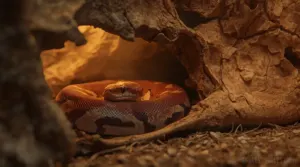
You should replace your boa’s hide box whenever it stops doing its job, which is giving your snake a secure, clean place to rest. That can happen for several reasons, and the timing depends on the material, your boa’s size, and how the hide is holding up.
If you’re unsure what to look for in a replacement, these snake hides for boa constrictors are a good way to compare sizes and materials.
Look for damage first. Cracks, collapse, and sharp edges all mean it’s time for a new one. Soiling matters just as much. If feces, urates, or spilled water get into a hide you can’t fully sanitize, replace it right away.
Growth is the other trigger. A juvenile can outgrow a hide in a couple of months, while an adult needs a new one only when it can no longer coil comfortably inside.
Check your hides on a regular schedule so problems never go unnoticed.
Inspect Boa Hide Boxes for Structural Wear
Damage is the easiest problem to spot, so start with a hands-on check. Pick up the hide box and run your fingers along every edge, seam, and corner. Do this weekly, and always after a deep clean.
Your boa’s weight puts steady stress on a hide, and weak spots fail without warning. Look for these signs:
- Cracks or splits in plastic and wood
- Seams or joints that have loosened or separated
- Sagging or bowing in the roof or floor
- Sharp edges or splinters near the entrance
- Warping that leaves the hide rocking or tilting
Press down gently on the roof. It should feel firm and stay put. If it flexes, shifts, or creaks, replace the hide before it collapses with your snake inside. Because adult boas need an enclosure of at least 8’L x 4’W x 4’H, make sure any replacement hide fits comfortably within the minimum enclosure size without crowding the basking or cool zones.
Discard Hides That Cannot Be Fully Sanitized
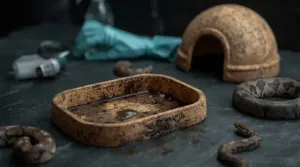
Cracks and loose seams are easy to see. Contamination is harder, and it’s the other reason a hide has to go.
Swapping in one of these mold-resistant snake hide boxes for bioactive setups keeps surfaces smooth and gives bacteria far less room to settle in.
Clean your hides on your regular cage cleaning schedule, then look closely at the result. If a stain, smell, or slimy film is still there after scrubbing and disinfecting, the damage is below the surface. Those are signs of entrenched bacterial growth, and the hide should be thrown out right away.
Porous materials are the usual problem. Bacteria settle into tiny crevices where disinfectant can’t reach, and soaking won’t change that. The same goes for any hide that’s been soiled beyond a surface wipe.
Porous hides harbor bacteria deep inside tiny crevices, where no amount of soaking or disinfecting can ever reach them
If your boa has had parasites or a fungal infection, discard porous hides too. Reinfection isn’t worth the risk, and good hygiene practices include knowing when cleaning won’t work.
Assess Replacement Needs by Hide Material
Not every hide wears out the same way, so your replacement schedule should depend on what it’s made of. The two types below break down differently and call for different checks. Here’s what to watch for with each one.
Managing Temporary Cardboard and Paper Hides
Say you grab a cardboard box for your boa after a move, and two weeks later the corner is soft and smells musty. That’s your cue.
Use this checklist to decide:
- Replace it right away if it’s wet, torn, or soiled with waste.
- Toss paper hides after 1-3 uses.
- Swap cardboard every 1-2 weeks in humid setups.
Evaluating Cork and Untreated Wood Hides
A cork hide controls humidity better than most untreated wood hides, but neither lasts forever. Check them weekly. Inspect every hide box for fissures that trap bacteria or parasites.
| Material | Replace when |
|---|---|
| Cork | Deep grooves remain |
| Wood | Soft, splintered, cracked |
| Both | Cleaning can’t sanitize |
Prioritize substrate safety and a clean snake enclosure setup. Replace any hide that fails these checks.
Replace Hide Boxes Your Boa Has Outgrown
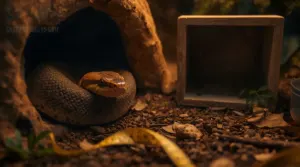
A hide that fit your boa last year may now be too small. If your snake can’t turn around without forcing its way in, or if its body sticks out of the entrance while it rests, the hide is done. Rubbed or scraped skin on the snout is another red flag, and so is a snake that stops using its hide during the day.
Measure before you decide. Check the mid-body girth and compare it to the interior width. Replace it when girth exceeds 80% of the hide’s width. Adult boas need roughly 2 to 3 inches of clearance beyond their girth. Juveniles do best in a snug fit, about 1.5 times their body width.
Replace it before shedding begins.
Maintain Humid Hide Linings Between Box Replacements
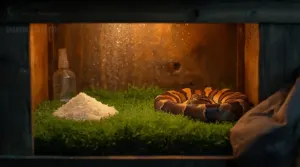
The lining inside a humid hide wears out much faster than the box around it. You’ll need to keep up with regular lining changes to hold humidity steady and keep mold and bacteria away. Below, you’ll find when to swap out each of the two common lining materials.
When to Replace Sphagnum Moss
Moss that looks fine can still be failing. Over time it breaks down and compacts, and compacted moss holds less moisture than fresh strands. Swap it out completely every 4 to 6 weeks, even if it seems clean.
Change it right away if you notice any of these:
- A sour smell
- A slimy texture
- Visible mold or fecal contamination
When to Change Paper Towels
Picture a damp paper towel gone limp and gray, clinging to the floor of the hide box with a sour smell rising from it. That’s your cue.
In a humid hide, change the paper towel every 1-3 days. Swap it daily if you spot waste or food debris, and right away after regurgitation. Toss it if it tears, sheds fibers, or smells off.
Frequently Asked Questions (FAQs)
Can a boa feel stressed after a hide is replaced?
Yes, it can. A new hide box removes familiar scents and cues, and some boas respond by hiding more, moving less, or refusing food. Nervous or shedding snakes react most. Keep the old hide nearby.
How do you clean a hide between replacements?
Think of a hide box as a kitchen counter: wipe off the mess first, then sanitize. Remove all feces, urates, shed skin and soiled substrate. Apply a 1:30 bleach solution, wait 10 minutes, rinse well, and dry completely.
How many hide boxes does a boa need?
Give your boa at least two hides: one on the warm end and one on the cool end. This lets your snake regulate its temperature without giving up its sense of security.
Add a third if space allows.
Why is my boa staying in his hide all day?
Picture a boa that vanishes at sunrise and appears at dusk. That’s normal. Boas are nocturnal, so daytime hiding behavior is typical.
Worry if he also refuses food or your boa enclosure runs too cold.
Conclusion
A hide box is a shield, and a worn one is a shield with cracks you can’t see. Knowing when to replace a boa constrictor hide box due to wear keeps that shield sound. Swap out anything that sags, splits, holds odors, or pinches your snake’s body. Cardboard goes first, wood and cork follow.
Check the hide weekly, and don’t wait for a visible problem. A fresh, snug hide keeps your boa safe and secure.