This site is supported by our readers. We may earn a commission, at no cost to you, if you purchase through links.
Your new snake looks perfect, and that’s exactly the problem. Mites are the size of a poppy seed, and they love hiding in coconut husk, where they’ll wriggle about unnoticed for weeks.
Quarantine only works if you can see what’s happening. Pale urates, a speck of blood, a drowned mite after treatment: every one of them tells a story, but only on a clean, plain floor. The right terrarium substrate mixes for quarantine tanks turn out to be no mix at all.
Here’s how to build a setup that hides nothing, holds humidity steady, and gives you answers fast.
Table Of Contents
- Key Takeaways
- Why Snake Quarantine Requires Simple Substrates
- Terrarium Substrate Mixes to Avoid During Quarantine
- How to Set Up Paper Towel Bedding
- Maintain Quarantine Humidity Without Waterlogged Bedding
- Replace Quarantine Bedding and Monitor Snake Waste
- Transition to Species-Appropriate Substrate Mixes After Quarantine
- Frequently Asked Questions (FAQs)
- Conclusion
Key Takeaways
- Plain paper towel, two or three sheets deep and clipped down at the edges, is the best quarantine substrate because it lets you spot mites, blood and odd urates that coconut husk, sand or bioactive soil would hide.
- Pine, cedar, sand, coconut husk, gravel and bioactive setups all work against you during quarantine, since they harm your snake’s lungs, risk impaction, or give mites and waste somewhere to hide.
- You’ll keep humidity steady by using a wide, shallow water bowl in a rear corner, adjusting ventilation, placing the thermostat probe on top of the towels, and swapping out damp or soiled sheets straight away to avoid scale rot.
- Plan on at least 90 days of quarantine (longer for boas, pythons and wild-caught snakes), then introduce the species-appropriate substrate gradually, letting your snake choose when to move onto it.
Why Snake Quarantine Requires Simple Substrates
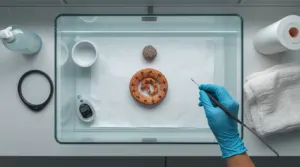
Why strip everything back when you’ve just brought a new snake home? Because quarantine is about information, and a plain setup tells you far more than a pretty one. (Sorry, aquascapers.)
A bare enclosure makes it easy to spot droppings, shed skin, and behavior changes, so you can catch common snake parasites before they reach your other animals.
A bare, simple enclosure reveals more about a new snake’s health than any elaborate habitat ever could
On clean white paper towel, you can spot mites, mite droppings, blood in the feces and odd urates at a glance. You’ll see dead mites after treatment, too, which is rather reassuring. Alongside your own observations, book a reptile vet check-up that includes at least a basic fecal screening.
Hygiene gets easier as well. Paper is cheap, so you can bin it and disinfect the whole tank as often as needed, with nothing hiding in crevices.
Fewer decorations mean less stress for your snake. A plain terrarium substrate like paper gives you a neutral baseline, so you’ll learn what humidity your species needs before anything fancier.
Terrarium Substrate Mixes to Avoid During Quarantine
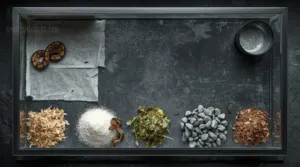
So what’s off the menu? Quite a lot, as it happens.
Pine and cedar shavings smell lovely, but they release aromatic phenols that can damage your snake’s lungs and nervous system. A new arrival with a shaky immune system really doesn’t need that.
Watching for signs of a bad substrate for snakes, like wheezing or labored breathing, helps you catch a harmful bedding choice before it worsens.
Sand is a hidden impaction risk. Snakes swallow grains while feeding, and a blockage means a vet bill.
Coconut husk and chip soak up waste and odours, which sounds handy until you realise they also hide feces and urates. You’re quarantining to observe, remember?
Skip bioactive soil setups with springtails, isopods or leaf litter too. They give mites and parasites somewhere to lurk and make waste hard to spot.
Gravel and pebbles don’t absorb anything, so urine pools and bacteria thrive. They’re also rough on scales.
How to Set Up Paper Towel Bedding
So what’s left? The humble kitchen roll, and honestly, it’s great.
Start by laying two to three sheets across the whole enclosure floor. One layer tears the moment your snake slithers over it, leaving shredded bits bunched in the corners. Layering gives it enough body to stay put but still lifts out easily.
Pairing that sturdy substrate base with snug hides and covered enclosure sides is a simple way to make your snake feel secure in its new home.
Next, get your kit sorted:
- Paper towels, stacked two or three deep
- Office clamps or binder clips for the edges
- A thermostat probe
- A water dish
- A hide or two
Clip the edges down so nothing bunches and no escape artist finds a gap. Place the probe on top of the towels, where your snake actually rests. Underneath, it reads falsely high and your thermostat cooks the tank while it waits.
A reptile thermostat with probe lets you tape the sensor flat against the paper towels, so readings match what your snake actually feels.
Maintain Quarantine Humidity Without Waterlogged Bedding
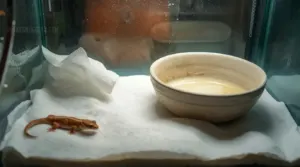
Paper towels don’t hold moisture like soil does, so humidity control takes a bit of finesse. (Think of them as a blank canvas, not a sponge.)
Use a wide, shallow water bowl and tuck it in a rear corner. You get a gentle humidity gradient without soaking the bedding. Check daily for cool, dark patches. Those mean trouble. Swap soggy sheets straight away.
Ventilation does the rest. If humidity drops too fast, reduce airflow a little. If condensation builds, open it up. Good aeration keeps mould away, and it’s easier to fix than a wet tank. Simple, right? A digital reptile hygrometer thermometer lets you track humidity and temperature at a glance, so you can adjust airflow before problems start.
Quick tip: wipe spills immediately, because poor drainage on a flat floor means puddles. Lift a corner and check underneath too, daily.
Replace Quarantine Bedding and Monitor Snake Waste
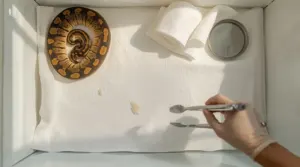
The paper towel itself is your best diagnostic tool, so treat it that way. Swap it out completely every time your snake defecates or urates. (Yes, every time. We’re not fussy, we’re thorough.)
Between accidents, spot clean daily. Replace everything if it turns damp, smelly or compacted, because soggy bedding invites scale rot and bacteria.
Skip any soil mix or fancy substrate layering here. Plain towels give you zero water retention and instant drainage, so moisture regulation stays in your hands.
Now look at what’s left behind:
- Urates: white or cream is normal.
- Yellow or green urates: call your vet.
- Blood: call your vet today.
Odd waste once is a blip. Repeated oddness is a pattern, and patterns deserve photos.
Transition to Species-Appropriate Substrate Mixes After Quarantine
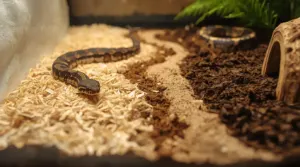
We’ve made it. Quarantine’s over, the snake’s healthy, and that bare paper towel setup can finally go. But don’t just tip everything out and dump in a new substrate.
Introduce it gradually. Put the new mix on one side of the enclosure and let your snake decide when to move in. For the first few days, watch for excessive rubbing or avoidance, because those flag a substrate incompatibility early.
Then match the mix to the species. Hognose snakes are burrowers, so give them a deep layer of aspen or a soil and sand mix. Rainbow boas need 75 to 90 percent humidity, which cypress mulch or eco earth holds far better than damp paper ever could (and without the soggy scale rot risk).
Most snakes settle fast, and you’ll see it in their confident movement.
Frequently Asked Questions (FAQs)
How long should a new snake stay quarantined?
Plan on 90 days as your baseline for any new snake. Boas and pythons deserve longer, up to six months or even a year, because inclusion body disease can hide quietly. Wild-caught animals? Twelve months.
How long should terrarium plants be quarantined separately?
Give new terrarium plants two to four weeks in their own space. Tropical ones need 10 to 14 days minimum, so hidden eggs can hatch and you can spot them. Check often, and don’t skip it.
How should quarantine plants be prepared before entering enclosures?
Start by rinsing every root clean under lukewarm running water. Old soil hides pests and fertiliser residue, so lose it all. Then check leaves and stems closely, and dip foliage in 1:10 bleach for 5-15 minutes. Rinse well.
Conclusion
Paper towels look dull, and yes, your snake deserves better than a bargain-bin bedroom. But quarantine isn’t a forever home, it’s a few weeks of detective work. Plain, boring terrarium substrate mixes for quarantine tanks aren’t really mixes at all, and that’s the point.
Keep it simple and spotless, change it often, and read every dropping like a diary. Once the all-clear comes, go wild with proper bedding. Patience now buys a healthy collection later.