This site is supported by our readers. We may earn a commission, at no cost to you, if you purchase through links.

Most boa keepers spread an inch or two of bedding across the floor, call it done, and wonder why their snake stays dry, restless, and glued to the water bowl. Two inches is the absolute minimum, and it barely buffers humidity.
Boas are burrowers. A hatchling wants 3 inches to tunnel into, and a large adult female wants 4 to 6 inches so she can vanish completely. That depth also holds the 55 to 75 percent humidity her skin needs.
So how deep should boa substrate be? It depends on age, size, material, and whether your enclosure can handle the weight and moisture.
Table Of Contents
- Key Takeaways
- What Substrate Depth Do Boa Constrictors Need?
- Substrate Depth Affects Humidity and Burrowing
- Safe Substrate Materials for Boa Constrictors
- Bioactive Boa Substrate Needs a Soil Base
- Enclosure Features That Accommodate Deep Substrate
- Substrate Volume by Enclosure Size and Depth
- Frequently Asked Questions (FAQs)
- Conclusion
Key Takeaways
- Two inches is the bare minimum for a boa, so start hatchlings at 3 inches and give big adult females 4 to 6 inches so they can vanish completely and stay in the 55-75% humidity their skin needs.
- Deep bedding works as your enclosure’s humidity reservoir, so a thin layer dries out within hours and leaves your boa restless and shedding in patches.
- Coconut husk, cypress mulch, or a topsoil, coconut fiber, and play sand mix are your best materials, but you should skip pine, cedar, reptile carpet, and gravel, and feed in a separate bare tub to avoid impaction.
- Deep substrate is heavy, wet, and a blanket over undertank heaters, so you need a rigid waterproof enclosure with side ventilation, a heat source mounted on the wall or above, and a full bedding swap every 3 to 6 months.
What Substrate Depth Do Boa Constrictors Need?
Your boa’s substrate depth isn’t one number, because it changes as the snake grows. The right amount also decides whether your boa can burrow, hide, and hold its humidity. Below, you’ll find what to aim for at each life stage, starting with hatchlings and juveniles and moving on to adults.
If you’re unsure your substrate is holding enough moisture, the signs your boa’s humidity is too low can tell you when to adjust.
Hatchlings and Juveniles
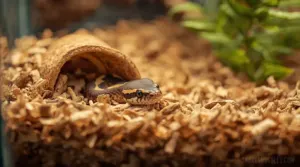
Depth matters more for small boas than most keepers assume. Give hatchlings and juveniles at least 2 inches of bedding, and aim for 3. A deeper layer lets them tunnel out of sight, which lowers stress, and it holds moisture so humidity stays in the 55-75% range.
Adult boas do well with 2-3 inches of substrate such as aspen, paper, or fir/cypress bark, with humidity kept around 60-70%.
Feed them in a separate bare tub so they don’t swallow chips.
Adults
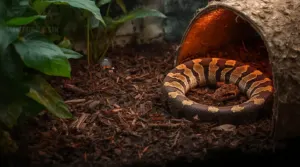
Once boas hit adult size, go deeper. Three inches is a fair baseline, but 4 to 6 inches suits big females, since they need room to disappear completely. Two inches is the floor, not a goal.
Thicker layers also buffer humidity better, so you’ll mist less. Just check your belly heat: deep substrate can muffle undertank heaters and hide hot spots.
For a closer look at how substrate depth fits into the rest of your enclosure, see these indoor snake habitat setup tips.
Substrate Depth Affects Humidity and Burrowing
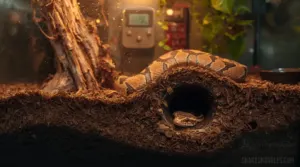
Depth isn’t just about giving your boa room to dig. It’s what makes your enclosure hold moisture at all.
Substrate is your main humidity engine. It soaks up water when you mist and releases it slowly, which keeps ambient humidity near the 40-60% boas need. A thin layer over a bare floor dries out within hours. Go deeper, around 4 to 6 inches, and it buffers evaporation far better. Two inches is the floor, not the goal.
Your boa’s bedding works like a humidity reservoir, and a shallow layer simply can’t store enough moisture to last the day
Depth also drives burrowing. A boa that can’t disappear into the medium will still try, and it may dig to cool off or to build a hide in an exposed setup. Constant digging can also signal mites or excess heat, so check your temperatures before you blame the bedding.
Safe Substrate Materials for Boa Constrictors
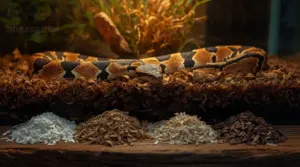
Once you’ve settled on depth, the material matters just as much. Your best bet is coconut husk or cypress mulch. Both hold humidity and let your boa burrow, but both can cause impaction if swallowed. Chunkier pieces like ReptiChip are harder to ingest by accident than fine, dusty bedding.
If you’d rather mix your own, 40% topsoil, 40% coconut fiber, and 20% play sand drains well and holds moisture. Aspen shavings are safe too, though they’re dusty and need replacing weekly before they turn soggy.
Whichever substrate you choose, keeping it about 3-4 inches deep gives your snake room to burrow, and this corn snake habitat requirements guide covers the rest of the enclosure setup.
Skip pine and cedar. Their aromatic oils irritate skin and can cause respiratory illness. Reptile carpet is a poor choice as well, since it blocks digging and can scrape ventral scales. Gravel is too hard to excavate.
Feed in a separate bare enclosure to cut ingestion risk further.
Bioactive Boa Substrate Needs a Soil Base
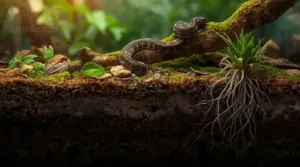
A bioactive boa setup isn’t just a regular enclosure with a plant stuck in it. It needs a soil-based layer that can support live roots and a cleanup crew, because loose chips alone won’t do the job.
Below, you’ll find the two things that decide whether that layer works: the mix itself and how you keep it from going bad.
Soil Mixes for Plants and Cleanup Crews
Plain topsoil alone won’t cut it. Mix 40% topsoil, 40% coconut fiber and 20% play sand by volume, or use 2 parts topsoil, 2 parts fiber and 1 part sand.
Fold in sphagnum moss and hardwood leaf litter to feed your cleanup crew. Add springtails first, then isopods two to four weeks later. Loose chips can’t support roots or colonies.
Moisture and Mold Control
Deep substrate holds moisture longer than you’d think, and that’s where trouble starts. Keep these three habits:
- Let the surface dry briefly between mistings, since short drying cycles beat a permanently damp setup.
- Run low intake and high exhaust vents so air never goes stagnant.
- Stir compacted top layers before they turn mushy and sour.
Enclosure Features That Accommodate Deep Substrate
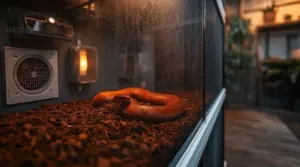
Picture a keeper who fills a standard 4x2x2 melamine tub with five inches of cypress mulch, mists it daily, and wonders why the floor swells and the corners leak within three months. The enclosure wasn’t built for the job.
Deep substrate is heavy and wet, so you need a rigid, flat-bottom build. Welded PVC takes moisture best. If you’re going wood, run a thick bead of silicone along every seam and coat the interior with a waterproofing paint like DRYLOCK.
Airflow matters just as much. Thick bedding blocks bottom ventilation, so add screened side vents or a small fan on a timer to keep humid air from going stale.
Choose a front-opening door with a substrate dam. Reaching over the top stresses boas, and the dam keeps the bedding where it belongs.
Substrate Volume by Enclosure Size and Depth
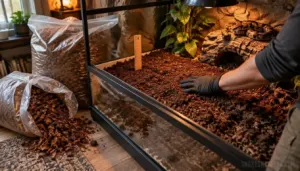
A 48-inch by 24-inch adult enclosure needs at least 60 quarts of substrate for a three-inch layer. Most people eyeball it and buy one bag.
The substrate volume calculation is simple. Multiply inside length by width to get cubic inches per inch of depth, then multiply by your target depth. Convert to quarts to match the bags you’re buying, and add 10 percent for settling.
For hatchlings, a 36-inch by 18-inch footprint at four inches takes about 45 quarts. A 4-foot by 2-foot space at four inches needs at least 80 quarts. Juveniles in 24-inch tanks need far less.
Density varies by material, so check bag volume, not weight. Topping off later is easy, and running short mid-setup is annoying.
Frequently Asked Questions (FAQs)
How do you spot-clean deep boa substrate?
Deep bedding hides messes beautifully, which is the problem. Scoop the visible feces and urates, then remove all substrate within an 8 to 10 inch radius, because urine soaks outward and downward.
Refill it dry.
How often should boa substrate be fully replaced?
Picture a corner of the enclosure after three months: packed, dark, faintly sour. That’s your cue. For most setups, replace everything every 3 to 6 months, sooner for big, messy boas. Spot clean weekly.
Can under-tank heating be used with deep substrate?
Not well. An under-tank heater only warms the surface it touches, so deep substrate acts like a blanket and your boa’s enclosure stays cold. Mount the pad on a side wall, or heat from above.
Does substrate depth affect boa shedding problems?
Yes, and more than most keepers expect. Shallow bedding dries out fast, so your boa sheds in patches instead of one clean piece. Go deeper than 2 inches, ideally 4 to 6, to hold humidity.
Can boas be kept on substrate while feeding?
Yes, they can. Dry the thawed prey with paper towels, then set it on a plate, tile, or cork slab inside the enclosure. Wet food collects bedding, and that’s how accidental ingestion happens.
Conclusion
So how deep should boa substrate be, in the end? Deep enough for your snake to vanish completely.
Start with 3 inches for hatchlings and work up to 4 to 6 for adults, then match the material to your humidity goals. Skip the thin layer that looks tidy but does nothing. Check your enclosure’s weight limits and moisture control before you pile it on.
Get that right and your boa stops pacing and starts digging.