This site is supported by our readers. We may earn a commission, at no cost to you, if you purchase through links.

Every night, your boa slides into the same plastic box, tucked against the same wall, even though three other hides sit within easy reach. That’s not stubbornness. It’s a decision.
Boas weigh warmth, wall contact, humidity, and fit before they commit to a spot, and they remember what works. Once you know the signs your boa constrictor prefers a specific hide box location, you can stop guessing and start reading your snake. A sudden change in that routine can also flag a health problem.
Six clear signals separate a true favorite from a passing visit, and each one points to something you can adjust.
Table Of Contents
- Key Takeaways
- Your Boa Consistently Chooses One Hide Location
- Your Boa Settles Against Walls or Corners
- Hide Selection Tracks Your Boa’s Temperature Needs
- Humid Hide Use Increases During Shedding
- Daytime Rest Centers on One Hide
- Confirming a Genuine Hide Box Location Preference
- Frequently Asked Questions (FAQs)
- Conclusion
Key Takeaways
- Track which hide your boa uses for a couple of weeks to set a baseline, because a steady choice shows a real preference and a sudden abandonment of its favorite spot can signal a temperature, humidity, or health problem.
- Your boa picks hides based on wall contact and warmth, favoring spots where its sides and back are covered and moving to the warm side after meals or the cool side once ambient heat passes 88°F.
- Shedding sends your boa to a humid hide holding 70-85% humidity, so offer at least two regular hides on the warm and cool sides plus a humid one.
- Before crediting location, make sure the hide fits (1-2 inches of clearance, touching the walls on every side) and compare temperature and humidity inside each hide, since a spot that wins daytime rest for three days running is a true preference.
Your Boa Consistently Chooses One Hide Location
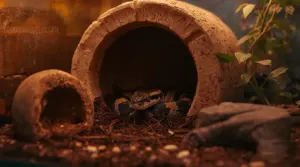
You’ll often notice your boa heading to the same hide box night after night, even when you’ve offered several other hiding spots. That’s a learned habit, and it usually means the spot feels secure and holds the right temperature or humidity for your snake.
Because a hide box that stays warm and slightly humid feels so secure to a snake, it helps to understand why snakes need hiding spots in the first place.
Write down which hide your boa uses each day for a couple of weeks. That record becomes your behavioral baseline, and it separates a true hide box preference from a one-off visit. Sudden changes deserve attention.
Boas are usually calm and solitary, so a snake that suddenly avoids its favorite hide may be showing signs requiring veterinary attention such as lethargy or a decreased appetite.
Your Boa Settles Against Walls or Corners
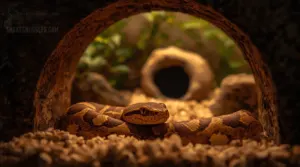
Once you’ve confirmed your boa returns to one hide, look at where that hide sits. Most boas pick spots that put their body against a wall or tucked into a corner, and that’s normal. Snakes feel safest with solid contact along their sides and back.
Watch for these signs:
- Your boa presses its length along the enclosure wall.
- It wedges into a corner of the hide box.
- It ignores hides sitting in open space.
If you shift a hide away from the wall, expect reduced hide use until your boa finds new contact points.
Hide Selection Tracks Your Boa’s Temperature Needs
Wall contact explains part of your boa’s choice, but heat explains the rest. Boas thermoregulate by moving between hiding places, so the hide they pick often reflects what their body needs.
A boa’s favorite hide isn’t random; it’s the spot where the snake can best regulate its body temperature
After a meal, expect your boa to park in the warm-side hide while it digests. It also heads there when room temperatures dip, holding heat without burning energy. Once ambient heat climbs past 88°F, it shifts to the cool side to avoid overheating.
For a hide that holds steady heat after meals, choosing the right snake hide for your boa constrictor makes it easier to keep that warm side near 86–90°F.
Never switching? Check your temperature gradient.
Humid Hide Use Increases During Shedding
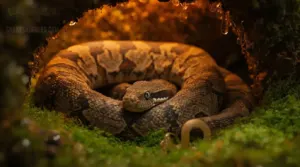
Heat isn’t the only thing steering your boa’s choice of hiding places. When shedding approaches and your boa’s eyes turn milky blue, it’ll often claim the humid hide and stay put.
That moss-lined spot holds humidity levels of 70-85%, which loosens old skin. Watch for these moments:
- Your boa lingers inside for days, refusing to leave.
- Its eyes cloud over, and it looks vulnerable.
- It ignores food, and you feel worried.
- After the shed, it leaves and you feel relieved.
Daytime Rest Centers on One Hide
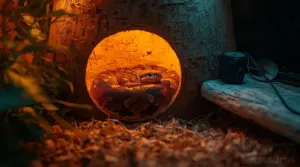
Usually, a boa spends its daylight hours tucked into one spot, and that’s exactly what you want to see. Boas are ambush predators built to conserve energy, so a snake that rests in the same hide box every day is behaving normally, not being picky.
A snug, dark hide box gives your boa the cover it needs to feel safe, and these boa constrictor hide box benefits for stress relief explain why that matters.
Most of that choice comes down to warmth. Your boa picks the spot that holds its preferred body temperature while it rests, so check that the hide sits within a proper temperature gradient.
Confirming a Genuine Hide Box Location Preference
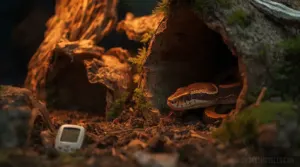
Spotting the signs is one thing, but you’ll want to be sure your boa truly prefers a spot before you rearrange anything. A single habit can have more than one cause, so a little detective work pays off. The two checks below will help you tell a real preference from a passing habit.
Separate Hide Fit From Location
A boa that loves one spot might just be loving the box. Before you credit location, check the fit.
Hiding places that are too big, too tight, or oddly shaped get ignored, even when they sit in the perfect spot. Your boa should coil with 1-2 inches of clearance, touch the walls on every side, and slip in and out without squeezing. If it’s forcing its way through, the problem is the opening, not the placement. For exact interior measurements by snake size, this boa constrictor hide sizing guide shows what juveniles and 6–8 foot adults need.
Fix the fit, then retest.
Track Microclimates and Daily Hide Use
Picture a thermometer probe tucked inside each hide, quietly reporting while your boa sleeps. That’s the kind of detail that separates a guess from a pattern.
Check each of your boa’s hiding places once in the morning and once at night, noting temperature and humidity inside, not just in the room. If the same hide wins daytime rest for three days running, that’s a real location preference. Adjust your thermal gradient or humidity control only when the readings explain the choice.
Frequently Asked Questions (FAQs)
Can I move my boas hide after it settles?
Yes, you can, but go slowly. Shift the hide a few inches every few days rather than all at once, and keep it within the same thermal gradient so your boa’s temperature and security needs stay met.
Should I provide more than one hide box?
Yes, offer at least two. Place one on the warm side and one on the cool side so your boa can regulate its temperature without leaving shelter. Add a humid hide for shedding.
Does my boas age affect hide preferences?
Yes, but mostly in the details. Juveniles want snug hides and explore more before settling, while adults need roomier ones and stay put once they’ve learned your enclosure setup. Both still prioritize location.
What materials make the best hide boxes?
Choose thick PVC or resin for most boas. Both resist warping, clean easily, and hold heat well. For shedding, add a humid hide made of ABS plastic with damp sphagnum moss, or use cork bark.
How often should I clean my boas hide?
Spot clean your boa’s hide whenever it’s soiled, and disinfect it weekly. Soak it in a 3% bleach solution for at least 10 minutes. Swap humid hide paper towels every 1-3 days, and do a full deep clean monthly.
Conclusion
Watch where it sleeps, note when it moves, and track what changes. Those habits turn guesswork into understanding. The signs your boa constrictor prefers a specific hide box location are simple once you know them: steady choice, wall contact, warmth, humidity, and daytime rest.
Keep your notes honest and your setup flexible. Sudden abandonment of a favorite hide deserves a closer look at temperature, humidity, and health. Your boa has told you what it needs.