This site is supported by our readers. We may earn a commission, at no cost to you, if you purchase through links.

A boa that won’t eat, stay coiled in the open, or strikes defensively isn’t a problem snake—it’s a stressed one. Nine times out of ten, the enclosure lacks adequate cover. Boas are ambush predators, hardwired to feel exposed without a snug retreat, and in large enclosures that instinct amplifies fast. The bigger the space, the more a poor hide choice costs you in behavioral problems and failed feeds.
Getting boa constrictor hides for large enclosures right means matching interior dimensions to body mass, choosing materials that hold up under heat and humidity, and placing hides with purpose across the thermal gradient.
The nine options ahead are worth your attention.
Table Of Contents
- Key Takeaways
- Top 9 Boa Constrictor Hides
- 1. Zoo Med Rock Corner Water Dish
- 2. Pangea Large Reptile Hide Box
- 3. Wooden Reptile Hideout Climbing Ladder
- 4. Large Plastic Reptile Hide Box
- 5. RunXF Resin Reptile Rock Hideout
- 6. BNOSDM Large Resin Reptile Hideout
- 7. Oversized Reptile Basking Hide Platform
- 8. Extra Large Resin Reptile Hide
- 9. PUEUTU Large Resin Reptile Cave
- Choosing The Right Hide Size
- Best Hide Materials for Boas
- Hide Placement in Large Enclosures
- Cleaning and Replacing Boa Hides
- Frequently Asked Questions (FAQs)
- What are the best hides for Boas?
- How many hides should a boa have?
- How big should a boa enclosure be?
- Do Boas need a new enclosure?
- Do boa constrictors need a hide?
- What is the best enclosure for a boa constrictor?
- How many hides does a boa need?
- Can boas share a hide in the same enclosure?
- Do hides affect a boas feeding behavior?
- Should hides be elevated or kept at ground level?
- Conclusion
Key Takeaways
- A stressed boa that won’t eat or is constantly exposed almost always needs a better hide—snug fit and proper placement fixes most behavioral problems fast.
- Match hide size to your boa’s body: juveniles need 9–14 inches of interior length, while adults over six feet in length need hides 14–20 inches wide with room for a full S-curve.
- Use at least three hides—warm side, cool side, and a humid hide packed with sphagnum moss—to address thermoregulation and shedding within a single enclosure setup.
- ABS plastic and food-grade resin outlast wood in humid enclosures, but smooth interior walls are non-negotiable regardless of material to protect the snake’s scales and simplify the cleaning process.
Top 9 Boa Constrictor Hides
Finding the right hide for a large boa isn’t as simple as grabbing whatever fits your budget.
A few smart tricks can make all the difference, so it’s worth checking out this guide on creating effective boa constrictor hides before you start building.
Size, material, and placement all matter — and the wrong choice can stress your snake more than having no hide at all.
Here are nine options worth considering for large enclosures in 2026.
1. Zoo Med Rock Corner Water Dish
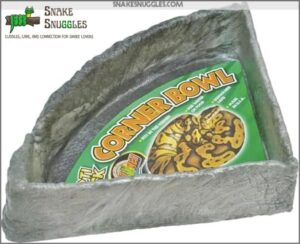
The Zoo Med Rock Corner Water Dish pulls double duty in large enclosures. At 13.8 × 13.2 × 3.2 in with a roughly 1-gallon capacity, it gives adult boas room to soak without flooding your setup. The corner-mount design reclaims floor space—critical in tight enclosures. Heavy-duty plastic resists cracking through repeated cleanings, and the dishwasher-safe surface makes weekly sanitation straightforward.
One note: the deep sides can challenge smaller or less mobile animals, so it’s best suited for larger, confident boas.
| Best For | Large reptile owners—think adult boas, bearded dragons, or turtles—who need a roomy, stable water dish that’s easy to keep clean. |
|---|---|
| Material | Rigid plastic |
| Primary Use | Soaking dish/hide |
| Ease of Cleaning | Dishwasher safe |
| Size (L×W×H) | 13.8×13.2×3.2 in |
| Species Compatibility | Snakes, dragons, turtles |
| Durability Rating | Heavy-duty, crack-resistant |
| Additional Features |
|
- Holds about a gallon of water, giving bigger reptiles plenty of space to soak comfortably
- Corner-mount design saves floor space and stays level, cutting down on spills
- Dishwasher safe and built tough—cleans up fast and holds up over time
- Deep, high sides can be tricky for smaller or less agile animals to climb in and out of
- Color is random, so it might clash with your enclosure’s look
- Gets heavy fast when filled with water, making it a bit of a chore to move or reposition
2. Pangea Large Reptile Hide Box
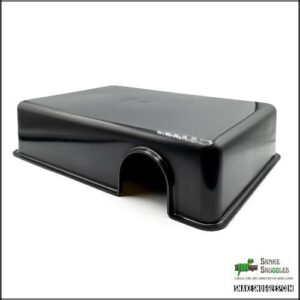
The Pangea Large Reptile Hide Box provides a proper retreat for boas requiring more than basic water access. Its 13" × 8" × 3" interior comfortably accommodates mid-size to adult boas, ensuring ample space for natural movement.
Constructed from 1/8-inch ABS plastic, the hide box resists warping under heat lamps and withstands repeated disinfections without cracking. Smooth walls eliminate scale snags, prioritizing your boa’s safety during use.
The offset entrance placement mimics a narrow burrow entry, a design choice proven to reduce defensive behavior in reptiles. This feature creates a secure, stress-minimizing environment.
Compatible with standard rack tubs and 40-gallon breeders, the hide box optimizes enclosure space without compromising floor area. Its durable, low-maintenance design ensures long-term functionality.
| Best For | Owners of mid-size to adult boas, ball pythons, or kingsnakes who need a roomy, easy-to-clean hide that works in rack systems or larger tanks. |
|---|---|
| Material | Injection-molded plastic |
| Primary Use | Snake hide |
| Ease of Cleaning | Smooth, wipe-clean surface |
| Size (L×W×H) | 13.25×9×3.25 in |
| Species Compatibility | Ball pythons, boas, geckos |
| Durability Rating | Warping-resistant plastic |
| Additional Features |
|
- Spacious interior (13" × 8" × 3") gives adult snakes plenty of room to feel secure and settle in comfortably
- Smooth plastic is a breeze to wipe down and disinfect — no rough seams or textures to trap bacteria
- Fits standard rack setups and 40-gallon breeder tanks, so it works with what most keepers already have
- Too big for juveniles or smaller snakes — a hide that’s oversized can actually stress them out instead of calming them down
- The bulky footprint eats into floor space, which matters in tighter enclosures
- Plain black plastic with zero decorative flair — not ideal if you care about how your enclosure looks
3. Wooden Reptile Hideout Climbing Ladder
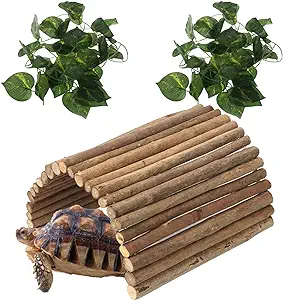
Not every boa hide needs to be a solid box. The Hamiledyi Wooden Reptile Hideout takes a different approach: bendable metal wire connects natural wood sticks, letting you reshape it into a tunnel, bridge, or ramp. The detachable reptile leaves add overhead cover, turning it into a functional shelter.
Available in Extra Large (20 × 11.8 in), it works best for younger or mid-size boas.
Weight-bearing capacity isn’t listed, so monitor heavier animals closely.
| Best For | Younger or mid-size boas and other small-to-medium reptiles whose owners want a flexible, customizable hide that doubles as a climbing structure. |
|---|---|
| Material | Wood with metal wire |
| Primary Use | Hide/climbing structure |
| Ease of Cleaning | Wood requires spot cleaning |
| Size (L×W×H) | 20×11.8 in (XL) |
| Species Compatibility | Reptiles, amphibians, mammals |
| Durability Rating | Wood with metal reinforcement |
| Additional Features |
|
- Bendable wire frame lets you reshape it into a tunnel, bridge, or ramp to fit your enclosure layout
- Natural wood is chew-friendly, supporting dental health for species that gnaw
- Detachable leaves add overhead cover, giving animals a more secure, sheltered feel
- Weight-bearing capacity isn’t listed, so it’s a gamble with larger or heavier boas
- The artificial leaves can look shiny and smell off out of the box — they need airing out before use
- Only one unit per purchase, so bigger enclosures may need multiple buys to fill the space
4. Large Plastic Reptile Hide Box
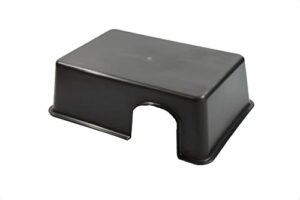
If you want straightforward function over aesthetics, plastic wins every time. This hide measures 19.75 × 13.5 × 6 inches—roomy enough for medium adult boas without being cavernous. Heavy-duty polypropylene ensures durability, resisting cracks under heat and repeated disinfection cycles.
The offset entrance limits interior sightlines, a detail more critical than many keepers realize. Smooth interior walls prevent scale snagging and eliminate stubborn residue during cleaning, simplifying maintenance.
One limitation: monitor humidity closely, as no built-in ventilation exists. This design choice requires proactive environmental management.
| Best For | Keepers of medium to large reptiles—adult ball pythons, boas, woma pythons, and similar species—who prioritize easy cleaning and long-term durability over a natural look. |
|---|---|
| Material | Polypropylene plastic |
| Primary Use | Reptile hide |
| Ease of Cleaning | Smooth non-porous surface |
| Size (L×W×H) | 19.75×13.5×6 in |
| Species Compatibility | Boas, pythons, monitors |
| Durability Rating | Near-unbreakable polypropylene |
| Additional Features |
|
- Heavy-duty polypropylene holds up to heat, humidity, and repeated disinfecting without cracking
- Smooth interior cleans up fast and won’t snag scales
- Offset entrance gives your reptile a real sense of security by blocking interior sightlines
- No built-in ventilation means you’ll need to keep a close eye on humidity inside the hide
- Way too big for juveniles or smaller species—oversized hides can actually stress them out
- Plain black plastic won’t win any style points if you’re going for a naturalistic setup
5. RunXF Resin Reptile Rock Hideout
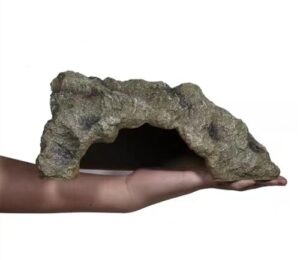
Three sizes, one smart design. The RunXF Resin Rock Hideout blends natural aesthetics without sacrificing practicality. Its eco-polyresin construction is non-toxic, humidity-resistant, and won’t warp under the demanding conditions of large boas.
Its smooth interior surfaces also make cleanup simple—a big plus when you’re keeping up with regular boa constrictor hide maintenance to keep bacteria and shed buildup in check.
The rough exterior texture aids shedding, allowing your boa to rub against it directly. Inside, smooth walls protect scales and simplify cleaning, ensuring both safety and maintenance ease.
A stable base prevents tipping, even during active snake movement. This thoughtful design confidently manages humid setups, making it a reliable mid-range choice that earns its floor space.
| Best For | Reptile owners looking for a natural-looking hide that doubles as a basking spot and shedding aid for geckos, bearded dragons, skinks, or turtles. |
|---|---|
| Material | Eco polyresin |
| Primary Use | Hide/basking platform |
| Ease of Cleaning | Smooth interior finish |
| Size (L×W×H) | 10×7.7×5.2 in (L) |
| Species Compatibility | Geckos, dragons, skinks |
| Durability Rating | Heat and humidity resistant |
| Additional Features |
|
- The rough exterior gives reptiles a great surface to rub against during shedding — no extra tools needed.
- Corner-fit design keeps the tank looking clean and leaves room for other gear or décor.
- Eco-polyresin holds up well in humid setups and won’t warp, crack, or off-gas anything harmful.
- Edges can come out sharp right out of the box, so you might need to do a little sanding before it’s safe for basking.
- Color varies unit to unit — what you get could lean more brown or more gray than what’s pictured.
- The small size runs pretty tight, so double-check the dimensions if you have a larger juvenile or any adult lizard.
6. BNOSDM Large Resin Reptile Hideout
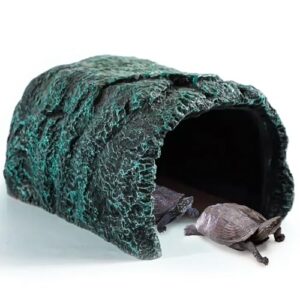
Built specifically for large boas, the BNOSDM Large Resin Reptile Hideout doesn’t mess around. The interior cavity comfortably fits boas over 6 feet, with a chamber width of 6–8 inches to accommodate genuinely thick-bodied snakes.
Smooth internal walls protect scales during movement and shedding—no snag points. The non-porous resin resists mold and humidity, making it a practical fit for high-humidity enclosures.
Clean it with mild soap or a reptile-safe disinfectant and you’re done. Durable, functional, and worth the floor space.
| Best For | Small reptiles and juvenile turtles that need a secure, stable hide in a land-water or terrestrial setup. |
|---|---|
| Material | High-density resin |
| Primary Use | Hide/basking platform |
| Ease of Cleaning | Rinse clean, odor-free |
| Size (L×W×H) | 7.87×5.12×4.33 in |
| Species Compatibility | Turtles, reptiles |
| Durability Rating | Sufficient weight, stable build |
| Additional Features |
|
- Realistic rock texture blends naturally into most enclosures and looks great
- Heavy enough to stay put in shallow water setups without floating or tipping
- Easy to clean and leaves no plastic smell after washing
- Interior is too cramped for larger turtles, side-neck species, or big reptiles
- Single entrance limits airflow and can feel restrictive for more active animals
- Some units have reported cracks or repair flaws that need a close look before use
7. Oversized Reptile Basking Hide Platform
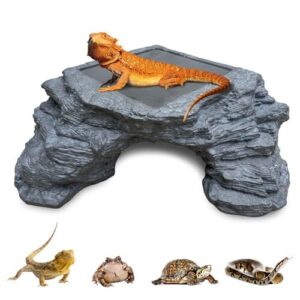
The Oversized Reptile Basking Hide Platform serves double duty as a dedicated basking surface and functional hide in one unit. Its 13 × 12 × 5 in resin body supports up to 25 pounds, ensuring stability even for large adult boas.
The platform features an integrated natural slate top that efficiently absorbs heat from a basking bulb, radiating it as infrared—ideal for aiding digestion. Smooth interior walls protect scales from abrasion during use.
Monitor the slate surface closely; it can exceed safe temps rapidly if the heat source runs hot.
| Best For | Reptile and amphibian owners who want a single enclosure piece that works as both a basking spot and a hide for species like bearded dragons, geckos, snakes, and turtles. |
|---|---|
| Material | Resin with slate top |
| Primary Use | Hide/basking platform |
| Ease of Cleaning | Easy to clean resin |
| Size (L×W×H) | 13×12×5 in |
| Species Compatibility | Dragons, geckos, snakes, frogs |
| Durability Rating | Stable, odor-free resin |
| Additional Features |
|
- The natural slate top soaks up heat and radiates it as infrared, which genuinely helps with digestion and keeping your reptile comfortable.
- It’s a solid, heavy build that won’t tip or wobble when your pet climbs on it or ducks inside.
- Works across a wide range of species, so it’s a practical pick for mixed enclosures or if you keep multiple animals.
- The slate can get seriously hot fast, so you’ll need to keep a thermometer handy to avoid burns.
- Some units ship with sharp interior edges that need a quick sand-down before you let your pet near it.
- At $52.99, it’s on the pricier side, and a few buyers have reported damage or missing pieces on arrival.
8. Extra Large Resin Reptile Hide
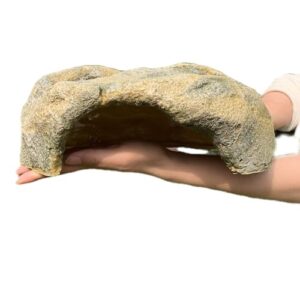
The Extra Large Resin Reptile Hide earns its place in serious setups.
Its smooth interior protects scales during movement and shedding—no rough edges scraping your boa mid-cycle. The wide entry opening lets your snake retreat fast, which matters when stress spikes.
Exterior texture mimics natural rock, blending cleanly into enclosures without looking artificial. It’s crafted from non-toxic, crack-resistant resin that withstands consistent enclosure temperatures.
A solid pick for large boas needing reliable daily refuge.
| Best For | Medium-sized reptiles, amphibians, and turtles that need a sturdy, spacious hide with a built-in basking platform. |
|---|---|
| Material | High-density resin |
| Primary Use | Hide/basking platform |
| Ease of Cleaning | Smooth interior, rinse clean |
| Size (L×W×H) | 12×10×3.5 in |
| Species Compatibility | Reptiles, turtles, amphibians |
| Durability Rating | Resists movement and floating |
| Additional Features |
|
- Heavy resin construction keeps it firmly in place — no floating or shifting around the enclosure.
- Smooth interior and rounded edges make it safe for daily use and easy to clean.
- Works in both dry and semi-aquatic setups, so it’s versatile enough for turtles and aquatic reptiles too.
- Some units arrive with sharp edges or resin shavings that need sanding before they’re safe to use.
- The color often looks more reddish-orange in person than it does in product photos.
- Not a great fit for very large snakes — despite the "extra large" label, it runs smaller than expected.
9. PUEUTU Large Resin Reptile Cave
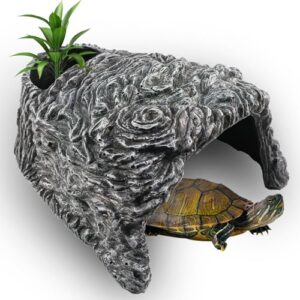
The PUEUTU Large Resin Reptile Cave serves as both a hiding spot and basking platform, combining functionality in a single unit. Its resin construction ensures durability and resists warping in high-humidity setups, a critical feature for boas requiring 75–85% humidity during shed cycles.
The faux rock texture seamlessly integrates into planted enclosures, enhancing natural aesthetics. Interior clearance measures approximately 4 inches, with an entrance of 3.5–4 inches, making it suitable for boas up to 8 feet when supplemented with additional hides.
Smooth interior surfaces prevent scale snags, prioritizing safety. The design is easy to clean and built for long-term use, ensuring practicality and hygiene in reptile care.
| Best For | Reptile owners with larger pets like bearded dragons, turtles, or snakes who want a hide that doubles as a basking platform and works in both dry and aquatic setups. |
|---|---|
| Material | High-density resin |
| Primary Use | Hide/basking platform |
| Ease of Cleaning | Smooth interior, rinse clean |
| Size (L×W×H) | 9.25×8.07×4.92 in |
| Species Compatibility | Dragons, turtles, geckos, snakes |
| Durability Rating | Unbreakable resin construction |
| Additional Features |
|
- Does double duty as a hide and a basking platform, so you’re not buying two separate pieces
- Smooth interior walls and rounded edges mean no sharp spots to snag scales
- Heavy enough to stay put in water without floating around or tipping over
- The deep hole in the back can be a trap for smaller animals and tricky to exit
- It’s heavy, which is great for stability but a pain when you want to rearrange the enclosure
- Pricier than a lot of similar resin hides on the market
Choosing The Right Hide Size
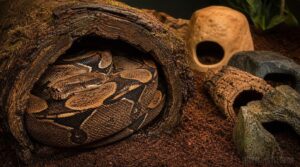
Getting the hide size right isn’t just a preference—it’s one of the most important decisions you’ll make for your boa. A hide that’s too big offers no real security, and one that’s too small causes stress fast.
Here’s what you need to know before sizing up.
Internal Hide Dimensions for Juvenile Boas
Juvenile boas require more precision than most keepers expect. Get the dimensions wrong, and your snake won’t settle—stress climbs, feeding drops, and shedding goes awry.
Key Enclosure Requirements:
- Height-Width Ratio: Aim for 7–10 inches tall with 6–9 inches wide.
- Coil Length Clearance: Interior length of 9–14 inches—ensuring no wall contact when curled.
- Smooth Interior Walls with Rounded Bottom Design: Prevents scale abrasion and facilitates natural coiling posture.
- Optimized Headroom: Apply snug-fit hide design principles—tight enough to feel secure, never cramped.
For reference, the typical adult boa length is around eight-to-ten feet.
Adult Boa Hide Sizing for 6–8 Ft Snakes
Once your boa reaches six feet, sizing demands change rapidly. Internal dimensions should measure 14–20 inches wide with height-to-width proportions of 8–12 inches to accommodate natural coiling behavior.
Spine stretch clearance is crucial—insufficient space compresses posture and increases stress. Coil space must allow room for a relaxed S-curve, ensuring the snake can move without restriction.
Always keep a minimum of two hides available, following custom scaling guidelines as your snake approaches eight feet. This ensures continuous comfort and adaptability as the boa grows.
Entrance Size and Snug-fit Guidelines
Once sizing is locked in, the entrance becomes just as important as the interior. Clearance Dimensions should allow 1.5–2 inches around your boa’s girth—snug-fit hide design principles mean tight enough for security, not restriction.
Look for a Recessed Rim and Rounded Lip with Burr-Free Edges to prevent scale snags.
Ventilation Balance matters too—oversized openings trap moisture unevenly.
When Large Boas Need Custom-built Hides
Once your boa hits 7–8 feet, commercial options run out fast. That’s when DIY Hide Construction Ideas and custom-made builds take over. Custom hides deliver what store shelves can’t:
- Extra-large hide box dimensions up to 18 × 18 inches internally
- Reinforced, nonporous resin walls for structural stability
- Non-slip bases preventing shifting under 50-pound pressure
- Modular expansion with integrated sensors for microclimate tracking
Quarterly Growth Checks and Hide Upgrades
Every 90 days, run a full Growth Metrics check—snout-to-vent length, girth, and body mass. That data drives your Upgrade Timeline and Size Forecasting decisions. Don’t guess; measure.
Growth Scaling rules are straightforward: when girth increases noticeably, entrance sizing must follow.
Adaptive Placement and Hide Replacement Timing go hand-in-hand—a cramped hide stresses your boa and disrupts shedding.
Best Hide Materials for Boas
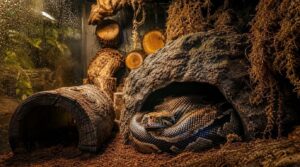
Material choice isn’t just a preference—it directly affects your boa’s health, your cleaning routine, and how long the hide actually lasts.
Some materials handle humidity like a champ; others warp, mold, or leach chemicals you don’t want near your snake. Here’s what you need to know before picking one.
ABS Plastic and Food-grade Resin Durability
ABS plastic and food-grade resin aren’t flashy — but they’re built for the long haul. For large adult snake housing, that matters more than looks.
- Impact Resistance withstands daily bumps without cracking
- UV Stability prevents yellowing and structural breakdown
- Thermal Cycling tolerance survives repeated hot-water cleanings
- Moisture Absorption stays near zero — no warping in humid setups
- Food-Contact Certification confirms nonporous surface safety
Cork Bark, Mopani, and Manzanita Benefits
Natural materials win on enrichment where plastic excels in durability. Cork bark, mopani, and manzanita each bring moisture resistance and antimicrobial properties to large enclosures — without material toxicity or safety considerations you’d worry about.
Cork bark offers sustainable sourcing and natural camouflage, while mopani adds thermal insulation with dense, warp-resistant structure. Both materials ensure long-term safety and functionality.
Wooden and cork bark hides augment environmental enrichment while maintaining safe, durable performance over time. These natural solutions prioritize both animal welfare and enclosure integrity.
Smooth Interiors for Scale Protection
Interior surface quality isn’t cosmetic—it directly affects your boa’s scale health and shedding efficiency. Smooth inside and outside walls eliminate snag points that tear shed skin or abrade belly scales over time.
Smooth hide walls aren’t optional — they protect your boa’s scales and shedding every single day
- Microtexture standards below 1.5 micrometers prevent scale irritation
- Drag reduction coating lets boas glide through entrances cleanly
- Scale friction reduction protects ventral scales during daily movement
- Gloss finish impact: fewer debris accumulation zones
- Durable ABS plastic and nonporous material enable ultra-easy cleaning
Smooth inner and outer surfaces aren’t optional—they’re essential.
Mold Resistance in Humid Enclosures
Humid enclosures are mold’s ideal environment—so your hide material must fight back. Mold-Resistant Finishes on resin and ABS plastic prevent moisture absorption, making your cleaning and maintenance schedule for snake hides fast and effective. Pair this with ventilation hole design for Airflow Optimization, and surface moisture drops considerably.
Incorporating Desiccant Integration inside hides adds a targeted Moisture-Barrier Design.
Regular Inspection catches early growth before it spreads.
Safe, Non-toxic Materials for Large Setups
Every material touching your boa matters—especially in large enclosures where off-gassing accumulates fast.
- BPA-free plastics and polypropylene stability prevent chemical leaching in humid air
- Water-based sealants on non-toxic wood eliminate VOC risks
- Ventilation-compatible hides allow airflow without trapping contaminants
- Eco-friendly cork and mopani resist mold naturally
- Extra-Large Hide Box options in food-grade resin stay inert long-term
Material toxicity and safety considerations—wood vs PVC for enclosures—deserve your full attention.
Hide Placement in Large Enclosures
Placement isn’t just about fitting a hide into your enclosure—it’s about building a thermal map your boa can actually use. Get it wrong, and even the best hide becomes dead weight.
Here’s what you need to set up each zone correctly.
Warm-side Hide Temperature Targets

Your boa’s warm hide requires a consistent target temperature range of 88–92°F for proper digestion and thermoregulation.
Use a thermostat-controlled heat source placed directly beneath the hide to provide radiant heat. Ensure temperature accuracy by monitoring with digital probes positioned 0.5–1 inch above the substrate.
Conduct gradient stability checks and schedule monthly calibration procedures for the probes to detect and correct temperature drift proactively.
Cool-side Hide Positioning and Comfort
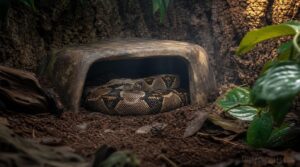
The cool side hide anchors your temperature gradient setup in enclosures—place it at the far end, away from all heat sources. This positioning is critical for effective thermoregulation and occupant comfort.
Key positioning details include:
- Maintain ambient airflow impact by keeping the area ventilated but draft-free
- Size the hide for full floor contact area on multiple walls
- Use a concealed entrance angle facing inward for security
- Monitor behavior observation cues—restlessness signals temperature imbalance
- Confirm hide height variation doesn’t trap excess moisture
Target 75–80°F inside for optimal conditions.
Third Humid Hide for Shedding Support
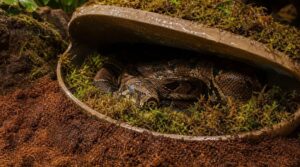
Shedding puts your boa’s skin under real pressure—and your third hide is where that pressure gets managed. Pack it with sphagnum moss to maintain 80–85% humidity inside. This Humidity Ramp should build gradually over 24–48 hours as eye caps cloud over. A Curved Interior allows your boa to coil fully during the shed cycle.
| Feature | Spec | Purpose |
|---|---|---|
| Removable Lid | Tool-free access | Moss refresh monthly |
| Ventilation Slots | Controlled airflow | Humidity management for shedding |
| Moss Depth | 2–4 inches | Moisture retention and humidity control |
Place the hide on the warm side, away from direct drafts—rapid airflow can quickly reduce humidity levels.
Using Digital Probes Inside Hides
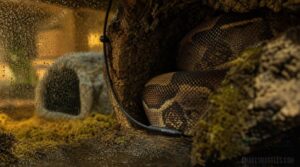
A third hide regulates humidity—but knowing what’s actually happening inside each hide requires data. Place a digital temperature probe low in every hide, where your boa’s body contacts the surface.
- Data Logging Intervals: Log readings every 5 minutes for accurate trend tracking.
- Alert Configuration: Set push alerts for deviations outside target ranges.
- Cable Management: Route cables along walls—away from your boa’s reach.
- Calibration Frequency: Recalibrate probes every 6–12 months for consistent accuracy.
Creating a Proper Temperature Gradient

Probes give you the data—now build a real gradient. Place your warm hide under a ceramic heat emitter or basking lamp, targeting 29–34 °C for adults. The cool side should be 4–8 °C lower. This temperature spread drives natural thermoregulation via strategic hide placement.
For juveniles, adjust warm hides to 28–32 °C, with cool hides maintained at 24–28 °C. The dual-hide strategy for thermoregulation relies entirely on precise thermostat programming to lock each zone’s temperature.
| Gradient Zone | Target Range |
|---|---|
| Warm hide (adult) | 29–34 °C |
| Warm hide (juvenile) | 28–32 °C |
| Cool hide (adult) | 23–26 °C |
| Cool hide (juvenile) | 24–28 °C |
| Differential target | 4–8 °C gap |
Ventilation Strategies to Prevent Mold
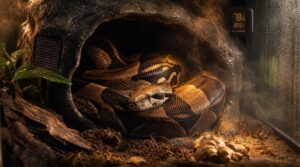
Mold thrives where air stalls—so your ventilation strategy has to be intentional. Dead Air Zones form behind hides and under ledges fast. Here’s what to lock in:
- Place intake vents low, exhaust high for natural airflow design
- Use screened intake filtration to block debris
- Monitor with a hygrometer for consistent humidity monitoring
- Cross-ventilate customizable Boa Constrictor habitats to eliminate stagnant pockets
- Position exhaust placement away from humid hides to pull damp air out
Cleaning and Replacing Boa Hides
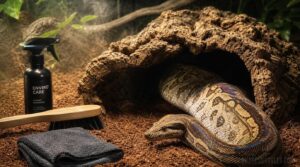
A dirty hide is a health risk—plain and simple. Bacteria, mold, and shed debris build up fast, especially in warm, humid enclosures.
Here’s what you need to know to keep your boa’s hides clean, safe, and ready for replacement when the time comes.
Daily Spot-cleaning Routine
Think of your cleaning schedule as the first line of defense. Spot clean daily — remove waste, wipe damp areas, and check for early mold prevention issues before they spread. Good odor control starts with this simple daily spot cleaning habit.
Your tool selection matters: use a soft microfiber cloth and mild reptile-safe cleaner only.
Monitor your boa’s behavior during each session.
This routine ensures a healthy environment while minimizing stress for your reptile.
Disinfecting Plastic and Resin Hides Safely
Disinfecting plastic hides isn’t just about wiping them down — it’s about doing it right. Use a 3% hydrogen peroxide solution or F10SC disinfectant, letting it achieve full contact dwell time before you rinse thoroughly with warm water.
Chemical compatibility matters; the wrong cleaners crack the resin quickly. Air drying prevents trapped moisture. Conduct spot damage checks after every cycle.
Replacing Sphagnum Moss in Humid Hides
Sphagnum moss breaks down fast — replace it every 2–4 weeks before mold takes hold. If sphagnum isn’t available, coconut coir alternative, polyfiber moss blend, and peat moss substitute all work well.
Add a water crystal additive or perlite humidity balance layer to stabilize moisture retention between changes.
Spot-clean daily, monitor humidity control closely, and adhere strictly to your moss replacement schedule.
Signs of Cracking, Warping, or Wear
Edge Cracking in resin develops within the first year, with Hairline Splits forming along interior seams where faux textures meet plastic walls.
Panel Warping follows, bowing edges 2–5 mm and creating gaps your boa exploits.
Metal Fatigue loosens hinges, while Moisture Distortion weakens cork grain.
Inspect every hide weekly—damage hides faster than you’d expect.
Replacement Timing for Plastic and Wooden Hides
Plastic hides usually last 2–5 years—but UV Degradation, Edge Chipping, and Joint Loosening can cut that short fast. Moisture Warping hits cork and mopani within 12–18 months in humid setups, causing wooden hides to fail sooner.
Your Inspection Frequency matters. Check weekly for wear or damage. Growth Scaling and Hide Replacement Timing should align with your boa’s development—upgrade every 1–2 years as your boa grows.
Frequently Asked Questions (FAQs)
What are the best hides for Boas?
The right hide cuts stress, aids shedding, and encourages natural behavior.
You need a minimum of two hides—one warm, one cool—each with a snug fit.
Placing hides at opposite ends of the tank encourages natural thermoregulation, and browsing these snake tank decor ideas can help you choose styles that suit your snake’s personality and habitat.
How many hides should a boa have?
Your boa needs at minimum two hides—one on the warm side, one on the cool side.
As your boa grows into a larger enclosure, setting up a boa-friendly habitat with proper hides and temperature zones becomes even more important for their comfort and security.
This minimum hide count promotes stress reduction, proper thermoregulation, and natural behavioral hiding preferences year-round.
How big should a boa enclosure be?
Size depends on age. Juveniles do fine in a 2×5×1 ft enclosure. Adults 6–8 ft need at least 6×3×3 ft—enough floor area ratio for full movement.
Do Boas need a new enclosure?
Think of it like outgrowing a studio apartment. Yes — as large-body snakes grow, enclosure size limits matter. Upgrade when your boa can’t comfortably coil, turn, or thermoregulate properly.
Do boa constrictors need a hide?
Hides are essential. They provide stress mitigation, immune support, and natural resting spots. Without one, escape behavior increases and thermoregulation suffers.
A proper hide isn’t optional; it’s foundational habitat enrichment for every boa.
What is the best enclosure for a boa constrictor?
A secure enclosure—8×4×4 ft minimum—with proper enclosure dimensions, substrate selection, a reliable heating system, temperature gradient setup, and appropriate hide materials gives your boa everything it needs to thrive.
How many hides does a boa need?
Every boa needs at least two hides — a dual hide strategy, one on each end of the temperature gradient. That’s your minimum hide count for stable thermoregulation and stress-free behavior.
Can boas share a hide in the same enclosure?
Boas are solitary. Sharing a hide triggers dominance hierarchy conflicts—one snake monopolizes, the other shows behavioral stress signals. Separate hides aren’t optional; they’re a health risk assessment baseline.
Do hides affect a boas feeding behavior?
Absolutely. Hide proximity appetite shifts when a boa feels exposed—entrance size stress alone can trigger refusals.
Humid hide cues, material scent masking, and post-meal hide duration all shape feeding response and hide availability directly.
Should hides be elevated or kept at ground level?
Keep most hides at ground level—predator avoidance instinct drives boas to ground refuges. Elevated hides add vertical enrichment and thermal stratification, but only if your enclosure layout allows it.
Conclusion
The boa that hides well lives well—and the keeper who gets this right rarely troubleshooting feeding problems or defensive strikes again. Every choice you make around boa constrictor hides for large enclosures either builds a snake that thrives or one that merely survives.
Nail the fit, placement, material, and your boa’s behavior will tell you everything. Calm coils, consistent feeds, clean sheds—that is the scorecard of a setup done right.