This site is supported by our readers. We may earn a commission, at no cost to you, if you purchase through links.
Most people underestimate a full grown boa constrictor—until one coils across both their arms and the sheer muscle becomes impossible to ignore. A mature female can hit 10 feet and push 33 pounds of dense, living weight.
That’s not a pet you manage casually; that’s an animal that demands you understand it on its own terms.
Knowing exactly how big boas get, how fast they grow, and what drives their final size isn’t just interesting—it’s the difference between keeping a healthy snake and fighting problems you never saw coming.
Table Of Contents
Key Takeaways
- Female boa constrictors reach 7–10 feet and up to 33 pounds at maturity, nearly double the size of males, so your enclosure plans must account for that gap before it becomes a crisis.
- Your boa’s final size is shaped more by feeding schedule, prey sizing, and enclosure temperature than genetics alone — get those three wrong and you cap your snake’s potential.
- Full growth takes 3–4 years, but the real work starts at year one: weekly feeding during the rapid growth phase builds lean mass fast, and inconsistency during that window stunts development permanently.
- A well-kept boa can live 20–30 years, but obesity, temperature swings, and skipped vet checks are the quiet killers — annual wellness exams and a 10–14 day feeding rhythm are non-negotiable for that kind of longevity.
Full Grown Boa Constrictor Size
Boa constrictors are bigger than most people expect — and the size range varies more than you’d think. Whether you’re sizing up an enclosure or just curious about what "full grown" really means, the numbers matter. Here’s what you need to know about adult boa size.
Planning ahead pays off — check out this guide on healthy snake habitat creation before your boa outgrows its first enclosure.
Average Adult Length

Adult boa constrictors commonly measure 7 to 10 feet in length, though this varies by sex and subspecies. Females grow longer — often hitting 8 to 10 feet — while males stay closer to 6 to 8 feet. Regional genetics also shapes size.
Captive adults average around 6 to 10 feet, depending on diet and care quality.
Adult Weight Range
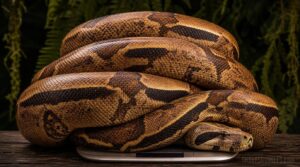
Length gives you part of the picture — but weight tells the real story. A full-grown boa can range anywhere from 5 to over 40 kilograms, depending on sex, subspecies, and diet. Most common pet subspecies settle between 15 to 25 kilograms at maturity. Genetics and feeding history shape that number more than almost anything else.
Here’s what typical adult weights look like:
- Healthy adult females commonly weigh 22–33 lb (10–15 kg) under normal captive conditions.
- Adult males are noticeably lighter, usually landing between 13–16 lb (6–7 kg).
- Well-fed large females in established breeding lines can exceed 30 kg.
- Wild boas in good condition often reach 20 kg or more with consistent prey access.
- Record captive females have topped 40 kg — notable, but documented.
Sexual dimorphism drives much of this weight variation. Females carry more body mass to support reproduction. Dietary impact is equally significant — consistent, properly sized meals fuel healthy metabolic rate and steady growth patterns. Obesity management matters too; overweight boas face real health consequences, so matching meal size to roughly 1–2% of body weight keeps nutritional requirements met without excess.
Male Vs Female Size

Sex determines more than just weight in boa constrictors — it shapes the entire body plan. Female size advantage is dramatic here. Females usually reach 7–10 ft (2.1–3.0 m) and weigh 22–33 lb (10–15 kg). Males stay shorter at 6–8 ft and lighter at 13–16 lb.
| Metric | Female | Male |
|---|---|---|
| Length | 7–10 ft | 6–8 ft |
| Weight | 22–33 lb | 13–16 lb |
This sexual size dimorphism exists because females invest more energy into reproduction, requiring larger body mass to carry live young successfully.
Dwarf Boa Size
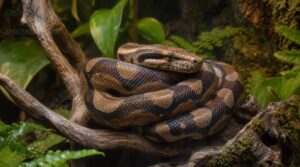
Not all boas follow the same playbook. Dwarf boa subspecies cap out at just 3–5 feet — a far cry from the standard 7–10 ft females you just read about.
- Locality and genetics set the hard size ceiling
- Females reach 4.5–5 ft; males stay at 3–4 ft
- Growth plateau hits earlier, around 12–18 months into development
Record Boa Sizes

Only a handful of boas shatter expectations on size. The longest verified specimen measured 4.8 m (≈15.7 ft), while the heaviest recorded female hit around 99 lb (45 kg). Rare 13‑foot individuals exist, and anecdotal record lengths of 18 feet circulate — but verified cases are nearly nonexistent. Size verification methods matter: always demand documented, measured proof over keeper claims. The largest subspecies size averages around eight feet for sexually mature females.
| Record Type | Measurement | Notes |
|---|---|---|
| Longest Verified | 15.7 ft (4.8 m) | Documented specimen |
| Heaviest Female | ~99 lb (45 kg) | Captive record |
| Dwarf Subspecies Limits | Max ~6 ft | Locality‑dependent ceiling |
When Boas Reach Full Size
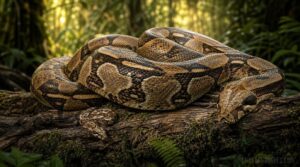
Boas don’t hit their full size overnight — it’s a slow build that happens in distinct stages. From the moment they hatch, their growth follows a predictable pattern tied to age, feeding, and biology. Here’s how that journey unfolds, from hatchling to full-grown adult.
If you’re curious how fast each stage actually moves, this boa constrictor size and growth timeline breaks it down year by year.
Hatchling Starting Size
Every boa constrictor starts its life surprisingly well-equipped. Hatchlings measure 17 to 20 inches at birth and weigh between 40 and 70 grams — tiny, but fully formed. Their neonatal weight depends on the mother’s size and clutch conditions. Within minutes, they move independently and are ready to feed on their own.
Juvenile Growth Rate
Once a boa hatches, its growth engine kicks into high gear. The Rapid Growth Phase runs through the first three years, with juveniles gaining 18–24 inches annually. Metabolic Growth Correlation is key here — young boas burn energy fast and convert prey into lean mass efficiently. Feed them weekly, and watch the Juvenile Size Gains stack up quickly.
What drives that speed?
- Diet quality directly controls growth velocity — high-protein rodents build lean mass, not fat
- Nutrient Utilization Rate peaks in year one, then gradually tapers
- Warmer enclosures accelerate digestion and support faster juvenile growth
- Irregular feeding disrupts Growth Plate Development and stalls progress
- Strong genetics combined with stable environmental conditions grant a juvenile’s full growth potential
Sexual Maturity Timeline
Sexual maturity hits most boas between 3 and 4 years old. Females generally get there first, usually when they reach 8–10 feet. Males follow slightly later, around 3.5 to 4.5 years.
Genetics and feeding history drive that timeline more than anything else. Watch for increased tongue-flicking and restlessness — those are your clearest puberty signs that breeding readiness is approaching.
Adult Growth Slowdown
Once your boa hits adult length, the sprint is over — now it’s a slow crawl. Metabolic decline kicks in, and your snake simply doesn’t need as much energy to grow.
The growth plateau means length gains drop to just 2–4 inches per year.
Muscle stabilization follows, with girth widening gradually rather than shooting up.
Skeletal remodeling continues quietly in the background.
Lifelong Size Changes
Even a full-grown adult boa constrictor keeps changing — just quietly. The growth curve flattens, but it never truly zeros out. Here’s what to watch as your snake ages:
- Weight fluctuations shift with feeding cycles
- Girth changes reflect muscle and fat balance
- Aging morphology alters skin texture and scale clarity
Monitor body condition consistently. That’s how you master long-term size maintenance.
What Affects Adult Boa Size

A boa’s final size isn’t set in stone the moment it hatches. Several key factors shape how big your snake actually gets — and how fast it gets there. Here’s what you need to know.
Genetics and Lineage
Your boa’s final size is written in its DNA before it ever hatches. Genetic lineage is one of the strongest predictors of adult length and body mass.
Subspecies variation, mitochondrial haplotypes, and inherited color morph genes all shape how large your animal grows — and breeders use lineage markers to anticipate adult size with surprising accuracy.
Feeding Schedule
Genetics sets the ceiling, but your feeding schedule shapes how close your boa gets to it.
Adults do best eating every 10 to 14 days.
Feed too often, and you risk obesity; too rarely, and growth stalls.
Stick to a consistent routine — same day, same time.
That rhythm promotes steady metabolism and healthy, measurable size gains.
Prey Size
Prey size is the other half of the feeding equation. Adult boas thrive when meals equal 20 to 60 percent of body mass — enough calories to fuel growth without straining digestion.
Too large, and regurgitation risk climbs. Too small, and nutrition and diet fall short.
Match prey size to your boa’s girth, not its length.
Temperature and Humidity
Temperature and humidity quietly shape how well your boa grows. Keep your warm side at 88–92°F and your cool side at 78–82°F. That gradient lets your boa move between zones to digest meals and rest properly.
Humidity between 40–60% prevents shedding problems and respiratory stress.
Stable conditions — not perfect conditions — are what your boa actually needs.
Enclosure Space
Space shapes your boa’s full potential. An adult needs minimum 2 × 3 × 4 ft of floor space to thermoregulate and move naturally.
Key enclosure essentials:
- Vertical climbing space for younger, semi-arboreal individuals
- Two hides placed at opposite thermal ends
- Solid, stable substrate to prevent ingestion risks
- Ventilation gaps to balance humidity without trapping moisture
Caring for a Full Grown Boa
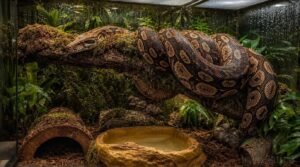
A full-grown boa demands more than good intentions — it needs a setup that actually works. Getting the basics right makes every interaction safer and keeps your snake healthier for decades. Here’s what you need to know to care for an adult boa properly.
Adult Enclosure Needs
Your adult boa needs at least 6 × 2 × 2 ft of floor space — more for larger individuals.
Set a basking zone at 88–92°F with a cool side around 78–82°F.
A front-opening PVC enclosure makes it much easier to maintain these gradients consistently — check out these ball python cage setup tips for enclosure recommendations that simplify temperature management.
Since factors like tank material, ambient room temperature, and fixture distance all affect heat output, check this guide to choosing the right bulb wattage for your snake tank to dial in the perfect basking temp.
To keep those ranges accurate over time, it helps to log readings regularly and recalibrate your sensors periodically—this guide on tracking temperature and humidity together walks through building a routine you can rely on.
Keep humidity between 50–60%, rising briefly during sheds.
Use cypress mulch or reptile carpet as substrate, and add a sturdy climbing branch for enrichment.
Safe Handling Tips
Handling a full-grown boa constrictor demands respect — and the right gear.
Wear two pairs of gloves and use a snake hook to support the midsection before lifting. Always support the full body length with both hands.
Never handle within 48 hours of feeding.
Move slowly, stay calm, and stop immediately if your boa hisses or gapes.
Feeding Adult Boas
Feed your adult boa every 10 to 14 days — no more, no less. Match prey width to the snake’s midsection. Stick to high-protein rodents as the core diet. Always thaw prey to body temperature before offering.
- Feed every 10–14 days
- Match prey to midsection width
- Use thawed, warmed prey only
- Prioritize rodents for protein intake
- Adjust frequency by body condition
Preventing Obesity
Obesity is the silent saboteur of a long, healthy boa life. Feed every 10–14 days and match prey width to your boa’s midsection — not bigger. Watch for a "rounded" midbody; a healthy boa tapers toward the tail.
Give enough enclosure space to move freely. Maintain a proper thermal gradient so digestion stays on track.
Veterinary Health Checks
Think of your vet as your boa’s early‑warning system. Schedule annual wellness exams that cover essential signs, a full physical, and parasite screening.
Your vet will run bloodwork panels to catch organ issues before symptoms appear.
Respiratory infections and scale rot respond far better to early treatment.
Prevention beats cure — every single time.
Adult Boa Lifespan and Health

A full-grown boa constrictor can be your companion for decades — if you know what to watch for. How long they live, what threatens that lifespan, and what healthy aging actually looks like are things every serious keeper needs to understand. Here’s what you should know.
Captive Lifespan
A well-cared-for boa constrictor can live 20 to 30 years in captivity. Some reach beyond 30, with rare individuals approaching 40.
Diet quality and a consistent feeding regimen drive much of that longevity. Pair that with temperature stability, proper humidity management, and routine health monitoring, and you’re giving your boa its best shot at a long, healthy life.
Diet, temperature, and routine care are the quiet forces behind a boa that lives 30 years
Wild Lifespan
In the wild, boa constrictors can live 20 to 30 years — but most don’t make it that far. Predator pressure from jaguars and caimans cuts many lives short.
Add habitat loss and food scarcity, and the average wild boa faces real survival odds.
Captivity removes those threats, which is exactly why your boa has a longer shot at life.
Common Health Problems
Even a long-lived boa isn’t invincible.
Mouth rot is common — watch for gray or white patches inside the mouth, swelling, or a foul smell. Respiratory infections show up as wheezing, open-mouth breathing, or nasal discharge.
Parasites, scale rot, and regurgitation from poor temperatures or overfeeding round out the biggest threats you’ll face managing a healthy adult.
Stress and Environment
Your boa doesn’t just suffer from disease — it suffers from its world.
Temperature swings, noise disturbance, and poor light cycles quietly erode health over time. Unstable humidity disrupts shedding and irritates airways.
Strategic hide placement on multiple levels lowers stress hormones measurably. Good ventilation quality and consistent environmental conditions give your boa the stable foundation it needs to truly thrive.
Healthy Aging Signs
A long-lived boa tells its story through behavior, not just size.
Watch for steady, purposeful movement — a healthy adult moves with clear intent, not sluggish dragging.
Consistent feeding response matters too; a boa that strikes reliably and processes prey without regurgitation is metabolically sound.
Stable body weight across months signals balanced health, while gradual, even muscle tone confirms proper growth without obesity.
Frequently Asked Questions (FAQs)
Do full grown boas recognize their owners over time?
Yes, boas recognize their owners — not by sight, but through scent and routine. Their vomeronasal organ picks up familiar odors, and consistent handling builds trust over weeks.
Can adult boas safely coexist with other reptiles?
Adult boas should not share enclosures with other reptiles. Differing temperature needs, disease risks, and territorial aggression make cohabitation dangerous. Separate housing is always the safer, smarter choice.
Even species like lavender corn snakes with their striking ruby-toned irises thrive best when housed solo, free from the stress of sharing space with other reptiles.
How do boas behave during seasonal temperature changes?
When temperatures shift, boas slow their metabolism and eat less. They seek warmer basking spots to aid digestion and stay hidden longer during cooler periods, naturally adjusting activity to match their environment.
Are full grown boas legal to own everywhere?
No, ownership laws vary widely. Local and federal rules differ by region. Some areas require permits, ban large constrictors outright, or impose size-based restrictions. Always verify your jurisdiction before acquiring one.
How do boas communicate stress or discomfort to owners?
Boas can’t speak, but they signal clearly. A loud hiss means back off. Defensive coiling, tail whipping, and a fixed upward gaze all say the same thing: your snake feels threatened.
Conclusion
It’s no coincidence that the keepers who thrive with a full grown boa constrictor are the ones who respected the animal before it ever reached full size. They learned the growth timeline, dialed in the feeding schedule, and built enclosures that matched real adult dimensions—not guesses.
That preparation didn’t happen by accident.
Every fact you now carry about size, health, and lifespan puts you exactly where the snake needs you to be: ready.