This site is supported by our readers. We may earn a commission, at no cost to you, if you purchase through links.

A snake trapped in its own skin can’t see, can’t hunt, and can’t heal properly, and roughly a third of dysecdysis cases stem from problems you could catch within days if you knew what to look for. That milky film over the eyes or the papery ring tightening around a tail tip isn’t cosmetic. It’s often the first sign of a physiological cascade that, left unaddressed, threatens corneal damage or tissue death.
Recognizing the signs of incomplete snake shed early gives you the window to intervene before minor dysecdysis becomes a veterinary emergency. What follows covers the physical markers, behavioral red flags, and root causes you need to understand, along with exactly when home care won’t cut it.
Table Of Contents
- Key Takeaways
- How to Spot Incomplete Snake Shed
- Behavioral Signs of Shedding Problems
- Why Incomplete Snake Sheds Happen
- Safely Help Your Snake Finish Shedding
- When Stuck Shed Needs Veterinary Care
- Frequently Asked Questions (FAQs)
- How to tell if a snake is done shedding?
- What happens if a snake doesn’t shed properly?
- What helps a snake shed faster?
- How long can snakes go without shedding?
- How often should healthy snakes normally shed skin?
- Can incomplete shedding happen in young hatchling snakes?
- Does shed frequency change with snake age or size?
- Is incomplete shedding more common in certain species?
- Can stress alone cause a snake to shed poorly?
- Conclusion
Key Takeaways
- Below 40% humidity, your snake’s skin can’t separate cleanly, so check moisture levels and watch for dry patches, cloudy eye caps, and tight bands around the tail tip.
- A darkened or swollen tail tip signals cut-off circulation and needs a vet visit that same day, since tissue can die within 24-48 hours.
- Never pull on retained eye caps yourself—soak your snake to soften the keratin, then let a vet remove them safely to avoid corneal damage.
- Persistent rubbing past 48 hours, appetite loss beyond a week, or two failed soaking attempts all mean it’s time to call your vet instead of waiting it out.
How to Spot Incomplete Snake Shed
When a shed doesn’t come off clean, your snake’s body tells you before any test result does. Certain patches of skin, scale texture, and even the eyes reveal exactly where the process broke down. Here’s what to check first, working from head to tail.
Start with the eye caps and tail tip, since retained skin loves to hide there — this step-by-step guide to checking a shed for completeness walks you through each spot.
Patchy Retained Skin
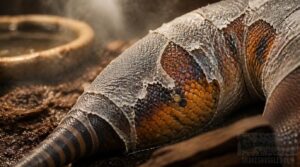
Run your fingers along your snake’s flanks and you’ll often find the first clue: patches of dry, flaky scales that look dull against healthy, glossy skin. Retained skin frequently clusters at the tail tip, snout, neck folds, and body rings, sometimes hardening into leathery bands.
Below 40% humidity, skin can’t separate cleanly, so check moisture levels and consider soaking before it constricts. Stress, injury, or poor conditions can lead to incomplete sheds or dysecdysis, leaving patches of old skin stuck to your snake.
Cloudy Retained Eye Caps
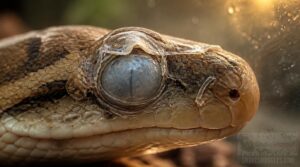
Patchy skin isn’t the only red flag. Check the eyes: a milky, bluish film over the spectacle after shedding signals retained caps.
Humidity and eye caps are directly linked, since dehydration below 40% keeps keratin stuck. Left uncleared for weeks, this blocks light transmission and risks vision impairment, so don’t dismiss a cloudy eye as temporary.
Missing Shed Skin Pieces
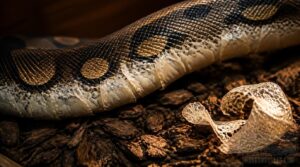
Beyond the eyes, run your hands along the body. Fragment adhesion patterns often cling near mid-body fragment zones, where scale plates flex most.
Look for:
- Translucent skin slivers on ventral scales
- Scale edge remnants near flex points
- Parchment-like strips along the abdomen
- Retained skin snagged in enclosure corners
Incomplete shedding leaves these fragments behind, so check thoroughly before assuming your snake’s shed finished cleanly.
Tight Tail Tip Bands
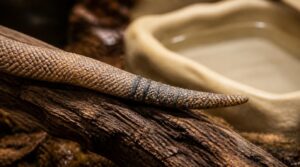
Move to the tail tip, where constricting bands signal trouble. Three to five dark rings, each 1-3 mm wide, form when low humidity tightens retained skin at the tip.
| Sign | What It Means |
|---|---|
| Charcoal rings | Retained skin |
| Constant width | Chronic dehydration |
Left untreated, bands compress tissue, so soak affected tails and consult your vet if darkening persists.
Dull or Rough Scales
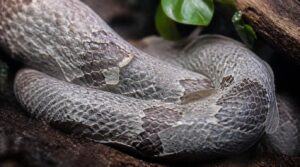
A snake stuck mid-shed often looks faded rather than injured. Watch for dull, ashy scales with patches of retained skin still clinging on, especially where texture turns gritty.
Causes range from low humidity and dehydration to vitamin A deficiency or mites feeding beneath the surface. Regular soaks, proper enclosure humidity, and balanced nutrition usually restore that natural sheen within days.
Behavioral Signs of Shedding Problems
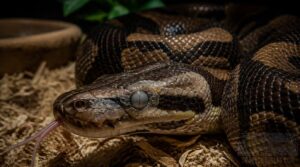
Retained skin doesn’t just sit there quietly—it changes how your snake moves, eats, and reacts to the world around it.
Since a shedding snake can’t see clearly and may strike out of fear rather than aggression, it helps to recognize signs your snake is stressed rather than truly aggressive before handling it.
Retained skin never stays silent—it reshapes how a snake moves, eats, and responds to the world around it
Behavior often signals trouble before the skin itself gives you a clear answer, since discomfort and impaired senses show up in daily habits first.
Here’s what to watch for in your snake’s actions when a shed hasn’t gone as it should.
Persistent Rubbing
Watch how long the rubbing lasts, not just that it’s happening. Normal shedding rubbing resolves within 24-48 hours; anything past that signals trouble, often low humidity or inadequate abrasive surfaces like cork bark.
Frantic, repetitive rubbing against the same spot, rather than varied surfaces, risks facial abrasions and infection. If it continues beyond two days, intervene or contact your veterinarian.
Vision or Striking Difficulties
When retained eye caps cloud the spectacle, your snake’s world narrows fast. Depth perception loss turns feeding time chaotic: strikes fall short, overshoot, or miss entirely as prey tracking falters.
Watch closely and you’ll notice growing heat sensing reliance, since visual cues aren’t dependable anymore. Some snakes develop visual cue avoidance altogether, retreating rather than risking a failed strike caused by incomplete shedding.
Unusual Restlessness
A snake pacing its enclosure isn’t bored, it’s telling you something. Preshed behavior includes restlessness lasting 4-6 hours, intensifying within 24 hours of cloudy eye caps. Below 40% humidity, this unusual restlessness triples as retained skin adheres tighter. Temperature swings past 5°F and parasite stress compound the problem. Persistent stuck shed causes symptoms to resurface days later if untreated.
Reduced Appetite
Why won’t your snake eat during a stuck shed? Retained eye caps alone can cut food intake by 70%, since impaired vision stops strikes cold. Nutritional deficiencies and low humidity worsen this fasting, sometimes stretching past 10 days. Chronic stress from constricting bands or parasite irritation compounds appetite loss, so prolonged anorexia during shedding always warrants a closer look.
Sensitivity When Handled
A snake mid-shed doesn’t want your hands anywhere near it, and for good reason. Vision impairment leaves it striking blind, while tail tip sensitivity and constricting retained skin around the eye caps trigger a genuine defensive response.
- Sudden strikes at gentle touches
- Tail thrashing or vibrating
- Full-body flinching near the head
- Post-handling health impacts: torn skin, infection risk
Skip soaking-day handling. Let the shed finish first.
Why Incomplete Snake Sheds Happen
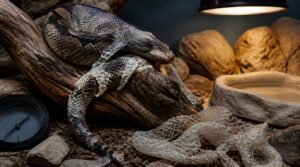
Once you’ve spotted the signs, the next question is what’s driving them. Dysecdysis rarely comes from a single cause—it’s usually your snake’s environment or health signaling that something’s off. Here are the five culprits you’ll want to rule out first.
If you’re noticing dents or dimples on the shell, our guide on why ball python eggs look deflated can help you tell normal fluctuations from real warning signs.
Low Enclosure Humidity
Below 40% humidity, keratin layers can’t rehydrate properly, so incomplete shedding becomes almost inevitable. Your snake’s skin stays brittle and clings around the tail and toes.
Fix this with daily hygrometer checks, misting routines, moist substrate, and a strategically placed water bowl. Proper ventilation adjustments prevent stagnant air while still supporting humidity levels between 50-70% for healthy shed cycles.
Dehydration and Temperature Problems
Beyond humidity alone, fluid balance drives clean sheds. Heat stress increases evaporative water loss; cold slows movement snakes need to rub off skin. Either extreme raises dehydration risk and stalls keratinization.
- Keep gradients: 85-90°F basking, 75-80°F cool side
- Check hydration via urate concentration
- Avoid swings that stress metabolism daily
Correct both factors together, or incomplete shedding recurs each cycle.
Poor Shedding Surfaces
Even with hydration and heat sorted, your snake still needs friction to peel skin, not just fluid balance. Smooth glass and plastic offer nothing to catch on.
Add rough enclosure textures: cork bark, stone, or a dedicated shedding box lined with sphagnum moss. Textured climbing zones let scales snag and shed cleanly, preventing the friction-related retention smooth setups practically guarantee.
Nutritional Imbalances
What goes into your snake’s mouth shapes what comes off its skin. Vitamin A deficiency and protein deficiency weaken new skin layers, so sheds come off in pieces instead of one sheet.
Calcium and D3 imbalances compound this. Feeding the same prey repeatedly, skipping dietary variety, starves your snake of nutrients it needs for clean keratinization cycles.
Mites or Skin Infections
Snake mites cause dysecdysis in up to 37% of infested snakes, while fungal infections like Ophidiomyces produce skin lesions that block normal keratinization.
Left untreated, mite bites and skin infections invite bacterial infection into broken scales.
Watch for:
- Tiny moving specks near eyes or vent
- Excessive soaking behavior
- Skin lesions or discoloration
- Recurring incomplete sheds
- Restlessness despite proper humidity
Safely Help Your Snake Finish Shedding
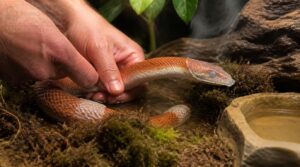
Once you’ve identified the signs of a stuck shed, safe intervention becomes your priority—rushing the process can cause more harm than the retained skin itself.
Success depends on controlling a few key variables in your snake’s environment and knowing exactly where to draw the line on manual assistance.
Here’s what you need to get right, step by step.
Watch for swollen or crusty skin, wheezing, or a sudden loss of appetite, then read up on how to spot and treat a bacterial infection in your snake before the problem gets worse.
Before you book anything, check Lacey Act requirements and prohibited species restrictions, since international snake shipping regulations vary widely by destination and species.
Correct Humidity Levels
Dry air is often the real culprit behind stuck shed. Aim for a 45–55% humidity range during active shedding, checked twice daily with a reliable hygrometer. If readings dip below 50%, raise humidity gradually, sudden spikes above 65% invite mold and respiratory trouble. Consistent terrarium moisture balance, not guesswork, keeps your snake’s skin pliable enough to release cleanly.
Provide a Humid Hide
Think of a humid hide as a rehydration chamber for stubborn skin. Line it with sphagnum moss, keep interior humidity at 70–90%, and tuck it away from heat sources. Check moisture daily, refresh moss every 1–3 months, and place it opposite a dry hide.
This targeted humidity control loosens retained skin without soaking your entire enclosure.
Use Lukewarm Soaks
When a humid hide isn’t cutting it, a lukewarm soak often finishes the job. Keep water at 25-28°C, chin-deep only, for 15-20 minutes. Watch closely throughout.
- Repeat after 24-48 hours if skin remains
- Check eye caps and tail tip for release
- Offer fresh water afterward, snakes often drink heavily
If two soaks fail, stop and call your vet.
Remove Only Loose Skin
Patience beats force every time. After soaking, use a damp washcloth or silicone-tipped tool, moving with the scales, on loose fragments only. Retained skin still anchored to the body needs another soak, not a tug. Forceful pulling raises injury risk by roughly 30%, tearing fresh scales beneath.
| Do | Don’t |
|---|---|
| Remove loose flakes | Pull attached skin |
| Use damp cloth | Use dry fingers |
| Soak first | Skip hydration |
| Stop if resistant | Force it |
| Wait 24 hours | Repeat immediately |
Never Pull Retained Eye Caps
Your eyes aren’t the place to test your luck. Never pull retained eye caps, no matter how loose they look, since the spectacle is living tissue and tearing it risks corneal scarring or permanent vision impairment.
Try soaking the snake to soften keratin, then call your vet. Professional eye cap safety protects corneal protection far better than home attempts ever could.
When Stuck Shed Needs Veterinary Care
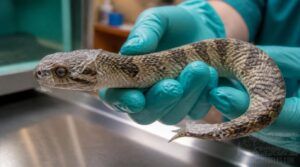
Home care resolves most stuck sheds, but not all of them—some cases threaten lasting damage if you wait too long. Knowing where that line sits keeps you from either overreacting or, worse, underreacting when it counts. Here are the five warning signs that mean it’s time to call your vet.
Persistent Retained Eye Caps
When one eye stays cloudy while the other clears, you’re looking at a retained cap, not normal shedding. Causes include:
Low humidity, dehydration, poor nutrition, or a healed injury can all leave a stubborn spectacle stuck in place, and this guide to snake eye discoloration causes breaks down how to tell them apart.
- Chronic low humidity
- Vitamin A deficiency
- Dehydration
- Poor shed cycles
- Prior scarring
Never attempt removal yourself. Veterinary removal with forceps and lubricating gel prevents corneal damage that home soaking can’t safely fix.
Swollen or Darkened Tail
A darkened tail tip is an emergency: retained skin has formed a constricting band, cutting circulation. Tissue turns black within 24-48 hours without treatment.
| Sign | What’s Happening | Action |
|---|---|---|
| Tight band | Constriction | Soak now |
| Dark tip | Necrosis | Vet today |
| Swelling | Infection risk | Antibiotics |
| Cool skin | Poor flow | Emergency |
| Discharge | Bacterial colonization | Urgent care |
Red or Ulcerated Scales
Retained skin isn’t the only threat: bacteria exploit micro-tears left by dysecdysis, sparking scale rot on ventral scales.
- Red, warm patches
- Ulceration within 1-2 days
- Pus or yellow discharge
- Premature scale detachment
- Spreading lesions
Untreated, bacterial colonization risks septicemia in 3-5 days. Ulcerated scale healing demands veterinary antibiotics, moisture control, and ventral scale protection, not home remedies.
Repeated Incomplete Shed Cycles
When shed problems keep recurring cycle after cycle, scale rot risk climbs, but so does something subtler: systemic infections take hold internally.
Track shedding frequency and humidity cycling patterns; if two-plus cycles fail despite corrected humidity, vitamin A, and ventilation, an root issue exists.
Don’t wait for visible damage. Chronic dysecdysis warrants bloodwork and professional evaluation.
Lethargy or Prolonged Anorexia
Rarely should you ignore a snake that stops eating alongside a difficult shed. Prolonged anorexia past 14 days, paired with lethargy, warns of systemic infections or nutritional deficiencies, not just pre-shed lethargy.
- Appetite loss duration beyond 7 days
- No anorexia recovery time after humidity fixes
- Feeding refusal patterns with both prey types
- Dehydration appetite link causing dry mouth
- Weight loss exceeding 10%
Frequently Asked Questions (FAQs)
How to tell if a snake is done shedding?
Think of it as a curtain lifting fully, not halfway. Run an eye clarity check, a scale texture test, and a tail tip inspection, no retained skin, no cloudy eye caps, glossy scales, and vivid pattern return confirm a complete shed.
What happens if a snake doesn’t shed properly?
Left untreated, retained skin causes circulation issues, tail necrosis, and scale damage. Trapped eye caps risk vision impairment and infection. Constricting bands cut off blood flow, so tissue dies without prompt veterinary help.
What helps a snake shed faster?
An ounce of prevention beats a pound of cure. A humidity boost to 70-75%, lukewarm soaks, textured surfaces for friction, and a whole-prey diet all speed shedding, alongside digital monitoring to catch problems early.
How long can snakes go without shedding?
Juveniles shed every 4 to 6 weeks given faster growth rates, while adults stretch intervals to 1 to 3 months. Beyond that, suspect dehydration, low humidity, or dysecdysis, since prolonged delays often signal environmental or health cycle problems requiring intervention.
How often should healthy snakes normally shed skin?
Ecdysis runs like a clock reset for growing skin. Juvenile shedding frequency hits every 4-6 weeks; adult shedding cycles slow to 2-4 times yearly. Growth rate, enclosure conditions, and health status all shift timing naturally.
Before the skin actually loosens, you may notice dulled colors, hiding, and a lost appetite, all common snake pre-shed behavior changes worth watching for.
Can incomplete shedding happen in young hatchling snakes?
Yes, hatchlings shed frequently as they grow, making incomplete shedding common. Low humidity, smooth surfaces, or dehydration cause retained skin, especially around eye caps and the tail tip. Gentle soaking and proper humidity prevent complications early on.
Does shed frequency change with snake age or size?
Ever wonder why your snake sheds like clockwork one year and barely at all the next? Growth rate drives frequency: juveniles molt every 4-6 weeks, while adults settle into 2-4 sheds annually as growth slows with age.
Is incomplete shedding more common in certain species?
Constrictors and colubrids show higher incomplete shedding rates than boids and viperids, especially in captivity.
Species with weak eyelid physiology retain eye caps more often, while thicker-skinned or larger-bodied snakes commonly hold onto midbody skin and tail tip fragments.
Can stress alone cause a snake to shed poorly?
Chronic stress raises corticosterone and disrupts energy regulation, but it rarely acts alone. Incomplete shedding usually traces back to low humidity, dehydration, poor nutrition, or parasites, conditions that often accompany stress rather than cause retained skin by themselves.
Conclusion
Like a snake shedding old skin to grow, your vigilance sheds doubt and builds confidence in reading your reptile’s health.
Catching the signs of incomplete snake shed early turns a potential emergency into a routine fix. A cloudy eye cap, a stubborn tail band, these details matter more than they seem.
Trust your observations. Act promptly, and call your vet when something feels wrong. Your snake’s next shed can be clean and complete.