This site is supported by our readers. We may earn a commission, at no cost to you, if you purchase through links.
Your ball python refuses dinner, slides into the darkest corner of her hide, and stares at you with eyes the color of milk glass. You didn’t do anything wrong.
These snake pre shed behavior changes catch many keepers off guard. Your snake feels vulnerable during this window. She can’t see well, her skin feels tight, and she wants to disappear. Mistake the signs for illness and you might stress her more. Ignore real illness and you might miss a serious problem.
Here’s how to read each sign, support her through the shed, and spot the red flags that mean it’s time to call a vet.
Table Of Contents
- Key Takeaways
- Key Pre-Shed Behavior Changes in Snakes
- Physical Signs Your Snake is About to Shed
- Snake Shedding Stages: From First Signs to Finished Shed
- How to Support Your Snake During Pre-Shed
- Normal Pre-Shed Behavior Vs. Signs Your Snake Needs a Vet
- Frequently Asked Questions (FAQs)
- How do snakes act before they shed?
- Do snakes get less active before they shed?
- Do snakes feel better after shedding?
- What does a snake look like right before shedding?
- Can snakes shed multiple times per month?
- Do all snake species shed the same way?
- What causes incomplete or stuck shed problems?
- How long between sheds for pet snakes?
- Should I increase feeding before shedding starts?
- Do snakes eat their shed skin afterward?
- Conclusion
Key Takeaways
- Before a shed, your snake will hide more, refuse food, and get a bit snappy, so don’t mistake those normal changes for illness.
- Your snake’s eyes turn cloudy blue and its skin goes dull, and the whole pre-shed phase usually lasts 4 to 7 days before the shed itself finishes in a few hours.
- You can help by keeping humidity at 60-80% for most species (less for desert species like sand boas), adding a damp humid hide, skipping handling, and offering food only 24 to 48 hours after the shed.
- Call a reptile-savvy vet if you see wheezing, labored breathing, weight loss, lethargy, retained eye caps, or no eating a week after the shed, because those point to illness or poor husbandry, not normal shedding.
Key Pre-Shed Behavior Changes in Snakes

Before your snake sheds, you’ll spot key preshed behavior changes in snakes within days. Decreased activity and appetite loss usually come first, so don’t panic over a refused meal.
Once the eyes turn cloudy and blue, you can compare your snake’s progress against these signs of a healthy snake shedding process to make sure everything is on track.
Reduced activity and increased hiding follow, and your snake may turn snappy when you reach in. It can’t see well, especially once cloudy or bluish eyes and dull skin coloration appear. That bluish-white haze comes from the transparent scale called the spectacle, which covers a snake’s eyes because snakes lack eyelids and can’t blink.
Physical Signs Your Snake is About to Shed
Behavior tells you something’s coming, but your snake’s body confirms it. Check your snake closely and look for these signs.
First, look at the skin. Dull skin coloration shows up as the old layer separates from the new one underneath. Bright patterns look faded, almost dusty.
Next, check the eyes. Cloudy or bluish eyes mean fluid is building up between the old and new spectacle. Look at the belly too. It may carry a pinkish or reddish tint during the blue-eye phase.
You might also spot loose skin around the neck, which looks slightly wrinkled or baggy. Pair that with decreased activity and appetite loss, plus increased hiding, and shedding is close. Don’t try to peel anything off yet, though.
Snake Shedding Stages: From First Signs to Finished Shed

Once those signs show up, the clock starts ticking. Shedding runs in three stages, and knowing them puts you in control.
The first stage is easy to spot, since a milky, bluish haze over the eyes means your snake is heading into shed and may be a bit skittish for a few days.
Pre-shed lasts about 4 to 7 days, sometimes up to two weeks. You’ll see dull skin, cloudy or bluish eyes, and decreased activity and appetite loss.
Then comes ecdyxis itself. It usually wraps up in 1 to 6 hours.
- Your snake rubs its nose against a rough branch
- The old skin splits near the lips
- The shed peels back like a sock turned inside out
- Your snake crawls forward, leaving a ghostly tube behind
- The new skin glistens, bright and clean
Afterward, eyes clear and appetite returns within 24 hours. Keep humidity between 60-80, and check for retained shed.
If your snake still refuses meals after a clean shed, a corn snake feeding schedule can help you spot stress, temperature, or prey-size issues behind the fast.
How to Support Your Snake During Pre-Shed
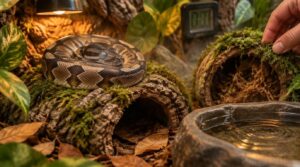
Your snake can’t prepare for a shed alone, so pre-shed care falls to you. You don’t need fancy gear, just a few smart adjustments to the setup you already have. Here are three areas to get right, and they’ll help you feel in control of the whole process.
Species-Specific Humidity and Temperature
Picture a ball python with cloudy eyes and a dull coat, sitting in a 45% enclosure. That’s a stuck shed waiting to happen. Your species-specific cycles matter here.
Most ball pythons, kingsnakes, and ratsnakes do best with humidity between 60-80% during pre-shed. Desert species like sand boas need only 40-50%. Keep temperatures steady, and check your gauges every single day.
Hides, Hydration, and Feeding
During pre-shed, your snake wants security. Add a humid hide filled with damp sphagnum moss, and keep it in your enclosure setup where temperatures stay steady.
Hydration matters too. Check substrate moisture, mist the walls, and offer a water bowl. Dry, chalky urates signal dehydration.
Skip feeding for now. Offer a meal 24 to 48 hours after the shed.
Reducing Stress and Limiting Handling
is the best thing you can do once your snake goes in blue. Cloudy eyes mean poor vision, and a snake that can’t see you clearly may give defensive or unpredictable responses, like hissing or striking.
So skip handling completely until the shed is done. Stick to essential tasks, like swapping water, and do them slowly and quietly. Keep temperature and humidity steady, because sudden changes add to handling stress.
Use behavioral observation for stress reduction.
Normal Pre-Shed Behavior Vs. Signs Your Snake Needs a Vet
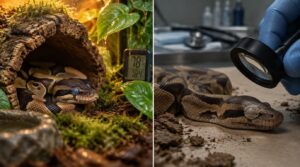
A quiet snake is usually fine. A struggling snake is not.
A snake that stays quiet is usually just shedding, but one that struggles to breathe or move needs help
Most Pre Shed Symptoms in Snakes look dramatic but pass fast. Cloudy or blue eyes, increased hiding, and short-term food refusal are all normal. Keep humidity between 60-80% and give it space.
| Symptom | Normal | Call a vet |
|---|---|---|
| Appetite | Pauses until shed ends | No eating a week after shed |
| Eyes | Cloudy, clear after shed | Caps stay on |
Wheezing, labored breathing, weight loss, or lethargy mean illness, not shedding. Retained eye caps need a vet too, because they can cause ulcers. Repeated patchy sheds point to mites or poor husbandry.
Trust your gut. Don’t wait if something feels off. A reptile-savvy vet catches problems early, while they’re still treatable. Call today.
Frequently Asked Questions (FAQs)
How do snakes act before they shed?
Ever wonder why your snake suddenly acts like a stranger? Expect behavioral changes: increased hiding, irritability, and appetite changes. Eyes clouding over is the classic sign.
Proper humidity management keeps your upcoming shed smooth.
Do snakes get less active before they shed?
Most keepers notice it first: a snake that’s usually out exploring suddenly vanishes. Yes, snakes get less active before a shed. Hiding increases, appetite changes show up, and defensive behavior can rise. Give your snake space.
Do snakes feel better after shedding?
Within 24 to 48 hours of finishing skin shedding, most snakes eat eagerly again. Do snakes feel better after shedding? Yes. Skin renewal brings a postmolt metabolic boost, clearer vision, brighter color. Hydration monitoring helps.
What does a snake look like right before shedding?
Picture a snake wrapped in a dusty, faded coat. Its dull cloudy eyes glow bluish-white, and its colors look washed out. You’ll spot loose skin around the neck, wrinkles, and sagging skin under the chin.
Can snakes shed multiple times per month?
Juvenile shedding frequency runs every 2-4 weeks, while adults usually shed every 4-8 weeks. These differences between young and adult snakes come from growth rate shedding. Your adult sheds twice monthly? Call a good vet.
Do all snake species shed the same way?
Mostly, yes: one inside-out piece. Shedding frequency and duration differ, though. Young snakes shed often, adults less. Humidity and temperature also shape your snake’s preshed behavior changes.
What causes incomplete or stuck shed problems?
Dry air can wreck a shed overnight. Low environmental humidity, dehydration, and bare enclosures cause dysecdysis, leaving retained skin, retained eye caps, and stuck tail tips. Poor airflow and neglected enclosure cleaning make it worse.
How long between sheds for pet snakes?
Your snake keeps time like a slow, steady clock. Young snakes shed every 2 to 4 weeks as they outgrow their skin fast. Adults slow down, shedding every 2 to 4 months.
Should I increase feeding before shedding starts?
Myth: extra food fuels a shed. It doesn’t. Your snake’s nutrition and hydration needs stay the same, and feeding refusal is normal.
Skip feeding during metabolic slowdown, keep proper humidity and temperature, then resume afterward.
Do snakes eat their shed skin afterward?
Almost never. Only 19 species have been documented doing it, mostly in captivity. After ecdysis, your snake will usually leave the shed skin behind and move on.
Conclusion
Most healthy snakes move through pre-shed in about seven to ten days. That’s a short window, and you control how smooth it goes.
Once you recognize snake pre shed behavior changes, the hiding and fasting stop feeling scary. Keep humidity steady, leave her alone, and trust the process. Watch for stuck shed, wheezing, or a skipped cycle. Those mean a vet visit. Otherwise, you’ve done your job, and she’ll slip out of that old skin.