This site is supported by our readers. We may earn a commission, at no cost to you, if you purchase through links.

Feed a corn snake like a hatchling forever, and you’ll end up with a snake shaped like a sausage link. Feed an adult like it’s still growing fast, and you’re inviting fatty liver disease down the road. Age changes everything about how often that food bowl, or feeding tongs, should come out.
Corn snakes shift their metabolism dramatically as they grow, and their feeding schedule needs to shift right along with it. A hatchling burning through calories every five days has nothing in common with a lazy ten-year-old adult who’s happy eating every two weeks.
Get the timing wrong and you’ll see it: stalled growth, refused meals, or a snake carrying extra weight around its middle. Get it right, and you’ll watch your corn snake thrive at every stage, from pinky mice to full-grown rats.
Table Of Contents
- Key Takeaways
- Corn Snake Feeding Schedule by Age
- Choose The Correct Prey Size
- Prepare and Offer Prey Safely
- Track Growth and Adjust Feedings
- Fix Common Corn Snake Feeding Problems
- Frequently Asked Questions (FAQs)
- What is a good feeding schedule for a corn snake?
- How do I tell when my corn snake is hungry?
- Can I hold my corn snake 24 hours after feeding?
- How long can corn snakes go without being fed?
- How often should you feed a corn snake?
- How do you feed a corn snake?
- How do you handle a corn snake?
- Can you feed a corn snake a carnivorous pet?
- How often should I feed a corn snake?
- How long can corn snakes go without eating?
- Conclusion
Key Takeaways
- Your corn snake’s feeding schedule should shift as it ages—hatchlings eat every 5-7 days, juveniles every 7-10 days, and adults every 10-14 days, with seniors adjusting based on body condition rather than a set calendar.
- Always size prey to match your snake’s mid-body width (1 to 1.5 times), since guessing wrong on size leads to regurgitation or slow growth.
- Track your snake’s health with monthly weigh-ins and body condition checks instead of relying on feeding schedules alone, and cut back if it gains more than 5% in a month.
- Most feeding refusals trace back to a few common causes—cold enclosures, shedding, recent handling, or seasonal brumation—so rule these out before assuming something’s wrong.
Corn Snake Feeding Schedule by Age

How often should you feed your corn snake? The honest answer is: it depends on age. Let’s break it down stage by stage, from hungry hatchlings to easygoing adults.
This detailed corn snake feeding schedule by age walks you through exactly what to expect as your snake grows from a delicate hatchling into a hearty adult.
Hatchlings: Every Five to Seven Days
Why do hatchlings eat so often? Their bodies are growing fast, so hatchlings eat every 5-7 days, matching that early growth spurt.
Keep the schedule steady unless weight dips. Prey should match their girth, no wider. Track meals on a feeding chart, weigh monthly, and watch for slow growth. Consistency now builds a healthy, confident eater later.
Juveniles: Every Seven to Ten Days
Once that early growth spurt slows a bit, you can stretch meals out. Juveniles do well on every 7-10 days, gaining 10-20 grams weekly. Weigh monthly, expect steady growth toward 300 grams, and keep prey sized to body width, moving from fuzzies to hopper mice as your snake fills out. Prey should always be 1-1.5 times the snake’s width at its widest point to help guarantee safe, properly proportioned meals.
Adults: Every Ten to Fourteen Days
By full size, that steady growth curve flattens out, and so does the feeding schedule. Adults eat every ten to fourteen days, with prey matched to body width, large mice or small rats. Watch body condition monthly.
Breeding females need more, every five to seven days for egg development, then back to standard once eggs are laid.
Seniors: Adjust for Body Condition
Older snakes don’t read birthdays, they read bodies. Once yours slows down, let body condition, not the calendar, set the pace. Some large adults do fine every 2-3 weeks.
Score it monthly:
- Palpate the spine and ribs
- Check for smooth contour
- Weigh on a digital scale
- Log weight beside feeding changes
Losing weight? Feed more often until they recover.
Seasonal Feeding Schedule Changes
Notice your snake eating less as days shorten? That’s the brumation cycle kicking in, driven by temperature and photoperiod. Winter feeding reduction is normal, even skipping meals entirely.
Spring appetite increase follows, fueled by seasonal fat stores built earlier. Warmer enclosures and longer days restart digestion. Adjust your feeding schedule seasonally, and let growth monitoring, not the calendar, guide each change.
Choose The Correct Prey Size
Ever wonder if that mouse is too big for your snake? Getting the size right matters just as much as getting the timing right. Here’s exactly how to size it up, step by step.
A proper feeding setup matters too — check out these snake water dishes for breeding enclosures to make sure your snake’s environment supports healthy digestion.
Follow The Body-Width Rule
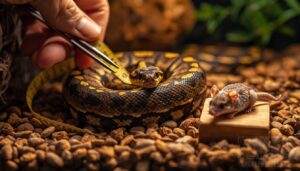
How wide is too wide? Grab a flexible tape measure and check your snake’s mid-body, then match prey within 1 to 1.5 times that width. This ratio also lines up with roughly 10% of body weight.
For a deeper breakdown of measuring techniques and prey-to-girth ratios, check out this guide on choosing the right size prey for your snake.
- Measure mid-body circumference
- Compare to feeder mouse size
- Stay within 1.0-1.5x width
- Split meals if prey runs large
Start Hatchlings With Pinky Mice
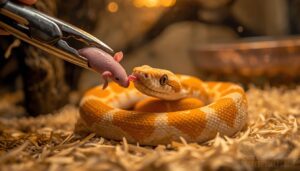
When should that first meal happen? Most hatchlings take their debut pinky within 1 to 2 weeks after hatching, once they’ve shed for the first time.
Offer prey with feeding tongs, warmed and thawed, never microwaved. Watch for bright eyes and steady strike behavior, good acceptance cues.
From there, hatchlings eat every 5-7 days.
Increase Mouse Size Gradually

Sizing up too fast is how regurgitation happens. Stick to the body width rule, moving to fuzzies only after two consecutive clean meals on the current size.
- Increase width by 0.1–0.2 cm per feeding
- Never jump more than one prey tier
- Track each size change in your feeding log
- Watch for steady, not rapid, growth
- Pair gradual adjustment with monthly weigh-ins
Select Prey for Adult Snakes
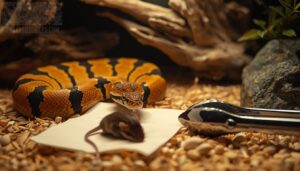
By adulthood, your snake’s diet settles into a groove. Adult mice are the go-to choice, offering solid nutrition without hassle. Prefer variety? Rotate in appropriately sized rats or occasional quail for enrichment.
Always choose whole, uncooked prey, sourced from reputable suppliers. A properly thawed frozen mouse works just as well as fresh-killed, provided it’s handled safely and matches your snake’s girth.
Avoid Unnecessary Dietary Supplements

Think whole prey means whole nutrition, no powders required. Corn snakes pull everything they need, protein, calcium, vitamins, straight from feeder rodents.
Reach for supplements only when you spot a real gap:
- Dull, incomplete sheds (possible vitamin E shortfall)
- Reduced appetite alongside lethargy
- Breeding females needing extra monitoring
Excess calcium risks metabolic bone disease. Skip routine multivitamins unless your vet confirms a deficiency.
Prepare and Offer Prey Safely

Got your prey sized right? Good—now it’s all about handling it the right way. A few small habits at feeding time keep your snake safe, calm, and ready to eat.
Thaw Frozen Prey Safely
With a little planning, thawing becomes routine. Keep frozen prey sealed in its bag, thaw in the fridge or cool water, never on the counter. Refreezing raises bacterial risk, so use it or lose it.
| Method | Time |
|---|---|
| Fridge | ~24 hrs/5 lbs |
| Cold water | 2-3 hrs |
| Counter | Never |
| Microwave | Never |
Warm Prey Before Feeding
Once thawed, don’t feed straight away. Your snake hunts by heat, so cold prey often gets ignored.
Warm it to about 100°F using warm water or an under-tank heater nearby, never a microwave. Check with a probe thermometer.
- Submerge 15-30 minutes
- Confirm with digital thermometer
- Serve within 10 minutes
Warm prey means faster strikes and fewer refusals.
Present Prey With Feeding Tongs
Ready to serve? Grab feeding tongs instead of your fingers. Flat tips suit small pinkies, serrated tips grip live prey, rounded tips prevent injury on strikes.
| Tip Type | Best For | Benefit |
|---|---|---|
| Flat | Pinky mice | Won’t crush prey |
| Serrated | Live prey | Secure grip |
| Rounded | Lunging snakes | Injury prevention |
Wiggle prey gently, mimicking movement, then rinse tongs after each use.
Feed Inside The Enclosure
Where you feed matters as much as what. Set up a designated feeding spot on the warm side, six inches from hides, using a smooth dish or flat rock. Skip loose substrate here to avoid contamination.
Time it right: evenings work best, once temps hold 75-80°F for 30 minutes. Consistency builds trust.
Provide Fresh Water Daily
Ever notice your snake soaking after a meal? Fresh water daily prevents bacteria and helps digestion.
Choose a bowl at least six inches wide, one third of body length, deep enough for full soaking. Place it on the cool side, away from heat mats.
Clean weekly with reptile-safe disinfectant. Watch drinking habits closely, since reduced hydration often signals stress or illness.
Track Growth and Adjust Feedings

How do you know if your feeding schedule is actually working? The proof shows up in your snake’s weight and body shape over time, not just in an empty feeding dish. Here’s how to keep tabs on growth and fine-tune things as your corn snake ages.
Record Each Meal and Refusal
A feeding chart tells you more than memory ever will. Log the date, prey type, size, and whether it was accepted or refused, plus quick notes on behavior.
Food refusal isn’t random, patterns emerge over time. This kind of feeding data tracking makes adjustment decisions (frequency, prey size) far easier down the road.
Weigh Your Corn Snake Monthly
Numbers don’t lie, and that’s exactly why a digital scale belongs in your snake-care toolkit. Weigh monthly, same time each cycle, skip shed weeks since your snake retains water then.
- Use grams for precision
- Log the date every time
- Watch for steady growth
- Flag sudden drops
- Compare month to month
This weight trend analysis guides real feeding adjustments, not guesswork.
Check Overall Body Condition
A scale only tells half the story, so pair it with hands-on checks. Do a quick visual spine assessment: a sharp ridge or inverted V from above means underweight. Then palpate gently between the ribs, along the spine, and the tailhead. This is basically body condition scoring, and a 2.5 on the 5-point scale is your sweet spot.
Prevent Overfeeding and Obesity
A chubby corn snake isn’t cute, it’s a warning sign.
Pair monthly weighing with body condition scoring, and cut back if gain tops 5%. Reserve fatty treats like quail eggs for rare occasions, respect treat limits, and skip extra vitamins.
Fix a wonky temperature gradient too, since sluggish metabolism packs on pounds even with normal feeding.
Adjust Prey Size and Frequency
Growth doesn’t follow a calendar, it follows your snake’s actual body.
A snake’s growth follows its own body, never a calendar
Use monthly weigh-ins to build a weight-based feeding plan: gaining weight steadily means your prey size matching is on track. Plateaus call for frequency fine-tuning, maybe every 12 days instead of 10. Bump prey size only after two clean feeds, keeping progression gradual and growth rate tracking honest.
Fix Common Corn Snake Feeding Problems

Snake refusing food? Don’t panic just yet. Most feeding issues trace back to a handful of usual suspects, and here’s where to start looking.
Check Enclosure Temperatures First
Before blaming stubbornness, check the thermostat. A warm hide below 78°F is the top cause of refusal.
Confirm your temperature gradient runs 70-75°F cool side to 80-85°F warm side, with basking near 88-92°F. Nighttime shouldn’t dip under 65°F (75°F for juveniles).
Fix the gradient before offering another meal.
Pause Feeding During Shedding
Temperature checks out but your snake still won’t eat? Look for the cloudy blue eyes and dull skin of shedding, corn snakes redirect energy toward skin growth and simply stop being hungry.
Expect a 3-7 day pause for the blue phase, sometimes longer for juveniles. Withhold food, keep humidity at 50-60%, and resume 24-48 hours after the shed comes off clean.
Reduce Handling and Other Stress
Skin isn’t the only thing that spooks a snake off food. Handling right before or after a meal ranks high on the stress list too.
Wait 48 hours post feeding before picking your snake up. Keep noise low, hides plentiful, and stick to a separate container for meals. Consistent feeding times and lower stress mean better appetite.
Manage Seasonal Appetite Changes
Calm handling habits won’t help much if the calendar itself is working against your snake’s appetite. Cooler months naturally slow things down, sometimes into full brumation lasting four to six weeks.
Keep your warm side at 88-92°F, offer smaller prey (1.0-1.2x body width), and weigh your snake weekly. Stable weight during a slow spell is normal, not a red flag.
Recognize Signs of Illness
Fourteen straight days of food refusal in an adult? That’s your cue to look closer, not wait it out.
Watch for wheezing, regurgitation, yellowish mouth plaque, stuck shed, or black specks near the vent. Track snake weight monthly. Sudden loss, bloating, or odd stool color all point to deeper digestive health issues, not pickiness. When in doubt, call your vet.
Frequently Asked Questions (FAQs)
What is a good feeding schedule for a corn snake?
Ever wonder why one snake eats like clockwork while another skips meals for weeks? It comes down to age. Growth Phase Nutrition means hatchlings eat every 5-7 days, juveniles every 7-10, and adults every 10-14 days.
How do I tell when my corn snake is hungry?
Watch for active searching behavior, quicker tongue flicking near the glass, and steady focus on your movements. These hunger cue indicators, paired with a snake tracking toward the feeding area, signal genuine appetite rather than routine exploring.
Can I hold my corn snake 24 hours after feeding?
Technically yes, but it’s risky. The Digestive Waiting Period usually runs 48–72 hours. Watch for the belly lump to vanish, not the clock, since early handling raises regurgitation risk and unnecessary post-feeding stress.
How long can corn snakes go without being fed?
Say your snake skips two meals during brumation, don’t panic. Thanks to metabolic adaptation, adults safely fast up to eight weeks, sometimes longer seasonally. Beyond two months with weight loss, call your vet for proper post-fast recovery.
How often should you feed a corn snake?
Frequency depends on age and metabolism. Follow these feeding frequency guidelines: hatchlings eat every 5-7 days, juveniles every 7-10 days, and adults every 10-14 days, always adjusting for growth rate, seasonal appetite shifts, and weight-based conditioning.
How do you feed a corn snake?
Thaw prey fully, warm to 100°F, then use feeding tongs with a gentle wiggle to mimic hunting. Feed in a quiet space, stay consistent with timing, and watch how your snake responds each session.
How do you handle a corn snake?
Scoop from the side, never above, cradling head to tail with both hands. Let your snake move hand to hand freely. Wait 48 hours after meals, skip shedding days, and wash up after for safe handling.
Can you feed a corn snake a carnivorous pet?
No fur, no bones, no other pets. Nutritional compatibility matters: corn snakes need whole rodent prey, not carnivorous animals. Feeding risk assessment shows non-standard prey causes regurgitation. Stick with proper prey selection, mice and rats, sized to your snake’s stage.
A prey size chart for constrictors can help you pick the right mouse or rat as your snake grows from hatchling to adult.
How often should I feed a corn snake?
Your snake’s age sets the pace: hatchlings eat every 5-7 days, juveniles every 7-10, adults every 10- Growth rate drives the schedule, so track body condition monthly and adjust feeding frequency as seasons or growth spurts shift things.
For a closer look at how species, size, and room temperature change mealtimes, this snake feeding frequency guide breaks down what to offer and when.
For a fuller corn snake feeding timeline, this corn snake diet and nutrition guide also covers senior snakes that often eat every 14–21 days.
In the wild, pythons scale up to deer and boar weighing 20-100 kg, so check out this guide on what Burmese pythons eat to see how captive portions compare.
How long can corn snakes go without eating?
Healthy adults can safely fast 2–3 months; hatchlings and juveniles tolerate far less. Fasting beyond these limits, especially with weight loss or poor body condition, points to illness, poor temperatures, or seasonal appetite changes rather than normal feeding refusal.
Conclusion
Think of your corn snake’s life like a river, rushing fast through youth, slowing into a calm, wide current by adulthood.
A corn snake feeding schedule isn’t a rigid chart. It’s a conversation you have with your snake’s body, season after season. Watch its weight, trust its appetite, and adjust when the signs call for it.
Get this rhythm right, and you won’t just raise a healthy snake. You’ll raise one that trusts you completely.