This site is supported by our readers. We may earn a commission, at no cost to you, if you purchase through links.
Your snake just finished shedding, and within hours its tongue flicks faster, its posture loosens, and it starts patrolling the enclosure like it owns new territory. That shift isn’t random. It’s a predictable window where hunger climbs, vision sharpens, and handling tolerance changes fast enough to catch owners off guard.
Missing these post shed snake behavior signs means missing your best feeding opportunity or, worse, mistaking a retained eye cap for normal recovery. The difference between a smooth post-shed period and a vet visit often comes down to what you notice in the first 48 hours.
Knowing what’s normal, and what demands attention, makes all the difference.
Table Of Contents
- Key Takeaways
- Common Post-Shed Snake Behavior Signs
- Post-Shed Behavior by Species and Temperament
- Safe Feeding After Your Snake Sheds
- Gentle Handling During Post-Shed Recovery
- Warning Signs After a Snake Sheds
- Frequently Asked Questions (FAQs)
- Are snakes irritable after shedding?
- How long after a snake sheds can you handle it?
- Do snakes feel better after shedding?
- What does a snake do after shedding?
- Why do snakes bask more often after shedding?
- Does refreshed skin affect mating and courtship behavior?
- Why do snakes rub against rough objects post-shed?
- Can shedding trigger increased scent marking in males?
- Why do females become more receptive after shedding?
- Conclusion
Key Takeaways
- Within hours of a completed shed, you’ll notice faster tongue flicking, clearer eyes, looser posture, and more confident exploration, all signs your snake is recovering normally.
- Feeding response peaks around day three after shedding, and offering warmed prey (95-100°F) within 24-48 hours boosts first-feeding success significantly.
- Recovery timelines vary by species and size, with smaller snakes like corn snakes handling and feeding again within 1-3 days, while boas need 4-7 days before resuming normal activity.
- Retained eye caps, constricted tail skin, persistent face rubbing, or lingering lethargy signal trouble, so contact a vet if two or more of these warning signs appear together.
Common Post-Shed Snake Behavior Signs

Once the old skin comes off, your snake tells you a lot through its behavior, if you know what to watch for. These changes show up fast, often within hours of a completed shed, and they follow a fairly predictable pattern. Here’s what you should expect to see.
You’ll typically see appetite return, more confident movement around the enclosure, and less of the burrowing behavior common in corn snakes that dominated the pre-shed days.
Increased Tongue Flicking
Almost immediately after the eye caps drop, you’ll notice the tongue working overtime. This is chemical cue detection kicking back in, tracking scent trails, sampling humidity, and confirming prey presence.
Watch for:
- Faster flick rate
- Ground scanning
- Head tilting toward objects
- Water bowl checks
- Pre-feeding scent bursts
Clearer Vision and Alertness
Once the old eye cap detaches, milky blue eyes give way to clear, transparent spectacles almost overnight. That fresh eye cap means a genuine visual acuity boost, not just cosmetic clearing.
You’ll notice sharper tracking, quicker head turns toward movement, and enhanced depth perception feeding into better prey detection. This heightened alertness signals a snake ready to re-engage, watching rather than just sensing its world. If the old spectacle doesn’t fully detach, it’s worth checking for retained eye caps in snakes, since this can cloud vision and lead to complications if left unaddressed.
Looser, More Relaxed Posture
Vision isn’t the only thing that changes. Muscle tension reduction shows up fast: coils loosen, the back arches gently at rest, and head position aligns level with the spine.
Watch for these signs:
- Relaxed body language with even substrate contact
- Normal breathing, steady and unforced
- Smooth muscles, no stiff jutting joints
- Higher activity level and better feeding tolerance
Purposeful Enclosure Exploration
Once that looser posture sets in, movement takes on a job to do. Your snake starts enclosure scent marking along edges, testing substrate texture, running thermal gradient mapping between hot and cool zones, and running hide preference trials, entering and exiting several shelters before settling on one within that first day.
Stronger Feeding Response
Once exploration settles, hunger takes over fast. That appetite surge post-shed pairs with heat-sensing stimulation, so warmed prey (95-100°F) triggers a 65% higher first-feeding success rate than room-temperature offerings.
Chemosensory boost from fresh tongue flicking sharpens prey detection too. Expect the strongest feeding response within the postshed window of days two through five, peaking around day three.
Post-Shed Behavior by Species and Temperament

Not every snake reads from the same post-shed script, and species matters more than most keepers expect. A ball python’s recovery looks nothing like a corn snake’s, and temperament adds another layer of variation on top of that. Here’s what to watch for based on what you’re keeping.
If your snake seems sluggish or off its food after a shed, checking its diet against a guide to snake vitamin and supplement needs can rule out nutritional gaps before you assume it’s just species-typical behavior.
Ball Python Appetite Changes
Ball pythons often show a post-shed hunger surge, with prey intake rising over 1 to 2 weeks before resetting to a normal 2 to 3 week feeding rhythm. Juveniles rebound faster than adults.
Warm-side basking near 90 to 92°F helps digestion, so keep temperatures stable. Size prey to 1.5 times body width, and limit handling until after this feeding response settles.
Corn Snake Activity Changes
Watch a corn snake within 24 hours of a finished shed and you’ll notice a clear shift toward enclosure roaming, with corner investigation and warm side exploration replacing the sluggish pre-shed hiding.
- Corner investigation
- Warm side exploration
- Scent trail tracking
- Substrate interaction
- Steadier tongue flicking
Sharper vision and scent tracking now support feeding response accuracy within 1 to 3 days.
Boa Constrictor Recovery Patterns
Size changes the math on postshed recovery. Boa constrictors take 4 to 7 days before normal handling resumes, with nighttime activity climbing 15 to 25 percent as vision clears within 24 hours.
| Recovery Stage | Boa Constrictor | Smaller Species |
|---|---|---|
| Vision clarity | 24 hours | 24 hours |
| Handling resumes | 4-7 days | 1-3 days |
| Feeding response | 3-5 days | 24-48 hours |
Stable temperature and humidity speed this timeline noticeably.
Age and Temperament Differences
Age changes the picture as much as species does. Juveniles show bolder, faster exploration and quicker tongue flicking after a shed, while adults settle into steadier, more predictable feeding and pacing.
Senior snakes recover more cautiously, often responding slower to enclosure changes. With age, temperament stabilizes, so defensive bursts fade and post-shed behavior grows easier to read.
Tracking Your Snake’s Baseline
Numbers beat memory every time. Log tongue flick frequency, hide preference, and typical feeding response timing during calm weeks, then compare against post-shed activity pattern monitoring.
Track posture consistency and exploration habits across several shed cycles. That running record helps you catch true problems early, like eye cap retention or unusual lethargy, rather than mistaking normal variation for trouble.
Safe Feeding After Your Snake Sheds
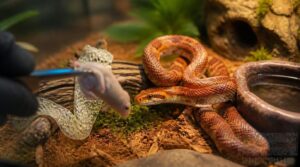
Shedding shifts your snake’s appetite into high gear, but timing matters just as much as hunger. Feed too soon or skip a few key checks, and you risk a regurgitated meal or worse. Here’s exactly what to confirm before that first post-shed meal goes in the enclosure.
Confirming a Complete Shed
Before feeding resumes, confirm eye cap absence and check the tail tip edge for a clean finish, not a jagged remnant. Look for a complete onepiece shed outside the enclosure. Run a quick ventral scale check for uniform color.
Retained eye caps or retained skin signal an incomplete shed, so hold off until the enclosure is shed free.
Ideal Post-Shed Feeding Window
Once the shed checks out clean, the Feeding Timing Window opens fast, most keepers offer food within 24 to 48 hours.
Confirm temperature before feeding hits 88-92°F, since cold enclosures cause regurgitation.
Watch for post-shed hunger cues like tongue flicking and tong interest.
Adjust prey size slightly upward, matching 10-15% of body weight for the appetite surge.
Recognizing a Feeding Response
Prey Detection Cues show up fast: tongue flicking accelerates, and eye brightness sharpens as pupils track movement.
Watch for a body orientation shift, the coil loosens, and the head angles toward the scent.
That’s strike readiness. A rapid strike window follows almost immediately, so keep hands steady and give the feeding response room to finish uninterrupted.
Washing Hands Before Feeding
Once that strike readiness appears, resist the urge to rush in unwashed. Wet your hands, apply soap, and scrub for a full 20 seconds, covering knuckles, nail beds, and wrists where scent residue lingers from earlier meals.
Dry hands thoroughly with a clean towel. This prevents cross-contamination and stops a mistaken feeding response aimed at your fingers instead of the prey.
Avoiding Handling After Feeding
Rarely does patience matter more than right after a meal. Keep hands off for at least 48 hours, longer in cool enclosures, since digestion runs 3-6 days and slows sharply below 68°F.
Handling too soon risks regurgitation, wasted nutrition, and a lasting feeding aversion. Ball pythons especially need this window respected before resuming gentle handling techniques.
Gentle Handling During Post-Shed Recovery
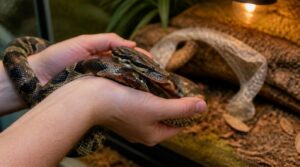
Once feeding is settled, handling comes next, and timing matters just as much here. Your snake’s body is still adjusting after the shed, so a few habits make these sessions safer and more productive. Here’s what to keep in mind before you reach into the enclosure.
Best Time to Begin
Timing matters more than eagerness here. Wait until the eye clarity check confirms bright, transparent eyes and no retained caps, usually 24-48 hours post-shed.
- Eyes fully clear, not milky
- Tail tip skin fully shed
- Calm tongue flicking, no hissing
- Stable temps for 24 hours
This same window overlaps the appetite peak period, so many keepers offer a post-shed soak first, then feed before handling.
Supporting The Full Body
Lifting a snake wrong risks real injury. Use two-hand support: one hand behind the head, one under the body, distributing weight evenly to prevent spinal strain.
| Hand | Placement | Purpose |
|---|---|---|
| First | Behind head | Control |
| Second | Mid-body | Weight balance |
Keep grip loose, allowing free movement as they explore, since postshed bodies still feel tender from recent skin loss.
Keeping Handling Sessions Brief
Shorter beats longer here. Cap sessions at 3 to 5 minutes right after a shed, even if your snake seems curious and calm.
Watch for stress indicators: rigid body, musking, head-hiding, or rapid tongue flicks past ten per minute. Any of these means the session ends now, not in five minutes.
Skittish snakes need under 30 minutes total weekly. Push too hard and you’ll see decreased appetite or increased hiding behavior next.
Approaching From The Side
Head-on approaches read as predatory to your snake, so staying parallel to its body keeps things calm. Match shoulder height, guide with light palm pressure at the midsection, and let your eyes stay visible so it can read your intent.
This single habit, practiced consistently during postshed handling, cuts strike risk and builds cooperative body posture over time.
Building Trust Through Consistency
Trust builds the same way muscle memory does: through repetition. A consistent handling schedule of one to four sessions weekly, paired with predictable feeding times, gentle approach repetition, and environmental stability, teaches your snake that postshed behavior means safety, not stress.
Routine health checks fit naturally here too. Snake trust building isn’t instant, but shedding behavior changes give you a reliable, low-stress window to strengthen it consistently.
Warning Signs After a Snake Sheds
Most sheds go smoothly, but not all of them do, and knowing the difference matters for your snake’s health. A few red flags show up more often than others, and catching them early keeps small problems from becoming bigger ones. Here’s what to watch for once the old skin comes off.
Retained Eye Caps
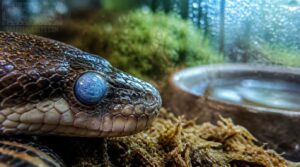
A cloudy or opaque patch over the eye after shedding means the cap didn’t release. Retained eye caps usually trace back to low humidity during the cycle, so check your setup against species-specific ranges. A digital hygrometer placed mid-level in the enclosure takes the guesswork out of this, and this guide on fixing low humidity during snake shedding walks through species-specific targets and setup fixes.
Soak affected snakes 15-20 minutes, twice daily. Caps that persist past one cycle need veterinary intervention before they harden and threaten vision.
Retained Tail Tip Skin
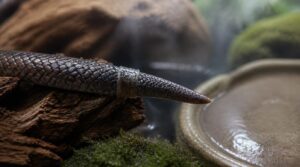
Eye caps aren’t the only trouble spot. Check the tail tip too: retained skin here can constrict like a tourniquet, cutting blood flow toward necrosis. Low humidity and dehydration are usual culprits.
Retained tail skin can tighten like a tourniquet, choking off blood flow until it leads to necrosis
Soak 30-60 minutes in 85-90°F water, then wipe gently toward the scales. If skin won’t release, raise humidity to 70-75% for 48 hours, or seek veterinary removal before tissue damage sets in.
Persistent Face Rubbing
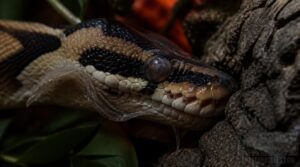
Tail skin isn’t the only holdout. Watch the face too: rubbing past 24 hours often means retained eye caps or stuck skin, not itching. Causes include low humidity and rough surface preference (bark over glass), worse at night.
- Rub marks on cork bark
- Cloudy eyes past shed day
- Skin flaps near jawline
- Nighttime rubbing spikes
- No relief after humid hide therapy, needing veterinary cap removal
Ongoing Lethargy or Weakness
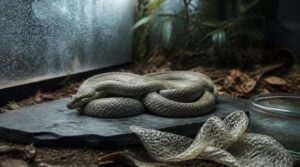
Weakness that lingers past a normal shed cycle isn’t itching, it’s a red flag. Parasite fatigue, nutritional deficiency, respiratory weakness, dehydration, or reproductive strain can all mimic post-shed sluggishness.
Watch for reduced appetite, increased hiding, or dull responsiveness lasting more than a few days. These aren’t quirks to wait out, they’re stress indicators warranting a vet checkup.
If you’re unsure whether those changes stem from handling stress or something more serious, this guide to reptile handling for kids breaks down the warning signs to watch for.
When to Contact a Veterinarian
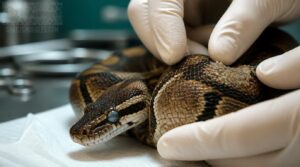
When several signs stack up at once, waiting rarely pays off.
- Eye discharge or nasal swelling
- Weight loss or dehydration signs
- Skin lesions near retained shed
- Mouth discharge or feeding refusal
- Handling reveals lethargy or heat
If two or more appear together, schedule a vet exam promptly. Early diagnosis protects long-term health far better than a wait-and-see approach.
Frequently Asked Questions (FAQs)
Are snakes irritable after shedding?
Before shedding, restlessness; after, calm. Most snakes shift from defensive, edgy behavior to relaxed post-shed mood, with steady appetite and looser posture replacing the irritability and decreased appetite common right before the old skin comes off.
How long after a snake sheds can you handle it?
Once you’ve done a shed completeness check confirming intact eye caps and tail tip, wait 24-48 hours. Corn snakes clear fast; boas need longer. Watch for retained shed or stress signs before proper handling resumes.
Do snakes feel better after shedding?
Yes. Heart rate normalization, better hydration, and eased vision replace shedding appetite loss and hiding behavior.
You’ll notice activity level rise, calmer posture, and stronger feeding response, clear comfort indicators that stress has genuinely lifted once the cycle completes.
What does a snake do after shedding?
Your snake basks longer to harden new skin, rubs against rough surfaces, and soaks in water dishes. Appetite rebounds quickly, activity increases, and males may travel more, scent-marking as chemical signaling rises after the fresh shed.
Why do snakes bask more often after shedding?
Warmth is the name of the game now. Basking at 85-90F boosts heat absorption efficiency, speeds enzyme activity, tightens keratin, and regulates hydration, all while resetting circadian rhythm before feeding resumes.
Does refreshed skin affect mating and courtship behavior?
Absolutely, courtship intensifies after shedding. Skin Reflectance Courtship and smoother scales boost Pheromone Dispersion Boost and Tactile Signaling Increase, sending clear Mating Readiness Signals while Reduced Ectoparasite Load keeps her calmer and more receptive to a male’s approach.
Why do snakes rub against rough objects post-shed?
Think of it as scratching an itch you can’t reach. Rough surfaces give skin fragment removal its friction, aiding scale detachment assistance and completing shedding, while offering welcome tactile stimulation along stubborn patches near the mouth.
Can shedding trigger increased scent marking in males?
Yes. Fresh skin releases chemical compounds that trigger male scent marking, driving territorial marking behavior near basking spots.
This scent cue increase prompts exploratory travel and post-shed signaling, especially when rivals or receptive females are nearby during your snake’s recovery.
Why do females become more receptive after shedding?
It’s no coincidence that fresh scales and fresh hormones arrive together. Hormonal influence peaks right as skin sheds, boosting scent signaling and courtship cues, so mate attraction rises sharply during this brief, biologically primed window.
Conclusion
A fresh shed is like a snake stepping out of a worn coat, sharper, hungrier, and bolder than before.
Reading post shed snake behavior signs correctly tells you when to offer food, when to handle gently, and when something’s off.
Trust the pattern: clear eyes, steady movement, and calm exploration mean recovery is going right. Retained caps or lingering lethargy don’t.
Stay attentive through those first 48 hours, and your snake will show you exactly what it needs.