This site is supported by our readers. We may earn a commission, at no cost to you, if you purchase through links.

Your boa sheds, and the skin peels off in ragged patches instead of one clean sleeve. That’s the moment most keepers learn their substrate isn’t doing its job.
The best substrate for boa constrictors holds humidity between 60 and 80%, resists compaction, and stays safe if your snake swallows a stray bit. Cedar and pine fail that test. Gravel and loose sand fail it worse. Coconut husk, cypress mulch, and aspen each bring different strengths, and each has a catch.
Here are eight picks that earn a spot in your enclosure, plus the setup tricks that keep them working.
Table Of Contents
- Key Takeaways
- Best Substrate for Boa Constrictors: Coconut Husk, Cypress Mulch, or Aspen?
- Top 8 Substrates for Boa Constrictors
- 1. Aspen snake bedding substrate material
- 2. Coconut Chip Reptile Bedding Block
- 3. Natural Coconut Husk Reptile Bedding
- 4. Coconut Coir Growing Media Chips
- 5. Forest floor reptile bedding substrate
- 6. Zoo Med Eco Earth Loose Coconut Fiber
- 7. Eco Earth Compressed Coconut Brick
- 8. Kempf Coco Coir Brick Expanding Soil 10lbs
- How to Set Up Boa Substrate for Humidity and Comfort
- Is Bioactive Substrate Right for Your Boa Constrictor?
- Boa Substrate Safety and Maintenance: What to Avoid, Clean, and Replace
- Frequently Asked Questions (FAQs)
- What type of substrate is best for a boa constrictor?
- Do boa constrictors like to soak in water?
- What is the safest substrate for snakes?
- What is the ideal enclosure setup for a boa constrictor?
- What is the best enclosure for a boa constrictor?
- What is the best bedding for a Columbian boa?
- What do boa constrictors need in their enclosure?
- What is the best substrate for snake tank?
- How often should substrate be replaced in quarantine tanks?
- Can wild-collected leaves be used as natural substrate?
- Conclusion
Key Takeaways
- Coconut husk bedding is the top choice for boa constrictors because it holds the 60–80% humidity they need, stays safe if swallowed, and supports natural burrowing.
- Never use cedar, pine, gravel, or loose sand—their oils or sharp textures can harm your boa’s airways or cause impaction if ingested.
- Aspen shavings work well for drier setups but mold easily when wet, so keep them dry and monitor for dust.
- Maintain substrate at 2–4 inches deep, spot-clean daily, keep it damp but never soggy, and replace it every 2–4 weeks (or immediately if you spot mold or a chemical smell).
Best Substrate for Boa Constrictors: Coconut Husk, Cypress Mulch, or Aspen?
Pick your boa’s substrate the way you’d pick a bedroom, because that’s what it is. Your choice shapes humidity, comfort, and safety every single day.
If you want a deeper dive into bedding options and overall setup, our corn snake care guide covers substrate choices in detail.
Choose your boa’s substrate like you’d choose its bedroom, since it shapes humidity, comfort, and safety every day
Coconut husk is the humidity champ. It holds moisture, resists compaction, and lets your boa dig in. Cypress mulch also holds moisture and dries slowly, but it can mold if you keep it soggy. Aspen shavings stay clean and dust-free, though they don’t hold humidity well, and loose bits can get swallowed.
Boas need 60 to 80% humidity, so humidity control in terrariums matters more than looks. Curious about a bioactive substrate? We’ll touch on that later. For now, here’s how these three stack up. Spoiler: there’s no one-size-fits-all winner. Your boa’s needs decide it.
Top 8 Substrates for Boa Constrictors
Ready to find the right bedding for your boa? Here are eight substrate options for boas that help you keep humidity steady and your snake comfy. Let’s walk through them one by one.
1. Aspen snake bedding substrate material
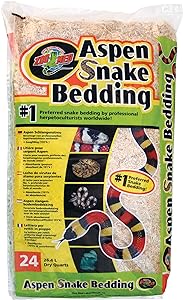
The Zoo Med aspen bedding is a solid pick for your boa, and it’s easy to love. It’s made from renewable aspen and boasts a 191% absorbency rating, so it soaks up spills fast. There are no aromatic oils here, which keeps sensitive noses happy.
Keep it dry, though. Excessive moisture invites mold, and some owners report dust, so pour gently. It works best when room humidity sits around 40-60%.
Spot clean daily. Then do a full refresh every 4-6 weeks. Your boa gets firm footing for climbing, and you get a simple routine. Less hassle for you, and a cleaner home for them.
| Best For | Snake owners, especially those with boas, who want a natural, odorless aspen bedding for indoor enclosures and are willing to spot clean daily and keep the substrate dry. |
|---|---|
| Material | Aspen bedding |
| Absorbency | 191% rating |
| Dust level | Some dust reported |
| Mold risk | Mold if too wet |
| Compostable | Not mentioned |
| Replacement frequency | Full refresh 4-6 weeks |
| Additional Features |
|
- Made from renewable aspen and free of aromatic oils, so it is odorless and safe for all snakes
- Highly absorbent with a 191% absorbency rating, so it soaks up spills fast
- Easy to spot clean, and it lets snakes, lizards, and small animals form burrows and nests
- May produce dust, and customers report varying dust levels
- Needs monitoring when wet, since excessive moisture can lead to mold
- Not suitable for outdoor use, as it is meant for indoor enclosures only
2. Coconut Chip Reptile Bedding Block
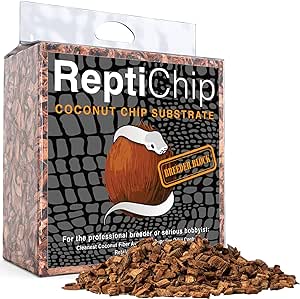
Aspen wants to stay dry, but if your boa needs a more humid home, this coconut chip block is your fix. It starts as a compact 12x6x12-inch brick and expands into roughly 72 quarts of substrate once wet.
For a deeper dive into why coconut fiber works so well for snakes, our guide to coconut husk snake bedding covers the benefits and setup tips.
The chips are made from coconut husk, so they offer strong moisture retention and dry out slower than loose coconut fiber. That means fewer misting sessions for you. They also shed less fine dust, which keeps cleanup simple.
Add water gradually and let the block soak up every drop. Then crumble it to set a substrate depth that suits natural burrowing behavior. Check for mold or odor often.
| Material | Coconut husk |
|---|---|
| Absorbency | High absorbency |
| Dust level | Not mentioned |
| Mold risk | Mold if stays wet |
| Compostable | Yes, compostable |
| Replacement frequency | Replace every 2-4 weeks |
| Additional Features |
|
3. Natural Coconut Husk Reptile Bedding
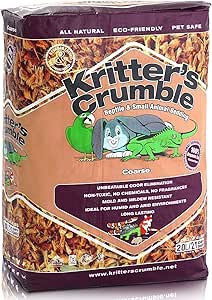
Skip the soaking step with this loose coconut husk bedding. It’s ready to pour, and it’s made from 100% organic coir that soaks up moisture and helps keep odors in check.
That absorbency holds humidity around 60–80% when you spread it as a top layer, which helps your boa shed cleanly. It works in humid and arid setups, so you can adjust by misting more or less. Watch for mold. Wet bedding that never dries gets funky fast, so spot-clean waste and replace everything every 2–4 weeks.
You might spot harmless springtail pods, and some buyers say the pieces run small. When you’re done, toss the used fiber in your compost.
| Best For | Reptile, amphibian, and small pet owners who want a ready-to-use, natural bedding that works in both humid and dry enclosures and can be composted afterward. |
|---|---|
| Material | Coconut coir |
| Absorbency | High absorbency |
| Dust level | Low dust |
| Mold risk | Mold if stays wet |
| Compostable | Not mentioned |
| Replacement frequency | Not mentioned |
| Additional Features |
|
- Ready to pour with no soaking needed, and made from 100% organic coconut husk fiber
- Absorbs moisture well, helps control odors, and holds humidity for both humid and arid setups
- Biodegradable, so used bedding can go into the garden or compost as a soil conditioner
- May contain visible but harmless springtail pods
- Some buyers say the pieces are smaller than expected
- Mixed feedback on value for the amount you get, and wet bedding that never dries can grow mold
4. Coconut Coir Growing Media Chips
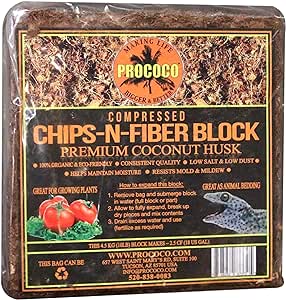
A 4.5 kg bag of INKBAY coconut coir growing media goes a long way. Just add water and it expands like a sponge on a mission. You get a mix of fiber and chips that feels like a forest floor, with very little dust when you open the bag.
Spread it 2 to 3 inches deep so your boa can burrow without crushing the air pockets. Aim for 60 to 80% humidity, keep the surface lightly damp, and don’t soak the deeper layers. Coir can dry out fast, so mist when needed. Dry leftovers fully before storing, because sealed containers and damp coir don’t mix.
| Best For | Reptile keepers with crested geckos or tortoises, and gardeners who want a moisture-holding top layer for raised beds. |
|---|---|
| Material | Coconut fiber |
| Absorbency | High absorbency |
| Dust level | Not mentioned |
| Mold risk | Mold if soaked |
| Compostable | Yes, compostable |
| Replacement frequency | Not mentioned |
| Additional Features |
|
- Expands significantly when water is added, so the 4.5 kg bag goes a long way.
- The mix of coconut fiber and chips supports digging and holds moisture well.
- Low dust when you open the bag.
- Becomes damp after expanding, so leftovers need to dry fully before storage.
- May dry out relatively quickly after wetting, so it needs regular misting.
- Not ideal for long-term storage in sealed containers because it retains moisture.
5. Forest floor reptile bedding substrate
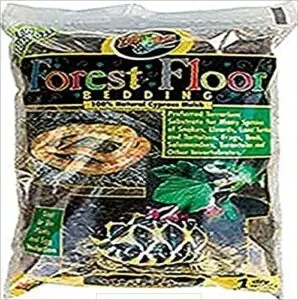
You want your boa to feel like it’s slinking through a damp jungle, and forest floor bedding gets you close. This cypress-based mix holds moisture without turning soggy, so humidity control in terrariums gets much easier. It’s a great naturalistic terrarium substrate, with chunky pieces that give your snake plenty of cover.
Spot cleaning is simple, but waste can hide in the mix. Check daily so your boa’s home stays fresh and truly safe.
For substrate safety for reptiles, choose untreated, pesticide-free bedding and keep depth around 2 to 4 inches. Spread it thick enough for burrowing, and it also suits a bioactive enclosure.
| Material | Coconut husk |
|---|---|
| Absorbency | High absorbency |
| Dust level | Not mentioned |
| Mold risk | Mold if soaked |
| Compostable | Not mentioned |
| Replacement frequency | Not mentioned |
| Additional Features |
|
6. Zoo Med Eco Earth Loose Coconut Fiber
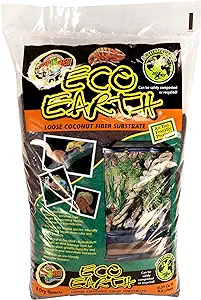
Picture a damp forest floor, soft and dark, giving way beneath your boa as it tunnels in. That’s what this loose coconut fiber delivers.
Made from coconut husks, it holds moisture and lifts humidity, and it helps break down odor and waste when damp. Spread it 2 to 4 inches deep so your boa can burrow. Mist it, but don’t soak it, because soggy fiber invites mold.
Layer it over HydroBalls for drainage. Don’t mix in pine or cedar, since their oils irritate boas. The bag isn’t resealable, so store it in a bin. When you’re done, compost it. Your garden will thank you too.
| Best For | Reptile, amphibian, and invertebrate keepers who want a naturalistic, humidity-boosting substrate that also helps control odor and waste. |
|---|---|
| Material | Aspen shavings |
| Absorbency | 191% rating |
| Dust level | Some dust reported |
| Mold risk | Mold if too wet |
| Compostable | Not mentioned |
| Replacement frequency | Full refresh 4-6 weeks |
| Additional Features |
|
- Holds moisture and raises humidity in enclosures
- Helps break down odor and waste when damp
- Can be layered over HydroBalls for drainage and later composted or reused in gardens
- The bag is not resealable, so it needs a separate storage bin
- Nesting species may need extra sphagnum peat moss
- The fine texture may not support burrowing for some tortoise species
7. Eco Earth Compressed Coconut Brick
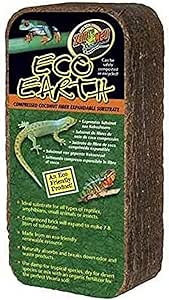
Think of a dry, dusty tan slab that turns into a pile of soft, dark, earthy fluff the moment water hits it. That’s Eco Earth Compressed Coconut Brick.
Soak it in a tub until it fully expands, then drain it. Squeeze a handful: it should feel damp, not dripping. Spread it 2 to 3 inches deep, and your boa gets a cozy burrowing layer that holds humidity around 70 to 80% for shedding.
Watch for mold. Let the surface dry between soaks, keep a dry backup substrate, and trust your nose if a chemical smell appears. Avoid dusty batches for juveniles. Replace it every 6 to 12 months.
| Best For | Reptile and amphibian keepers who want an affordable, burrow-friendly substrate that holds humidity for species like boas, frogs, and invertebrates. |
|---|
- Expands when soaked into soft, loose bedding that suits burrowing animals
- Holds humidity well, which helps with shedding and keeps terrariums damp
- Safe for reptiles, amphibians, and invertebrates, and works as a drainage layer over HydroBalls
- Some customers report a chemical-like odor
- Quality is inconsistent, with mixed feedback on dirt quality and durability
- Can mold quickly in humid conditions, so it needs regular monitoring
8. Kempf Coco Coir Brick Expanding Soil 10lbs
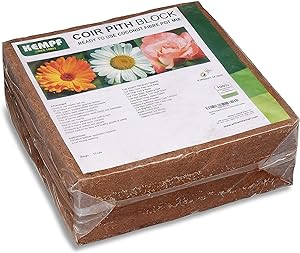
Need humidity without the hassle? The Kempf Coco Coir Brick delivers. This 10-pound block is made from coconut husk that’s pre-rinsed, triple-filtered, and screened, so you won’t fight sand or debris. Its neutral pH of 5.5 to 6.5 is gentle on your boa.
One brick swells to roughly 8 to 10 quarts, giving you about 1.0 to 1.25 cubic feet of loose coconut coir substrate. Coir holds up to 10 times its weight in water, which helps your boa shed cleanly.
Hydrate it in a large, wide container so it expands evenly. Dense bricks fight back, so grab a saw or chisel.
| Best For | Reptile keepers, especially boa owners, and gardeners who want a low-mess, high-moisture substrate that they can hydrate at home and use for bedding, seed starting, or potting. |
|---|
- Holds up to 10 times its weight in water, which helps keep humidity steady and supports clean shedding
- Pre-rinsed, triple-filtered, and screened, so there’s little sand, rock, or debris to deal with
- Neutral pH of 5.5 to 6.5 with low electrical conductivity, making it gentle on animals and plants
- Needs to be hydrated in a large, wide container, or it can expand unevenly and damage the container
- The dense brick can be hard to break apart and may take a saw or chisel
- Customer feedback is mixed on how well it holds up over time in container plants
How to Set Up Boa Substrate for Humidity and Comfort

Is your boa’s enclosure a rainforest or a desert? Get this setup right and your snake thrives.
Start with coco coir or coconut husk. Both offer excellent moisture retention, so you get steady humidity regulation without constant fuss. Aim for 60 to 70 percent RH, and keep the substrate damp, never soggy.
Here’s your quick setup checklist:
- Keep substrate depth at 2 to 4 inches to support burrowing behavior.
- Offer a shallow water dish and a humid hide.
- Mist during the day, then spot-clean daily.
Keep substrate loose around heat sources so no hot pockets form. Swap everything every 2 to 4 weeks, or sooner if you spot mold. Prefer a bioactive approach? Same humidity rules apply, just stay alert.
Is Bioactive Substrate Right for Your Boa Constrictor?
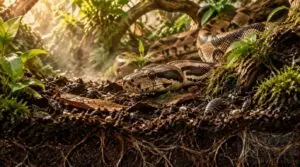
Bioactive substrate can be a great fit, but it’s not a set-and-forget deal. You’re building a tiny habitat, and your boa lives right on top of it.
Here’s how it works. A cleanup crew of springtails and isopods breaks down waste, while microbes keep the mix fresh. Keep substrate depth at 3 to 4 inches, since that gives roots, microfauna and burrowing behavior plenty of room.
The catch? Big snakes make big messes. If the crew falls behind, ammonia and mold creep in fast. Choose bioactive if you genuinely enjoy monitoring and tweaking. Prefer simple? Stick with a regular coco mix and swap it on a schedule. Either way, watch the humidity regulation and check for compaction and mold weekly.
Boa Substrate Safety and Maintenance: What to Avoid, Clean, and Replace
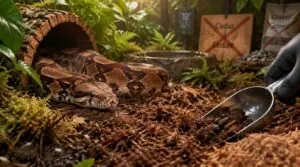
Cleanup crews help, but they don’t replace your own routine. Substrate safety comes first, so skip cedar, pine, and other resinous woods. Their oils irritate airways and can hurt your boa’s respiratory health. Skip gravel and loose sand too, since a hungry constrictor can swallow them.
Spot-clean daily. Scoop waste and urates, then add fresh bedding to keep a 2 to 3 cm layer. Your substrate should feel damp, never soggy or packed down.
Follow a substrate replacement schedule. Swap loose bedding every one to three months. Coconut-based mixes last six to twelve months, and a bioactive cleanup crew can stretch that further.
For mold prevention in substrate, watch for odor and fuzzy patches after each shed. Spot mold? Replace everything and disinfect the enclosure right away.
Frequently Asked Questions (FAQs)
What type of substrate is best for a boa constrictor?
Picture your boa gliding over soft, damp coconut fiber, tongue flicking happily. That’s the winner: coconut husk bedding. Its moisture retention holds 60–70% humidity, encourages natural burrowing behavior, resists dust, and keeps shedding smooth.
Cypress mulch works too; aspen suits drier setups.
Do boa constrictors like to soak in water?
You’ll see occasional brief soaks when humidity dips or shedding starts. Most boas just sip and move on. If yours soaks constantly, check your temperature gradient and moisture retention, and call a vet.
What is the safest substrate for snakes?
For substrate safety for snakes, you can’t beat aspen shavings. It’s dust-free, low in oils, and mold-resistant. Skip cedar and pine; their aromatic oils irritate airways. Coconut husk works well too.
What is the ideal enclosure setup for a boa constrictor?
Think of it as your boa’s whole world. Get enclosure size right, add temperature gradients, a damp hide, solid humidity monitoring tools, and ventilation slot design that locks in moisture without turning things swampy.
What is the best enclosure for a boa constrictor?
Here’s the truth: boas need room to roam. Give yours a 4’L x 2’W x 4’H enclosure if it’s under 6 feet. Add proper heating, temperature gradient control, UVB lighting, solid ventilation slot design, and two hiding spots.
What is the best bedding for a Columbian boa?
Here’s a stat worth knowing: boas thrive at 60–80% humidity. For your Columbian boa, choose coconut fiber or cypress mulch. Both hold moisture safely if ingested. Add sphagnum moss for extra humidity gradient management.
What do boa constrictors need in their enclosure?
Picture your boa gliding through a snug jungle retreat. You’ll need a 75–100 gallon tank, heating elements, UV lighting, two hides, proper substrate, humidity control at 60–70%, and enrichment items for comfort.
What is the best substrate for snake tank?
You can’t beat coconut fiber for snake tanks. It nails moisture retention, stays safe if ingested, and helps respiratory health. Add sphagnum moss, keep your temperature gradients steady, and you’re golden.
How often should substrate be replaced in quarantine tanks?
Say your boa soaks its water bowl overnight: damp bedding means you replace it that day, not next week. Change quarantine tank substrate weekly; paper towels daily; newspaper or reptile carpet every 3-4 days.
Can wild-collected leaves be used as natural substrate?
Technically yes, but it’s risky. Wild leaf litter can carry parasites, bacteria, and mold. Oven-bake it at 200°F for 30 minutes first. Honestly, commercial leaf litter is safer and way more consistent.
Conclusion
A keeper I know switched from pine shavings to cypress mulch after one bad shed, and her boa’s next shed came off like a glove. That’s the difference the best substrate for boa constrictors makes.
Pick coconut husk for humidity, aspen for dry setups, or go bioactive if you love a living tank. Spot-clean weekly, replace monthly, and watch your snake thrive.
Your boa spends its whole life on this bedding. Make it count.