This site is supported by our readers. We may earn a commission, at no cost to you, if you purchase through links.
Your ball python hasn’t eaten in three weeks and spent the whole day buried in its hide. Is that normal, or is something wrong? Snakes hide illness instinctively, so by the time symptoms show, problems are often serious. Respiratory infections alone cause roughly 40% of ball python health issues, and most trace back to fixable husbandry mistakes like wrong humidity or a bad temperature gradient. Learning how to tell if ball python is sick means watching for wheezing, mouth discharge, retained eye caps, and lethargy that goes beyond normal shyness. Here’s what healthy looks like, what sick looks like, and when to call a reptile vet.
Table Of Contents
- Key Takeaways
- What Does a Healthy Ball Python Look Like?
- How Can You Tell if a Ball Python is Sick?
- Which Illnesses Commonly Affect Ball Pythons?
- Could Poor Husbandry Be Causing The Symptoms?
- What Should You Do if Your Ball Python Seems Sick?
- Frequently Asked Questions (FAQs)
- What are the signs that a ball python is dying?
- What are the common causes of death in ball pythons?
- What are the signs that a ball python is unhappy?
- What are the signs that a ball python is dehydrated?
- How do you know if a ball python is sick?
- How do I know if my ball python is dying?
- Are ball pythons sick or dying?
- What should I do if my ball python is sick?
- How do you know if a ball python is stressed?
- What health problems do ball pythons have?
- Conclusion
Key Takeaways
- Respiratory infections cause roughly 40% of ball python health problems, so wheezing, clicking sounds, open-mouthed breathing, or nasal discharge means you should call a reptile vet immediately rather than wait it out.
- Most ball python illnesses trace back to fixable husbandry mistakes—wrong temperature gradients (88–92°F warm side, low 70s cool side), improper humidity (50–60%, higher during sheds), cramped enclosures, missing hides, or poor hygiene—so inspect your setup first.
- Distinguish normal shyness from true sickness by watching for lethargy beyond usual hiding, feeding refusal paired with weight loss, retained eye caps or patchy sheds, swollen gums or cottage-cheese mouth discharge, and mites or ticks on the skin.
- Act fast on emergency signs like gasping, blood in the mouth, spreading black lesions, tremors, or inability to right itself, and keep a simple health journal tracking weekly weight, feeding, sheds, and temperatures to catch dangerous trends early.
What Does a Healthy Ball Python Look Like?
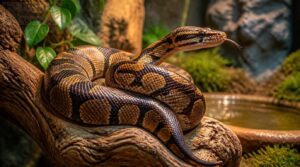
One healthy ball python is easy to spot once you know the markers. Look for a smooth, glossy appearance with intact scales, no stuck shed, and clear bright eyes that blink and track movement normally.
If you notice retained eye caps, wrinkled skin, or unusual patches, this guide to common ball python skin problems can help you pinpoint the cause.
Body condition matters too. You want a well-rounded body shape, a full tail, and no sharp spine or rib ridges poking through. A sunken skull or wrinkled belly? That’s a red flag, not a quirk.
Behavior tells the rest of the story. A healthy snake shows curious yet calm behavior, flicks its tongue, and explores when handled. It uses both the warm and cool sides of its enclosure instead of parking in one spot.
How Can You Tell if a Ball Python is Sick?
Spotting the difference between a resting snake and a sick one trips up a lot of keepers. Your snake looked fine yesterday. Today it feels wrong.
Lethargy is the big one. Your python should move with purpose when active. If it’s limp, unresponsive, or hiding far more than usual, something’s off.
Watch for these red flags:
- Openmouthed breathing or audible wheezing at rest, not just during handling
- Discharge from nose or eyes, including mucus, froth, or persistent crusting
- Abnormal shedding like retained patches, dull eyes outside shed cycles, or wrinkled skin
Weight loss paired with feeding refusal is a strong warning. So are tremors or an inability to right itself. These aren’t personality quirks. They’re your snake asking for help.
Which Illnesses Commonly Affect Ball Pythons?

Ball pythons are generally tough little animals, but they do get sick — and knowing what you’re dealing with makes all the difference. A few illnesses come up time and again in ball pythons, and spotting them early is what separates a quick fix from a serious vet visit. Here’s what to watch for.
Respiratory Infections
Studies suggest respiratory illness accounts for roughly 40% of all health problems seen in captive snakes, and ball pythons are particularly susceptible. If you suspect a respiratory infection, don’t wait it out. These things escalate fast.
Watch for these warning signs:
- Wheezing or clicking sounds during inhalation
- Openmouthed breathing and visible effort to draw air in
- Nasal discharge or bubbly saliva near the mouth
Lethargy and appetite loss often follow as the body fights infection. Cool temperatures, high humidity, and poor enclosure ventilation are the usual culprits. All three suppress immune function and make pathogen control harder. Get a reptile vet involved early.
Since these same signs can also point to impaction, our guide to whether substrate liners cause impaction in snakes is worth reading before assuming it’s just a temperature issue.
Mouth Rot
Respiratory infections often share a culprit with the next problem: mouth rot. Vets call it infectious stomatitis, and it starts with red, swollen gums or irritated lip corners. Left alone, you’ll see thick cottage cheeselike discharge and a foul smell. Your snake may stop eating or struggle to open its mouth. An oral cavity examination by a reptile vet catches it early, before ulcers and tissue damage set in.
Shedding and Skin Problems
Shedding trouble is your snake’s SOS. Dysecdysis, or abnormal shedding, shows up as patchy skin, retained eye caps, or stuck tail tips. Watch for:
Even small changes like dull eyes or skipped meals can signal a bigger problem, so this guide to the early warning signs of illness in pythons helps you act before shedding trouble worsens.
- Dull, cloudy color (normal pre-shed)
- Shed coming off in fragments
- Wrinkled, dry skin
- Skin lesions or redness
- Eye caps that won’t lift
Fix humidity first, soak gently, and see your vet if problems repeat.
A shallow reptile soaking tub lets your snake soak safely while the raised humidity loosens stubborn shed.
Mites and Ticks
Check your snake for tiny black specks and brown lumps. Mites swarm in hides; ticks latch near skin folds. A returning parasitic infestation means eggs survive in decor, so run a quarantine protocol for new arrivals.
| Sign | Mites | Ticks |
|---|---|---|
| Look | Tiny black dots | Brown lumps |
| Where | On snake and substrate | Skin folds |
| Risk | Itching, stress | Blood loss |
| Action | Vet treatment | Deep clean |
Dehydration and Digestive Problems
Dehydration and digestion troubles often develop slowly and silently. Watch for these clues:
- Sticky mouth lining or sunken eyes
- Feeding refusal lasting weeks
- Regurgitation causes include oversized prey or cold basking spots
- Retained shed patches from low humidity
- Constipation with a still, uncomfortable belly
Fix your temperature gradient and humidity, offer water, and see an exotic vet if weight loss appears.
Could Poor Husbandry Be Causing The Symptoms?

Here’s the uncomfortable truth: most ball python illnesses trace back to husbandry mistakes, not bad luck. If your snake is sick, your enclosure is the first place you should look. Let’s walk through the five most common setup problems that could be making your snake sick.
Incorrect Temperature Gradient
Is your snake glued to one side of the tank? That’s a red flag.
Ball pythons need a proper temperature gradient: a warm basking spot around 88–92°F and a cooler zone in the low 70s. Measure surface temps, not just air, and verify your thermostat calibration. And if you’re breeding as well as keeping, understanding how super form ball python genetics work helps you avoid risky pairings that can produce nonviable offspring.
Poor thermal gradient maintenance causes stress, hiding, and skipped meals.
Improper Humidity Levels
Humidity is a silent troublemaker. Too low, and you’ll see dry, dull skin, shedding complications, and retained eye caps. Too high with soggy substrate, and you’re inviting respiratory infection and irritated, damp-damaged scales. Both extremes cause environmental stress.
Keep 50–60% normally, 70–80% during shed, and trust a well-placed hygrometer, not guesswork.
Inadequate Enclosure Size
Cramped quarters quietly sabotage your snake’s health. A ball python needs room to move between warm and cool zones. Without that temperature gradient, it can’t thermoregulate, digest properly, or shed cleanly. Small enclosures also trap moisture faster, so humidity levels swing wildly and proper ventilation suffers.
Here’s what a too-small tank causes:
- Waste concentrates, undermining enclosure sanitation and irritating mucous membranes.
- Damp, soiled substrate dominates, triggering skin infections and stuck shed.
- Chronic spatial stress suppresses appetite and behavior.
Aim for an enclosure at least as long as your snake, minimum.
Insufficient Hiding Spots
Space alone isn’t enough. Your ball python needs two snug hides, one on the warm side, one on the cool. A hide that’s too big, wobbly, or drafty won’t work.
Without proper hiding spots, stress builds fast. You’ll see behavioral changes: open-floor roaming, less refuge use, skipped meals.
Fix your enclosure setup first. It’s simple preventive care.
Poor Enclosure Hygiene
Hides are only half the battle. Poor hygiene turns a cozy setup into a germ factory. Feces, damp bedding, and biofilm in water bowls breed bacteria fast.
- Spot-clean daily, remove waste immediately.
- Full enclosure cleaning monthly, disinfect décor.
- Replace wet substrate; prioritize water hygiene.
Stagnant moisture invites mold, and mold irritates lungs. Substrate maintenance plus mold prevention keeps infections away.
What Should You Do if Your Ball Python Seems Sick?
So you’ve spotted something off with your snake. Now what? The next steps matter, and acting fast can make all the difference. Here’s exactly what to do, from emergency warning signs to long-term health tracking.
Emergency Warning Signs
Here’s a sobering number: reptile owners delay vet care by days in over half of emergencies, and that delay is often fatal.
Over half of reptile owners delay vet care in emergencies, and that hesitation is often fatal
So act fast if you see openmouthed breathing or gasping, blood or cottage cheese discharge in the mouth, black spreading skin lesions, tremors, or your snake can’t right itself.
Sunken eyes plus limpness? Go now. Don’t wait.
Safe Supportive Care
If it’s not an emergency, focus on supportive care. Keep the enclosure warm, with proper ventilation and tight humidity control. Offer fresh water daily and adjust your feeding techniques, smaller prey, less handling. Never force-feed. Skip home remedies and medications; they often backfire. Your job is stability, not diagnosis. A balanced diet and calm environment buy time until professional help.
Reptile Veterinary Care
When should you stop waiting and book the appointment? If you notice wheezing or open-mouth breathing, suspect a respiratory infection. If you see swollen, discolored gums, that’s mouth rot. And if shedding problems or mites persist despite perfect humidity, you need parasite screening and a proper exam. Reptiles hide illness well, so timely veterinary intervention matters. Don’t gamble.
Ongoing Health Tracking
A simple health journal changes everything. Log weekly weight monitoring with a gram scale, feeding frequency, shedding tracking, and temperature logs from your thermostat probes.
You’ll spot trends a single glance can’t catch, like a 10% weight drop or skipped sheds. Bring these notes to your vet.
Consistent health journaling turns vague worry into useful data, and it could save your snake’s life. A dedicated pet health journal log book keeps all those numbers organized in one place you can actually hand to your vet.
Frequently Asked Questions (FAQs)
What are the signs that a ball python is dying?
Watch for labored breathing with open-mouth gaping, cloudy eyes, persistent loss of appetite, and cold, limp posture. If your snake can’t right itself or respond to touch, you’ll need an exotic vet immediately.
What are the common causes of death in ball pythons?
The most common causes of death are respiratory infection, stomatitis, scale rot, severe dehydration, mite infestations, and stress-induced anorexia. Most trace back to poor husbandry, so fix your temperatures and humidity first.
What are the signs that a ball python is unhappy?
An unhappy ball python shows persistent lethargy, hides constantly, or refuses food. You’ll also notice openmouth breathing, wheezing, discharge from nose or eyes, abnormal shedding, mites, or gradual weight loss.
Knowing what a healthy ball python looks like makes it much easier to spot these warning signs early.
What are the signs that a ball python is dehydrated?
Like a wilted leaf, a dehydrated ball python shows it: sunken eyes, dull scales, wrinkled skin, a hollow spine, patchy sheds, lethargy, and concentrated urates. Fix humidity levels 50–60 and offer hydration support.
How do you know if a ball python is sick?
Sick ball pythons show lethargy, appetite loss, weight loss, wheezing, open-mouth breathing, or mouth bubbling. You’ll also notice abnormal shedding, mites, swollen gums from mouth rot, or discharge from the nose.
How do I know if my ball python is dying?
How do I know if my ball python is dying? Imagine this: your snake stops flicking its tongue, lies limp, and gapes open-mouthed.
Emergency signs include severe lethargy, bubbling from mouth, respiratory distress, sunken eyes, and inability to right itself. Call an exotic vet immediately.
Are ball pythons sick or dying?
Is your ball python sick or dying? Watch for persistent lethargy, refused meals, respiratory distress, or abnormal shedding. Gradual decline often means treatable illness; rapid worsening needs an exotic vet immediately.
What should I do if my ball python is sick?
Call a reptile vet today. Most illnesses are treatable when caught early. Meanwhile, make a temperature adjustment and humidity adjustment, avoid handling, do immediate waste removal, and track eating, breathing, and stool daily.
How do you know if a ball python is stressed?
Stressed ball pythons show frequent hiding, refusing food, hissing, or striking defensively. You’ll also notice excessive pacing, rapid breathing, rubbing against enclosure walls, or tightly coiled postures. These behavioral changes usually point to husbandry problems.
What health problems do ball pythons have?
What health problems do ball pythons have? Watch for respiratory infection (wheezing, open-mouth breathing), mouth rot, mites, dysecdysis from low humidity, and dehydration causing constipation or lethargy. Good husbandry prevents most of these.
Conclusion
Watchful, wary, and wonderfully secretive, your ball python won’t cry for help. You have to notice.
Learning how to tell if ball python is sick comes down to daily observation: check the tongue flicks, the breathing, the shed, the appetite.
Most illnesses trace back to fixable husbandry, so fix the enclosure first.
When symptoms linger or worsen, call a reptile vet.
Trust your gut. You know your snake better than anyone.