This site is supported by our readers. We may earn a commission, at no cost to you, if you purchase through links.

Boa constrictors live 20 to 30 years, grow past six feet, and need precise humidity year-round. Buying one from the wrong source can mean a sick animal, a seized shipment, or a fine you didn’t see coming. State and local laws vary wildly, and a few states ban specific morphs outright, even if federal law permits ownership.
Knowing where to buy a boa constrictor legally protects you, your investment, and the animal. The difference between a trustworthy breeder and a problematic seller often comes down to paperwork most buyers never think to request.
Table Of Contents
- Key Takeaways
- Where Can You Legally Buy a Boa Constrictor?
- Which Boa Constrictor Laws, Permits, and Shipping Rules Apply?
- How Can You Identify a Trustworthy Boa Constrictor Seller?
- What Should You Verify Before Completing The Purchase?
- Are You Prepared for Boa Constrictor Care and Long-Term Costs?
- Frequently Asked Questions (FAQs)
- Can you legally own a Boa constrictor?
- How much is a boas?
- Can I have a boa as a pet?
- Where can I find baby boa constrictors for sale?
- How much does a boa constrictor cost?
- Are boa constrictors a good pet snake?
- Where can I buy a used boa?
- Do boa constrictors poop?
- How much does a Boa imperator cost?
- What is a pet boa?
- Conclusion
Key Takeaways
- Legality depends on where the snake is delivered, not where it’s shipped from, so confirm state, county, and city rules—including morph bans and permit requirements—with your state wildlife agency before paying anything.
- Buy only from sellers who provide captive-bred documentation, lineage records tracing at least two generations, feeding and health logs, and written live arrival and health guarantees; missing or mismatched paperwork is a walk-away signal.
- The four main purchase channels are registered breeders, licensed reptile stores, local expos, and online marketplaces like MorphMarket—each requires verifying permits, accreditation, and shipping terms (FedEx accepts nonvenomous snakes, UPS requires contracts, USPS won’t ship them).
- Owning a boa is a 20–30 year commitment: expect a 4–6 foot enclosure held at 82–88°F with 60–80% humidity, feeding every 7–14 days, $100–$2,000+ for the snake itself, and $300–$800 annually in vet costs.
Where Can You Legally Buy a Boa Constrictor?

You’ve decided to buy a boa constrictor, so now you need a legal, trusted source. Where you buy matters for your snake’s health and your peace of mind. Below, you’ll find the four main purchase channels, each with its own advantages.
Understanding the full cost of owning a boa constrictor can help you evaluate which source fits your budget and long-term commitment.
Captive-Bred Boa Breeders
Start with a captive-bred boa constrictor from a breeder registered with regional husbandry bodies. Their CITES Compliance paperwork and studbooks prove legal lineage.
Check breeder reputation through reviews and inspection reports, then demand health records and feeding logs for each hatchling.
Confirm your state regulations allow ownership, and choose a Trusted Reptile Retailer offering guarantees and post-sale support.
Licensed Reptile Stores
Licensed reptile stores offer walk-in control over your purchase. Every Trusted Reptile Retailer carries state-issued business licenses, reptile-specific permits, and on-site quarantine facilities. You inspect animals before buying, something breeders can’t always match.
Demand these before you pay:
- Health guarantee paperwork with vet certifications
- Captive-bred documentation and origin traces
- Live arrival guarantee terms for shipping
Check Verified reviews, confirm staff handling training, and match store inventory against your State regulations. You keep full control when every record checks out.
Cross-referencing your founder stock and offspring ID records with boa constrictor legal regulations ensures every sale is backed by documentation that holds up under scrutiny.
Reptile Expos and Marketplaces
Expos give you hands-on control. Local reptile expos gather breeders, vendors, and hobbyists under one roof, so you inspect enclosure standards and feeding records before paying. Since a boa constrictor needs serious space, ask vendors whether their stock is thriving in a properly sized large reptile terrarium before committing.
Unlike Specialty reptile shops, prices vary widely between captive-bred and wild-caught stock. Verify Reptile marketplace accreditation, confirm vendor permits, and check return terms. ReptMart and similar platforms list vetted sellers, but you still demand provenance paperwork.
Online Reptile Retailers
Online reptile retailers give you wider morph selection than any expo. Sites like MorphMarket and ReptMart list cMart list captive-bred boas** with generation data, so you verify provenance before checkout.
Confirm the live arrival guarantee covers 24–72 hours, request the health guarantee in writing, and insist on overnight shipping with temperature monitoring.
Check state restrictions at checkout first.
Some states restrict or prohibit certain reptile sales, so reviewing corn snake breeding and selling regulations before listing animals can save you from costly legal surprises.
Which Boa Constrictor Laws, Permits, and Shipping Rules Apply?
Although federal law allows ordinary possession of captive-bred Boa constrictors, you can’t assume your state agrees. Some states ban boas outright, others require permits, and counties or cities often add stricter rules. Contact the state wildlife agency before you buy, and confirm the rules where the snake will be delivered, not just where it’s shipped from.
Three checkpoints protect you:
- Verify your state and local regulations, including any importation or possession permits, before payment.
- Confirm the exact scientific name, since the Lacey Act restricts listed species and CITES permit requirements apply to certain taxa.
- Follow carrier rules: FedEx accepts nonvenomous reptiles, UPS requires contract arrangements, and USPS won’t ship snakes.
Apply for permits before the snake arrives. Keep records, meet secure housing standards, and document everything.
How Can You Identify a Trustworthy Boa Constrictor Seller?

Not every seller deserves your money. You need proof of captive-bred origin, solid health records, and honest answers about lineage before you commit. Here’s how to spot a trustworthy boa constrictor seller and protect your purchase.
Captive-Bred Documentation
Here’s the truth: a boa without paperwork is a gamble. Demand captive-bred documentation with every purchase. You want a breeder-issued certificate, matching microchip or tattoo ID, and a written lineage tracking ledger showing dam, sire, and generation. Cross-check breeder licenses against your state wildlife authority. Genetic testing results add proof. If documents don’t match the animal, walk away.
Health and Feeding Records
A seller who keeps feeding records has nothing to hide. You want dates, prey sizes, and refusal history, not vague claims. Ask for health logs covering weights, stool notes, and any vet visits.
If your captivebred boa constrictor recently ate, expect slower shipping prep. Solid paperwork plus a live arrival guarantee and health guarantee shows real accountability.
Lineage and Genetic Transparency
Picture a pedigree chart spread across a breeder’s desk, sire and dam IDs inked beside each hatch. That’s what lineage and genetic transparency looks like.
Ask private breeders and specialty reptile shops for parentage test results, morph alleles, and documented lines traceable two generations back. A legitimate captive-bred boa constrictor comes with verifiable records, disclosed inbreeding risks, and tamper-evident certificates.
Guarantees and Ongoing Support
A weak refund policy should stop you cold. Demand a live arrival guarantee with 14-day replacement terms, plus a health guarantee covering vet-verified fatalities.
Strong private breeders go further: 12-month vet hotline access, feeding adjustment plans, and 30-day return options if your boa won’t eat.
You’re not buying a snake. You’re buying accountability that lasts long after delivery.
Buying a boa constrictor means purchasing accountability that outlasts the moment of sale
What Should You Verify Before Completing The Purchase?

Before you hand over any money, slow down and run through a quick but critical checklist. Confirm species and morph match exactly what was advertised, and ask the seller for proof of compliance with local and federal laws and permits, including any CITES documentation if the animal was imported. Request high-resolution photos, a handling video, and recent health certificates showing parasite screening and quarantine history.
It’s also smart to review local ordinances online before the transaction closes. Some states restrict specific morphs outright. If anything looks unclear, consult a veterinarian or reptile specialist who can flag issues in the paperwork before you commit.
Are You Prepared for Boa Constrictor Care and Long-Term Costs?
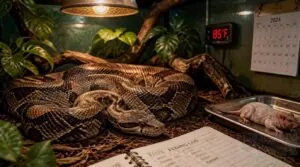
Once you’ve confirmed the paperwork, the real commitment begins. A captive-bred boa constrictor isn’t a weekend project. Adults need a proper enclosure setup, at least 4 to 6 feet long, held at 82-88°F with 60-80% humidity year-round. That takes equipment, consistency, and a real willingness to show up every week.
Feeding records from the seller give you a solid baseline, but you’ll be building your own from day one. Expect to feed rats or rabbits every 7 to 14 days. With a lifespan range of 20 to 30 years, you’re signing on for decades, not years. A dedicated reptile feeding log journal makes it easy to track feeding dates, prey size, and refusals over the decades ahead.
Budget $300 to $800 annually for routine vet visits, and keep that health guarantee accessible so early health issues don’t blindside you.
Frequently Asked Questions (FAQs)
Can you legally own a Boa constrictor?
Yes, in most places you can. Boa constrictor ownership is legal in many states and countries, but local rules vary. Check your wildlife regulations first, since some jurisdictions require permits or registration.
How much is a boas?
How much is a boa? Ironically, the snake is the cheap part. Expect $100–$300 for common boas, $500–$2,000 for designer morphs, plus shipping, permits, and setup costs.
Can I have a boa as a pet?
You can keep a boa as a pet in most of the United States, but you must check state and local laws first. Some areas require exotic animal permits or ban them entirely.
Where can I find baby boa constrictors for sale?
Baby boa constrictors for sale? Start with captive bred reptiles from licensed breeders, visit specialty reptile shops, browse local reptile expos, or use reptile marketplace accreditation and overnight shipping.
How much does a boa constrictor cost?
A captive bred boa constrictor runs $50–$400 for common morphs; rare morphs hit $1,000+. Reputable breeders include health guarantees, but budget extra for enclosure, food, legal compliance, and shipping costs.
Are boa constrictors a good pet snake?
Are boa constrictors a good pet snake? Picture a calm, powerful companion draped across your arms. They’re low-maintenance once established, fascinating to watch, and live 20–30 years.
But their size, specialized care, and long commitment demand preparation. Ready keepers find them rewarding companions.
Where can I buy a used boa?
Where can I buy a used boa? Check reptile rescues, local exotic pet groups, or MorphMarket listings. Verify health records, ask private breeders about lineage, and confirm reptile marketplace accreditation plus buyer dispute resolution before paying.
Do boa constrictors poop?
Do boa constrictors poop? Absolutely, and their waste rivals a medium-sized dog’s. Your captive-bred boa constrictor’s feeding schedule drives output, so pair reptile health monitoring with regular cleaning and proper humidity requirements.
How much does a Boa imperator cost?
How much does a Boa imperator cost? Expect $50–$150 for a juvenile normal from most legal purchase sources. Captive-bred boa constrictor morphs and adults run higher. Budget extra for reptile husbandry setup.
What is a pet boa?
What is a pet boa? Here’s a striking fact: over 90% of pet boas are captive-bred boa constrictors, bred for calm temperaments. These non-venomous snakes grow 5–12 feet, live 20+ years, and demand proper reptile husbandry, secure enclosures, and a correct temperature gradient setup.
Conclusion
Picture your boa draped over your arm years from now, healthy and calm, because you did the homework today.
Knowing where to buy a boa constrictor legally separates confident owners from regretful ones. Verify permits, demand captive-bred documentation, and question every seller who hesitates. Choose breeders who stand behind their animals.
Your snake will share two or three decades with you, so start that relationship with a purchase you’ll never have to second-guess.