This site is supported by our readers. We may earn a commission, at no cost to you, if you purchase through links.

Your corn snake sheds on Sunday, and by Monday she’s pacing the glass, tongue flicking, acting like a different animal. Or she’s wedged under her hide and ignoring everything you do.
Both reactions can be normal. Fresh skin brings sharper vision, a hungrier appetite, and sometimes a day or two of rest. But a snake behaving strangely after shedding can also point to stuck skin, shaky humidity, or a temperature gradient that’s slipping.
Knowing which is which keeps you calm and keeps your snake safe. Here’s how to spot the difference and decide what to do next.
Table Of Contents
Key Takeaways
- Mild changes like a bigger appetite, extra exploring, or a day or two of rest are often normal after a shed, and they usually settle within a few days.
- Check your snake 12 to 24 hours after the shed for retained skin on the eye caps, tail tip, and vent, and use a warm soak at 85°F (29°C) for stubborn patches, never forceps near the eyes.
- If the skin is clear and your snake still seems off, look at your setup first, since unsteady humidity, a slipping temperature gradient, or an oversized enclosure with too few hides is often the cause.
- Wait until the new skin is dry before handling, offer food a day or two after a clean shed, and call a reptile vet for breathing trouble, a pink or red belly, cloudy stuck eye caps, or odd behavior that lasts or worsens.
Normal Snake Behavior After Shedding
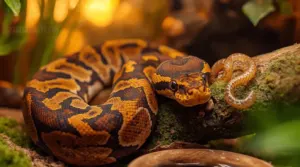
When your snake finally slips out of its old skin, you might expect a calm return to normal, and often that’s what happens. Many snakes show a stronger appetite once the shed is done, since they can see clearly again and feel more comfortable in their skin. Your snake may also seem less defensive and more tolerant of gentle handling after a short adjustment period.
Once you’ve confirmed the shed is complete, giving it a day or two before handling lets you see the relaxed post-shed behavior signs settle in.
Activity can go either way. Some snakes explore the enclosure more because their vision has improved, while others rest for a day or so, especially if the shed took a lot of effort.
Mild changes like these are usually nothing to worry about, and they tend to settle within a few days of the shed. However, if you notice retained eye caps or tight bands of old skin on the tail tip, you should contact a veterinarian, since retained shed can impair circulation.
Checking for Retained Skin After Shedding
Wait about 12 to 24 hours after the shed before you check, so the new skin has hardened and your snake’s eyes are clear. Gently run your fingers along its body, feeling for rough or loose patches. Normal skin feels smooth and moves freely, while retained skin feels firm and stuck in place.
Focus on the eye caps, the tail tip, and the vent, since skin often sticks in these spots. A retained eye cap looks like a dull, opaque spot over the clear eye. Bright light, or magnification, helps you see scale edges.
If you find a stubborn patch, a warm soak at 85°F (29°C) for 15 to 20 minutes can soften it. Never use forceps near the eyes.
If the cap still won’t budge after soaking, this guide to retained eye caps in snakes walks through what to try next without risking your snake’s eyes.
Husbandry Problems Behind Post-Shed Behavior Changes
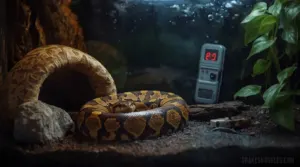
If you’ve cleared away retained skin and your snake still seems off, your setup is the next place to look. Behavior after a shed often reflects husbandry more than the shed itself.
When a snake acts strange after shedding and its skin is clean, the cause is usually its habitat, not the molt
Start with humidity. Misting only during shed, without steady baseline levels, creates swings that stress your snake, and a gauge placed in the wrong spot can give false readings. Check temperature next. A warm hide that swings more than 5 to 7°F daily, or a missing gradient, can leave your snake lethargic or hiding.
Also look at the enclosure. Rough surfaces help with rubbing, which prevents an incomplete shed. Add snug hides and visual barriers, and size the space to your snake. Oversized spaces often feel quite exposed. A textured reptile shedding rock gives your snake a safe, abrasive surface to rub against, helping loosen stubborn skin without scratches.
Feeding and Handling Your Snake After Shedding
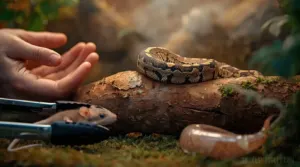
Once your snake’s new skin is in place, you’ll probably wonder when it’s safe to feed and handle them again. Getting the timing right helps you avoid stress, missed meals, and regurgitation. Below, you’ll find two points that explain when to offer food and when to bring back gentle handling.
Once your corn snake has fully shed and is calm again, a step-by-step look at the corn snake shedding process can help you tell when it’s truly ready for its next meal.
When to Offer Food Again
Picture a ball python that finished a clean shed on Sunday, eye caps and tail tip included. By Tuesday, you can offer a thawed rodent, since this is often when appetite peaks.
If she refuses, don’t worry. Many snakes need up to a week, and two refusals are rarely a concern. Wait several days, then try again. Skip feeding if any skin is still stuck.
When to Resume Gentle Handling
How do you know your snake is ready to be held again? Wait until the new skin has fully dried, which usually takes 24 to 48 hours, and your snake is moving smoothly and exploring on its own. Keep the first session to 5 to 10 minutes, support its body gently, and skip touching the head or tail. Some snakes need 72 hours or more.
When Post-Shed Symptoms Need a Reptile Vet
Most snakes settle back into their routine within a few days of shedding, so a short stretch of odd behavior usually isn’t a cause for alarm.
Still, some symptoms can point to a health problem that needs a professional’s eyes.
Below, you’ll find the warning signs that call for a vet’s attention and what to expect when your snake gets examined.
Urgent and Persistent Warning Signs
Some changes after a shed shouldn’t wait. A pink or red belly paired with lethargy and open-mouth breathing can signal septicemia, so seek emergency care right away.
Wheezing or labored breathing that lingers may point to infection or a retained shed blocking the nostrils. Cloudy eyes with stuck spectacles need a vet’s help, since pulling them off yourself risks blindness.
How Your Vet Investigates Symptoms
Say your ball python stays hidden and skips meals after a messy shed. A vet visit usually runs like this:
- A reptile exam checks skin, eyes, and mouth.
- A weight check tracks condition.
- Husbandry questions cover humidity and temperatures.
- Diagnostics may include bloodwork or skin cytology.
- Imaging rules out internal problems.
You’ll then get a feeding strategy and veterinary monitoring.
Frequently Asked Questions (FAQs)
Should I clean the enclosure after my snake sheds?
Your snake just spent days shedding, so naturally you’ll want to scrub everything. Don’t. Remove the old skin, spot clean soiled substrate, and keep humidity steady. A full deep clean can wait unless it’s dirty.
Is it normal for snakes to defecate after shedding?
Some keepers believe post-shed droppings signal a problem, but that’s mostly a myth. It’s completely normal for your snake to defecate during or after shedding, and the droppings are often larger because waste builds up.
How often should healthy snakes shed their skin?
Healthy snakes usually shed every four to eight weeks, though it varies. Juvenile vs adult shedding differs: young, fast-growing snakes may shed monthly, while adults often shed only a few times yearly.
Conclusion
So is a snake behaving strangely after shedding a problem or just a phase? Usually, it’s a short reset that fades within a day or two.
Check for retained skin, confirm your humidity and temperatures, and hold off on feeding or handling until she settles.
Call a reptile vet if the odd behavior lasts, worsens, or comes with trouble breathing, refusing meals for weeks, or stuck skin you can’t safely remove. Patience keeps her safe.