This site is supported by our readers. We may earn a commission, at no cost to you, if you purchase through links.
You spot a dark speck crawling near your ball python’s eye, and your stomach drops. Then you see another one, drifting in the water bowl where your snake has been soaking for hours.
Snake mites multiply fast, and a single female can start a colony. That’s why so many keepers grab the tube of Nix from the pharmacy shelf and hope for the best. But nix for snake mites is a gamble with real risks, from wrong concentrations to ingredients your snake can’t handle.
Here’s how to spot the problem early, know when a vet is the safer call, and clean up for good.
Table Of Contents
Key Takeaways
- Nix isn’t labeled for snakes, and mixing your own spray from the thick cream makes dosing a gamble, since too strong can cause tremors or death while too weak leaves mites alive, so ask a reptile vet for a safe dose first.
- Check the eyes, nostrils, chin and cloaca for tiny black specks, and treat long soaking, white dandruff-like dust, rubbing and messy sheds as warning signs, then call a vet the same day for heavy infestations, open sores or any mites on a hatchling.
- Treating the snake alone won’t work, so strip and scrub the whole enclosure, swap in paper towels, and repeat treatment every 5 to 7 days for three rounds to catch newly hatched mites.
- Quarantine every new snake for 2 to 3 months with daily checks, since mites can hide for weeks and a single female can start a colony that forces you to treat every reptile in the room.
How to Spot Snake Mites
Where should you look first when you suspect something’s wrong? Start around the eyes, nostrils, chin and cloaca, because ectoparasites love spots where scales meet soft tissue. These tiny black parasitic insects measure barely a millimeter, though fed adults can look nearly black or dark red.
Once you’ve spotted these tiny bugs, a step-by-step guide on what to do when your snake has mites can help you get rid of them quickly.
Watch behavior too. A snake soaking for hours in its water bowl is a big red flag, and you may find drowned mites floating there like dark specks. Rubbing, restlessness, poor appetite and messy sheds all fit.
Check the skin itself. Fine white dust that looks like dandruff is mite waste, and raised, dull scales show where they’re feeding. For a quick test, wipe the body with a damp white paper towel. Any moving specks are snake mites.
A careful look beats guessing. Early catches make mite infestations easier to handle, and regular checks belong in your snake health maintenance routine. Mite eggs can survive weeks to months in substrate and cage seams, so repeat treatments timed to hatching are needed to prevent reinfestation.
When to Call a Reptile Vet
Spotting mites is only half the job. Knowing when home care isn’t enough keeps your snake safe.
Not sure which parasite you’re seeing? This guide to telling snake mites from ticks helps you judge how urgent the problem is.
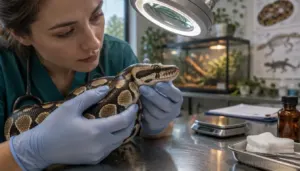
Call a reptile vet the same day if you see heavy mite numbers, pale gums, open sores, swelling, or a hatchling carrying any mites. Go to an emergency clinic RIGHT away for weakness, collapse, active bleeding, or trouble breathing.
Watch for signs of infection too. Raised, red, weeping, or foul-smelling skin under the scales means bacteria have joined in, and that needs proper veterinary treatment alongside mite control. Swollen eyes, crusting, and odd shedding deserve a prompt exam.
Don’t guess with medications. Ivermectin can be fatal to turtles and tortoises and harms some skinks, so confirm species with a vet first. Call before using any pesticide on young, small, weak, or gravid snakes. If your snake turns lethargic or stops eating after treatment, don’t repeat it. Phone the vet immediately.
Can Nix Treat Snake Mites?
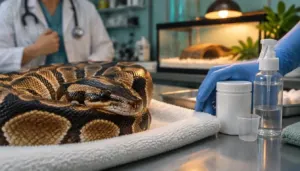
You’ll see Nix recommended in keeper forums, but it isn’t labeled for snakes, and which bottle you grab matters. Nix Permethrin Cream Rinse contains only permethrin, a synthetic pyrethrin. Nix Ultra adds other ingredients meant for human head lice, and those extras make it a poor guess for reptiles.
The bigger danger is DIY dilution. The cream is thick, so mixing your own spray means guessing at concentration. Too strong can cause tremors, weakness, or death, and too weak leaves survivors.
A vet-prescribed dose removes the guesswork, and this guide to reptile skin infection treatment explains what proper care looks like once parasites are confirmed.
Homemade mite sprays turn dosing into a gamble, since a mix that’s too strong can kill your snake and one that’s too weak spares the mites
Before anyone reaches for the bottle, keep these points in mind:
- Ask your vet first, since they can confirm a dose that fits your snake’s size and health.
- Skip Nix Ultra entirely, since its added ingredients aren’t made for reptiles.
- Never mix your own solution from the cream, even if a video makes it look easy.
Safer, vet-approved options exist, so don’t gamble with your snake.
How to Clear Mites From The Enclosure
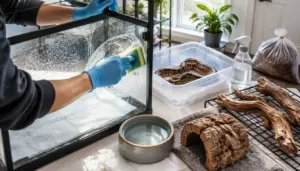
Even a vet-approved treatment fails if mites keep living in the enclosure. Adult mites ride on your snake, but eggs and hungry mites hide in the substrate, cracks, and decor, so enclosure sterilization matters as much as treating the animal.
Move your snake into a temporary tub first. Then picture the job in three steps:
- Remove the water bowl, hides, and branches, then bag the old substrate and toss it outside immediately.
- Scrub every surface and corner with hot, soapy water, then wipe with a reptile-safe disinfectant and rinse well.
- Soak or bake wooden decor and rocks, or replace porous pieces, then dry everything completely before use.
Mites also wander, so wipe the perimeter around the tank, including shelves and the cage stand. Use paper towels as substrate for now, since you can inspect them easily and swap them daily. Repeat the routine weekly until mites disappear.
Quarantine Helps Prevent Snake Mite Spread
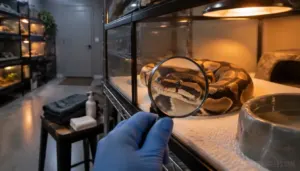
A new snake should never go straight onto your shelf, no matter how healthy it looks. Mites can hide for weeks before you see a single one, so plan on keeping every newcomer quarantined for 2-3 months. I’d go the full 90 days.
Check the animal and its enclosure EVERY day. Look around the eyes, chin and heat pit scales, then wipe down the water bowl and glass for tiny moving dots. Daily checks catch trouble early, long before it spreads.
Handle the newcomer last, wash your hands, and change clothes before visiting your other animals. Mites hitchhike on skin and fabric, and one female can start a whole colony alone.
If you find one, the new animal stays put, and every reptile in that room needs treatment too. Following this infestation eradication protocol early costs far less than fighting a house-wide outbreak, and it prevents reinfection.
Frequently Asked Questions (FAQs)
Are there safer alternatives to Nix for mites?
Yes, and you’ve got a few. Daily warm soapy soaks drown mites on the body, and a quick oil coat before dish soap helps too. Predatory mites clean the substrate. Never use ivermectin around turtles.
Does Nix harm snakes eyes or heat pits?
Worried about spraying near your snake’s face? Properly diluted Nix is considered safe for eyes and heat pits, and mites hide there. Never use it undiluted, though. If it splashes, flush with water.
Can Nix be used on baby snakes?
I’d skip Nix on baby snakes. Their tiny bodies leave almost no margin for error, and permethrin can cause tremors or seizures if the mix runs even slightly strong. Call a reptile vet before you treat anything.
How often should treatments be repeated for mites?
Repeat the full treatment every 5 to 7 days for three rounds total. Mite eggs hatch between applications, and the parasitic infestation lifecycle runs 2 to 3 weeks. If you spot reinfestation, start over completely.
How long does Nix take to kill mites?
Most live mites die within a few hours of the first Nix application, though some owners say the full kill can take up to 45 minutes. Keep your snake away from water for 2 to 3 hours.
Does rubbing alcohol kill snake mites?
One reptile keeper I read about wiped down a whole rack with alcohol and still found mites a week later. Yes, but only on contact. It kills mites and eggs on surfaces, never on your snake.
Conclusion
Don’t let this problem get under your skin. Mites are beatable, but only when you treat the snake and the enclosure together. Skip the guesswork of nix for snake mites and let a reptile vet set the plan, especially if your snake looks weak or sheds badly.
Then do the unglamorous work: strip the tank, scrub everything, and quarantine every newcomer. A clean, calm enclosure is the real cure, and your snake will thank you.