This site is supported by our readers. We may earn a commission, at no cost to you, if you purchase through links.

That yellow-brown crust on your gecko’s snout isn’t dried substrate. It’s a skin infection, and it will spread if you wait. Reptiles hide illness until lesions like blisters, ulcers, and discoloration break through, so what you see is often weeks in the making.
The good news: most infections respond well to treatment when you match the therapy to the cause. Bacterial dermatitis, fungal disease, and mites each demand a different approach, and guessing wastes healing time. This reptile skin infection treatment guide walks you through spotting symptoms, getting an accurate diagnosis, and supporting recovery at home.
Table Of Contents
- Key Takeaways
- Recognize Reptile Skin Infection Symptoms
- Get an Accurate Veterinary Diagnosis
- Treat Reptile Skin Infections Safely
- Support Healing Through Proper Reptile Care
- Prevent Skin Infections From Returning
- Frequently Asked Questions (FAQs)
- What are the common skin diseases in reptiles?
- How to clear up a bacterial skin infection?
- What does sepsis look like in snakes?
- What antibiotics are safe for reptiles?
- What should I do if my reptile has a skin infection?
- How to treat a bacterial skin infection?
- How do you get rid of skin on a reptile?
- What are skin and shell infections in reptiles?
- How do you get rid of parasites in reptiles?
- What is bacterial dermatitis in reptiles?
- Conclusion
Key Takeaways
- Crusty, discolored patches, blisters, ulcers, swelling, appetite loss, and mites or shedding problems are the key warning signs of reptile skin infections, and early action matters because reptiles hide illness until lesions are well established.
- Never treat based on appearance alone—bacterial, fungal, and parasitic infections each require different therapy, so get a veterinary diagnosis using skin scrapings, cultures, or PCR before starting treatment.
- Bacterial dermatitis is treated with culture-guided antibiotics, debridement, and antiseptic cleaning, while fungal infections need species-specific antifungals continued beyond visible improvement and mites require treating the animal and the entire enclosure.
- Medication alone won’t finish the job: correct humidity, temperature gradients, UVB lighting, and enclosure hygiene are essential for healing, and prevention relies on quarantining new reptiles, consistent sanitation, and finishing every prescribed antibiotic course.
Recognize Reptile Skin Infection Symptoms
Your reptile can’t tell you its skin hurts, so you need to read the physical signs yourself. Infections show up on the skin first, then in behavior. Watch for the six warning signs below and act early.
Keeping a well-stocked reptile first aid kit with the essentials on hand means you can clean and protect early skin problems right away.
Our guide to reptile skin infection symptoms breaks down each sign with photos so you can catch problems before they spread.
Your reptile can’t tell you its skin hurts, so learn to read the physical signs early
Crusts And Discoloration
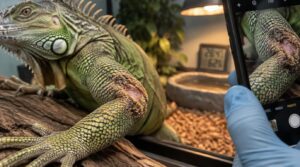
The crusty patches you see are dried serum and pus, not just dirt. They trap bacteria and mark where your reptile’s skin barrier has failed. Watch for:
- Yellowbrown discoloration spreading beyond the crust
- Thickening plaques that keep expanding
- Raw or bleeding tissue under lifted crusts
- Crusts at friction points like elbows or tail base
Don’t peel them. Note the location, photograph the skin lesions, and schedule wound cleaning with your exotics vet. Improve enclosure hygiene now.
A good reptile enclosure disinfectant cleaner makes deep-cleaning the habitat easier while your vet treats the wounds.
Blisters

look like small fluid-filled bumps, and they’re never normal. Clear fluid suggests early blister disease; cloudy or yellow fluid means bacterial involvement. Don’t lance them. Track whether they multiply or rupture, since open lesions invite contamination. Photograph them, check for mites, and book your exotics vet promptly. Fix wet substrate now, because persistent moisture keeps triggering new blisters.
Swapping to a drier coconut fiber reptile substrate helps, but only if you spot-clean damp patches daily.
Ulcers
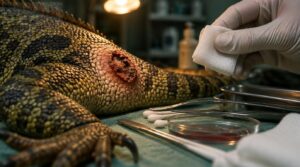
are open sores with a raw, depressed center, and they often follow ruptured blisters. Expect red or darkened margins, discharge, or adherent crust.
These ulcers tend to develop in the later stages of scale rot, so catching other early warning signs of scale rot in snakes gives you a much better chance of treating the problem before the skin breaks down this far.
Don’t self-treat. Ulcerative dermatitis needs a vet who can culture the wound, prescribe targeted antibiotics, and perform debridement if necrotic tissue lingers. Meanwhile, start gentle wound cleaning and make environmental corrections: dry substrate, spotless water, proper temperatures.
And Swelling
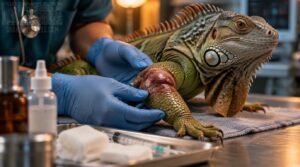
Swelling means inflammation is building beneath the skin. Watch for these warning signs:
- Hot, firm swelling that grows daily
- Puffiness concentrated at a lesion’s edge
- Oozing discharge or spreading redness
- Swelling near the head, limbs, or cloaca
Act fast. Your vet may perform wound irrigation, apply antiseptics, prescribe systemic antibiotics, or recommend topical antifungal cream. Deeper infections escalate quickly.
Appetite And Activity Changes

Watch your reptile’s behavior closely. Appetite loss and lethargy signs often signal the infection is stressing the whole body, not just the skin. Painful lesions discourage movement and feeding, and immune system weakness follows when poor nutrition sets in.
Compare against your animal’s normal baseline, factor in recent husbandry changes, and prioritize stress reduction. Sustained refusal to eat demands a vet visit.
Mites And Shedding Problems
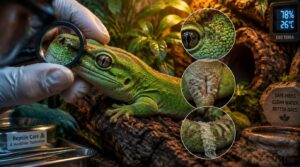
Check for reptile mites first. Look for mobile specks around the eyes, vent, and skin folds, plus small raised bumps or crusting. Mites feed on skin and trigger shedding problems, so retained shed often signals infestation.
If you spot mites or persistent shedding issues, this guide to snake skin problems and solutions walks through treatment options step by step.
Inspect hides and crevices too, since off-host stages hide there. Improve enclosure hygiene and temperature management, then call your reptile vet.
For a step-by-step routine that keeps mites from taking hold in the first place, this snake mite prevention guide covers quarantine habits, substrate choices, and cleaning schedules.
Get an Accurate Veterinary Diagnosis
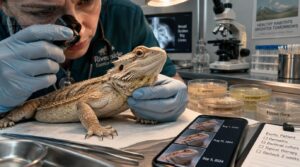
A bearded dragon arrives with yellow-brown crusts along its ventrum, and the owner assumes it’s stuck shed. It isn’t. That’s why you should never treat based on looks alone.
Your vet will start with a thorough physical exam, distinguishing crusts from vesicles or ulceration, because each pattern points to different causes. Expect detailed questions: when lesions appeared, how they spread, and any recent husbandry changes like new substrate or cage mates.
When appearance isn’t definitive, diagnostic testing matters. Skin scrapings rule out mites, while fungal cultures, bacterial culture and microscopy, and PCR identification pinpoint the actual pathogen. Deep ulcers may require biopsy for histopathology.
Document everything before your appointment: dated photos with a scale reference, treatments already tried, and your husbandry parameters. Prior antimicrobials can alter culture results, so full disclosure improves diagnostic accuracy.
Treat Reptile Skin Infections Safely
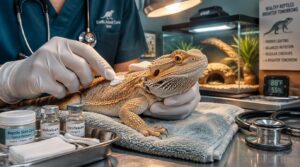
You’ve got a diagnosis. Now comes the part where you treat it correctly. Each infection type demands a different approach, so let’s walk through your treatment options one by one.
Bacterial Dermatitis Treatment
Bacterial dermatitis responds well when you act fast. Culture and susceptibility testing tells your vet which antibiotics actually work, so don’t guess.
- Debride crusts and necrotic tissue first.
- Clean with dilute antiseptics like chlorhexidine.
- Apply topical antibacterials to superficial lesions.
- Use systemic antibiotics for deep or spreading infections.
Recheck progress every few days. If lesions worsen, resistance is likely.
Fungal Infection Treatment
Fungal skin infections demand patience. Your vet confirms the species first, because antifungal treatments vary by pathogen.
Superficial lesions respond to topicals; deeper disease needs itraconazole or voriconazole with monitoring. Debride crusts so medication reaches infected layers.
Continue therapy beyond visible improvement, since fungi persist in reservoirs. Pair medication with environmental corrections: lower humidity, disinfect surfaces, and keep the enclosure dry.
Parasite Control
Treating the animal alone invites relapse. Parasitic infestations need full-cycle control, because mites and ticks hide off-host between feeds.
Your vet confirms parasite detection with skin scrapings and fecal exams, then prescribes the right antiparasitic medication.
Meanwhile, start a reptile quarantine protocol: discard porous substrate, disinfect hides and tongs, and treat every reptile sharing that space.
Monitor closely for reinfestation.
Severe Wounds and Debridement
Some infections go deeper than parasites ever will. When necrotic tissue, pus, or undermined pockets persist, your vet performs surgical debridement, removing dead tissue so antiseptics and systemic antibiotics reach living tissue.
Recovery hinges on addressing the root causes too, and this guide to identifying and treating snake mouth rot walks through the husbandry corrections that prevent recurrence after debridement.
Expect:
- Wound cleaning with tissue-safe antiseptics
- Careful mapping of viable vs dead tissue
- Culture-guided antibiotics
- Follow-up checks for granulation
Heal healthy tissue first, then monitor progress.
Support Healing Through Proper Reptile Care
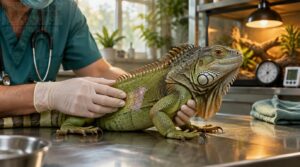
Medication alone won’t finish the job. Proper husbandry is what turns a treated infection into a healed one.
Start with humidity control. Keep levels inside your species’ ideal range, and fix any wet substrate or stagnant air. Damp conditions macerate healing skin and feed bacteria. Improve ventilation before you reach for more antibiotics. A reliable reptile humidity gauge takes the guesswork out, since readings at the basking end often differ wildly from the cool side.
Dial in your thermal gradient. Your reptile needs a correct basking spot to mount an immune response. Verify temperatures with a digital thermometer, not guesswork. A reliable reptile digital thermometer placed at the basking site takes the guesswork out of daily readings.
Keep up wound cleaning as directed, and remove shed crusts gently so topicals reach the tissue. Confirm your UVB bulb outputs properly; vitamin D3 and calcium metabolism underpin tissue repair.
A quality reptile UVB bulb should be replaced every six to twelve months, even if it still lights up.
Prevent Skin Infections From Returning

Once your reptile heals, your job shifts from treatment to prevention. Build a preventive medicine plan with your vet and stick to it.
- Quarantine every new reptile for 30–60 days with dedicated tools and separate housing.
- Run consistent sanitation protocols: spot-clean daily, disinfect decor on a schedule, and refresh water bowls.
- Verify humidity and temperatures weekly with calibrated gauges, not memory.
Solid reptile husbandry prevents most relapses. Correct any nutritional gaps, especially vitamin A, and add environmental enrichment to reduce stress-related immune suppression. Damp, dirty substrate is a leading cause of scale rot in reptiles, so keeping bedding clean and dry is essential to prevention. Finish every prescribed antibiotic course, even when lesions look resolved. If infection returns, request culture and sensitivity testing so therapy targets the actual pathogen. Schedule a recheck before you relax your vigilance. Prevention is cheaper and kinder than cure.
Frequently Asked Questions (FAQs)
What are the common skin diseases in reptiles?
Expect bacterial dermatitis (scale rot), fungal infections, mite infestations, viral skin disease, and noninfectious problems like burns or nutritional deficiencies. Each looks different, so a proper veterinary diagnosis matters before you treat anything.
How to clear up a bacterial skin infection?
Roughly 1 in 5 captive reptiles develops skin disease, often bacterial. Clear bacterial dermatitis with culture-guided antibiotics like injectable ceftazidime, plus wound cleaning, topical silver sulfadiazine, debridement, and corrected husbandry.
What does sepsis look like in snakes?
Watch for pinkish-red ventral discoloration, petechiae, open-mouth breathing, lethargy, vomiting, and green or black stools. Septicemic Cutaneous Ulcerative Disease causes necrotic ulcers. Suspect Aeromonas and Pseudomonas spp; seek systemic antimicrobials immediately.
What antibiotics are safe for reptiles?
Here’s the truth: no antibiotic is universally safe for every reptile. Your veterinarian selects drugs based on species, diagnosis, and culture results. Never self-prescribe. Wrong drugs, doses, or routes cause serious toxicity.
What should I do if my reptile has a skin infection?
Call an exotic reptile veterinarian promptly. Don’t scrub lesions. Keep the enclosure clean and dry, adjust humidity control, isolate your reptile, and follow prescribed antibiotics, antifungal treatments, or debridement exactly as directed.
How to treat a bacterial skin infection?
Treat bacterial dermatitis with culture-guided topical antibiotics like silver sulfadiazine daily. Flush lesions with povidone-iodine. Use systemic antimicrobials, such as enrofloxacin, for deeper infections. Debride necrotic tissue and correct husbandry concurrently.
How do you get rid of skin on a reptile?
Help shedding with warm water soaks (15–20 minutes), then gently peel loose skin with damp cotton. Never force retained spectacles. If skin won’t release, see your vet; persistent retention signals humidity problems or infection.
What are skin and shell infections in reptiles?
Last spring, a bearded dragon arrived with a small red patch that had become a deep ulcer in three weeks. Skin and shell infections are bacterial dermatitis, fungal infections, or parasitic invasions of damaged scales, scutes, or shell tissue.
How do you get rid of parasites in reptiles?
Parasitic infestations need a vet’s diagnosis first. Your reptile gets antiparasitic treatment, like fenbendazole deworming medication or ivermectin, plus thorough enclosure sanitation. Repeat doses as directed, house on paper towels, and monitor closely.
What is bacterial dermatitis in reptiles?
Think of bacterial dermatitis as uninvited squatters breaching your reptile’s skin fortress. It’s a localized skin infection where bacteria enter through wounds, burns, or moisture damage, causing crusts, ulcers, and swelling. Get a veterinary diagnosis promptly.
Conclusion
Picture your gecko six weeks from now: clear-snouted, feeding hard, shedding in one clean piece.
That outcome starts with matching the right reptile skin infection treatment to the actual cause, whether bacterial, fungal, or parasitic. Get a diagnosis instead of guessing.
Fix the husbandry that allowed the infection to take hold. Then stay consistent with medications and follow-ups.
Skin heals slowly in reptiles, but your patience and precision decide whether this becomes a story or a scar.