This site is supported by our readers. We may earn a commission, at no cost to you, if you purchase through links.
Your corn snake refused dinner again, curled tight in the corner with that flat, defensive posture you’ve started to recognize. Signs of stress in pet corn snakes are easy to miss if you don’t know what a relaxed, healthy snake actually looks like.
Stress isn’t just discomfort. Left unchecked, it weakens immune function, disrupts digestion, and turns a manageable husbandry tweak into a vet visit.
The good news is that corn snakes communicate clearly once you learn their language. This guide walks you through the behavioral shifts, physical changes, and environmental fixes that make the biggest difference.
Table Of Contents
- Key Takeaways
- Common Signs of Stress in Corn Snakes
- Normal Corn Snake Behavior Vs. Stress
- What Causes Stress in Corn Snakes?
- How to Calm a Stressed Corn Snake
- When Stress Signs Require Veterinary Care
- Frequently Asked Questions (FAQs)
- What are the common causes of death in corn snakes?
- What is the biggest trouble with corn snakes as pets?
- How to know if a corn snake is happy?
- How to tell if a corn snake is angry?
- How to tell if a corn snake is stressed?
- What are signs of discomfort in snakes?
- What can stress do to a snake?
- How do snakes show distress?
- How can I tell if my snake is dehydrated?
- What are some common misunderstandings about snake behavior?
- Conclusion
Key Takeaways
- Stress in corn snakes shows up as persistent patterns—refusing food, constant hiding, glass surfing, defensive striking—not one-off moments, since normal behavior is intermittent while stress never is.
- Most stress traces back to fixable husbandry problems: a temperature gradient of roughly 85°F to 75°F, steady 40–60% humidity, at least two snug hides on opposite ends of the gradient, and a 40-gallon minimum enclosure with 3–4 inches of substrate for adults.
- Loss of appetite is your earliest alarm, so track meals, droppings, and weekly weights, and fix one husbandry variable at a time while giving your snake about a week to respond.
- See a reptile vet immediately for open-mouth breathing, wheezing, repeated regurgitation, stuck shed with retained eye caps, tremors, or sunken eyes—these signal illness or dehydration, not just stress. Many of these problems start with feeding, so choosing the right boa constrictor feeders for beginners can help you avoid common mistakes before they affect your snake’s health.
Common Signs of Stress in Corn Snakes
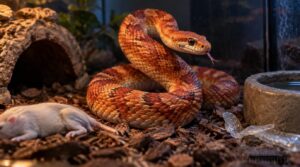
Your corn snake can’t tell you it’s stressed, but it will show you. You just need to know what to look for. Below, we’ll break the signs into three groups: behavioral warning signs, physical health changes, and appetite shifts.
If your snake has gone off food, understanding the common reasons corn snakes stop eating can help you connect appetite changes to the bigger picture of its overall wellbeing.
Behavioral Warning Signs
Watch your snake’s daily behavior closely. Stress shows up in patterns, not one-off moments. Here’s what to flag:
- Loss of Appetite, especially refusing food you’d normally take eagerly.
- Unusual Hiding or Constant Hiding, retreating to the darkest corner every day.
- Aggressive or Defensive Behavior, like striking at the enclosure opening.
- Excessive Movement or Glass Surfing, plus Unusual Shedding Problems.
Physical Health Changes
Behavior follows stress. Physical changes confirm it.
| Sign | What You See | Likely Cause |
|---|---|---|
| Patchy shedding | Stuck skin, dull scales | Low humidity |
| Weight loss | Less body "fill" | Chronic stress, feeding issues |
| Eye problems | Cloudiness, discharge | Systemic illness |
| Nose abrasions | Rubbing, mucus | Enclosure friction |
Spot these? Fix husbandry fast, then call your reptile vet.
For a deeper look at what’s behind these episodes, common regurgitation causes in baby snakes can help you pinpoint the issue before your vet visit.
Appetite and Digestion Changes
Physical signs often arrive late. Appetite speaks first.
Loss of appetite is your earliest alarm. A corn snake skipping a meal it usually takes? That’s a classic stress flag, especially after a move, new schedule, or extra handling.
Stress-induced anorexia can stretch for weeks. You might also see feeding issues like late strikes, biting then dropping prey, or outright regurgitation. Digestion problems show up in stool too: smaller, delayed, or missing poops after meals.
Pair this with weight loss, and you’ve got a pattern, not a fluke. Track meals and droppings. If warmth is right but refusal continues, stress is your suspect.
A digital reptile gram scale makes weekly weigh-ins easy, so you can catch subtle losses before they become serious.
Normal Corn Snake Behavior Vs. Stress
Here’s the tricky part: some "weird" snake behavior is perfectly normal. Adult corn snakes hide most of the day and get active at dusk. That’s not stress, that’s a schedule.
Giving them the right hideout matters too — check out these corn snake hide types and setups to make sure your snake has a cozy spot that actually fits their instincts.
So how do you tell the difference? Context and duration.
| Behavior | Normal | Stress Signal |
|---|---|---|
| Hiding | Daytime, emerges at dusk | Constant, even at feeding time |
| Pacing | Brief evening exploring | Day-long restlessness |
| Resting spot | Rotates warm and cool zones | Glued to one spot |
| Body language | Relaxed, slow tongue flicks | Tail tension, recoiling |
Notice the pattern? Normal behavior is intermittent. Stress signals are persistent. A snake exploring its enclosure after a cage cleaning? Curious. A snake pacing the glass for hours, refusing its usual hide? That’s discomfort talking.
Normal snake behavior is fleeting; stress never is
Trust the trend, not the moment.
What Causes Stress in Corn Snakes?
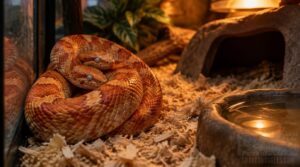
So your snake is acting off, and you’re wondering why. The good news? Stress causes usually fall into three buckets: environment problems, enclosure setup, and handling mistakes. Let’s walk through each one so you can pinpoint what’s bothering your snake.
Temperature and Humidity Problems
Ever wonder why your snake skips meals after a temp swing? Improper temperatures wreck digestion fast. You need a temperature gradient: a warm basking side around 85°F, a cooler end near 75°F. Too cold, and food rots undigested. Too hot, and stress hormones spike.
Humidity issues matter just as much. Keep humidity levels steady at 40–60%. Swings cause stuck shed, dull skin, even respiratory irritation. These environmental factors are fixable, so grab a thermometer and hygrometer today.
Enclosure Setup Issues
Since corn snakes are semi-fossorial, a cramped enclosure with nowhere to burrow or hide is basically a stress factory. You need at least two snug hides, one on each end of the temperature gradient. Without it, your snake can’t thermoregulate.
Enclosure size matters, too. Adults need a 40-gallon minimum and 3-4 inches of substrate to support burrowing and maintain humidity. In fact, corn snakes in captivity can live 15 to 20 years, making proper enclosure setup a long-term investment in their health.
Handling and Timing Mistakes
Like waking a teenager at 7 a.m., picking up your corn snake at the wrong time almost guarantees a defensive reaction. Improper handling techniques, like gripping too tight or handling it right before feeding, spike stress and disrupt digestion.
Corn snakes are nocturnal, so don’t ignore that. Consistent gentle handling practices and calm handling are what real trust building takes.
A snake handling hook tool can also help skittish snakes feel less threatened during early handling sessions, giving them control over the initial contact.
How to Calm a Stressed Corn Snake
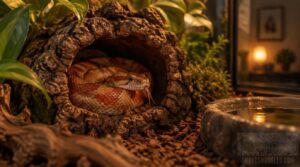
Think of your corn snake like a phone that needs to recharge. Plug it into a calm environment, step back, and let it do its thing.
Destressing snakes starts with reducing what’s overwhelming them. Cut the noise, dim the lights, and stop opening the enclosure every hour to check on things. Providing hides that fully enclose your snake is non-negotiable; a snug, dark hide is the single fastest stress management tool you have. A reptile light timer dimmer switch makes it easy to automate consistent, gradual lighting changes so your snake never gets hit with sudden bright shifts.
Here’s your short checklist:
- Stop frequent handling until normal behavior returns
- Keep routines consistent, same feeding times, same lighting schedule
- Minimize vibrations and movement near the enclosure
Gentle handling can resume once your snake is settled and eating reliably again. Patience is honestly the whole plan here.
When Stress Signs Require Veterinary Care

Some stress signals are just inconvenient. Others need a vet today.
If your corn snake shows open-mouth breathing, pale or bluish gums, or persistent wheezing, get to a reptile vet the same day. These aren’t behavioral quirks; they signal real oxygen problems.
Refusing food for 1-2 weeks is worth monitoring, but repeated regurgitation after meals is a different story. That always needs a vet, not just a husbandry tweak.
Watch for stuck shed with retained eye caps or constricting rings on the tail. These can actually cut off circulation fast.
Tremors, rolling, or an inability to right itself? That’s neurological, not stress. Sunken eyes or sticky mucus signal dehydration that won’t resolve alone. When in doubt, call your reptile vet.
Frequently Asked Questions (FAQs)
What are the common causes of death in corn snakes?
Most corn snakes die from respiratory infections, improper temperatures, or parasites such as worms or mites. These conditions can rapidly weaken the immune system. Chronic stress turns even small husbandry mistakes into something genuinely fatal.
What is the biggest trouble with corn snakes as pets?
Getting the environment exactly right is the real challenge. Improper temperatures, missing hides, and rough handling stack up fast, leaving your snake anxious, refusing food, and struggling to thrive in a setup that almost works.
How to know if a corn snake is happy?
Your corn snake is content and secure when it actively tongue-flicks and explores its space during active hours, rests with a loose, relaxed body posture, eats without hesitation, and consistently sheds in one complete piece.
How to tell if a corn snake is angry?
Your snake will practically announce it. Watch for tight coiling, a raised head, hissing, and repeated striking attempts. That rigid, refusing-to-settle body during handling? That’s not curiosity. That’s a clear defensive posture saying back off.
How to tell if a corn snake is stressed?
Your corn snake practically shouts it at you through their body language. Watch for refusing food, hiding too much, persistent nose rubbing, or frantic wall pacing. Those combined signs usually mean something is seriously off.
What are signs of discomfort in snakes?
Like a tightly wound coil ready to snap, your snake signals discomfort through unusual posture or body language, striking without reason, or constantly hiding. Also don’t overlook unexplained weight loss and unusual defecation patterns either.
What can stress do to a snake?
Think of stress as a slow drain on every system at once. It disrupts digestion and immune function, sparks erratic behavior like striking, and can cause weight loss, poor sheds, and even a shortened lifespan.
How do snakes show distress?
Your corn snake’s body language doesn’t hide much. Defensive behaviors like hissing, striking, or frantic escape attempts are often the most obvious signals. So are constant hiding, nose rubbing, and a noticeable drop in appetite.
How can I tell if my snake is dehydrated?
A thirsty snake wears it like a wrinkled shirt. Check for sunken eyes, loose skin, and stuck sheds. Watch for weight loss too. Improve humidity control, offer fresh water daily, and see a vet if nothing improves.
What are some common misunderstandings about snake behavior?
You’ll see tons of misread cues. Tongue flicking means curiosity, not aggression. Head-raising is exploration. Coiling tightly? Often just resting. Even hiding usually means relaxation. Learn snake behavior properly before worrying or mishandling.
Conclusion
Picture your snake gliding calmly across its enclosure, tongue flicking, curious and loose. That’s the picture worth working toward.
Most signs of stress in pet corn snakes trace back to fixable causes: wrong temperatures, thin hides, or handling too soon. Adjust one variable at a time and give your snake a week to respond. If appetite stays low or breathing looks labored, call your vet. You’ve got this, and so does your snake.