This site is supported by our readers. We may earn a commission, at no cost to you, if you purchase through links.
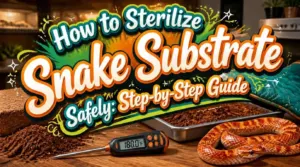
That bag of coco fiber you baked in the oven last weekend? It probably isn’t sterile. Bacterial spores and cysts shrug off the heat your kitchen can produce, and only an autoclave’s pressure wipes them out.
Still, you can cut the risk sharply. Knowing how to sterilize snake substrate the right way means hitting the right temperature, checking it beneath the surface, and spotting the bedding that belongs in the trash instead of the oven. A few degrees or a skipped cooldown can leave pathogens alive or breed scale rot.
Here’s how to treat your snake’s bedding safely, step by step.
Table Of Contents
- Key Takeaways
- Can You Sterilize Snake Substrate at Home?
- Snake Substrates to Replace Rather Than Treat
- Heat Treatment, Freezing, and Disinfectant Limits
- Steps to Heat-Treat Suitable Snake Substrate
- Spot-Cleaning Bioactive Snake Substrate Without Sterilizing It
- Snake Substrate Replacement Schedule
- Frequently Asked Questions (FAQs)
- Conclusion
Key Takeaways
- You can’t truly sterilize snake substrate at home, since bacterial spores and cysts survive without an autoclave, so the realistic goal is cutting pests and risk through careful oven heat-treating, never the microwave.
- Check the manufacturer’s label first, then heat only suitable moist substrate, measuring the center with a meat thermometer, and skip dry bedding like aspen and Lignocel, which can char.
- Throw away cedar, pine, reptile carpet, moldy or wet bedding, and anything from a mite infestation rather than treating it, and let heated substrate cool fully so it doesn’t invite scale rot or mold.
- Trust your nose and eyes over the calendar by replacing bedding right away when it smells, molds, or holds damp clumps, and in bioactive setups just spot-clean urates with an 8 to 10 inch margin instead of sterilizing.
Can You Sterilize Snake Substrate at Home?

A true answer is partly yes and mostly no. You can’t fully sterilize reptile substrate at home, because without autoclave pressure, bacterial spores and cysts often survive both heat and chemicals. What you can do is cut down the pests, which is usually the real goal.
Weekly substrate changes, thorough cleaning, and good ventilation keep bacteria in check, as this guide to reptile habitat health risks explains.
The oven is your best option. Spread the material in a thin layer and bake it so mites, larvae, and eggs don’t survive. Settling for 180-200F won’t cut it, since that range only warms the bedding; you’ll need hotter settings, covered later in this guide.
Skip the microwave. Its hot and cold spots leave untreated pockets, so you can’t trust the result.
Even a good bake leaves some risk. Thick layers heat unevenly, so unsterilized pockets can hide in the middle. Using heat and careful handling lowers your risks, but it never gives you a guarantee. Cryptosporidium oocysts show exceptional thermal resistance and may survive temperatures that eliminate other common reptile pathogens.
Snake Substrates to Replace Rather Than Treat
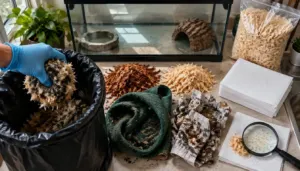
Because even a good bake leaves some risk, certain materials should go straight in the trash. Trying to sterilize reptile substrate that’s already compromised only wastes your time.
Toss wet or moldy aspen right away, and never reuse cedar or pine, since their oils can harm a snake’s nervous system even when the bedding looks clean. Reptile carpet traps germs in its loops, so replace it rather than washing it. Change paper towels and newspaper as soon as they’re soiled.
Any mite infestation means stripping the enclosure completely. Mite eggs survive disinfectants and heat, so discard every bit of loose bedding and switch to paper until you’re completely sure they’re gone.
Replace anything with widespread fungal growth, a smell that lingers after spot cleaning, or a clumped, broken-down texture. Those signs mean the material can no longer hold humidity or support burrowing properly.
When you’re ready to swap everything out, using a snake hook for cleaning enclosures makes it easier to move your snake aside safely.
Heat Treatment, Freezing, and Disinfectant Limits
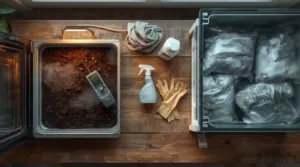
Even the materials worth saving have limits, so it helps to know what each method can and can’t do.
Heat is your most dependable option. Moist soil or potting mix needs 140°F (60°C) for 30 minutes to kill most fungi, bacteria, and viruses. Soil insects and tougher bacteria need 160°F (71°C) for the same time. A microwave heats unevenly, leaving cool pockets where pathogens survive, so oven heat is the better choice. Dry bedding like aspen or Lignocel can char before it gets hot enough, so don’t bake those.
Freezing is weaker than most keepers expect:
- A full 7 days at 0°F (-18°C) is needed to kill pests.
- Overnight freezing of 12 to 24 hours misses some life stages.
- Freezing won’t clear deep moisture or heavy bacterial loads.
For enclosure surfaces, use a 10% bleach solution with 15 minutes of contact, or a 3% solution for at least 10 minutes, then rinse well. Chlorhexidine and F10SC work without the harsh fumes. Skip chemicals on bioactive setups, since they’ll wipe out your cleanup crew.
Steps to Heat-Treat Suitable Snake Substrate
Once you’ve picked substrate that can handle heat, the process itself is simple. Follow three steps in order, and you’ll sterilize it safely without damaging the material. Start with the first one before you ever turn the oven on.
Check The Manufacturer’s Heating Guidance
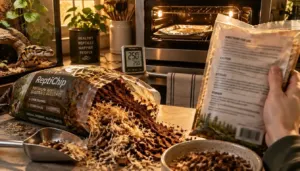
Before you reach for the oven, read the bag your substrate came in. Think of it as the rulebook for that specific product.
Many makers say their mix is single-use only, and some warn that heat releases dyes or chemicals. If the label says replace it, do that. Where it allows heating, note the 82-93C range, since that’s the heat tolerance of substrate this gentle.
Verify Temperature Beneath The Surface
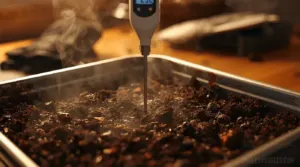
Push a meat thermometer into the thickest, central part of the substrate, keeping the tip off the bottom and sides of the pan so metal heat doesn’t give you a false high. A laser thermometer only reads the surface, so skip it.
Wait 15 to 30 seconds for the reading to settle. Aim for 82-93C at the middle, then spot-check other areas.
Cool Completely Before Adding Bedding
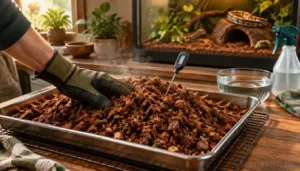
You’ve finished thermal sterilization, so don’t rush the next part. Substrate heated to 212F (100C) stays hot inside, inviting scale rot and mold.
Follow this routine every time you sterilize reptile substrates:
- Test the center, not the surface.
- Wait until it feels room temperature.
- Rehydrate until damp but not soaking wet.
- Let it expand and settle.
- Fluff layers for airflow.
Spot-Cleaning Bioactive Snake Substrate Without Sterilizing It
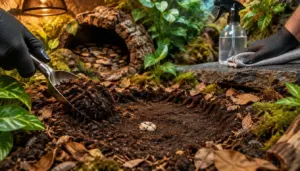
A bioactive snake enclosure doesn’t need sterilizing, it needs you to remove what the living substrate can’t handle. The cleanup crew breaks down feces and shed skin quickly, often within a day, so those rarely need your attention.
Urates are the exception. The liquid part soaks into the soil, and neither springtails nor isopods will touch it. When you spot a white pellet or a damp, discolored patch, scoop out the substrate in an 8 to 10 inch radius around it. That margin catches the urine-soaked soil you can’t see.
Push the clean substrate toward the sides afterward, so you disturb your snake’s scent profile as little as possible.
Don’t forget logs and rocks. Isopods can’t safely hide on elevated surfaces, so waste sits there untouched. Wipe those spots with a 50/50 mix of white vinegar and water. Skip chemical cleaners, since fumes harm your springtails and isopods.
Snake Substrate Replacement Schedule
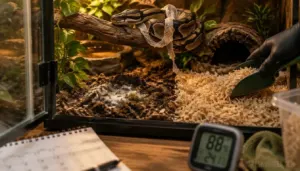
Picture a keeper who swaps her ball python’s aspen every eight weeks like clockwork, then opens the enclosure during a humid shed to a musty smell and a fuzzy patch of mold. The calendar said everything was fine. The bedding said otherwise.
A schedule can promise cleanliness while the enclosure quietly spoils, so trust what your nose and eyes find over what the calendar says
Treat dates as a starting point for your habitat sanitation schedule, then let your snake’s enclosure guide you. Aspen usually needs a full change every 2 to 8 weeks, coco fiber and cypress mulch every 3 to 4 months, and corn snake setups every 4 to 6 months with daily spot-cleaning. Arid substrates for desert species can last 12 to 18 months.
Replace everything right away if you notice:
- A lingering odor that spot-cleaning can’t fix.
- Visible mold quietly threatening your snake’s health.
- Damp waste clumps you can’t lift out.
Substrate hygiene depends on wetness and waste, not marketing.
Frequently Asked Questions (FAQs)
How to sanitize a snake enclosure?
Picture a bare, empty tank, gleaming and free of every speck. Remove your snake and all substrate, scrub off waste, then disinfect the enclosure with diluted chlorhexidine. Rinse well, dry completely, and refill with fresh bedding.
How do I disinfect snake logs and hides?
Scrub logs and hides with soap and hot water first, then soak plastic hides in a 10% bleach solution or spray reptile-safe disinfectant. Rinse bleach thoroughly, and let everything dry completely, odor-free, before returning it.
Which snake substrates hold humidity without growing mold?
Coconut fiber and cypress mulch work best. Coco holds 60 to 80 percent humidity for days, while cypress resists compaction and mold. Mix them, add sphagnum moss on top, and air-dry between waterings.
Is sterilized substrate safe for baby snakes?
Sterilized substrate can be safe for baby snakes, but only if it’s the right type. Heat treatment kills parasites and bacteria, yet it won’t fix impaction risks. For hatchlings, paper towels remain the safer choice.
Can I reuse substrate after my snake sheds?
Yes, a shed alone doesn’t mean you have to replace the substrate. Just watch for dampness, since the extra humidity speeds up mold. Check the bedding closely, and swap it out if it’s wet or smells off.
Why do white particles appear after heating substrate?
Those white specks are usually mineral salts left behind as moisture evaporates, or dried mold. Sometimes they’re tiny soil critters that turned pale from the heat. Check for fuzz or a musty smell first.
Conclusion
Think a few stray microbes don’t matter? For a healthy adult snake, they often won’t, but damp, dirty bedding gives them room to multiply.
Learning how to sterilize snake substrate isn’t about chasing spotlessness. It’s about heating it right, cooling it fully, and tossing anything that’s soiled or moldy. Spot-clean daily, and stick to a replacement schedule.
Do that, and your snake rests on clean, dry bedding. That’s real control, and your snake feels it.