This site is supported by our readers. We may earn a commission, at no cost to you, if you purchase through links.

A snake can carry more than 600 pairs of ribs, and almost every one of them works for a living.
The snake rib cage purpose goes far beyond armor. Those ribs shield organs lined up in a single file, pull air into the lungs without a diaphragm, grip the ground during movement, and swing sideways so a swollen gut doesn’t crush the liver. Even a constricting python keeps breathing while its ribs hold prey tight.
You’re looking at one of the most adaptable skeletons in vertebrate anatomy. Here’s how your understanding of ribs changes once you see what they do for a limbless body
Table Of Contents
Key Takeaways
- Your snake’s ribs run along nearly its whole trunk and stay free at the tips, so they shield organs lined up in single file while still flexing to absorb impact.
- Because your snake has no diaphragm, its ribs do the breathing work, pulling outward to draw air in and moving in independent segments so ventilation continues even when one region is restricted.
- Your snake’s ribs also drive limbless movement, linking to the skin through muscles that let belly scales grip the ground and adapt the body to crawling, sidewinding and gliding.
- Since the ribs never join at a sternum, they swing outward to make room for oversized prey, and they keep air moving while a constrictor squeezes without loosening its grip
Snake Rib Cage Anatomy and Arrangement
A snake’s rib cage runs along most of its body, and you can read its layout straight from the spine. Ribs attach to nearly every precaudal vertebra through a single socket, though the first vertebra, or the first three, lack them. The posterior lumbar and tail vertebrae are ribless.
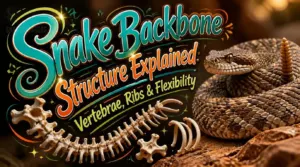
That single attachment point on each vertebra’s transverse process is what lets the ribs move freely, as this snake backbone structure explanation illustrates.
Because snake vertebrae number from 130 to over 600 depending on the species, rib pair count tracks trunk length directly.
Unlike mammals, snakes have no sternum, so the distal rib tips stay free. That gap lets the body cavity widen and deepen considerably. Without a diaphragm, snakes also rely on these free-ended ribs to aid lung ventilation as the body expands. Flexible ligaments, not bony joining, hold this costal arch together, and each vertebra meets its neighbor at five points, including a ball-and-socket joint, which gives the spine extreme flexibility
Snake Ribs Protect Internal Organs
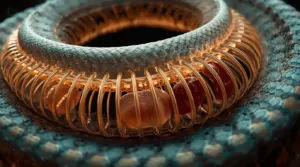
Because the ribs run nearly the full length of the trunk, they shield organs that sit in a single file instead of side by side. Your snake’s right lung stretches far down the body, and the liver, kidneys and gonads lie staggered along the same line, each one staying separated and uncompressed thanks to the ribs around it.
The curved ribs flex under a direct blow and spread the energy across many segments, so a strike rarely shatters one spot. With hundreds of rib pairs, damage to one doesn’t leave the cavity exposed. Fractures still happen when force exceeds what the bone can take, and displaced breaks are the dangerous ones, since a loose fragment can injure the tissue it was guarding.
During feeding, the ribs flare outward, keeping a swelling gut from crushing the lungs and liver
Snake Ribs Power Breathing Without a Diaphragm
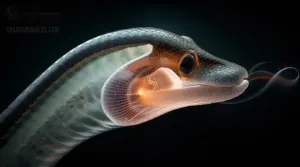
Your snake has no diaphragm, so the ribs do the work that a mammal’s chest muscle would. During inhalation, the levator costae muscles between the ribs contract and pull them outward and forward, which enlarges the body cavity and draws air in.
Because their ribs move so freely along a flexible spine, snakes can keep breathing even while coiled or squeezing prey, and this guide to how snakes breathe explains the mechanics in more detail.
Exhalation is passive. The elastic lung tissue recoils and the intercostal muscles relax, letting the rib cage settle back to rest.
The ribs also work in independent segments, so respiration doesn’t stop when one region is restricted. If forward ribs are immobilized, the posterior ribs keep air moving.
The rear lung adds to this flexibility. It contains no gas-exchange tissue and acts as a bellows, pulling air deeply into the airway while the forward lung takes care of oxygen uptake
Snake Ribs Support Movement Without Limbs
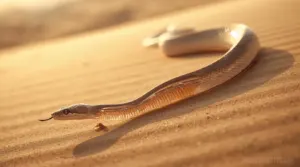
Without legs, a snake still covers ground with surprising control, and its ribs do much of the work. You’ll see two main ways they contribute to movement without limbs below. Each one shows how your snake turns a simple rib-and-muscle framework into forward motion
Rectilinear Movement Through Belly Scales
Picture a Burmese python easing along a narrow drainage pipe, its body barely rippling, no curves in sight. You’re watching rectilinear locomotion, and the ribs are doing the work.
- Muscles lift ventral scales forward.
- Keratin ridges grip the surface.
- Ribs undulate inside loose skin.
- Waves repeat along the body.
Costocutaneous muscles link ribs to skin
Rib Support During Other Movements
A snake’s ribs do more than rectilinear crawling requires, and you can see it in how they adapt to each surface. In concertina movement, your snake bends sideways and presses its body against tunnel walls, anchoring the rear while the front extends.
When sidewinding on sand, biarticular costovertebral joints buttress the forces.
Gliding species even flare their ribs into a flattened C-shape for lift
Snake Ribs Enable Feeding and Constriction
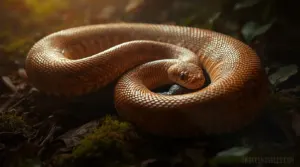
Your snake’s ribs do two demanding jobs at once, and both show up at mealtime.
The next two points cover how the ribs let the body stretch around oversized prey and how they keep air moving while a constrictor squeezes.
Reading them in order will help you understand what you’re seeing the next time a snake feeds
Body Expansion During Prey Swallowing
Picture swallowing a meal wider than your body. A snake does it routinely, and its ribs make that possible.
A snake swallows prey wider than itself with ease, thanks to ribs that swing freely outward to make room
Because the ribs attach only to the vertebrae and never meet at a sternum, they swing outward, creating room for gastric distension.
You’ll see three results:
- Ribs pivot sideways, widening the cavity.
- Throat skin unfolds accordion-style.
- Prey advances through concertina bending
Muscular Support and Breathing During Constriction
Does a snake stop breathing while it squeezes? The idea doesn’t hold up. Constriction can raise oxygen use up to 17 times resting levels, so ventilation must continue.
Your snake isolates it: nerve signals silence rib muscles gripping the prey, while posterior ribs keep phasic breathing going, pulling air through the vascular lung like a bellows, without loosening its grip
Frequently Asked Questions (FAQs)
Can snakes regrow or repair damaged ribs?
Ironically, a snake can mend a cracked rib but can’t replace a lost one. Your pet’s bone heals through a callus, not regeneration, because snakes lack the stem cells needed to rebuild skeletal structures
Why do some snakes have more ribs than others?
Is rib count just about your snake’s size? Not quite. Vertebral count variation drives it, since each rib-bearing vertebra carries a pair. Slender, climbing species like vine snakes have more, while stout, heavy vipers don’t
Can snakes feel pain when their ribs break?
Yes, they can. Snakes have nociceptors and central pathways that register tissue damage, so a broken rib hurts. Your snake won’t cry out, but it may go rigid, flinch, hide, refuse food, or strike defensively
How many muscles attach to a snakes ribs?
Think of a snake’s ribs as a ladder of anchors. Across 100 to 400 pairs, you’ll find roughly 10,000 to 15,000 muscle segments, and each rib receives several distinct groups, from intercostals to levator costae
Conclusion
Ribs that shield, ribs that pump, ribs that grip, ribs that stretch: that’s the snake rib cage purpose in four verbs. Each job depends on the same flexible, repeating design, which is why a limbless body can breathe, crawl and swallow prey without a diaphragm or legs.
Next time you see a snake, don’t picture a bare spine. Picture hundreds of working levers carrying everything it needs, and you’ll understand how little this animal wastes