This site is supported by our readers. We may earn a commission, at no cost to you, if you purchase through links.
About one in five rattlesnake bites injects no venom, and nobody can tell which kind of bite they’ve got at the moment it happens. That uncertainty shapes everything about how you should treat these snakes.
The North American rattlesnake group covers 37 to 50 species, from the eastern diamondback, the heaviest rattlesnake on Earth, to small pygmy rattlesnakes. Arizona alone hosts 13 of them. Most stay hidden, striking only when prey or threat comes within half their body length.
Knowing which species live near you, how they behave, and what their venom does lets you act fast and stay safe.
Table Of Contents
- Key Takeaways
- North American Rattlesnake Species and Identification
- Rattlesnake Distribution and Habitats Across North America
- Rattlesnake Behavior, Hunting, and Ecological Adaptations
- Rattlesnake Venom, Bite Risks, and Emergency Care
- North American Rattlesnake Conservation and Threats
- Frequently Asked Questions (FAQs)
- Conclusion
Key Takeaways
- You can’t tell at the scene whether a bite is dry, since roughly 20 percent inject no venom, so treat every suspected bite as an emergency and call 911 right away instead of driving yourself or waiting to see what happens.
- Venom varies by species and even by population, with some causing paralysis, others causing internal bleeding and tissue damage, and some Arizona populations carrying both.
- You’ll stay safest by keeping at least 10 feet back, watching where your hands and feet go, leashing your dog, and backing away slowly if you hear a rattle, because rattlesnakes are ambush predators that strike only at close range.
- Learning which species live near you matters, since most of the 37 to 50 species cluster in the Southwest and Mexico, and habitat loss, road deaths, disease, and persecution are driving many populations down, so you shouldn’t kill wild snakes.
North American Rattlesnake Species and Identification
North America is home to more than a dozen rattlesnake species, and they don’t all look or act alike. Knowing which ones live near you helps you judge risk and respond calmly. The two sections below cover how these snakes are grouped and how to spot one from a safe distance.
A venomous snake range map shows which rattlesnake species overlap with your region, from Arizona’s desert trails to Texas grasslands.
Species Diversity and Classification

How many rattlesnake species live in North America? Estimates vary from 37 to about 50, and all fall into two genera:
- Crotalus, the true rattlesnakes
- Sistrurus, the massasaugas and pygmy rattlesnakes
- The eastern diamondback rattlesnake (Crotalus adamanteus)
- The timber rattlesnake (Crotalus horridus)
- The western diamondback rattlesnake
Mexico hosts most species. Taxonomy keeps shifting, so you’ll see some names change. The eastern diamondback is the largest rattlesnake species in the world by both length and weight.
Recognizing Rattlesnakes From a Safe Distance
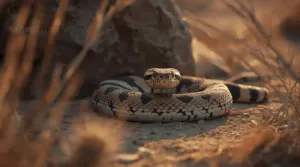
Knowing the species is only useful if you can spot one first. Start with the head. A rattlesnake’s broad, triangular head sits clearly wider than its neck, and its pupils are vertical slits, like a cat’s. A well-illustrated snake identification field guide lets you compare head shapes and pupils side by side before you’re ever in the field.
Because gopher snakes often mimic this look, a rattlesnake vs. gopher snake comparison can help you tell the two apart by head shape and scale pattern.
Look for a thick, stout body with keeled scales and blotched, banded, or diamond patterns. Color varies widely, so don’t rely on it. Stay at least 10 feet back. A pair of compact wildlife binoculars lets you study these markings safely from well beyond that distance without stepping any closer.
Rattlesnake Distribution and Habitats Across North America
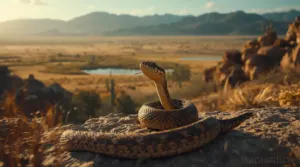
Rattlesnakes live only in the Americas, from southern Canada to central Argentina. Most species cluster in the American Southwest and Mexico, and Arizona leads the United States with 13. Only four species reach east of the Mississippi River, and two live in South America.
Habitat matters as much as range. Most rattlesnakes favor open, rocky areas where they find cover, prey, and places to bask, but they also use prairies, marshes, forests, and deserts. Elevation varies widely too. You can meet them from sea level to above 10,000 feet, though most sightings happen below 7,000 feet.
The prairie rattlesnake covers the Great Plains, while the western diamondback rattlesnake ranges from southeastern California to Arkansas. Learn which ones live near you.
Rattlesnake Behavior, Hunting, and Ecological Adaptations
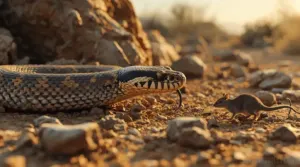
Knowing how rattlesnakes behave keeps you safer. Most are patient ambush predators. They sit motionless in cover, relying on cryptic coloration and rocky terrain camouflage to vanish against stone and soil. When prey passes within striking range, usually less than half the snake’s body length, they strike fast.
Heat-sensing pits between the eyes and nostrils detect warm bodies, while the forked tongue samples scent. After a strike, the snake lets go, then follows the chemical trail to the prey once the venom has done its work. It swallows the meal whole, head first.
Rattles give fair warning, so back away slowly when you hear one. Some venomous snake species stay silent, and desert sidewinders move across loose sand by sidewinding.
Sidewinding is just one of several specialized ways snakes travel, and these unusual snake movement patterns show how each style suits a different terrain.
Rattlesnake Venom, Bite Risks, and Emergency Care
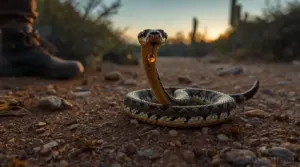
A rattlesnake bite is rare, but it’s a medical emergency when it happens. The sections below cover how venom differs between species, how you can prevent bites and protect your pets, and what to do the moment you suspect a bite. Knowing each of these ahead of time helps you act fast and stay calm.
Venom Variation and Bite Severity
Not every rattlesnake bite is the same, and venom composition is the reason. Mojave rattlesnakes show it clearly.
Some populations carry neurotoxic venom that can paralyze, while others carry hemotoxic venom that causes internal bleeding and tissue damage. Some Arizona populations carry both.
Roughly 20 percent of bites are dry, but you can’t know that at the scene.
Preventing Bites and Protecting Pets
Keep your dog on a leash of six feet or less, and stay on marked trails. Rattlesnakes hide in tall grass, brush, rocky areas, and woodpiles, and they’re most active in early morning and late afternoon.
Consider these realities:
- Vaccines only reduce symptom severity, so a vaccinated dog still needs a vet.
- Small dogs face faster venom spread.
- Face and neck bites are the most dangerous.
Suspected Bites Require Immediate Emergency Care
Would you really gamble with a bite? Don’t. Call 911 right away, even when symptoms seem mild, because venom spreads fast.
| Instinct | Risk | Do this |
|---|---|---|
| Drive yourself | Dizziness, weakness | Wait for help |
| Walk it off | Faster venom spread | Stay still |
| Panic and pace | Raised heart rate | Breathe slowly |
| Wait and see | Symptoms worsen | Call now |
Stay beside them until paramedics arrive.
North American Rattlesnake Conservation and Threats
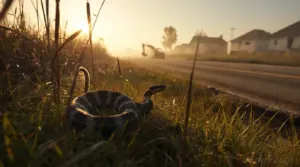
Picture a quiet wetland in the Midwest where eastern massasaugas once basked each spring. Then a housing development goes in, a road follows, and the snakes vanish within a few years.
Where eastern massasaugas once sunned themselves each spring, a new housing development and road can erase an entire population within a few short years
The rattlesnake conservation status of many species looks similar, and these pressures drive most population decline causes:
- Habitat destruction from development and farming has cut massasauga numbers by nearly 40%.
- Road mortality kills snakes that cross or bask on pavement.
- Snake fungal disease is spreading through timber rattlesnake populations.
- Persecution, roundups, and illegal collection remove adults from wild populations.
Climate change adds pressure. Drier conditions and wildfires threaten the New Mexico ridge-nosed rattlesnake in its sky island habitats. Among conservation threats, these compound one another. Never kill wild snakes.
Frequently Asked Questions (FAQs)
Do rattlesnakes lay eggs or give live birth?
Rattlesnakes give live birth, but they don’t lay eggs. Your best way to picture it is that the eggs hatch inside the mother’s body after about three months. Then she delivers fully formed live young in late summer.
How does a rattlesnakes rattle actually work?
Many people think a rattle holds loose pellets that clatter inside, but it doesn’t. Hollow keratin segments strike each other, like maraca pieces without beads. Three shaker muscles at your snake’s tail base vibrate the rattle rapidly.
How do baby rattlesnakes differ from adults?
Newborn rattlesnakes arrive at 6 to 15 inches with just a single rattle button, so they can’t buzz a warning. They still carry working fangs and venom, but less of it, and they eat lizards and frogs.
How long do rattlesnakes typically live in the wild?
A rattlesnake’s life runs like a slow clock that few reach the end of. In the wild, most live 16 to 20 years, though larger species like timber and eastern diamondback rattlesnakes can reach
What do rattlesnakes do during the winter months?
It isn’t true hibernation, and they don’t sleep. Rattlesnakes enter brumation when temperatures stay below 60°F, cutting their metabolism by up to 70%. They shelter in dens, often communal, and may bask on warm days.
Are there rattlesnakes anywhere but North America?
Yes, but only in the Americas. Rattlesnakes range from southern Canada to central Argentina, and Crotalus durissus lives across 11 South American countries. Mexico holds most species. None occur naturally in Europe, Asia, Africa, or Australia.
Conclusion
Learn the species. Learn the habitat. Learn the warning signs. Every bit of that knowledge shrinks the odds of a bad encounter with any North American rattlesnake, because most bites happen when people step, reach, or grab without looking.
Keep your distance, watch where your hands and feet go, and keep pets leashed. If a bite happens, don’t guess about venom. Call emergency services, stay calm, and get to a hospital.
Respect the snake’s space.