This site is supported by our readers. We may earn a commission, at no cost to you, if you purchase through links.

A restless snake is never random. Every lap around the enclosure, every nose pressed against the glass, every midnight climb answers a need your snake can’t voice.
Ball pythons are nocturnal, so some evening pacing is normal. But constant patrolling, refused meals, or open-mouth breathing tell a different story. Hunger, breeding drive, a stressful setup, and early illness all produce the same restless behavior, and each demands a different response.
If you’re asking why is my snake restless, the answer starts with when it moves, how it moves, and what else changes. Here’s how to read those clues and act on them.
Table Of Contents
Key Takeaways
- Restlessness always has a cause, and while evening pacing is normal for a nocturnal ball python, constant patrolling, refused meals, or open-mouth breathing aren’t.
- Hunger, breeding drive, and an insecure setup (too much open space, clear glass, no snug hides) are the most common behavioral causes, and each needs a different fix.
- Check your enclosure first by confirming the temperature gradient with a probe and infrared thermometer, keeping humidity right for shedding, and placing the tank away from household noise and vibration.
- If restlessness comes with wheezing, bubbles at the nostrils, tremors, regurgitation, or stuck shed, call a reptile-experienced vet the same day, since snakes hide illness until it’s serious.
Why is My Snake Suddenly Restless?

Sudden restlessness usually has a clear cause. Some of these causes are normal behavior, while others point to a problem you can fix. Here are the three most common explanations to rule out first.
Normal Nighttime Exploration
Ball pythons are built for nocturnal activity, so evening pacing is normal, not a sign of trouble. They rest in a hide all day, then roam after dark to explore, drink, and check their surroundings.
If you’re curious why your snake seems to wake up and start exploring just as the lights go down, this guide to ball python behavior explains what’s going on.
A snake that moves between hides, flicks its tongue, and settles by morning is behaving normally. Behavioral observation at night tells you what’s typical for yours. Some individuals also climb during these night hours, which is normal as long as secure climbing structures can support their weight.
Hunger and Post-Feeding Searching
Hunger drives restlessness more than most keepers expect. A snake that’s ready to eat patrols its enclosure, flicks its tongue constantly, and strikes at movement.
Picture these signs:
- Nose pressed into glass seams and corners.
- Substrate pushed into piles.
- Water bowl nudged out of place.
If it’s just fed, check prey size. Too small leaves it searching.
Matching prey to your snake’s age and size is easier with this guide to choosing prey size by age, so each meal fits comfortably.
Breeding Season Activity
Hormones can turn a calm snake into a nonstop wanderer, and unlike hunger, breeding drive ignores food. Males pace, nose the glass, and refuse meals. Gravid females dig corners, hunting for a nest site.
| Snake | Typical behavior |
|---|---|
| Male | Constant pacing, rostral rubbing |
| Female | Digging, restless searching |
Juveniles rarely show this, so check other causes first, and offer a secure hide.
Temperature and Humidity Can Cause Restlessness
Your enclosure’s climate is one of the most common reasons a snake paces, rubs its nose, or won’t settle. Two things matter most here: how heat is spread across the space and how much moisture is in the air. Check both against the two points below before you change anything else.
A well-placed humid hide for your snake creates a moisture-rich pocket without raising humidity across the whole enclosure.
Thermal Gradients and Accurate Temperature Checks

A restless snake often has a broken gradient. Say your ball python paces at night, and your dial thermometer reads 82°F. A probe on the branch shows 95°F, while the cool side sits at 88°F. That’s a failing gradient.
Stick-on dials can be off by 10°F to 15°F, so use a probe plus an infrared thermometer, and measure after two hours.
Humidity, Hydration, and Shedding Difficulties

You may notice your snake pacing the glass, rubbing its nose, or soaking more than usual. Often that signals a shed is coming. Low humidity dries the old skin, so it sticks instead of lifting cleanly. A digital hygrometer for terrariums lets you track humidity at a glance, so you can catch dry spells before a shed goes wrong.
Offer a moist hide with damp sphagnum moss and a bowl big enough to submerge in. Check urates and skin turgor to spot dehydration early.
Insecure Enclosures Keep Snakes Restless
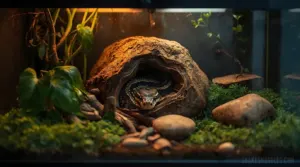
Snakes feel safest when their bodies touch something on several sides, so a roomy enclosure with bare floor space can leave yours restless.
Glass makes it worse. Your snake can’t perceive a clear barrier, so it keeps nosing the walls and hunting for a way out. Glass surfing, lid pushing, and nose rubbing are early stress indicators.
Try these fixes:
- Add two snug hiding places, one warm and one cool.
- Match your snake’s hide box preference: tight enough to touch its sides.
- Fill open floor with cork bark, plants, and clutter.
- Secure the lid with latches or weights.
- Cover three glass sides with opaque backing.
Change one thing at a time, because environmental stability helps your snake settle in faster.
Handling and Household Disturbances Increase Stress
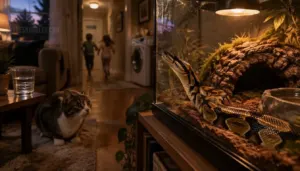
Picture a ball python that paces the glass every evening, right after your kids thunder down the hallway and the washing machine hits its spin cycle. Nothing’s wrong with the snake. It’s reacting to its surroundings.
A pacing snake isn’t necessarily sick; it may simply be answering the noise and vibration of a busy home
Snakes don’t hear the way you do. They pick up vibrations through their jaw and body, so foot traffic and appliances register as constant, close-range threats. Pets prowling near the enclosure add to it.
Handling matters just as much. Even a tame snake shows a stress response, with corticosterone rising each time it’s lifted. Keep sessions short and infrequent.
Never handle your snake for 48 to 72 hours after a meal. Disturbing digestion is a leading cause of regurgitation.
Place the enclosure in a quiet, low-traffic spot. A sturdy reptile enclosure stand lifts the tank off the floor, away from foot-traffic vibrations, and keeps it steady against a quiet wall.
Restlessness With Symptoms Needs Veterinary Attention
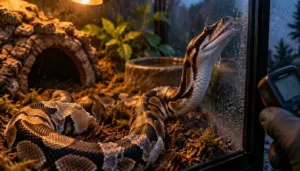
Restlessness paired with other symptoms isn’t a behavior problem. Picture a ball python that’s roaming for three nights straight, then starts holding its mouth open and making faint clicking sounds. That combination points to illness, not boredom.
Check for these three red flags:
- Open-mouth breathing, wheezing, or bubbles around the nostrils, which suggest a respiratory infection.
- Wobbling, tremors, or poor balance, which can mean a neurological problem or toxin exposure.
- Regurgitated meals, or patches of retained shed that don’t clear after repeated attempts.
If you see any of these, don’t wait. Snakes hide illness well, so visible signs usually mean the problem is already serious.
Fix your enclosure conditions first, then call a reptile-experienced vet the same day if symptoms continue.
Frequently Asked Questions (FAQs)
How long does snake restlessness usually last?
Most snake restlessness lasts hours to a few days. Evening roaming ends within two hours, enclosure changes settle in two to three days, and pre-shed pacing runs three to seven. Anything beyond two weeks needs investigation.
Should I add enrichment to a restless snakes enclosure?
Enrichment alone won’t fix restlessness. Check your temperature gradient and hide box security first, since those cause most cases. Once they’re right, add branches, varied substrate, and rearranged items for stimulation.
Does enclosure lighting affect a snakes restlessness?
Yes, lighting changes how restless your snake acts. Light at night blurs the day and night signal, so keep a steady 12-hour cycle. Skip colored bulbs, and use ceramic heat emitters if you need nighttime warmth.
Do certain snake species get restless more often?
Yes, species matters a lot. You might think restlessness always signals a problem, but active foragers like racers, whipsnakes, and garter snakes simply move more, while corn snakes and ball pythons stay still.
Conclusion
So why is my snake restless, and what should you do next? Start by watching the pattern. Brief evening roaming is normal for a nocturnal ball python. Nonstop pacing, refused meals, or open-mouth breathing are not.
Check your temperature gradient, humidity, and secure hiding spots first, since setup problems are the easiest to fix. If symptoms stack up, book a reptile vet visit promptly. Your snake can’t tell you what’s wrong, but its behavior does.