This site is supported by our readers. We may earn a commission, at no cost to you, if you purchase through links.

Your snake presses against the glass for the third time this week. You worry something’s wrong, and you’re right to notice. Snakes don’t whine or pace like dogs, but they show stress in clear ways once you know what to look for.
Wrong temperatures, too few hides, rough handling—these push your snake into survival mode fast. The good news? Snake stress and anxiety relief comes down to a few fixable habits, not guesswork.
Master these basics, and you’ll watch your snake settle, relax, and finally feel at home.
Table Of Contents
- Key Takeaways
- Common Causes of Snake Stress
- Signs Your Snake Feels Anxious
- Calming Habitat Adjustments
- Low-Stress Handling Techniques
- Preventing Future Snake Anxiety
- Frequently Asked Questions (FAQs)
- Can snakes help with anxiety?
- What to do if a snake is stressed?
- How do snakes express happiness or contentment?
- Can snakes form bonds with their owners?
- Do snakes experience separation anxiety?
- Are certain snake breeds more stress-prone?
- What role does shedding play in stress?
- Can snakes experience social bonding with other snakes?
- Does reptile-assisted therapy help humans with anxiety?
- What causes ophidiophobia and how is it treated?
- Conclusion
Key Takeaways
- Your snake’s stress almost always traces back to a fixable setup problem — wrong temps, bad humidity, or too few hides — so check those first, before assuming something serious is wrong.
- Snakes show stress through clear physical signals like glass‑pressing, meal refusal, and striking, so learn to read those cues early instead of waiting for things to get worse.
- Small, consistent habitat tweaks — stable lighting, deep substrate, species‑right hides, and familiar scents — do more for your snake’s calm than any expensive overhaul ever will.
- Less handling done right beats more handling done wrong: keep sessions short, support the whole body, and always wait 48 hours after feeding to build real trust over time.
Common Causes of Snake Stress

Your snake can’t tell you what’s wrong, but its body and behavior always will. Stress doesn’t come from nowhere. It starts with a few common setup mistakes, and here’s exactly where to look.
If you’re not sure where you went wrong, running through these common mistakes when setting up snake tanks can help you spot the issue before it becomes a serious problem.
Your snake can’t say it’s stressed, but its body and behavior always will
Incorrect Temperature Gradients
When your tank runs too hot or too cold, your snake can’t relax. Dangerous hot spots above 33°C burn skin and spike stress. A cool side under 21°C slows digestion and causes lethargy.
Bad thermostat probe placement wrecks your thermal gradient accuracy. Skip heat rocks. Use overhead basking light and allow nighttime temperature drops for real thermoregulation—no thermal shock, just balance. If your snake shows labored breathing or collapse, seek emergency veterinary care immediately.
Poor Humidity Levels
Temperature isn’t the only stressor—humidity wreaks shedding and breathing just as fast.
Below 50%, snakes can’t shed in one piece, causing retained eye caps and dehydration. Above 85%, fungal growth invites respiratory infections.
Keep a real humidity gradient: 70-85% cool side, 60% warm side. Skip guesswork. Use a digital hygrometer. Balanced microclimates keep shedding smooth and breathing easy.
Too Few Hides
Humidity isn’t the only thing snakes fight for—security matters too. One hide forces a brutal choice: hide or thermoregulate, never both.
Fix it with thermal gradient security: place hides on warm and cool sides. Choose snug, not spacious—snakes crave snugness over space. Pick materials mimicking natural burrows, ones that retain scent. Smart hide placement builds real habitat complexity and crushes stress fast.
Frequent Habitat Changes
Hides matter, but moving them too often undoes the work. Every full enclosure swap risks thermal shock and humidity swings that stress your snake’s body fast.
Watch for these red flags:
- Lost scent trails causing confusion
- Disrupted visual landmarks
- Substrate relocation stress
Skip abrupt overhauls. Gradual acclimation keeps habitat complexity intact and stress low.
Excessive Handling
Love holding your snake? Too much of a good thing backfires fast. Excessive handling spikes corticosterone levels within minutes, triggering HPA axis suppression that messes with digestion and immunity.
Cumulative hormone effects build up, raising overhandling risks and real digestion interference. Watch for behavioral indicators of stress like stiffening or strikes. Respect handling recovery intervals. Your snake’s welfare depends on knowing when to simply let go.
Signs Your Snake Feels Anxious

Your snake can’t tell you it’s stressed, but its body sure can. Watch for these five clear warning signs. Spot them early, and you’ll know exactly what’s going on.
Refusing Meals
A snake that skips dinner is sending you a message. Don’t panic right away, but don’t ignore it either.
A skipped meal often signals stress or illness, so before your next feeding attempt, brush up on how to properly support your snake’s body to help it feel safe and secure.
Check the warm side first. Cold tanks slow digestion and kill appetite fast.
Shedding causes natural fasting, and so does wrong-sized prey. Rule out blockages or parasites too. Chronic refusal raises cortisol and demands a vet visit.
Repeated Escape Attempts
When your snake presses nonstop against glass, that’s reptile escape behavior, not curiosity. Constant attempts to escape risk nose scrapes and physical injury consequences.
Spot a stressed reptile early: check enclosure seams weekly, watch vent gaps. Visual boundary deterrents, like dark tape, aid escape injury prevention and stress management in reptiles, while tracking escaped snakes helps speed safe recovery efforts.
Defensive Striking
A striking snake isn’t being mean. It’s showing a real fear response rooted in stress physiology.
Watch for warning signal identification first: hissing, rattling, or an S-shaped coil.
- Defensive posture analysis: raised body, flattened head
- Strike distance safety: stay 6 feet back
- Bluff strike intent: a fake lunge, no contact
- Post-strike reset patterns: stillness for 5-15 seconds
Prolonged Hiding
A vanishing act for days on end is a red flag, not shyness. New snakes hide for 1-2 weeks while adjusting, but constant concealment after that points to chronic stress.
Watch for thermoregulation failures, weight loss, and incomplete shedding. Missed meals signal nutritional deficiency. Run a quick reptile stress assessment: check hiding spots, temps, and humidity for consistency.
Regurgitation After Feeding
Regurgitating food is your snake sending a clear SOS. Stomach pressure spikes when feeding volume is too large or your snake moves too soon after eating. Swallowed air makes it worse.
- Overfed meals trigger backflow
- Post-feeding movement raises risk
- Low temps slow digestion
- Repeated episodes signal chronic stress
Monitor metabolic rate — cold enclosures stall digestion fast.
Calming Habitat Adjustments
Your snake’s enclosure is the one thing you have full control over, and small changes can make a real difference. The right setup gives your snake somewhere to feel safe, regulated, and genuinely at ease. Here are the habitat adjustments that matter most.
Species-Specific Hides

A good hide makes your snake feel invisible. Ideal hide dimensions matter most: ball pythons need full wall contact, while corn snakes want low, flat spaces.
Check entrance design security too. Coconut hides and resin caves offer natural cover, but material safety standards count more. For arboreal species, try vertical mounting strategies—mimicking branches builds real environmental enrichment and cuts stress fast.
Deep Burrowable Substrate

Once the hide’s doing its job, the ground beneath matters just as much. Use at least 3–6 inches of substrate so your snake can tunnel and disappear completely.
- Coconut coir holds 60–80% humidity for tropical species
- Aspen shavings absorb waste fast and resist mold
- Cypress mulch stabilizes around 50–60% humidity after settling
- BabiChip texture lets snakes build real tunnel systems
- Bioactive mixes support microfauna that break down waste naturally
Stable Lighting Cycles

Light works like an internal clock for your snake. Set a 12-hour light/dark cycle using an automatic timer — it removes guesswork entirely.
Ball pythons need complete darkness at night; corn snakes benefit from 2–5% UVB strips during the day. A 5000–6500K color temperature closely mimics natural daylight, keeping behavior and appetite steady.
Proper Microclimate Zones

Your snake needs more than one temperature — it needs a gradient with zones.
Aim for a warm basking spot at 28–32°C and a cooler retreat around 22–26°C. Add a humidity pocket at 60–80% for tropical species. Place sensors at multiple heights to track real conditions, not guesses. That’s microclimate control done right.
Familiar Scent Cues
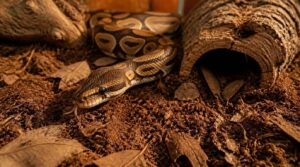
Your snake maps its world through scent. Keep substrate odor continuity by spot-cleaning instead of full replacements. Preserve hide scent by avoiding harsh disinfectants. Maintain a consistent feeding area for scent anchors. Try these three quick wins:
- Spot-clean only
- Keep the same hide
- Wash hands before handling
Low-Stress Handling Techniques

How you handle your snake matters just as much as how you set up its home. Small adjustments in your approach can make the difference between a calm, trusting snake and a stressed-out one. Try these five simple techniques to keep handling sessions low-pressure for both of you.
Wait After Feeding
Patience pays off after mealtime. Wait at least 24 to 48 hours before handling, so your snake’s stomach can fully digest. Keep enclosure temps stable—drops over 3°F slow digestion and trigger stress.
| Meal Size | Wait Time |
|---|---|
| Small | 24 hours |
| Large | 48 hours |
| Distended belly | Wait longer |
| Signs of distress | Delay handling |
| Belly smooth | Safe to handle |
Watch for regurgitation—it means you moved too fast.
Support The Whole Body
Your grip is the difference between trust and terror. Support the whole body from pickup to release — one hand behind the head, one cradling the mid-to-rear section.
Never let your snake dangle.
For snakes over 8 feet, use two handlers and assign each a body section. Distribute the weight evenly to prevent spinal injury and relieve their stress instantly.
Move Slowly and Calmly
Speed kills trust. Always approach from the side, never above, since overhead motion mimics a predator strike.
- Watch for slow tongue-flicks before contact
- Use deliberate hand-pacing, not rushed grabs
- Try 4-7-8 breathing to stay calm
- Keep steady hand-support the whole time
Your calm breathing signals safety. This builds a predictable routine and works like gradual exposure therapy, reducing your reptile’s stress fast.
Limit Session Length
More minutes don’t mean more bonding. Start new snakes with just 5-minute sessions, returning them once calm.
Choosing a properly sized, smooth-edged hook used only for handling helps you avoid feeding-related confusion, and this guide to hook training a new snake walks through picking the right one.
Add time only after relaxed behavior shows up, working toward 10 minutes, then 15 for acclimated corn snakes. Ball pythons tire near 10-12 minutes. Handle corn snakes 1-2 times weekly, never daily, and always wait 48 hours after feeding. End sessions immediately if breathing quickens or hissing starts.
Avoid Forced Interaction
Your snake isn’t being difficult — it’s communicating. A tight coil, S-shaped neck, or rapid tongue-flicking means back off now. Respect that signal.
Try non-contact enrichment instead: observe through the glass, speak calmly nearby, or offer a warm soak.
Predictable routines build trust over time. Forced interaction destroys it fast.
Preventing Future Snake Anxiety

Keeping your snake calm long-term isn’t complicated — it just takes consistency. A few steady habits can make a real difference in how settled and secure your snake feels day to day. Here’s what to put in place going forward.
Gradual Enclosure Transitions
Whenever you upgrade your snake’s home, skip the shock-and-drop approach. Use the habitat-in-habitat method: place the old enclosure inside the new one for 24-48 hours.
- Preserve scent markers
- Match thermal gradients
- Use target training rewards
- Avoid abrupt full transitions
- Monitor post-move behavior
This environmental consistency keeps stress low and builds real reptile husbandry mastery.
Consistent Feeding Schedule
Your snake’s stomach loves a good routine. Set a fixed feeding day, since predictable meals lower anxiety and build trust.
Match frequency to age and metabolic rate: juveniles eat every 5-7 days, adults every 1-4 weeks. Keep prey at 1.5 times body width.
Always feed in a separate container. This stops cage-defensive strikes and keeps health checks easy.
Gentle Enrichment Sessions
A full belly isn’t the only thing keeping your snake calm. Habitat enrichment matters too.
Try these stress reduction techniques:
- Add a clear tube for visual exploration
- Use puzzle feeders for foraging
- Offer climbing branches for exercise
- Rotate décor to spark curiosity
Some species enjoy supervised social buffering with a calm cagemate. Small steps like these relieve their stress and boost animal welfare.
Routine Health Checks
Routine health checks are your first line of defense against creeping stress. Weigh your snake every two to three weeks, logging each measurement in grams. Sudden weight loss often signals stress hormones at work.
Track feeding dates, shed cycles, and temperature readings too. Good health documentation catches problems early — before your snake starts showing behavioral coping styles you’d rather avoid.
Vet Care Warning Signs
When does stress cross the line into illness? Watch for open-mouth breathing, wheezing, or nasal discharge — clear respiratory distress signs.
Cottage cheese-like mouth discharge points to oral infection.
Check for mites, retained eye caps, sunken eyes, or sluggish tongue flicks.
These chronic stress signs, fueled by cortisol, demand a vet visit. Don’t wait — your snake’s welfare depends on you.
Frequently Asked Questions (FAQs)
Can snakes help with anxiety?
Yes — snakes actually can. Reptile-assisted therapy helps patients manage anxiety disorders through tactile grounding effects. Even overcoming ophidiophobia via exposure therapy builds confidence. The NHS reports genuine calming results across 70+ patients.
What to do if a snake is stressed?
When your snake shows stress, act quickly but calmly. Check temperatures with a reliable thermostat, adjust humidity using a hygrometer, and add hides. Preserve scent cues and keep changes gradual.
How do snakes express happiness or contentment?
A content snake looks like liquid calm — loose, flowing coils, slow curious tongue flicks, and relaxed exploration. Consistent appetite and clean, complete sheds confirm it. Your snake’s ease shows in every unhurried move.
Can snakes form bonds with their owners?
Yes — snakes recognize their owners by scent and visual cues. With consistent, gentle handling and a stable routine, your snake can build real trust over time.
Understanding why your snake shows aggressive behavior can help you respond calmly and avoid setbacks in that trust-building process.
Do snakes experience separation anxiety?
No, snakes don’t experience separation anxiety. They lack social brain structures that drive attachment. Your absence won’t distress them emotionally — but disrupting their routine, scent cues, or feeding schedule will trigger a real stress response.
Are certain snake breeds more stress-prone?
Absolutely, breed shapes everything. Ball python temperament is jumpy with finicky feeding, while corn snake activity stays bold and reliable.
Thermal tolerance differences and juvenile handling sensitivity matter too, so match your care style to each species’ true behavioral ecology.
What role does shedding play in stress?
Shedding is naturally stressful. Cloudy eye vision leaves your snake temporarily blind, triggering defensive behavior. Low humidity causes painful retained skin. Avoid handling during this phase and keep humidity stable.
Can snakes experience social bonding with other snakes?
Yes, they can. Research shows conspecific companions lower heart rates markedly. Snakes use chemical recognition cues to identify familiar partners and even share dens for mutual thermoregulation — that’s quiet but real social bonding.
Does reptile-assisted therapy help humans with anxiety?
Picture your blood pressure dropping while you hold something you once feared most.
Yes, reptile-assisted therapy works: oxytocin release and parasympathetic activation cut anxiety scores, lower heart rate, and help even snake phobia respond to exposure-based mental health treatment.
What causes ophidiophobia and how is it treated?
Ophidiophobia runs deep — sometimes genetic, sometimes sparked by a traumatic bite. CBT and virtual reality exposure clear it up in most people, with medication helping when needed.
Conclusion
You don’t need a perfect setup overnight—small, consistent changes build the biggest results.
Snake stress and anxiety relief isn’t about expensive gear or complex routines.
Fix the temperature.
Add a proper hide.
Handle your snake less, but better.
Once your snake stops pressing glass and starts exploring calmly, you’ll know it clicked.
That shift from survival mode to settled confidence?
It’s yours to create—and it starts with very next adjustment you make today.