This site is supported by our readers. We may earn a commission, at no cost to you, if you purchase through links.

Feel a hard, unmoving lump along your snake’s belly, and your gut should tighten too. That firmness, roughly 40% down the body, often signals a mechanical blockage rather than a normal meal working through the gut. Snakes hide illness well, so by the time you notice swelling, sluggish behavior, or skipped bowel movements, the problem has usually been building for weeks.
If your snake also shows other warning signs, such as common ball python health problems like respiratory infections or mites, it helps to rule those out early.
Impaction isn’t rare, especially in enclosures with loose substrate or prey sized wrong for your snake’s girth. Left untreated, it can turn fatal fast.
Knowing the early signs of impaction in snakes, and which ones demand a vet visit tonight, gives you the edge to act before a lump becomes an emergency.
Table Of Contents
- Key Takeaways
- What is Snake Impaction?
- Early Signs of Impaction in Snakes
- Which Signs Require Emergency Care?
- What Causes Snake Impaction?
- What Should Owners Do Immediately?
- How Vets Diagnose and Treat Impaction
- How to Prevent Future Impaction
- Frequently Asked Questions (FAQs)
- How can I tell if my snake is impacted?
- How to treat impaction in snakes?
- What are the first signs of impaction?
- How long can a snake go without pooping?
- Are certain snake species more prone to impaction?
- Can impaction cause permanent damage if untreated?
- How much does impaction treatment typically cost?
- Can snakes recover fully after impaction surgery?
- Conclusion
Key Takeaways
- A hard, unmoving lump about 40% down your snake’s body—paired with bloating, lethargy, or skipped bowel movements—usually signals impaction rather than a normal meal digesting.
- True impaction means weeks without a bowel movement plus a firm, palpable mass, while simple constipation clears up within days to two weeks with warm soaks and hydration.
- Emergency signs like repeated regurgitation, severe distension, cloacal prolapse, sudden weakness, or open-mouth breathing mean you need a vet today, not tomorrow.
- Preventing impaction comes down to safe substrate, proper hydration, correct temperature gradients, and appropriately sized prey, so build these habits into your snake’s care to keep that hard lump a rare visitor.
Even after that vet visit, knowing which drugs are actually safe matters, since misjudging dosages for your snake’s species can quickly complicate treatment—this guide to safe medications and dosages for snakes is a solid starting point for those conversations with your vet.
What is Snake Impaction?
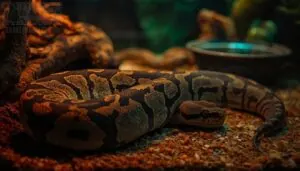
When your snake stops digesting properly, something has to give, and often it’s a blockage you can’t see from the outside. Understanding what’s actually happening inside your snake’s gut helps you catch trouble early. Here’s what impaction really means, and how it differs from a normal digestive hiccup.
Recognizing the early warning signs of impaction in pet snakes can mean the difference between a quick vet visit and a full-blown emergency—here’s a closer look at common impaction symptoms in pet snakes.
Digestive Blockage Explained
Picture a garden hose with a knot in it. That’s your snake’s gut during impaction, a mechanical obstruction blocking food, fluid, and gas from moving along. Intestinal motility slows, waste backs up, and gut stasis sets in. You’ll notice a bloated belly, straining without results, or sudden appetite loss.
A snake’s impacted gut is like a garden hose with a knot in it, blocking food, fluid, and gas from moving along
In humans, similar blockages can stem from causes like adhesions and hernias, underscoring how varied the root causes can be across species. Left untreated, fecal retention worsens fast, and immediate veterinary intervention becomes critical.
Impaction Versus Constipation
Not every sluggish gut means impaction. Simple constipation clears up in days to a couple weeks with warm soaks and hydration.
True impaction means no bowel movement for weeks, plus a firm, palpable mass rather than soft distension. Straining with zero results, bloating, and appetite loss point to blockage. Duration and that discrete mass are your clearest red flags.
Effects on Digestion
That discrete mass isn’t just uncomfortable, it’s a roadblock. Peristaltic movement loss stalls food in the stomach for weeks instead of days. Pancreatic enzymes never reach the duodenum, causing enzyme flow blockage and nutrient absorption failure. Meanwhile metabolic stress increase drains energy your snake can’t spare. This gastric processing delay is why reptile digestive health hinges on catching intestinal blockage early.
Early Signs of Impaction in Snakes
Catching impaction early gives your snake the best shot at a full recovery. Your snake can’t tell you something’s wrong, so you have to read its body instead. Here are five signs worth watching for, starting with what you can see and feel along its belly.
Firm Abdominal Swelling
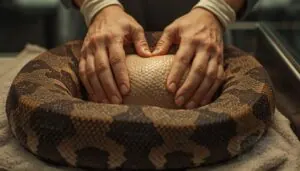
Run your fingers gently along your snake’s belly. Feel a hard, unmoving lump that won’t compress? That’s your red flag.
True impaction feels tough and rigid, not soft like recent prey. Masses often sit around 40% down the body, measuring roughly 8-11 cm long.
Checking texture:
- Press gently, note resistance
- Compare to normal areas
- Watch for visible distension
Appetite Loss
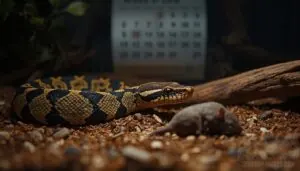
A snake striking without swallowing, or ignoring prey entirely, means something’s wrong. Feeding refusal past 2-3 weeks needs vet evaluation; past 3-4 weeks, insist on radiography.
Watch for bloating and appetite loss together, plus cloacal straining. Anorexia lasting weeks causes real weight loss and organ strain. Track fasting duration daily. Stress factors matter too, but persistent refusal alongside firmness demands attention.
Unusual Lethargy
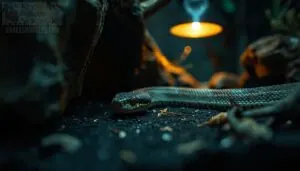
When your snake stops moving like itself, pay attention. Thermoregulation disruption keeps it stuck on the cool side, unable to digest properly. You’ll notice muscle weakness, ignored handling, and zero curiosity about its surroundings.
Watch for:
- Prolonged hiding
- No tongue flicking
- Limp posture
- Ignoring stimuli
- Energy-conserving stillness
This isn’t normal rest. It’s stress-induced inactivity signaling trouble.
When a snake goes quiet and stops eating, it’s worth checking whether your choice of substrate for young snakes is contributing to the underlying digestive stress.
Reduced Bowel Movements
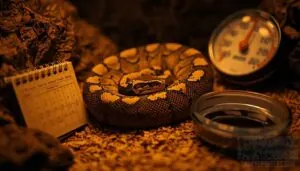
Rarely does a healthy snake skip its normal schedule without reason. Ball pythons usually go 4-5 weeks between movements, but track yours. Any deviation from that pattern matters more than the calendar date.
Dehydration and cold temperatures both slow things down. Prey size plays a role too. Bowel movement tracking helps you catch trouble before it becomes an emergency.
Straining Near The Cloaca
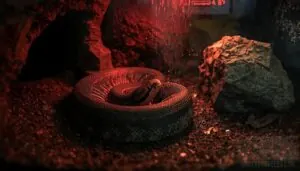
Watch how your snake lies when trying to pass waste. Tight coiling, pressed ventral surface, splayed posterior muscles pushing rhythmically, these signal straining during defecation. You might even hear cloacal popping sounds.
A pink lump at the vent means cloacal prolapse, an emergency. Cold enclosures below 75°F worsen straining. Don’t wait it out; call your vet.
Which Signs Require Emergency Care?
Some signs mean you’re watching and waiting. Others mean you’re in the car, headed to the vet, no debate. Here’s how to tell the difference.
Repeated Regurgitation
Bringing up a meal once is one thing. Doing it again within days is your snake telling you something’s seriously wrong.
Three or more episodes signals it’s time for immediate veterinary care, since each event risks esophageal damage. Skip home remedies. Get diagnostic imaging scheduled, and expect a recovery timeline stretching several weeks once treatment begins.
Severe Abdominal Distension
A belly that looks stretched tight isn’t just "full", it’s a red flag. Check for visible belly swelling paired with firmness on palpation and reduced movement during locomotion.
If distension worsens after feeding instead of easing, suspect intestinal blockage or fecal retention. Add lethargy or stillness, and you’re looking at systemic stress. Get to a vet now.
Cloacal Prolapse
Sometimes the belly isn’t the only thing that gives it away. Look for vent tissue protrusion, tissue bulging or everted right at the cloaca, often swollen and inflamed.
This is a cloacal prolapse, and it’s not something to monitor overnight. Cloacal function loss can follow fast.
Get immediate vet attention, since surgery may be needed to prevent re-prolapse.
Sudden Weakness
A prolapse is dramatic, but weakness can be sneakier, and just as urgent.
Tongue flicking loss and inability to coil are early red flags. As muscle weakness spreads, your snake may lie limp when handled, sometimes with lethargy and regurgitation together.
This signals paralysis symptoms tied to a mass pressing on nerves. Feeling palpable masses alongside abdominal swelling means it’s time for immediate veterinary care, not a wait-and-see approach.
Breathing Difficulty
Watch the mouth. Open mouth breathing at rest, wheezing, or a stretched neck posture means your snake can’t expand its lungs against the blockage.
Add lethargy, regurgitation, no bowel movements, or pale gums, and you’re looking at true respiratory distress. This needs a vet visit today, not tomorrow.
What Causes Snake Impaction?

Impaction rarely comes from one bad day. It builds from small habits in feeding, housing, and care that add up over time. Here are the five causes you need to watch for.
Dehydration and Urate Plugs
Think of dehydration as a slow-motion trap. Without enough water, urates thicken into paste, raising urate plug risk and blocking your snake’s cloaca.
Watch for reduced output or straining, early dehydration warning signs. Left unchecked, this cycle worsens fast.
Fresh water access and proper humidity are your first line of defense against dangerous intestinal blockage.
Accidental Substrate Ingestion
A few grains of the wrong substrate can do real damage. Ground-hunting snakes lick and strike near loose particles, picking up debris mid-hunt.
- Skip calcium sand (1-2mm) and walnut shell (3-5mm), both high impaction risk
- Use a feeding dish instead of feeding directly on substrate
- Choose nonparticulate substrates like paper towel for safer particle size
Substrate clumping turns small ingestion into big blockages fast.
Oversized Prey
A python’s jaw can stretch wide, but that doesn’t mean every meal is safe. Prey width should match your snake’s thickest point, roughly 1-1.5 times for corn snakes. Oversized meals cause slowed digestion and blockages. Warning signs include regurgitation within 1-2 hours, lethargy, and refused feedings. Stick to appropriate size, and feed larger prey only every 2-3 weeks.
Incorrect Enclosure Temperatures
Get the temperature gradient wrong, and digestion stalls before it starts. Your snake needs a basking spot near 32°C and a cool zone with proper thermal stability control. Warm side monitoring matters daily.
Nighttime cooling below 18°C halts enzyme activity, leaving food to harden. Pair inadequate temperatures with poor humidity levels, and urate plugs form fast.
Limited Movement
Cramped housing slows the gut. If your snake cannot fully stretch and follow natural locomotion, intestinal motility drops, feces harden, and impaction risk rises. Enclosures shorter than the snake’s body, often under 40 gallons, commonly contribute.
Watch for reduced mobility: more hiding, less activity, water-bowl stretching, straining, lethargy, appetite loss, stress, or regurgitation. Exercise protects digestion and lowers future risk.
What Should Owners Do Immediately?

If you suspect impaction, what you do in the first few hours matters. Start with a few safe, practical steps that protect your snake and help you avoid making the problem worse. Here’s what to do right away while you arrange proper veterinary care.
Contact a Reptile Veterinarian
Suspect impaction? Don’t wait it out. Find a reptile vet through the ARAV directory or trusted community recommendations, someone experienced with snakes specifically. Verify vet credentials before booking, board certification matters here.
Call ahead, describe symptoms, and ask about diagnostics like radiography or ultrasound. Bring medical notes and prepare for transport. This is immediate veterinary care territory, not a wait-and-see situation.
Check Temperature and Humidity
While waiting for your vet appointment, grab your monitor and check the enclosure. Poor temperature gradients or humidity often worsen impaction.
Quick checks:
- Place probe where your snake rests, not near heaters
- Allow acclimatization time after moving sensors
- Avoid drafts and outer walls for accuracy
- Verify both warm and cool zones separately
Proper humidity control and moisture levels support digestion while you wait for care.
Provide Fresh Drinking Water
Once the enclosure’s dialed in, turn to the water bowl. Dehydration hardens feces into stubborn urate plugs, so constant water access matters now more than ever.
Use a wide, stable bowl your snake can soak in, kept at 70-80°F.
| Do | Avoid |
|---|---|
| Change water daily | Letting it sit stagnant |
| Deep enough to submerge | Shallow, tippy dishes |
| Cool-side placement | Near misting nozzles |
| Treated tap water | Untreated chlorine |
| Weekly disinfecting | Biofilm buildup |
Pause Feeding Temporarily
With water sorted, stop offering food. This gives the gut a break, letting existing blockage move without new bulk piling on.
Skip meals until you see a normal bowel movement and renewed appetite. Feeding refusal often signals impaction already, so don’t force it.
Call your vet within 24-48 hours if nothing improves.
Avoid Unsafe Home Remedies
Skipping meals buys time, but don’t fill that gap with kitchen fixes. Never give human laxatives or mineral oil internally, and skip soap or alcohol "flushes" entirely.
- Forcing food or liquid into a non-eating snake
- Pressing hard on the abdomen
- Waiting days before calling your vet
These delay real treatment. When in doubt, get professional treatment fast.
How Vets Diagnose and Treat Impaction
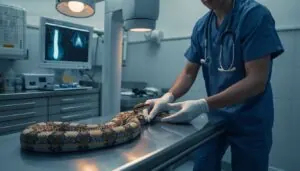
Once you’re at the vet’s office, diagnosis moves fast. Your snake will go through a specific sequence of checks, from hands-on exams to imaging and treatment. Here’s what that process usually looks like.
Physical Examination and Palpation
Your vet’s hands often catch what your eyes miss. During abdominal palpation, they’ll work cranial to caudal, feeling for hard masses, doughy fullness, or firm swelling along the coelom. Healthy ingesta feels different from a true blockage.
They’re also checking organ position, since an enlarged or displaced structure can mimic impaction, and confirming fecal retention before moving to imaging.
X-Rays and Ultrasound
Once palpation raises suspicion, X-ray imaging confirms it. Radiography reveals gas pattern analysis and opaque masses blocking the tract.
For soft tissue contrast and fluid detection, ultrasound steps in. This real-time imaging offers realtime visualization without radiation exposure, guiding your vet with precision.
Together, radiography and palpation, paired with ultrasound guidance, form a thorough diagnostic imaging approach before treatment begins.
Veterinary Hydration Therapy
Once your vet confirms impaction, rehydrating your snake becomes priority one. Subcutaneous fluids work for mild cases, while severe dehydration needs intravenous or intracoelomic routes instead.
Expect 5-15 ml/kg daily, warmed to 88-92°F. Your vet monitors PCV, weight, and breathing throughout therapy, adjusting doses as needed.
This hydration therapy softens impacted material, setting the stage for whatever comes next.
Blockage Removal Procedures
Once hydration softens the mass, your vet chooses a removal method matched to severity. Options include:
- Manual disimpaction (gloved, lubricated finger or forceps)
- Warm water enemas, repeated every 15-30 minutes
- Water irrigation with gentle massage
- Endoscopic disimpaction for deep blockages
Pre-anesthetic bloodwork comes first. Digital disimpaction and enema therapy often resolve moderate cases without surgery.
Surgery and Recovery Care
When conservative methods fail, surgical intervention becomes necessary. Anesthesia monitoring tracks vitals throughout. Postoperative care focuses on postoperative pain control, temperature support during recovery, and wound healing observation.
For broader context, review snake cancer signs and symptoms that may warrant prompt veterinary evaluation.
Feeding pauses until stable; a hydration resumption protocol guides fluid intake. Recovery tracking continues at home, paired with discharge follow-up instructions covering warmth, medication, and warning signs that mean calling your vet immediately.
How to Prevent Future Impaction
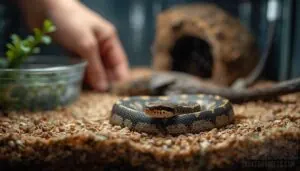
Once your snake’s on the mend, prevention becomes your real job. Impaction has a habit of returning if the same conditions stay in place. Here’s what to change in your setup, starting with the substrate under your snake’s belly.
Choose Safe Substrate
What’s under your snake matters more than you think. Skip loose sand and woodchips, both common impaction hazards. Choose particle sizes too large to swallow or too small to matter, like bioactive soil blends. Better yet, go nonparticulate: tile, vinyl, or reptile carpet eliminate ingestion risk entirely. Match substrate to species, and always prepare it properly before use.
Maintain Proper Hydration
Water is medicine here. Keep a shallow dish filled with clean water at all times, changed daily to prevent bacterial buildup. If soaking time calls for a gentle assist afterward, a properly sized snake hook for small hands makes handling safer for both of you.
Check urates regularly: chalky, dry urates signal trouble ahead. If dehydration hits, soak your snake briefly under supervision, never unattended, and contact your vet if straining or dry waste persists past a few days.
Optimize Temperature Gradients
Getting fluids right matters, but a snake sitting in the wrong temperature can’t digest that water anyway. Aim for 83-88°F on the warm side, 72-78°F cool side, roughly a 10°F split.
Place your UTH under the hot hide, calibrate with a proportional thermostat, and check surface temps with a probe, not a stick-on gauge.
Feed Appropriately Sized Prey
Prey width matching beats guesswork every time. For hatchlings, pinkies shouldn’t exceed the snake’s widest point. Adults need prey no more than 1.5 to 2 times midbody girth. Thaw prey fully to body temperature before offering it. Stick to a consistent feeding schedule, and always match prey size to your snake’s actual build, not its age alone.
Track Bowel Movements
Right prey size only helps if you’re watching what comes out the other end. Keep a simple log: dates, stool consistency, urate color. Adults defecating every 7-14 days is normal; going over four weeks warrants a vet call. Track appetite alongside bowel habits. Catching a slowdown early beats discovering a hard, swollen belly later.
Frequently Asked Questions (FAQs)
How can I tell if my snake is impacted?
Watch for abdominal distension, appetite loss, and lethargy. No waste after two weeks post-feeding signals trouble. Straining at the vent or regurgitation means don’t wait, call your reptile vet now.
How to treat impaction in snakes?
A ball python that stopped eating after swallowing loose substrate needed warm water soaks, gentle massage, and vet-guided hydration therapy. Treatment blends home support, adjusting temperature and humidity, with professional treatment, sometimes lubricants, sometimes surgery, plus close recovery monitoring afterward.
What are the first signs of impaction?
Look for firm abdominal swelling, appetite loss, and unusual lethargy first. Add reduced bowel movements or straining near the cloaca, and you’ve got a pattern worth calling your vet about right away.
How long can a snake go without pooping?
Days without bowel movements, weeks without bowel movements, it depends on the snake. Normal defecation frequency runs 7-14 days for adults, but past 21 days post-meal, start monitoring closely and call your vet.
Are certain snake species more prone to impaction?
Yes. Ball pythons face the highest risk, especially captive-bred males, with breeding programs pushing rates near 30%.
Forest species from Southeast Asia and West Africa run hotter too. Desert snakes tolerate dehydration longer but crash harder once impacted.
Can impaction cause permanent damage if untreated?
What happens when a blockage lingers too long? Untreated intestinal blockage can trigger intestinal necrosis, kidney failure, and permanent motility loss. Reptile impaction demands emergency care and proper husbandry to prevent lasting structural changes and chronic dehydration.
How much does impaction treatment typically cost?
Costs vary widely by severity. Diagnostics run $100 to $600, medical treatment $75 to $150 daily, and surgical intervention $800 to $2, Hospitalization, emergency fees, and post-surgical care can push totals past $3,000, so ask about payment plans and insurance coverage early.
Can snakes recover fully after impaction surgery?
Miracles happen, but not by magic. Full recovery is possible when caught early, with careful postsurgical monitoring, gradual feeding resumption, and a stable healing environment. Long-term prognosis drops once tissue damage or organ stress sets in.
Conclusion
A firm belly, a skipped meal, a sluggish coil, each one is your snake asking for help. Catching the signs of impaction in snakes early turns a crisis into a simple fix.
Waiting doesn’t. Keep your enclosure warm, hydrated, and stocked with properly sized prey, and that hard lump becomes a rare visitor, not a recurring threat. Trust your hands. Your snake can’t speak, but its body always will.