This site is supported by our readers. We may earn a commission, at no cost to you, if you purchase through links.

A ball python weighing 800 grams needs a fundamentally different antiparasitic dose than one at 1,200 grams—and that margin isn’t trivial. In reptile medicine, the distance between therapeutic and toxic can compress into a few tenths of a milligram per kilogram, a reality that catches even experienced keepers off guard.
What makes snake pharmacology particularly demanding is that pharmacokinetic behavior shifts with body temperature, hydration status, and species-level metabolic variation, meaning a dose that clears infection in one colubrid can trigger neurological crisis in another.
Managing safe medications for snakes requires precision, species-specific knowledge, and a structured approach to dosage calculation that leaves nothing to approximation.
Table Of Contents
- Key Takeaways
- Key Principles of Safe Snake Medication
- Common Antibiotics for Snakes and Their Dosages
- Antiparasitic Medications and Safe Dosage Guidelines
- Supportive Medications and Supplements for Snakes
- Best Practices for Administering Snake Medications
- Frequently Asked Questions (FAQs)
- How much IM should I give a snake?
- What is the best steroid for snakes & lizards?
- How much glycopyrrolate should a reptile take?
- How much Saffan can a snake eat?
- Are there drugs available for anesthesia in snakes?
- What is the best steroid for snakes & lizards?
- Does metronidazole kill snakes?
- Can a snake be injected into a syringe?
- Should nephrotoxic drugs be given to sick reptiles?
- What medications are safe for gravid snakes?
- Conclusion
Key Takeaways
- Snake medications have dangerously narrow margins between a therapeutic dose and a toxic one, so every calculation must be based on your snake’s current weight—not last week’s.
- Drug response varies significantly by species, meaning a dose that’s routine for a kingsnake can trigger neurological crisis in a corn snake, making species-specific guidance non‑negotiable.
- Common antibiotics like amikacin and antiparasitics like metronidazole each carry serious organ risks—kidney damage and neurotoxicity respectively—that require active monitoring throughout the full treatment course.
- Temperature, hydration, and enclosure conditions aren’t background details; they directly affect how your snake metabolizes medication, which means environmental management is part of safe dosing.
Key Principles of Safe Snake Medication
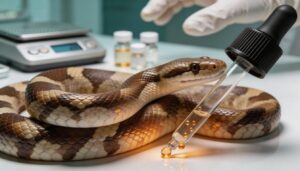
Getting medication right for snakes isn’t just about picking the correct drug — it’s about understanding that a small dosing error can tip the balance between recovery and a serious setback. Snakes respond to drugs differently than mammals do, and some species carry sensitivities that can turn a routine treatment into a crisis.
That’s why consulting a resource like safe antibiotics for snake infections can help you avoid the species-specific pitfalls that catch even experienced keepers off guard.
In snake medication, a small dosing error can turn treatment into crisis
Here are the key principles every snake owner should know before opening a medicine cabinet.
Why Accurate Dosing Matters for Reptile Health
Getting the dose right isn’t just good practice—it’s the difference between healing and harm.
Snakes present real pharmacokinetic variability: stress-induced weight changes, growth rate impact, and dehydration all shift how drugs behave internally.
Many reptile medications carry narrow therapeutic windows, where toxicity thresholds sit uncomfortably close to effective doses.
Accurate weight-based dosage calculation for exotic animals isn’t optional—it’s the foundation of drug safety in reptiles.
Research indicates that meloxicam analgesic effect was absent in ball pythons, underscoring the need for species‑specific dosing.
Species-Specific Drug Sensitivities in Snakes
Not all snakes respond the same way to the same drug—and that gap can be dangerous.
Metronidazole duration sensitivity means colubrid species like corn snakes and king snakes face real neurotoxicity variability even at standard doses.
Fenbendazole species limits become life-or-death at high single doses.
Ivermectin chelonian risk is absolute: never use it in turtles.
Therapeutic margin narrowness demands species-specific dosing, always.
When and Why to Consult a Reptile Veterinarian
Once you understand species-specific sensitivities, the next step is knowing when professional oversight isn’t optional.
Emergency signs—open-mouth breathing, sudden lethargy, or cloacal prolapse—demand same-day vet expertise, not home guesswork.
When those red flags appear, understanding how vets treat snake septicemia — from IV fluids to targeted antibiotics — helps you ask the right questions and act fast.
Routine wellness visits catch problems early, while diagnostic evaluation guides medication guidance and flags drug contraindications before harm occurs.
A qualified reptile vet applies species-specific dosing guidelines that no general-care chart can replace.
Common Antibiotics for Snakes and Their Dosages

Antibiotics are one of the most common tools you’ll use when a snake develops a bacterial infection, and getting the dose right isn’t optional — it’s the difference between recovery and serious harm. Each drug works differently, carries its own risks, and demands a specific administration schedule based on your snake’s weight and condition.
Here’s what you need to know about the most commonly prescribed options.
Amikacin Dosing, Loading Schedules, and Nephrotoxicity Risks
Amikacin sulfate demands respect — it’s one of the most effective bacterial weapons in your reptile formulary, but its nephrotoxic antibiotic management in exotic animals requires precision.
Start with a 5 mg/kg loading dose calculation, then 2.5 mg/kg every 72 hours.
Therapeutic drug monitoring and renal function adjustment aren’t optional; watch nephrotoxicity indicators closely, targeting safe peak‑trough targets throughout treatment.
Enrofloxacin and Ceftazidime Guidelines by Snake Size
fluoroquinolone and beta-lactam options anchor antibiotic therapy for reptiles when gram-negative infections strike. Enrofloxacin follows size-adjusted dosing at 5–10 mg/kg IM every 48 hours, while ceftazidime runs 20–40 mg/kg SC, IM, or IV every 2–3 days.
Route matching and interval timing aren’t interchangeable — both drugs require species-specific dosing guidelines to support resistance management and effective therapeutic monitoring throughout treatment.
Monitoring for Antibiotic Side Effects and Toxicity
Once you’ve started antibiotic therapy, monitoring isn’t optional — it’s where safety lives.
Renal function tests and liver enzyme panels catch nephrotoxicity early, especially with aminoglycosides.
Watch for gastrointestinal signs like appetite loss or abnormal stools, which can signal drug toxicity before bloodwork changes.
Hematologic monitoring and neurologic assessment round out your safety net, guiding antibiotic selection and dosing in reptile medicine.
Antiparasitic Medications and Safe Dosage Guidelines
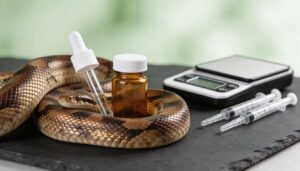
Parasites are one of the most common health challenges snakes face, and getting the medication right makes all the difference. Each drug works differently, targets different organisms, and carries its own dosing rules you need to follow closely.
Here’s what you need to know about the most commonly used antiparasitic medications and how to use them safely.
Fenbendazole, Praziquantel, and Metronidazole Dosages for Snakes
Each of these three antiparasitic agents targets a different threat.
Fenbendazole treats intestinal nematodes at 50–100 mg/kg orally, while Praziquantel clears cestodes and trematodes at 5–8 mg/kg IM or PO.
Metronidazole covers protozoa — but species-specific dosing guidelines matter: colubrid snakes tolerate only 40 mg/kg maximum.
Drug interaction risks and resistance development make therapeutic monitoring essential, and palatability strategies often determine compliance with oral off‑label uses.
Treatment Frequency, Duration, and Repeat Dose Intervals
Timing your antiparasitic treatments isn’t guesswork — it’s pharmacokinetic timing built around your snake’s biology.
- Fenbendazole repeats every 14 days to catch emerging larvae.
- Praziquantel follows the same 2-week repeat dose safety interval.
- Metronidazole runs q48–72h; dose interval optimization matters for colubrids.
- Renal function adjustments lengthen intervals in debilitated animals.
Never shorten a treatment course length without veterinary direction.
Species-Specific Warnings Including Colubrid and Chelonian Restrictions
Not every snake processes the same drug the same way. Colubrid Metabolism Variability means a dose safe for a kingsnake can quietly accumulate to toxic levels in a corn snake.
Weight Fluctuation Dosing demands you recalculate from current weight every treatment cycle.
Chelonian Hydration Risks compound this further — dehydration concentrates medications dangerously, and Shell-Related Injection Challenges make precise delivery harder.
Temperature-Dependent Drug Clearance ties everything together: a cool enclosure slows elimination, extending exposure unpredictably.
Supportive Medications and Supplements for Snakes
When a snake is sick or recovering, antibiotics and antiparasitics only do part of the work. Supportive medications and supplements fill in the gaps — keeping hydration, vitamins, and minerals where they need to be.
Here’s what you should know about the key options available to you.
Fluid Therapy Protocols and Electrolyte Dosage Guidance
Fluid therapy in snakes isn’t optional when you’re running nephrotoxic antibiotics — it’s protective infrastructure. Crystalloid selection, usually Lactated Ringer’s at 15–20 mL/kg subcutaneously every 24 hours, forms your foundation.
Acid-base monitoring guides fluid rate adjustments, while electrolyte replacement strategies address deficits cautiously. Potassium infusion limits matter even here.
Calcium gluconate delivery route — intramuscular versus intravenous — depends on severity and patient stability.
Vitamin a and Calcium Supplement Dosages for Reptiles
Beyond fluid balance, vitamin A and calcium management demand the same precision.
Preformed Vitamin A Forms carry real hypervitaminosis risk — skin lesions are a telltale sign of excess.
Ca:P Ratio of at least 2:1 guides Reptile calcium supplementation, while Calcium Powder Strength determines actual dietary delivery.
Calcium gluconate at 300 mg/kg IM remains your clinical anchor.
Safe Use of Adjunct Therapies Alongside Primary Medications
Herb drug interaction risk doesn’t disappear just because a supplement feels natural — ginkgo or garlic-based products can shift how primary antibiotics behave in your snake’s system. Adjunct monitoring starts the moment you add anything alongside a core drug regimen.
Pharmacist review or veterinary coordination, supplement timing separation, and careful dose titration give you the clearest picture of what’s actually working.
Best Practices for Administering Snake Medications
Getting the medication right is only half the battle — how you give it matters just as much.
A few consistent habits can make the difference between a treatment that works and one that causes more harm than good.
Here’s what every snake keeper should know before, during, and after each dose.
Calculating and Measuring Accurate Weight-Based Dosages

Getting the numbers right is the foundation of safe dosage calculation for exotic animals. Start with weight verification—weigh your snake fresh, not from last week’s chart.
Unit conversion matters: grams become kilograms by dividing by 1000. Then apply species-specific dosing for snakes, run your concentration math (mg ÷ mg/mL = mL), and finish with careful dose rounding to match your syringe precision.
Intramuscular Vs. Oral Administration Techniques
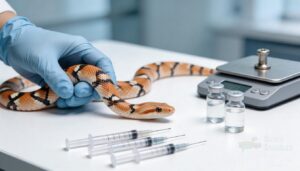
Once you’ve nailed your weight-based calculation, route selection becomes your next decision. Intramuscular injection techniques generally outperform oral dosing in bioavailability comparison because they bypass first-pass metabolism entirely.
Injection site selection matters—choose anterior trunk musculature in snakes. Match needle size guidelines to muscle depth.
For oral medication palatability, hiding doses in prey improves oral acceptance strategies considerably.
Record-Keeping, Temperature Considerations, and Ongoing Monitoring

Once medication is administered, your documentation becomes the safety net. Maintain Temperature Log Protocols for every enclosure zone—basking surface, ambient, and water—while conducting Sensor Calibration Checks regularly against a reference thermometer.
Define Excursion Thresholds clearly; sustained temperature deviations affect inhalant anesthetic recovery in reptiles by altering drug metabolism.
Schedule Routine Environmental Audits, apply Data Backup Strategies for electronic logs, and flag any monitoring protocol deviations immediately.
Frequently Asked Questions (FAQs)
How much IM should I give a snake?
IM dose depends entirely on your snake’s exact body weight and the drug’s concentration.
Injection Volume Limits vary by species-specific dosing guidelines — always confirm the mg/kg with your reptile vet first.
What is the best steroid for snakes & lizards?
There’s no single best steroid for snakes and lizards. Dexamethasone is most commonly referenced, but steroid selection criteria depend entirely on the condition, species, and a reptile veterinarian’s clinical judgment.
How much glycopyrrolate should a reptile take?
Glycopyrrolate dosing in reptiles requires species-specific dosing guidelines across snakes, turtles, and lizards—generally 01 mg/kg SC/IM/IV.
But always confirm with your reptile veterinarian first, since species metabolism variance substantially affects safe dose volume precision.
How much Saffan can a snake eat?
Saffan (alfaxalone-alfadolone) isn’t eaten — it’s administered intravenously. For snakes, the standard weight-based dose is 9 mg/kg IV, following species-specific dosing guidelines and careful toxicity monitoring throughout reptile anesthesia protocols.
Are there drugs available for anesthesia in snakes?
Yes — snakes can receive several anesthetic options, including Ketamine, Alfaxalone, Propofol IV, Medetomidine hydrochloride, Alpha-2 Agonists, Benzodiazepine Sedatives, Isoflurane and other Inhalant Anesthetics, Glycopyrrolate Premed, and reversible Atipamezole protocols.
What is the best steroid for snakes & lizards?
There’s no single "best" steroid — steroid potency, species response, and immunosuppression risk vary too widely. For snakes and lizards, dexamethasone at 5–25 mg/kg IM remains the most clinically referenced option.
Does metronidazole kill snakes?
Metronidazole can kill snakes if dosed incorrectly. Neurotoxicity signs—head tilt, tremors, seizures—develop fast. Dose-dependent mortality is real, so precise species-specific dosing and prompt withdrawal protocols are non-negotiable.
Can a snake be injected into a syringe?
No — snake receives the injection, not the other way around.
A syringe delivers liquid medication into the snake’s tissue through a needle, using precise intramuscular injection technique for accurate, weight-based dose delivery.
Should nephrotoxic drugs be given to sick reptiles?
Nephrotoxic drugs carry real kidney risk — call it a "renal roulette." Only use them when benefits clearly outweigh harm, hydration is confirmed, and biomarker monitoring is in place.
What medications are safe for gravid snakes?
No universal safe list exists for gravid snakes.
Drug Metabolism Variability and Embryonic Toxicity risks mean every choice demands veterinary oversight, with species-specific dosing guidelines prioritized and shortest effective duration always applied.
Conclusion
Administering safe medications to snakes is a high-stakes balancing act, where a single misstep can be the difference between life and death. With precision dosing and species-specific knowledge, you can tip the scales in your snake’s favor.
By mastering the guidelines outlined in this article, you’ll be well-equipped to handle the intricate world of snake pharmacology and guarantee your pet receives the best possible care, making informed decisions about safe medications for snakes dosage guide always a breeze.