This site is supported by our readers. We may earn a commission, at no cost to you, if you purchase through links.

Your kid wants a snake. You want to say yes without losing sleep. Good news: a corn snake can sit calmly in small hands for ten minutes, while a rosy boa stays under a pound for life.
The best friendly snake breeds for families share three traits: gentle temperaments, manageable adult sizes, and lifespans that match your commitment. Some live 20 to 30 years, so you’re adopting a long-term companion, not a phase.
Five species fit the bill, and each one comes with its own personality, enclosure needs, and feeding rhythm. Here’s how to pick the one that suits your household.
Table Of Contents
- Key Takeaways
- 5 Friendly Snake Species for Families
- Choosing The Right Family Pet Snake
- Setting Up a Family Snake Enclosure
- Safe Snake Handling and Trust-Building With Children
- Planning Your Family Snake’s Lifelong Care
- Frequently Asked Questions (FAQs)
- What is the friendliest snake to own as a pet?
- Which snake is the most friendliest?
- Which pet snake is the cuddliest?
- What is the lowest maintenance snake?
- What is the friendliest snake breed?
- Which snake is most human-friendly?
- What is the best pet snake for a child?
- Which snakes like to be handled?
- Can snakes carry salmonella to children?
- How should families find a reputable snake breeder?
- Conclusion
Key Takeaways
- Corn snakes are your best first pick, since they’re gentle, curious, and easy to handle, with ball pythons, rosy boas, garter snakes, and kingsnakes also suiting families.
- You’re making a long-term promise, because most of these snakes live 15 to 30 years, so choose a species your household can care for every week for decades.
- Set up a secure, locking enclosure with a warm and cool side, two hides, and the right humidity, and feed pre-killed prey sized to your snake.
- Give a new snake one to two weeks to settle in, handle it gently in short, supervised sessions (kids under five should only watch), and wash up afterward, since any snake can carry salmonella.
5 Friendly Snake Species for Families
Picking a first snake for your family feels big, but you’ve got great options. These five species are known for calm temperaments, manageable sizes, and steady, predictable care. Here’s your starter lineup to help you find the right fit.
If you’re still weighing which one suits your household, this guide to popular pet snake types compares their sizes, temperaments, and care needs side by side.
Corn Snakes: Curious, Beginner-Friendly Companions

Corn Snake temperament makes this species a top beginner pick. You’ll find it gentle, curious, and happy to climb across your hands.
Adults stay slender at 4 to 5 feet, so you can hold them confidently. Plan your terrarium setup around a 40-gallon tank with an 85°F warm side. Keep a steady feeding schedule too: every 10 to 14 days. Wait through a 7–14 day acclimatization period before handling a new snake, and never handle it within 48 hours after feeding.
Ball Pythons: Calm, Slow-Moving Companions

Want something even more relaxed than a corn snake? Ball Pythons offer a calm temperament that suits families. They’re slow-moving and shy, so they curl into a ball instead of striking.
With gentle handling, your child can build trust fast. Here’s what you’ll love:
- Beginner-friendly care routines
- Quiet, steady behavior
- Easy-to-hold adult size
- Low stress when handled gently every week
Rosy Boas: Small, Manageable Adults

Prefer a smaller snake? Rosy Boas stay compact and are easy to handle, which makes them beginnerfriendly for families. Offer temperature gradients and a secure lid, and they’ll settle in.
| Trait | Rosy Boas |
|---|---|
| Adult size | 24 inches |
| Feeding | Every 7-10 days |
| Warmth | 73-83°F |
| Lifespan | 20-30 years |
Plan for decades, though. Your child will grow up alongside this calm, steady companion.
Before bringing one home, read this boa constrictor care difficulty guide to understand the daily commitment, so your family is ready for the long haul.
A rosy boa can live for decades, so your child will grow up alongside a calm, steady companion
Garter Snakes: Active Daytime Viewing

Want a snake that’s out and about? Garter Snakes deliver active daytime viewing. You’ll watch them bask, explore, and hunt, mostly in the morning and late afternoon.
Their docile temperament makes them easy to handle, and they’re beginner-friendly. Adults reach 18 to 40 inches, so plan space.
Add branches, plants, a water bowl, and hides. Constant hiding means something’s off.
California Kingsnakes: Hardy, Food-Motivated Pets
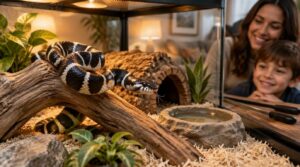
Most California Kingsnakes are food-motivated, hardy pets that stay easy to handle once they settle in. Here’s what to know:
- Feed juveniles every 5–7 days.
- Feed adults every 7–10 days.
- Offer prey no wider than your snake.
- Use tongs outside the enclosure.
- Latch a secure lid every time.
Skip hand-feeding, so your snake won’t mistake your fingers for a meal.
Choosing The Right Family Pet Snake

Picking a snake your family will love starts with a few simple checks. Here are five key factors to weigh before you bring one home. Walk through each one, and you’ll feel confident about the match.
Temperament And Handling
Want a snake your kids can enjoy? Start with docile temperament. Corn snakes are curious and easy to handle, making them family-friendly picks for first-time owners. Ball pythons stay calm, though they’ll curl into a ball when stressed.
Before you choose, a snake species comparison chart can show how temperament, size, and care needs line up side by side.
If you’re eyeing a larger species down the road, compare boa constrictor morph prices first, since rare colors can cost far more upfront.
Watch for hissing or frantic escapes. Wait 48 hours after meals. Keep sessions brief and calm, and gentle handling builds trust.
Adult Size And Manageability
Most family snakes finish growing between 2 and 5 feet. Adult size really matters, because a snake that’s easy to handle at 20 inches can feel huge at four feet.
- Rosy boas: under 1 pound
- Garter snakes: a few ounces
- Corn snakes: 1 to 2 pounds
- Ball pythons: 3 to 5 pounds
Temperament matters: a docile temperament means low-maintenance pets.
Habitat And Enclosure Needs
Picture a Saturday morning: your corn snake has pushed its way out of a loose-lidded tank. Don’t let that happen. Proper housing starts with an escapeproof enclosure and a front-opening door.
Plan your vivarium setup around the species. Choose safe substrate types, like aspen for corn snakes or paper for rosy boas. Then build a temperature gradient with two hides.
Feeding And Nutrition
Feeding your snake isn’t complicated. It just needs a plan. Good snake nutrition starts with prey size matching: offer prekilled rodents no wider than 1.5 times your snake’s thickest point.
Feeding schedules change, too. Hatchling corn snakes eat every 5 to 7 days, while adults slow to every 10 to 14. Give your snake a quiet digestion period before handling.
Lifespan And Care Commitment
Your snake could outlast your kid’s school years. That’s the point.
Every snake lifespan shapes your commitment:
- Garter snakes: 8 to 12 years.
- Corn snakes and kingsnakes: 15 to 20 years.
- Rosy boas: 20 to 30 years.
- Ball pythons: 20 to 30 years, sometimes beyond 40.
Proper care makes these familyfriendly, beginnerfriendly pets true longterm companions.
Setting Up a Family Snake Enclosure
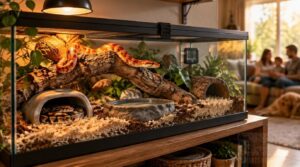
You’ve picked your snake. Now give it a home that feels safe and works right from day one.
Start with the snake enclosure itself. A hatchling does fine in a 20-gallon long tank. Adults need at least a 40-gallon breeder or a 36x18x18 inch setup. A good rule: the length should equal two-thirds of your snake’s adult size. Snap on a locking screen lid, since a secure enclosure keeps curious escape artists inside.
Next, build temperature gradients. Keep the warm side at 85 to 90°F and the cool side at 75 to 80°F. Nights can drop to 70 to 75°F.
Watch humidity levels with a hygrometer. Corn snakes and kingsnakes like 40 to 60%. Ball pythons want 50 to 60%, and 70% during shed.
Finish your reptile enclosure setup with two hides, one warm and one cool. Add branches or cork bark. Skip cedar and pine.
Safe Snake Handling and Trust-Building With Children

Your enclosure is ready, so let your snake settle in. Give it one to two weeks before the first handling session. That quiet time helps it feel secure.
Corn snakes, ball pythons, and other nonvenomous snakes make childfriendly pets, but handling safety starts with you. An adult must supervise every session. Kids under five should only watch.
Follow these steps for gentle handling:
- Wash your hands with unscented soap, then dry them well.
- Support the snake’s full body with both hands, close to a soft surface.
- Stop after 10 to 15 minutes.
Watch the snake’s body language. Hissing, flattening, or fast movement means it’s stressed. Return it to its enclosure. Skip handling during shed.
Calm sessions build snake bonding fast.
Planning Your Family Snake’s Lifelong Care

Your snake can be part of your family for 20 years or more. A simple lifelong care plan keeps your snake healthy and your kids safe. Here’s what you’ll need to know about feeding, daily checks, costs, and who is responsible for which jobs.
Species-Specific Feeding and Nutrition
Aim for prey weighing about 10% of your snake’s body weight. That one number shapes every pet snake diet.
Feeding prekilled rodents is safer and simpler. Frozen-thawed mice supply complete nutrition without parasite risk. Ball pythons and rosy boas eat every 10 to 14 days.
Garters have feeding options. Mix mice, earthworms, and fish for proper care and snake health.
Daily Checks and Cleaning Routines
Feeding is only half the routine. Your snake needs a quick daily check too.
Start with snake health monitoring. Look for clear eyes, a clean nose, and steady tongue flicks. Swelling or discharge means a vet visit.
Next, spot clean. Remove feces and urates within 24 hours, refill the water bowl, and check temperature monitoring and humidity monitoring.
Lifespans, Costs, and Veterinary Care
Most family snakes live 15 to 20 years, so you’re making a long promise. Plan on annual vet checkups with an exotic veterinarian, usually $50 to $100.
Weigh adults monthly to track snake growth rate.
- Years of happy shared memories
- Pride in your snake’s steady growth
- Calm from snake health monitoring
- Relief when vet care for reptiles catches trouble early
Children’s Tasks and Adult Responsibilities
Every family member has a role in your snake’s care, and that’s what makes childsafe reptiles so rewarding. Kids ages 5 to 8 watch feedings and mist water. Ages 9 to 12 measure temperatures; teens spot-clean.
Adults handle all prey, medications, and heating gear. It’s great for teaching responsibility, and firsttime owners gain confidence. Supervise handling techniques and proper care.
Frequently Asked Questions (FAQs)
What is the friendliest snake to own as a pet?
A snake curled in your palm is trust, coiled and quiet. Among Friendly Snake Breeds for Families, Corn Snakes win. They’re docile and curious.
Ball Pythons, Garter Snakes, and Western Hognose Snakes follow close behind.
Which snake is the most friendliest?
Hands down, the friendliest snake on Earth is the Corn Snake. Its calm temperament stays steady from snake to snake.
A Ball Python, Garter Snake, or Western Hognose Snake can’t quite match that gentle consistency.
Which pet snake is the cuddliest?
Zero snakes feel affection for you, so cuddly really means warm. Ball Pythons wrap around your arm for heat. Corn Snakes, Rosy Boas, Garter Snakes, and Western Hognose Snakes just explore calmly in your hands.
What is the lowest maintenance snake?
Adult corn snakes eat just once every 1–2 weeks, making them your best pick among lowmaintenance pets.
Ball pythons need extra humidity, and garter snakes want water access. With proper care, corn snakes stay easy.
Since enclosure, heating, and humidity gear add up fast, this snake habitat setup cost breakdown helps you budget for a secure, properly sized home before bringing your snake home.
What is the friendliest snake breed?
Worried the friendliest snake might bite? Corn Snakes rarely do. Among Friendly Snake Breeds for Families, they’re your top pick.
Ball Pythons follow, while Garter Snakes and Western Hognose Snakes suit watching more than handling.
Which snake is most human-friendly?
A Ball Python is your calmest bet. Its Temperament stays mellow, and it curls up instead of striking. Corn Snake hatchlings nip at first. Among Friendly Snake Breeds for Families, it’s the top Beginner pick.
What is the best pet snake for a child?
Your best bet is a Corn Snake. It’s gentle, hardy, and easy to handle.
A calm Ball Python or small Rosy Boa works too. Garter Snake and Western Hognose Snake suit watching more than holding.
Which snakes like to be handled?
Wait 48 hours after meals before handling any snake. Corn Snakes and Ball Pythons enjoy calm sessions, and their gentle temperament suits every beginner. Use side support and short sessions. These handling techniques build trust.
Can snakes carry salmonella to children?
Yes, they can. Any of your pet snake breeds may carry Salmonella without looking sick. Kids catch it by swallowing bacteria from hands or surfaces. Practice solid reptile hygiene, wash up after handling, and keep children under 5 supervised.
How should families find a reputable snake breeder?
Finding a breeder is like hiring a mechanic: you check the shop before you hand over the keys. Ask for captive breeding records, lineage, and feeding logs. Visit in person, and walk away from any pressure.
Conclusion
Picture Maya, age nine, feeding her corn snake on Saturday mornings while her dad checks the heat lamp. Nobody panics. Everybody knows their job.
That’s what the right pet looks like. Among the friendly snake breeds for families, the best match is the one your household can care for every week, for decades. Choose a calm species, build the enclosure properly, and handle gently. Your child gets a companion, and you get peace of mind.