This site is supported by our readers. We may earn a commission, at no cost to you, if you purchase through links.

Your ball python can sit in a perfectly warm enclosure and still develop a respiratory infection. The culprit is often stagnant air, not temperature. A snake breathing damp, motionless air for weeks will start wheezing, and by the time you hear it, the infection has already taken hold.
Ventilation needs in ball python terrariums trip up even careful keepers because two goals pull against each other: you want humidity at 70-85% on the cool end, yet you need air moving through the enclosure to keep it from turning into a bacterial swamp.
Here’s how to place vents, balance moisture, and spot trouble early.
Table Of Contents
- Key Takeaways
- Choose a Well-Ventilated Ball Python Enclosure
- Set Up Safe Cross-Ventilation
- Balance Ball Python Humidity With Airflow
- Monitor Ventilation and Spot Airflow Problems
- Keep Ball Python Enclosure Vents Clean
- Frequently Asked Questions (FAQs)
- How much ventilation does a terrarium need?
- Can I put a humidifier in my ball python enclosure?
- Is 70% humidity too high for a ball python?
- How hot is too hot for a ball python enclosure?
- How does poor ventilation affect ball python shedding?
- How do seasonal changes affect terrarium ventilation needs?
- What are the signs of poor ventilation in snakes?
- How should ventilation change for baby ball pythons?
- Conclusion
Key Takeaways
- Stagnant, damp air can give your ball python a respiratory infection even when the temperature is perfect, so wheezing, bubbly nostrils, or open-mouth breathing means you need to fix airflow right away.
- You’ll get steady, draft-free airflow by placing intake vents low on one wall and exhaust vents high on the opposite wall, and by covering most of any mesh top with foil or HVAC tape, since uncovered mesh lets heat escape and dries the enclosure out.
- You can keep humidity at 70-85% on the cool end without creating a swamp by using properly moistened substrate like cypress mulch or coconut fiber, and by opening up the airflow whenever you see lingering condensation.
- You’ll catch problems early by putting a humidity sensor at each end of the enclosure, checking your vents by hand every week, and wiping away urates and dust that clog them.
Choose a Well-Ventilated Ball Python Enclosure
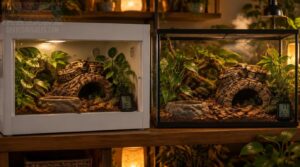
Your ball python’s airflow starts with the enclosure itself, long before you drill a single vent. The material you pick decides how well your setup controls airflow and humidity. Here are the two main options and what each one means for your snake’s health.
Whichever material you choose, plan your vent placement and substrate depth around it, and this ball python enclosure setup guide shows how to balance both.
Glass Tanks and Screen Tops
Mesh lids on Glass Tanks and Screen Tops leak heat and moisture fast, so they need work before they deliver proper ventilation. Cover most of the screen with foil tape or plexiglass, but leave a strip open. Airflow patterns stay vertical only, so vent placement matters. Switching to an enclosure with superior PVC insulation can also trap heat and moisture far better than glass with a mesh top.
- Humidity drops between mistings
- Substrate dries unevenly
- Heat escapes upward
- Lids need clips
PVC and Melamine Enclosures
PVC enclosures fix most of what glass gets wrong. They hold heat and moisture, so humidity control gets easier and you’ll mist less often. Airflow patterns still matter, though. Without proper vent placement, stale air pools inside.
Once the enclosure is sorted, match your humidity targets to your species, since a ball python and a rainbow boa need very different ranges, and this species-specific snake humidity guide breaks down the numbers.
Melamine works too, but it soaks up water and swells. Seal every seam and edge. Either way, check your temperature gradients before you trust the setup.
Set Up Safe Cross-Ventilation
Good airflow in your ball python’s enclosure doesn’t happen by accident, and the setup you choose affects your snake’s breathing every single day. Below, you’ll find three parts of cross-ventilation setup to get right: where your vents go and how big they should be, how mesh panels and vent pipes fit in, and whether you actually need a fan.
Work through them in order, and your python gets steady, draft-free air.
Vent Placement and Opening Size
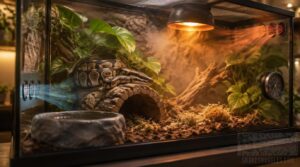
Won’t more vents just dry everything out?" Not if you place them right. Put intake vents low on one wall and exhaust vents high on the opposite wall, so warm air rises and pulls fresh air through on its own.
If you’re unsure how many holes to drill or how big they should be, this guide to ventilation holes in a snake terrarium walks through sizing and spacing so humidity stays stable.
Aim for 10 to 15 square inches of venting per gallon. That keeps your air exchange rate steady without stripping humidity.
Mesh Panels and Vent Pipes
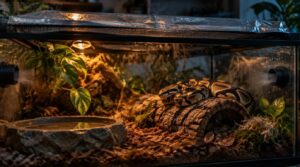
Mesh panels look like a ventilation win, but they backfire fast. Heated air rises through a mesh screen and escapes, pulling dry room air in behind it. Your air exchange rate spikes and humidity tanks.
Mesh panels seem like ventilation wins, but rising heat escapes through them and pulls in dry room air, sending air exchange up and humidity down
Cover 80 to 90 percent of any mesh top with HVAC tape. Then add vent pipes in the walls, which diffuse incoming air and spare your snake direct drafts.
When Fans Are Actually Needed
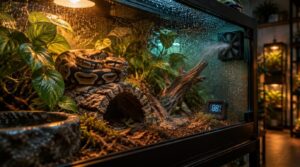
When does a ball python setup actually need fans? Less often than you’d think. Most enclosures under 2×2 feet get proper ventilation from passive vents alone. Add supplemental fans only when condensation lingers for hours, the air feels stagnant, or a large sealed PVC enclosure stays damp.
Since airflow also pulls moisture out of the enclosure, it helps to balance vents and fans against your humidity targets using this ball python humidity setup guide.
Your snake’s breathing tells you the rest. Wheezing in high humidity means airflow management needs work.
Balance Ball Python Humidity With Airflow

How do you keep a ball python’s enclosure humid without turning it into a swamp? You balance the two, and neither one wins outright. Humidity regulation starts with the substrate. Mix water into cypress mulch or coconut fiber until it clumps when squeezed but doesn’t drip. That gives you a steady moisture source, so you don’t have to cut airflow to the bone.
Then set your humidity gradient. Aim for 70-85% on the cool end and about 60% on the warm end, with a matching temperature gradient. Check both ends. A reptile humidity controller can switch a fogger or humidifier on and off automatically, holding your cool-end reading steady while you’re at work.
If humidity drops too fast in a glass tank, cover part of the screen top with foil or acrylic. If you see condensation on the walls, you’ve gone too far, so open it back up. Good airflow management keeps the substrate surface drying, and that moisture dissipation protects your snake from scale rot.
Monitor Ventilation and Spot Airflow Problems
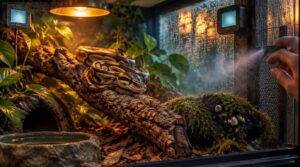
Humidity above 80% with weak ventilation is the point where respiratory infections start climbing, so your humidity sensors deserve a daily glance. Place one at each end of the enclosure, because a single reading hides dead zones.
Next, run a quick vent inspection. Hold your hand at the openings and feel for movement. Look for condensation that’s still clinging to the walls hours later, sniff for ammonia, and check for mold on decor. Those are classic signs that stagnant air is winning.
Watch your snake, too. Wheezing, crackling, bubbles at the nostrils, or open-mouth breathing at rest means you should act fast. Bad sheds count. If problems keep showing up, rethink your enclosure design and focus on stagnant air elimination.
Keep Ball Python Enclosure Vents Clean
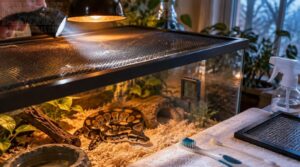
Last winter, a keeper in a glass tank noticed her ball python wheezing slightly. The culprit wasn’t illness. Dust and dried urates had clogged the screen top, choking airflow.
Don’t let that happen to you. Make vent inspection part of every weekly cleaning, and shine a flashlight across the mesh to catch hidden particles.
- Wipe urates off immediately with a damp cotton swab.
- Scrub ventilation components with a soft toothbrush and reptile-safe disinfectant.
- Soak removable covers in 3% bleach for 10 minutes, rinse, and dry.
- Clear shed skin from corners.
Smart enclosure design helps too. Glass tanks need cleaning every 2-4 weeks, PVC monthly. Keep substrate two inches below openings, and let an air quality monitor guide your airflow management.
Frequently Asked Questions (FAQs)
How much ventilation does a terrarium need?
Your python needs fresh air, yet you’re paying to seal it in. Aim for 2-3 air changes per hour, using smart vent placement and crossventilation.
Good airflow management keeps your humidity levels steady between 60-80%.
Can I put a humidifier in my ball python enclosure?
Picture a keeper whose glass tank sits at 45% humidity, so she aims a humidifier straight at it and soaks the substrate. Yes, you can use one, but keep mist off your snake, and pair it with ventilation.
Is 70% humidity too high for a ball python?
Say your hygrometer reads 70% after misting. That’s fine; it sits inside the 60 to 80% range.
Watch substrate moisture retention, air exchange rates, and mold prevention instead, since persistently soggy bedding threatens respiratory health.
How hot is too hot for a ball python enclosure?
Ambient air above 90°F causes heat stress, and sustained readings past 95°F risk burns. Keep your warm side at 88-92°F and your hotspot near 88-90°F, so your snake can always retreat down the temperature gradient.
How does poor ventilation affect ball python shedding?
Your ball python’s last shed came off in patches, and you did everything right. The culprit was poor ventilation. Stagnant dampness causes shedding issues, scale rot, and a respiratory infection risk. Review humidity levels and substrate choice.
How do seasonal changes affect terrarium ventilation needs?
Heated homes in winter often sit at 30-40% humidity, while ball pythons need 50-60%. Your seasonal adjustments matter: cover 70-90% of screen tops in winter, then uncover them in summer when humidity climbs.
What are the signs of poor ventilation in snakes?
Respiratory infection ranks among the top snake ailments vets treat. Watch for stagnant moistureladen air, constant condensation on surfaces, a musty odor, and bubbly nostril mucus. Fix airflow management fast when you see open-mouth breathing.
How should ventilation change for baby ball pythons?
Keep your hatchling’s proper ventilation low and small. Put tiny holes on opposite sides near the substrate, never on top, so humidity levels stay high while air still moves. Open them up as it grows.
Conclusion
Picture a bathroom mirror that never clears, fogged and dripping day after day. That’s life for a snake in stale air.
Getting the ventilation needs in ball python terrariums right comes down to three habits: vent across from each other, let humidity rise without pooling, and check your setup weekly.
Keep fresh air moving and your vents clear, and you’ll never have to diagnose a wheeze. Your python breathes easy tonight, and so do you.