This site is supported by our readers. We may earn a commission, at no cost to you, if you purchase through links.
Cedar shavings smell great, and that’s exactly the problem. The aromatic oils that make them appealing to us can damage a snake’s respiratory tract and liver, and the harm builds quietly over months.
Bedding does more than line the floor of your snake’s home. A sand boa burrows through shredded aspen, a ball python needs coconut husk that holds moisture, and a hognose hides waste in loose layers you can’t see. Good substrate maintenance tips for snake owners start with matching material, depth, and cleaning routine to your species.
Here’s how to choose safe bedding, spot-clean daily, and build a replacement schedule that keeps your enclosure healthy.
Table Of Contents
Key Takeaways
- Skip cedar, pine, scented bedding, clumping litter, and fine sand, and match a safe material like aspen or coconut husk to your snake’s species, at 3 or more inches deep for burrowers.
- Spot-clean every day by scooping waste with a margin of surrounding substrate, and check humidity with a hygrometer so bedding stays damp but never soggy, since wet bedding leads to scale rot.
- Replace substrate on a schedule that fits your species and what you see, roughly every 3 months for tropical snakes and 12 to 18 months for desert ones, sooner if you notice mold, odor, or compacted layers.
- Deep-clean by scrubbing, disinfecting with a reptile-safe solution, rinsing until no residue remains, and air-drying for at least 24 hours, and use plain paper towels during quarantine so mites and waste are easy to spot.
Choose Safe Substrate for Your Snake
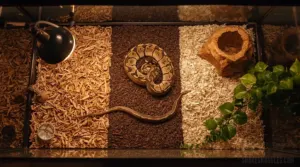
The bedding you choose shapes your snake’s health, comfort, and behavior every single day. Below, you’ll find two points that help you match bedding to species and steer clear of materials that cause harm. Use them to build an enclosure you can keep clean and control with confidence.
If you’re still weighing options, this guide to the best snake bedding compares popular substrates so you can match one to your snake’s species and habits.
Match Bedding to Species and Burrowing
Why does bedding matter so much for cleanliness? Because the right material makes everything else easier.
Start with your snake’s species-specific needs, since an arid sand boa and a tropical ball python want very different setups.
For burrowing species, offer at least 3 inches of substrate, and 4 to 5 inches for larger adults. Shredded aspen suits arid snakes, while coconut husk or cypress mulch holds moisture for tropical ones. Avoid cedar and pine bedding, since their aromatic compounds can damage a snake’s respiratory tract and liver.
A 60/40 coconut fiber and sand mix works well for hognose snakes. Ask a reptile vet when unsure.
Avoid Dusty, Irritating, and Hazardous Materials
Even the right bedding type can cause trouble if it’s the wrong product. Some materials look harmless but quietly work against your snake’s health.
If you’re unsure which products are safe, this buyers guide to bedding for king snakes compares the options so you can pick one that suits your snake.
Skip these four:
- Cedar or pine shavings, which release aromatic oils that irritate airways.
- Scented or deodorized bedding, since added chemicals can trigger respiratory irritation.
- Clumping cat litter, which can cause impaction if swallowed.
- Fine sand, especially for sand boas, since it’s abrasive and risky if ingested.
Choose dust-free bedding when you can, and shake aspen outdoors first before adding it to the enclosure.
Spot-Clean Snake Substrate Every Day
Once you’ve picked the right bedding, daily upkeep keeps it safe. Do a quick visual scan at the same time each morning, and remove waste immediately when you spot it. Scoop feces and urates along with a margin of surrounding substrate, since contamination spreads beyond what you can see.
Pairing this routine with a weekly water bowl wipe-down and a few other best practices for maintaining snake enclosures keeps the whole setup clean without much extra effort.
Inspect feeding areas for refused prey or regurgitated meals, and check for damp areas or shed skin. If you keep a burrower like a hognose on aspen, stir loose substrate to find buried waste.
Done daily, spot-cleaning takes about two minutes.
Maintain Species-Appropriate Humidity Without Soggy Bedding
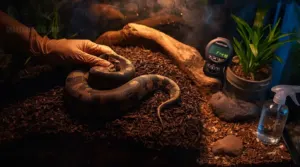
Your morning scan also tells you whether the bedding is too damp, and that’s where humidity regulation starts. Ball pythons do well around 50-60%, corn snakes at 40-60%, and both need a bump during shedding.
Mix water into moisture-retentive bedding like coconut husk or cypress mulch until it feels damp but doesn’t release water when squeezed. Check a hygrometer daily, and fix soggy patches fast, since scale rot follows wet bedding. Your reptile vet can confirm targets for your species.
Replace Substrate and Deep-Clean The Enclosure
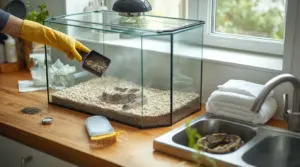
Even with daily spot-cleaning, your snake’s bedding eventually needs a full reset. Knowing when to swap it out and how to clean the enclosure properly keeps bacteria, mites, and odors from building up. Here are the two steps to cover: a flexible replacement schedule and a safe disinfecting routine.
Set a Flexible Substrate Replacement Schedule
Your calendar can’t tell you when bedding has given out, but your snake’s enclosure can. Species matters first: desert snakes may go 12 to 18 months between changes, while tropical species often need a full substrate change every quarter.
Watch the enclosure, not the calendar: how often you replace bedding depends on your snake’s species, from every few months for tropical snakes to over a year for desert ones
Then watch for these signs:
- Bedding that crumbles or won’t hold moisture despite misting.
- Matted, compacted layers that collapse burrows.
- Odors or visible mold that linger after your spot-cleaning routine.
- Damp clumps of shed skin and waste you can’t lift out cleanly.
Bioactive setups usually need only surface top-ups.
Disinfect, Rinse, and Dry Before Refilling
Start by removing every bit of substrate and scrubbing the empty enclosure with hot, soapy water to loosen waste and organic buildup. Then disinfect with a reptile-safe disinfectant, such as a 1:10 bleach dilution or a chlorhexidine solution. Skip ammonia, phenol cleaners, and scented products, since they can irritate your snake’s airways.
Rinse several times with clean water until no film or odor remains. Residue is easy to miss, so don’t rush this step.
Let everything air dry for at least 24 hours, using a fan or open window to help, before you refill.
Simplify Substrate Maintenance During Snake Quarantine
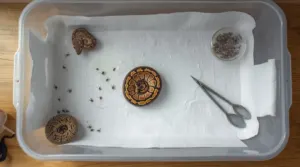
Picture a new ball python arriving from a breeder. You set up a bare tub with paper towels on the floor, and on day two you spot tiny black specks crawling across the white surface. Mites, caught early.
That’s the payoff of plain bedding. Unprinted newspaper works too, and you can swap it daily. Skip loose materials, since they hide pathogens and droppings.
Spot-clean every day, mist the paper lightly to hold humidity, and remove uneaten food within 24 hours. For feeding zone contamination prevention, use dedicated tools only for this tub.
Frequently Asked Questions (FAQs)
What should I do if my snake eats substrate?
Move your snake onto paper towels right away, and gently tweeze out any visible substrate from its mouth. Watch for vomiting, swelling, or no bowel movement within 48 hours, and book a vet check-up if any appear.
How do I deal with substrate mites or gnats?
Let your substrate dry out between mistings, since gnat larvae need moisture to develop. Set yellow sticky traps near the enclosure, remove uneaten food within a day, and add predatory mites. For mites, consult a reptile vet.
Can I reuse old substrate after sifting it?
Why risk your snake’s health to save a little bedding? Sifting only removes debris, not germs, so reuse takes extra steps. Heat it to at least 165°F, and toss anything soiled with urine or feces.
Are bioactive setups practical for snake enclosures?
Bioactive setups can work for snakes, but they’re only practical for some. They suit smaller or arboreal species with low waste output. Heavy-bodied snakes like ball pythons often crush plants and overwhelm the cleanup crew.
Is it safe to mix different substrate types together?
Yes, it’s often safe, as long as the materials suit each other. Aspen with cypress mulch works well, and so does coconut fiber layered under aspen. Skip cedar and pine, and avoid mixing materials with very different moisture retention.
What is a good DIY substrate for snakes?
Funny how the "natural" dirt in your yard is the worst pick. Mix 40% organic topsoil, 40% ReptiSoil and 20% play sand instead. Add sphagnum moss for humidity, and top it with leaf litter.
Conclusion
Choose the bedding, scoop the waste, and keep the humidity steady. Those three habits carry most of the weight in any set of substrate maintenance tips for snake owners, and none of them take much time once they become routine.
Your snake can’t tell you when its bedding has gone stale, so watch for damp patches and lingering odor. If something seems off, ask a qualified reptile veterinarian. Keep the enclosure clean, dry, and ready.