This site is supported by our readers. We may earn a commission, at no cost to you, if you purchase through links.
That cedar-scented bag at the pet store smells great. It will also inflame your king snake’s lungs and damage its liver.
King snakes burrow, shed, and swallow whatever sits in their mouths during a strike. So bedding choice decides more than looks. Sand and walnut shells risk impaction. Pine and cedar oils irritate airways. Dusty chips turn every cleaning day into a respiratory hazard, and humidity swings can leave you with a stuck shed.
This buyers guide bedding for king snakes compares four safe substrates, three aspens and one coconut husk, by dust, moisture, and cost per quart. Your snake’s next burrow starts here.
Table Of Contents
- Key Takeaways
- Top 4 King Snake Bedding Products Compared
- Safe King Snake Bedding Types and Substrates to Avoid
- King Snake Bedding Buying Factors: Dust, Humidity, and Cost
- King Snake Bedding Depth: How Much Substrate to Buy
- King Snake Bedding Care: Cleaning, Mold Prevention, and Replacement
- Frequently Asked Questions (FAQs)
- What bedding is best for kingsnakes?
- What not to use for snake bedding?
- What is the recommended bedding for snakes?
- What to put in a king snake enclosure?
- What is the best substrate for Brooks kingsnake?
- What are some alternatives to traditional bedding options for king snakes?
- How often should I change the bedding in my king snake’s enclosure?
- How often should I change king snake bedding?
- Can I mix different substrate types together?
- What bedding depth works best for burrowing?
- Conclusion
Key Takeaways
- Skip cedar, pine, sand, walnut shells, and scented bedding, since their oils, chemicals, or impaction risk can seriously harm your king snake’s lungs, liver, and gut. For safer options that hold humidity without risking your snake’s health, browse these beginner-friendly terrarium substrate mixes built around cypress mulch, coconut fiber, and organic topsoil.
- Aspen is your best all-around pick for its low dust and easy cleanup, while coconut husk is the better choice when you need steady 40 to 60 percent humidity for clean sheds.
- Give your snake 3 to 4 inches of bedding so it can fully burrow, and compare price per quart rather than bag price, because ReptiChip at about $0.49 beats T-Rex at $2.40 for larger enclosures.
- Spot clean daily and swap out all the bedding on a regular schedule, or sooner if you smell ammonia or see mold, to keep respiratory problems away.
Top 4 King Snake Bedding Products Compared
Your king snake’s bedding does more than cover the floor of the tank. These four picks are all safe king snake substrates, so you won’t be gambling with cedar oils or dusty sand. Here’s how they stack up, one product at a time.
If you’re keeping your snake in a small apartment, this guide to snake bedding for apartment living explains which options keep odor and moisture under control.
1. T Rex Aspen Terrarium Substrate
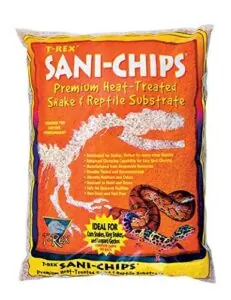
The T-Rex aspen substrate is the no-fuss pick for king snake keepers who want clean, simple maintenance. It’s made from renewable aspen wood chips, and it’s light, scent-free, and virtually dust-free, so your snake’s airways stay happy.
It’s also highly absorbent, which helps cut enclosure odors. The scoopable texture works like cat litter, so you can lift out waste without tearing the whole setup apart. Plan on 1-2 quarts per 10 gallons of tank space. Chips are a lower impaction risk than sand if your snake swallows a bit by accident, and they let your king snake dig around a little.
One catch. This isn’t ideal for species needing stable tunnels, and feeder insects like mealworms can burrow and hide. Spot cleaning helps, but you’ll need a full replacement every few months.
- Light, scent-free, and virtually dust-free, and made from renewable aspen wood chips.
- Highly absorbent and scoopable like cat litter, which makes waste removal easy and helps reduce enclosure odors.
- Lower impaction risk than sand if accidentally swallowed, and it supports natural digging in some reptiles.
- Not ideal for burrowing species that need stable tunnels.
- Feeder insects like mealworms can burrow and hide in it.
- Needs a full replacement every few months, even with regular spot cleaning.
2. Zoo Med Aspen Snake Bedding
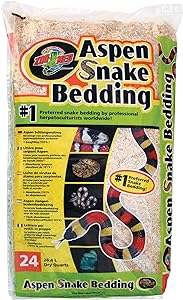
Zoo Med Aspen Snake Bedding is the one that just works. It’s made from 100% aspen shavings, with no cedar oils and no resins, so it’s safe for reptiles and gentle on your king snake’s lungs and scales.
Dustfree bedding matters more than most keepers realize. Low dust production means fewer airway irritants for your snake and for you during cleanouts.
If you’re weighing options, a clear breakdown of the differences between snake bedding types shows how dust levels, moisture retention, and odor control vary from one substrate to the next.
Then there’s the 191% absorbency rating. Moisture gets locked away fast, so the surface stays dry and odors stay under control. Wet spots clump, which makes spot cleaning quick. The 24-quart bag fills tanks up to 70 gallons and weighs about 5.35 lbs. Your king snake can also burrow in it, which it’ll love.
Heat treatment removes pests, too. Simple and hard to beat. Professional herpetoculturists worldwide prefer this aspen bedding for their snakes, and Zoo Med has been supplying reptile products for over 40 years.
3. Galapagos Aspen Digs Bedding
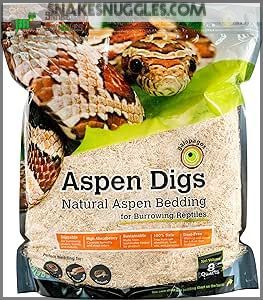
Zoo Med sets the bar, but Galapagos Aspen Digs Bedding is a solid rival. It’s 100% pure aspen with no added chemicals, oils, or resins, and it’s processed to strip out dust and debris before it reaches your enclosure.
Your king snake will love it. The lightweight texture is made for burrowing, tunneling, and nesting, and it won’t scrape scales. Absorbency is strong, so odors stay down and the habitat stays dry. Spot cleaning is easy, and so is a full change.
Now the fine print. Some keepers report inconsistent dust levels, with batches ranging from low to very dusty. Check each bag. Several buyers also say the 8QT size runs smaller than expected, so grab the 24QT if you’ve got a larger enclosure.
It’s also not a humidity holder. Need higher moisture? Look elsewhere instead.
- Made from 100% pure aspen with no added chemicals, oils, or resins
- Lightweight texture supports natural burrowing, tunneling, and nesting
- Strong absorbency and odor control keep the habitat clean and dry
- Dust levels can be inconsistent, with some batches turning out very dusty
- The package may be smaller than expected
- Doesn’t hold enough humidity for reptiles that need a moister environment
4. ReptiChip Coconut Substrate Block
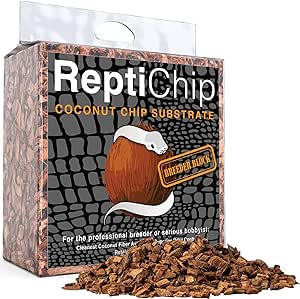
Galapagos won’t hold moisture, but the ReptiChip Coconut Substrate Block will.
For classroom terrariums, this coconut block pairs well with the snake substrate and bedding options for classroom reptile habitats that keep humidity steady and upkeep simple.
This coconut husk bedding is the odd one out here, and it earns its spot. One 10 lb block expands into roughly 72 quarts of dust-free chips, enough to fill a big enclosure several inches deep. Just add water.
The chunky chips invite burrowing, soak up odors, and keep humidity between 40-60% without turning soggy. That range helps with clean sheds. Skip the soupy mess, though. Damp, never wet.
Freeze the block for a few days before use. It kills hitchhiking insects without chemicals.
Maintenance is simple. Spot clean daily, and stir the chips so moisture stays even. Plan a full substrate swap every few months, sooner if you smell ammonia or spot mold. One block can refill multiple setups, so your wallet gets a break too. That’s the whole routine, really.
Safe King Snake Bedding Types and Substrates to Avoid
Several popular bedding choices can quietly hurt your snake, so stick to nontoxic bedding materials only. Respiratory health in reptiles depends on what’s under their belly, and a bad pick shows up fast.
Skip these four:
- Cedar and pine shavings: aromatic oils irritate lungs and damage the liver.
- Sand, walnut shells, and gravel: swallow one mouthful and you risk impaction.
- Scented or deodorized bedding: added chemicals cause toxicity in a closed enclosure.
- Soil with fertilizer, pesticide, or perlite: toxic, so use only additive-free reptile soil.
Dry coconut fiber is borderline. Sift it, or choose dustfree bedding instead.
Whatever you pick, it must allow substrate depth for burrowing and support humidity regulation for snakes. Safe always beats stylish every single time.
King Snake Bedding Buying Factors: Dust, Humidity, and Cost
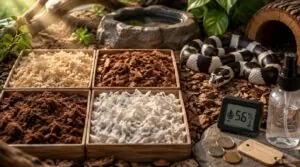
Picking bedding isn’t just about grabbing the cheapest bag on the shelf. Three factors separate a safe, healthy setup from a headache: dust levels, humidity control, and cost. Here’s what to weigh before you buy.
Dust And Respiratory Safety
Dust is the silent troublemaker in any king snake tank. Your snake burrows, and every dig sends fine particles into the air it breathes.
Dustfree bedding protects respiratory health in reptiles. Choose low dust production aspen, shake it out first, and keep airflow steady. That’s real dust inhalation prevention. Bonus: good aspen helps with odor absorption, too.
Humidity And Moisture Retention
Picture a corn-colored California kingsnake that spends a week stuck in a half-finished shed because the aspen never held any moisture. Sound familiar?
Aim for humidity between 4060. Coir holds it best, but over-misting turns it soggy, so strike a moisture retention balance and let the top layer dry. Add a damp sphagnum hide for shedding season adjustments.
Cost And Coverage
The sticker price lies, but the price per quart tells the truth. A cheap bag isn’t cheap if you need four.
A cheap bag of bedding isn’t a bargain if you need four, so judge by price per quart
Cost per quart, ranked:
- T-Rex: $2.40
- Zoo Med (24 quarts): $1.11
- Galapagos (24 quarts): $0.96
- ReptiChip (72 quarts): $0.49
Filling 10 quarts with T-Rex costs about $24. Skip it. For big enclosures, ReptiChip wins easily. Your wallet says thanks.
King Snake Bedding Depth: How Much Substrate to Buy
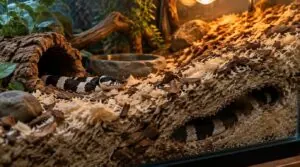
Think your kingsnake will be fine on a thin dusting of bedding? Think again. Substrate depth for burrowing is what turns a nervous, exposed snake into a calm one.
Aim for 3 to 4 inches. Anything under 2 inches dries out fast and gives no real cover.
Here’s your quick checklist:
- Go 2 inches minimum, 3 to 4 inches ideal, so your snake can fully submerge.
- Slope the bedding deeper on the cool end.
- Buy 10 to 20 percent extra for settling.
- Match substrate particle size to the snake. Fine chips suit baby snake substrate depth at about 2 inches.
- Fluff weekly for substrate compaction prevention.
A 4’x2′ enclosure at 2 inches needs roughly 40 quarts. Double the depth, double the bag count.
Good depth is burrowing behavior support you can actually see working.
King Snake Bedding Care: Cleaning, Mold Prevention, and Replacement
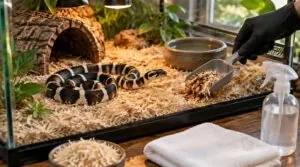
Waste doesn’t stay put. It seeps into bedding and turns a tank into a germ farm.
Spot clean daily. Scoop feces, urates, shed skin, and soiled bedding, then dry the spot before adding fresh substrate.
Spills need the same urgency. Check under the water bowl and hides, because damp patches hide there. Never bury wet bedding under dry material.
| Task | When |
|---|---|
| Spot clean | Daily |
| Check under bowl | Daily |
| Replace wet patches | Immediately |
| Full substrate swap | Every few weeks |
Mold prevention starts with dry floors and good airflow.
Follow enclosure hygiene practices: use a reptile-safe disinfectant, never mix chemicals, and dry everything. Your substrate replacement schedule changes if bedding turns moldy, stays damp, or gets soiled. Toss it, don’t reuse it.
Frequently Asked Questions (FAQs)
What bedding is best for kingsnakes?
Think cedar smells fresh, so it’s fine? Nope. Its oils irritate lungs. For substrate safety for reptiles, choose aspen shavings. Coconut husk bedding, cypress mulch, or paperbased bedding work too.
Aspen wins for most kingsnakes.
What not to use for snake bedding?
Skip cedar and pine shavings. Their aromatic oil toxicity irritates lungs and can harm the liver. Also avoid sand and charcoal, cat litter, and anything treated with insecticide. Your king snake deserves better than a gamble.
What is the recommended bedding for snakes?
For king snakes, go with aspen bedding. It’s safe for reptiles, and its low dust production protects their lungs. Want more humidity and burrowing behavior? Choose coconut husk substrate. Skip pine and cedar.
What to put in a king snake enclosure?
A king snake spends most of its life tucked out of sight, so build for that. Start with aspen shavings, dust free and loose, at four inches for burrowing depth. Add a hide, water bowl, and humidity regulation basics.
What is the best substrate for Brooks kingsnake?
Wondering what your Brooks kingsnake will actually thrive on? Aspen shavings win. They suit arid setups, cushion delicate scales, and allow a proper burrowing depth. Compare cost per quart, then spot clean daily.
What are some alternatives to traditional bedding options for king snakes?
Your enclosure is a tiny habitat, so stock it like one. Try coconut fiber bedding or coconut husk chips for burrowing, add natural leaf litter, and consider bioactive cleanup crews. They’ll protect terrarium air quality.
How often should I change the bedding in my king snake’s enclosure?
Picture clean bedding as fresh sheets, not a swamp. Your substrate replacement schedule is every one to two months. Spotcleaning daily keeps enclosure hygiene tight.
Smell ammonia or see mold? Swap it all out immediately.
How often should I change king snake bedding?
Spot clean daily, and plan a full substrate replacement schedule of every 3 to 4 months. Smell something sour or see soggy patches? Swap it sooner. Dirty bedding invites respiratory health problems, so don’t gamble.
If you’re still deciding what to put in the tank, these terrarium substrate mixes for ball pythons hold humidity well and make cleanups much easier.
Can I mix different substrate types together?
Yes, you can mix substrates, and aspen with coconut husk is a smart pair. Use a substrate change method: add the new material gradually while you watch your snake. Keep moisture control tight, and spot-clean often.
What bedding depth works best for burrowing?
Aim for 4 to 6 inches. Two to three inches is the bare minimum, but substrate depth for burrowing improves with more. Use natural burrowing substrate, add leaf litter for habitat enrichment. Watch them vanish.
Conclusion
Keep humidity between 40 and 60 percent, and most bedding problems vanish before they start. Aspen controls that range easily, while coconut husk holds moisture for shed time. Pick one, skip the cedar, and you’ve already beaten the pet store shelf.
Use this buyers guide bedding for king snakes as your shopping list, not your homework. Spot clean weekly, replace monthly, and watch your snake disappear into its new burrow, calm, content, and breathing easy.