This site is supported by our readers. We may earn a commission, at no cost to you, if you purchase through links.

Your ball python glides across the couch, tastes the air near your hand, and settles into your lap without a single defensive coil. It feels like love. Your snake seems to know you, seek you out, even relax in a way it never does with strangers.
But here’s the catch: a snake’s brain lacks the wiring for affection the way yours does. So what’s actually happening when your snake calms down around you and not your roommate?
The answer to can snakes love their owners comes down to biology, not sentiment, and it’s more fascinating than the romantic version.
Table Of Contents
- Key Takeaways
- Can Snakes Love Their Owners? Not Like Humans Do
- Do Snakes Recognize Their Owners?
- What Emotions Can Snakes Feel?
- Signs Your Snake Trusts You
- How to Build Trust With Your Snake
- Frequently Asked Questions (FAQs)
- Is it possible for snakes to feel love?
- Do snakes like to be petted?
- Are snakes aware of their owners?
- Can you tell if a snake likes you?
- Can snakes form a bond with their owners?
- Do snakes know their owner’s name?
- How do snakes show affection towards their owners?
- Can snakes recognize their owners based on their appearance?
- Are snakes capable of feeling emotions towards their owners?
- What do snakes eat in captivity?
- Conclusion
Key Takeaways
- Your snake doesn’t love you the way a dog does, since it lacks the brain wiring for real emotional attachment, but it can build genuine trust through repeated, calm interactions.
- Snakes recognize you mainly through scent, using tongue flicks and their Jacobson’s organ to pick up your unique chemical signature, along with signature, along with vibration cues from your footsteps and movement.
- Signs like slower tongue flicks, relaxed muscles, steady breathing, and voluntary exploration of your hands all show your snake feels safe with you, not that it feels affection.
- You can build trust by keeping handling sessions short and consistent, supporting your snake’s whole body, avoiding handling after meals or during shedding, and adjusting to your snake’s individual temperament.
[/body, avoiding handling after meals or during shedding, and adjusting to your snake’s individual temperament.
Can Snakes Love Their Owners? Not Like Humans Do
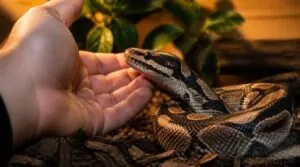
If you’ve ever wondered whether your snake loves you back, you’re asking a question science can actually help answer. The truth sits somewhere between wishful thinking and cold biology, and it’s worth understanding before you read too much into that head bump. Here’s what the research says, broken down piece by piece.
The Science-Based Answer
So does your snake love you? Not the way a dog does, but that doesn’t mean nothing’s happening between you two.
What you’re picking up on is real, just different—learning how snakes actually show affection can help you recognize the subtle ways your snake bonds with you.
What snakes have is scent association and learned behavior, built through chemical cue processing and vibration detection. Positive handling teaches recognition over time.
- Calmer coiling
- Slower tongue flicks
- Relaxed body language
That’s trust building, not romance.
Love Versus Reptile Trust
Love implies emotion. Trust is learned behavior, built through routine and scent association, not feeling.
| Love (Mammal Bond) | Trust (Reptile Response) |
|---|---|
| Emotional attachment | Owner interaction patterns |
| Limbic-driven | Instinct-driven |
| Felt | Learned |
Your snake isn’t loving you, it’s recognizing predictable, safe patterns. That’s trust through routine, and it’s still worth building.
Familiarity is Not Affection
Here’s the thing that trips people up: recognizing you isn’t the same as loving you. Your snake learns your scent recognition pattern, ties it to safety, and calms down around you. That’s a learned behavior pattern, not affection. Its emotional capacity is limited, so what looks like bonding is really routine handling trust built through repetition.
Spotting stress early, like a hiss that grows louder when you grip midbody, is easier with this guide to corn snake body language.
Recognizing you isn’t loving you: a snake’s calm is learned safety through scent, not real affection
- Scent-based recognition over facial memory
- Learned safety cues from repeated handling
- Reduced defensive strikes near familiar people
- Owner association tied to feeding routines
- Calm behavior signaling acceptance, not love
What Bonding Means for Snakes
So what does bonding actually look like here? It’s learned trust, built through routine, not romance. Regular gentle handling, predictable timing, calm environments, these create scent recognition and stress reduction patterns over weeks. Your snake isn’t falling for you. It’s learning you’re safe, one consistent visit at a time.
Snakes can recognize owners through scent association rather than visual facial recognition, which helps habituation and comfort during handling. scent association recognition
Do Snakes Recognize Their Owners?
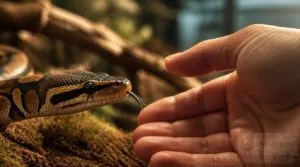
So if snakes can’t feel love the way we do, how do they know you from a stranger? The answer comes down to sharp senses working together, not sentiment. Here’s what actually helps your snake tell you apart from everyone else.
Your snake’s ability to recognize your scent over time is one reason low-maintenance species like corn snakes make such rewarding, easygoing pets for handlers of any experience level.
Scent and Tongue Flicking
That flicking tongue is doing more work than you’d think. Your snake picks up chemical traces every time it flicks, feeding info to its chemosensory capacity for scent discrimination. Flicking speeds up near familiar things:
- Faster flicks near you
- Slower near strangers
- Calmer body language
- Better scent memory
- Reduced startle response
The Jacobson’s Organ
Behind that flicking tongue sits the real workhorse: the Jacobson’s organ, tucked in the roof of your snake’s mouth. Chemical particles travel there through paired ducts for analysis.
| Structure | Location | Job |
|---|---|---|
| Tongue | Mouth/air | Collects scent |
| Ducts | Palate | Transfers particles |
| Jacobson’s organ | Nasal cavity | Processes signals |
This vomeronasal system drives scent recognition, turning owner interaction into genuine, learned behavior.
Detecting Familiar Vibrations
Since snakes lack outer ears, they rely on their jawbone vibration detection, feeling ground tremors through bone straight to the inner ear. Vibration sensitivity peaks below 50 Hz, and substrate transmission effects matter too: soft soil carries your footsteps clearly, while hard floors blur them.
Combined with scent recognition, these temporal vibration patterns help your snake learn your particular approach through habituation.
Distinguishing Familiar Handlers
How does your snake know it’s you and not a stranger reaching in? Through scent recognition patterns, silhouette, and pace. Familiar handler ID relies on:
- Consistent skin chemical signature
- Predictable movement and clothing
- Regular routine timing
- Individual tolerance built through repeated contact
Handler consistency shapes calmer reactions, since learned behavior, not name recognition, drives this reptile owner association.
Learning Positive Associations
Trust doesn’t happen overnight, it’s built one calm handling session at a time. This is habituation in action: gentle touch, paired with food association and predictable routines, teaches your snake that your presence means safety, not danger.
Scent recognition deepens with each visit. Slowly, voluntary approach behavior replaces hiding, proof that positive reinforcement really does shape learned behaviors over time.
What Emotions Can Snakes Feel?
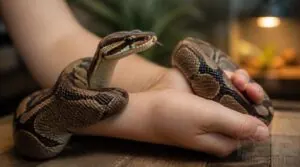
So if snakes aren’t loving you in the way a dog might, what exactly are they feeling? The truth is more limited than most people expect, but it’s still worth understanding. Here’s a closer look at the emotional range your snake actually has.
Instincts Versus Complex Emotions
Not every reaction in a snake’s day comes from feeling something. Many are pure instinct versus emotion: automatic, fast, wired in from birth, like heat sensing or predator avoidance.
Complex emotions need bigger neural networks and real experience behind them. Snakes mostly run on simple feelings tied to safety or appetite, not reflective moods, which highlights the real emotional complexity gap between reptiles and mammals.
Fear and Defensive Responses
Fear and aggression show up fast when a snake senses danger. Looming shadows or sudden movement can trigger a startle response in under half a second, sparking a flight reflex, quick retreat, or a warning strike aimed at your hand rather than real injury.
Threat perception drives it all, not malice, so respect those defensive biting triggers and give your snake space to calm down.
Stress and Contentment
Once that startle response fades, cortisol levels take time to recover, sometimes minutes, sometimes longer depending on the snake.
Calm, relaxed motion, steady basking thermoregulation, and normal appetite all signal contentment. Watch for steady breathing too. Stress shows up as restlessness or hiding, often tied to poor enclosure humidity or inconsistent routines that disrupt habituation.
Pain Perception in Snakes
Snakes do feel pain. Nociceptive receptors in their skin detect heat, pressure, and chemical irritants, sending signals through substance P signaling to the spinal cord and brainstem.
This triggers pain reflexes like sudden withdrawal or guarding an injured area. Thermal sensitivity helps snakes distinguish damaging heat from warmth. With proper analgesic response, opioid-based treatment eases discomfort, something vets increasingly recognize in reptile care.
Limits of Snake Expression
No eyelids, no facial muscles, no way to smile or frown. That’s why reading a snake’s face for love just doesn’t work.
Body language shows arousal, not affection. Coiling or stillness reflects temperature or safety, not emotional bonding. Recognition happens through scent, not personal attachment. Solitary by nature, snakes avoid prolonged contact. Their expressions stay functional, guided by instinct rather than complex feeling.
Signs Your Snake Trusts You
Even without words, your snake tells you exactly how it feels about you. You just need to know what to watch for. Here are the clearest signs that trust is building between you two.
Calm, Unhurried Exploration

Watch the pace, not the panic. A trusting snake explores with voluntary movement, unhurried and curious, tongue flicking gently as it gathers cues.
- Relaxed posture, no tensing
- Gentle tongue flicks, not rapid bursts
- Steady, purposeful pacing
Quiet rooms and slow handling cues help this calm rhythm settle in naturally.
Relaxed Muscles and Breathing
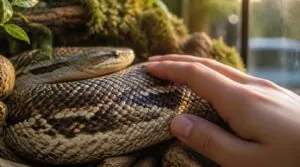
Place a hand gently along its side and feel for calm muscle tone, no tension, no tremor.
A trusting snake keeps breathing rate calm, around 6 to 12 breaths per minute, with even chest movement on both sides. The jaw and throat stay soft, letting the glottis open smoothly instead of forcing air. That steady rhythm, paired with a relaxed body, tells you it feels safe.
Voluntary Handling Behavior
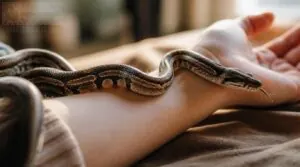
A confident escape artist would be racing off your arm, but a trusting snake does the opposite. It explores your hands and sleeves at its own pace, showing voluntary movement rather than fleeing.
This comes from gradual introduction and consistent interaction, short sessions with gentle contact in a calm environment. Over time, that habituation process turns your hands into safe, familiar territory.
Trust Versus Stress Signals
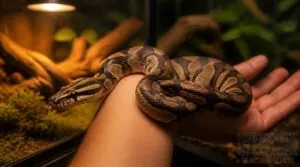
Body language tells the real story. Relaxed posture and slow, smooth movement mean your snake feels safe with you.
Stress looks different: tense coils, jerky retreats, or repeated musking. Watch for reduced strikes and calm exploration instead, these are learned trust signals built through consistent interaction and familiar scent, not random luck or fearlessness.
Healthy Contentment Indicators
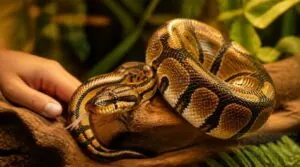
A content snake looks good all over, not just calm during handling. Check for clear eyes alert, steady breathing rate, and smooth muscle tone.
Three signs matter most:
- Coiled body posture without tension
- Regular feeding response and shedding
- Gentle tongue flicks during calm behavior
These add up to genuine relaxed posture and voluntary movement, your snake’s version of feeling settled and secure.
How to Build Trust With Your Snake
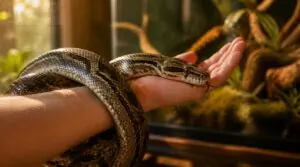
Trust isn’t something you can rush with a snake, but it is something you can build with the right habits. Small, consistent choices in how you handle and interact with your snake add up over time. Here’s what actually helps.
Start With Short Sessions
Rushing trust is like rushing a friendship, it just doesn’t work. Keep sessions to 1 to 3 minutes, watching for calm behavior before ending on a good note.
| Session Length | Frequency | Goal |
|---|---|---|
| 1-3 min | 2-3x daily | Gradual exposure |
| Short | Consistent | Stress reduction |
| Brief | Repeated | Trust building |
Support The Entire Body
Once your snake settles into short sessions, how you hold it matters just as much as how long. Proper body support means a two hand hold, one under the neck and one under mid body, keeping the spine straight. Good pressure distribution stops thrashing.
A relaxed snake that coils up or explores calmly is showing trust through body language, not affection.
Keep Handling Predictable
Good support means little if each session feels random. Snakes settle fastest with consistent handling routines: same pickup spot, calm movement patterns, steady voice guidance.
| Element | Why It Matters | Example |
|---|---|---|
| Timing | Builds predictability | Same time daily |
| Pace | Reduces startle | Slow, even lifts |
| Return | Signals safety | Same enclosure spot |
Avoid Feeding and Shedding
Predictability matters, but timing matters too.
Skip handling for 48 hours after meals, since postfeeding handling risks regurgitation from digestive strain.
During shedding cycles, pause feeding entirely; digestive rest helps energy focus on skin molt, not digestion, and lets you spot stress indicators like retained caps or restless coiling.
Respect Individual Temperament
Timing aside, no two snakes read the same. Temperament assessment matters just as much, some tolerate longer holds, others plateau at short sessions. Watch sensory preferences and cue recognition, like head movement or retreat from light.
Growth adaptability happens gradually. Adjust handling duration to what your snake shows you, not a schedule. That’s how learned comfort turns into real trust and a lasting bond with a pet snake.
Frequently Asked Questions (FAQs)
Is it possible for snakes to feel love?
True affection requires a limbic system snakes simply don’t have. What looks like love is really instinct: proximity seeking, scent recognition, and comfort with routine, not genuine emotional bonding like mammals experience.
Do snakes like to be petted?
Snakes aren’t cuddly like dogs, yet they aren’t stone-cold either. They tolerate gentle midbody touch when secure, showing calm behavior instead of fear, which builds real trust and bonding through touch over time.
Are snakes aware of their owners?
Yes, in their own reptile way. Your snake picks up on scent recognition cues through tongue flicking and vibration detection, building a handler scent memory that shapes calm, predictable responses over time.
Can you tell if a snake likes you?
Definitely. Watch for relaxed body posture, slow exploratory movement, tongue flicking interest, voluntary hand approach, and steady breathing. These calm, unhurried cues reveal genuine snake comfort behaviors, showing your reptile feels safe and secure with you.
If you’re also planning a clutch, these relaxed behaviors are especially worth tracking — a calm, comfortable female is better primed for the process detailed in this guide to breeding ball pythons successfully.
Can snakes form a bond with their owners?
A learned trust develops through repeated calm handling and scent association, not affection. Your snake links your presence with safety and food, so it relaxes sooner, moves smoother, and lingers near you, forming a genuine bond with a pet snake, just not love as humans define it.
Do snakes know their owner’s name?
Your snake’s brain isn’t wired for name recognition. What it’s really doing is matching your scent, footsteps, and handling pattern to "safe," through learned behavior, not language, the way any smart animal without words still knows exactly who’s coming.
How do snakes show affection towards their owners?
Gentle coils around your arm, calm head rubbing, and relaxed posture during handling all point to learned trust. It’s scent recognition and calm behavior, not romantic affection, driving these gentle, voluntary displays.
Can snakes recognize their owners based on their appearance?
Like a fingerprint hidden under a magnifying glass, your face means little to a snake. Reptile cognition research shows they lean on scent memory, clothing texture, and movement patterns, not facial recognition, to identify familiar people.
Are snakes capable of feeling emotions towards their owners?
Their emotional range stays basic: fear, curiosity, contentment. That’s instinct, not affection. Your snake’s brain lacks the neurological wiring for complex bonding, so calm behavior reflects survival-based comfort and trust building, not love toward you.
What do snakes eat in captivity?
Your snake’s diet centers on frozen prey, properly thawed and sized to its girth, fed by tongs on a schedule matched to age and species, never live rodents, since that risks injury during feeding.
Conclusion
The next time your snake curls into your palm instead of fleeing, you’ll know exactly what’s happening beneath that calm.
Whether can snakes love their owners has one honest answer: not the way you hope, but something quietly real all the same.
What you’ve built is trust, earned through scent, routine, and patience, not romance. That’s not a lesser bond. It’s a wild creature choosing safety with you, and that’s worth everything.