This site is supported by our readers. We may earn a commission, at no cost to you, if you purchase through links.

Picture a hatchling barely two feet long, small enough to coil in your palm. Give it five years and consistent meals, and you’re looking at a 15 foot animal capable of overpowering a grown man. That leap in scale is one of the fastest growth stories in the reptile world.
Burmese pythons don’t just get big, they get big fast, then spend decades holding onto that size. Knowing how long Burmese pythons get and how quickly they get there matters whether you’re planning an enclosure, budgeting for feeder rodents, or simply curious what "large snake" actually means in feet and pounds.
From hatchling to full grown giant, the timeline holds a few surprises worth knowing before you commit.
Table Of Contents
- Key Takeaways
- Burmese Pythons Typically Reach 12–18 Feet in 3–5 Years
- Burmese Python Size by Age
- Wild Vs. Captive Burmese Python Growth
- What Affects Burmese Python Size?
- Planning for a Full-Grown Burmese Python
- Frequently Asked Questions (FAQs)
- How much does a Burmese python cost?
- How many people are killed by Burmese pythons?
- How big is a 3 year old Burmese python?
- Are Burmese pythons friendly?
- How long do Burmese pythons grow?
- How fast do Burmese pythons move?
- How much does a Burmese python weigh?
- How often do Burmese pythons shed?
- What are the realistic size expectations for adult Burmese pythons?
- How fast do pythons grow?
- Conclusion
Key Takeaways
- Burmese pythons grow fastest in their first few years, typically reaching a full adult size of 12 to 18 feet within 3 to 5 years before growth slows dramatically.
- Females significantly outgrow males, often reaching 14 to 18 feet (with rare giants over 19 feet) compared to males’ 8 to 14 feet, thanks to sexual dimorphism.
- Final size depends heavily on genetics, feeding consistency, and temperature/humidity, with captive pythons generally growing larger and steadier than their wild counterparts.
- Because these snakes can live 20 to 30 years and require major enclosure upgrades at each life stage, owning one is a long-term commitment that demands planning well before they reach full size.
Burmese Pythons Typically Reach 12–18 Feet in 3–5 Years
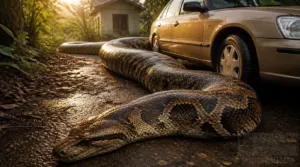
Picture a snake stretching longer than your car, and you start to understand what "adult size" really means here. That size doesn’t happen overnight, and it doesn’t happen the same way for every python. Here’s what shapes that final length, from typical adults to the rare giants that break the mold.
Growth actually never fully stops for pythons, which is why understanding how fast snakes grow at different life stages helps explain why "full-grown" is more of a moving target than a fixed number.
Typical Adult Length
Picture a snake stretching longer than a car. Burmese pythons commonly reach 12 to 18 feet, or 4 to 5.5 meters, once fully grown, with excellent females nearing 20 feet.
Size varies by:
- Sex (females far outsize males)
- Genetics
- Feeding history
Full growth takes three to five years, most of it packed into that first explosive stretch of life.
Males Reach 8–14 Feet
Males settle into a more modest range: 8 to 14 feet, usually by ages 3 to 5. Warmth speeds up their metabolism, while weekly to biweekly feeds during those first 3 to 4 years push steady length gains.
Genetics set the ceiling, though. Some males hit 12 to 14 feet early. Others plateau lower once growth slows after year four.
Females Reach 14–18 Feet
Females tell a different story. They usually reach 14 to 18 feet, outpacing males by several feet thanks to sexual dimorphism.
Growth accelerates by age three, with steady feeding and warm, humid conditions pushing them toward that upper range.
Reproductive maturity around years three to four often aligns with rapid length gains, especially in captivity versus the wild.
Exceptional Females Exceed 19 Feet
So what happens beyond that 18-foot mark? Every so often, a female pushes past it, with verified accounts reaching 19 to 22 feet. These giants usually appear in captivity, where steady feeding and mature breeding cycles support extended growth, often paired with solid girth and a noticeably larger head relative to body length.
Growth Slows After Year Four
Once your python clears age four, don’t expect the same dramatic leaps you saw earlier. Length gain drops sharply, often to just 6-12 inches a year instead of 12-24.
Growth shifts toward girth rather than length, and a slowing metabolism means size stabilizes as bones reach structural maturity, usually settling by ages four to six.
Burmese Python Size by Age
Picture a python’s growth like a time-lapse video, unfolding faster than you’d expect. Every stage brings its own milestones, from a foot-and-a-half hatchling to a hefty sub-adult. Here’s what to expect at each age.
Hatchling Size at Birth
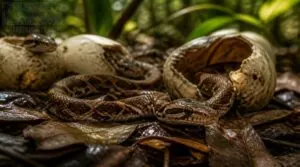
Picture a hatchling barely bigger than a pencil, yet already 18 to 24 inches long and hunting within days. Birth weight ranges 0.25 to 0.5 pounds, shaped by clutch size and maternal size.
As they grow fast in those early months, sizing an enclosure for your growing boa properly becomes essential to keeping them safe and thriving.
- Length: 24-28 inches
- Weight: 110-225 grams
- Feeding starts: 3-7 days
- Heavier hatchlings survive better
- Growth explodes toward 6 to 8 feet
Growth During The First Year
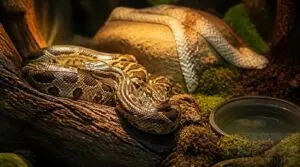
Once feeding kicks in, that pencil-thin hatchling transforms fast. Fed every 5 to 7 days at first, most juveniles hit 3 to 4 feet by month 12, though well-fed animals under ideal conditions can push toward 6 to 8 feet.
Shedding every 4 to 6 weeks signals growth spurts, so track monthly length and weight, adjusting enclosure size as your snake outgrows its space.
Size Around 18 Months
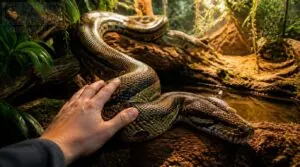
By eighteen months, that lanky hatchling has become a serious animal, commonly 7 to 10 feet with steady captive feeding.
Growth rate stays brisk here: males trend 8-14 feet, females 10-16 feet, evidence of sexual dimorphism emerging early.
Compare that to wild vs captive pace, and feeding schedule impact becomes obvious.
Time to reassess enclosure size again.
Size at Two Years

Two candles on the cake, and your python’s already a hefty subadult: 8 to 12 feet, 2 to 7 pounds, depending on diet impact growth patterns you’ve kept up. Growth rate downshifts from year one’s sprint to a steadier jog.
Females edge out males here, that size advantage starting to show. Wild vs captive size gaps widen too. Time again to check enclosure size.
Size at Three to Five Years

By age three, most Burmese pythons stretch to 12 to 15 feet, real adult territory now. Year four averages 14 to 17 feet, and growth rate noticeably slows.
By five, females often hit 15 to 18 feet, standout ones topping 19. Feeding frequency drops, so plan enclosure space for full adult size well before you get there. Just as effective product descriptions focus on benefits rather than just features, understanding a python’s growth helps owners meet its long-term needs. focus on benefits
Wild Vs. Captive Burmese Python Growth

Ever wonder why a wild python and a pampered pet one can look worlds apart at the same age? The answer comes down to food, freedom, and a few other factors that shape every inch of growth. Here’s what really separates the two.
Wild Feeding and Growth
Picture a python coiled motionless for days, waiting. That’s ambush hunting in action, and it shapes everything about wild growth rate. Feast-or-famine feeding, tied to seasonal prey and prey size, creates growth spurts followed by lean stretches.
| Factor | Wild Impact | Result |
|---|---|---|
| Prey size | Larger meals | Slower digestion |
| Season | Wet vs. dry | Variable feeding |
| Habitat | Prey density | Growth swings |
Captive Feeding and Growth
Captivity flips the script entirely. Instead of feast-or-famine, keepers offer a consistent feeding schedule, every 5-7 days during rapid growth, with prey sized to match girth.
| Practice | Captive Approach | Benefit |
|---|---|---|
| Prey size | 10% of girth | Steady digestion |
| Water | Always available | Hydration support |
| Monitoring | Regular weigh-ins | Tracks growth rate |
Optimal Conditions Versus Overfeeding
That steady feeding schedule sounds great, but more isn’t always better. Overfeeding speeds weight gain while raising fat deposition risks and shortening healthspan.
| Factor | Overfed | Balanced |
|---|---|---|
| Growth rate | Rapid, uneven | Steady |
| Health risk | High | Low |
Stable temperature regulation and humidity ease digestion, while enrichment curbs stress eating. Regular weight monitoring catches trouble early.
Why Wild Sizes Vary
Balance in the wild explains that spread. Where prey is thin, growth stalls; where it’s plentiful, pythons pack on length fast.
| Factor | Effect on Size |
|---|---|
| Prey availability | Drives growth rate |
| Seasonal temperature | Shifts metabolism |
| Habitat competition | Limits food access |
| Genetic population differences | Sets growth ceiling |
Regional variation and phenotypic plasticity mean no two populations grow quite alike.
Measuring Length and Weight
A few tools turn guesswork into real data. Tape measure accuracy works fine for total length, while calipers nail girth. Scale calibration methods matter too, taring before every weigh-in.
| Tool | Measures | Precision |
|---|---|---|
| Tape measure | Length | 1/16 inch |
| Digital scale | Weight | Few grams |
| Caliper | Girth | 0.01 inch |
Length conversion factors help compare wild and captive records fairly.
What Affects Burmese Python Size?

Not every python grows the same way, even with the best care in the world. Genetics, food, temperature, and stress all quietly shape the snake in front of you. Here’s what actually moves the needle on size.
Sex and Sexual Dimorphism
Ever wonder why your python’s mate might dwarf her? Sexual dimorphism is why: females reach 14-18 feet, males only 8-14. Females grow faster young, fueled by future egg production. Key differences:
- Size: females much larger
- Growth rate: females accelerate early
- Anatomy: ovaries vs. hemipenes
- Behavior: males roam, females stay put
- Coloration: subtle pattern variations
Genetics and Parent Size
Big parents make big pythons. Parental size prediction is real: pair a tall sire with a lengthy dam, and hatchlings trend larger.
| Factor | Influence | Effect |
|---|---|---|
| Sire size | Growth genes | Faster rate |
| Dam size | Clutch scaling | Bigger hatchlings |
| Lineage | Lineage size variation | Consistent averages |
| Sex chromosomes | Dimorphism | Female skew |
| Epigenetics | Timing | Growth spurts shift |
Diet and Feeding Frequency
You are what you eat, and pythons prove it. Prey size selection matters as much as frequency: hatchlings take mice weekly, juveniles shift to 5–9 day intervals, adults stretch to 14–21 days.
Feeding schedule consistency drives steady growth rate through age three. Prey availability, whether wild rabbits or captive rats, shapes nutritional needs and digestion timing throughout each growth stage.
Temperature and Humidity
Picture a snake that can’t shiver or sweat: temperature and humidity control everything. Keep basking spots at 88-92°F, cool zones near 75-80°F, and humidity between 50-60% (65-70% while shedding).
This thermal gradient drives digestion, appetite, and steady growth. Skip it, and you’ll see stalled sheds, poor appetite, and sluggish growth no matter how well you feed.
Health, Stress, and Housing
A stressed python simply won’t grow well, no matter how perfect its enclosure temperature gradients are. Poor housing triggers feeding refusal, weakened immunity, and respiratory infection.
Watch for:
- Consistent feeding response
- Proper humidity shedding cycles
- Quarantine for new snakes
- Adequate hiding spots
Address these, and steady adult size follows naturally, since a calm, healthy python always outgrows a stressed one.
Planning for a Full-Grown Burmese Python

That hatchling isn’t staying small for long, and your setup needs to keep pace with it. Planning ahead saves you money, stress, and a whole lot of last-minute scrambling. Here’s what to expect at every stage, from those first few months to full adult size.
Enclosure Upgrades by Life Stage
Since your snake won’t stay small, its home shouldn’t either. Hatchling enclosure setup starts at 4x2x2 feet; juvenile housing needs bump to 6 feet by 5 feet; subadult space requirements hit 8×3 feet. Each life stage demands more room, matching that rapid growth rate.
Waiting too long to upgrade? That’s how stress and stunted growth creep in.
Adult Enclosure Space Needs
By adulthood, that upgrading pattern lands you at the final stop: a custom build at least 8 feet long by 4 feet wide, with real vertical space for climbing.
Keep substrate depth around 6-8 inches, maintain a warm-to-cool temperature gradient, and make sure access stays secure. Big snake, bigger responsibility, right?
Feeding as Growth Slows
Once that 8×4 enclosure is set, your feeding routine needs its own upgrade. Adult Burmese pythons eat every 1-3 weeks, not weekly.
- Match prey size to girth, not appetite
- Watch body condition, not just weight
- Skip meals occasionally, mimicking wild patterns
- Prioritize nutrient density over bulk
Slower growth rate means smarter feeding, not more of it.
Safe Handling at Adult Size
Feeding smarter matters little if you can’t handle the snake safely. At adult size, always supervise every interaction, using a snake hook and restraint to control the head. Support the full body with both hands, wear thick gloves and long sleeves, and never handle during shedding or right after feeding, when strikes become more likely.
Long-Term Ownership Commitment
A Burmese python isn’t a pet you outgrow, you grow alongside it. With a reptile lifespan of 20 to 30 years in captivity, this is a genuine longterm pet commitment spanning enclosure upgrades, feeding commitment, and annual veterinary care.
A Burmese python isn’t a pet you outgrow, but one you grow alongside for twenty to thirty years
Add escape prevention and lifespan considerations to your planning now. Ask yourself: can you commit two decades? If yes, you’re ready.
Frequently Asked Questions (FAQs)
How much does a Burmese python cost?
The smallest hatchling can cost less than your dinner tonight, yet grow into a snake worth thousands. Prices span $50 to over $2,000, driven by age, morph genetics, seller type, and ongoing costs like feeding and enclosures.
How many people are killed by Burmese pythons?
Zero. No verified fatalities exist from wild Florida pythons. Wildlife agencies confirm encounters usually end in escape or minor injury, not death, so treat these snakes with caution and respect, not fear.
How big is a 3 year old Burmese python?
Picture a snake stretching across your living room floor. By three years old, most reach a 10 16 feet range, males around seven feet to twelve, females often nearing 18 feet, depending on diet and genetics.
Are Burmese pythons friendly?
Yes, with consistent gentle handling, many stay calm and predictable. Temperament varies by individual, but stable routines, proper feeding, and low stress reduce defensive strikes, building real bonding potential over time in captivity.
How long do Burmese pythons grow?
A well-fed hatchling can rocket from two feet to 6 to 8 feet within its first year. Most Burmese pythons settle into 12 to 18 feet over 3 to 5 years, with females often outpacing males in that final stretch.
How fast do Burmese pythons move?
On land, don’t expect a sprint. Burmese pythons cruise at roughly 1 mph, favoring energy conservation over speed. Strikes, though, deliver millisecond bursts of explosive force, and warmer temperatures noticeably quicken their pace and responsiveness.
How much does a Burmese python weigh?
That heavy-bodied coil could hide a surprising number on the scale. Most adults settle around 80 to 200 pounds, females often topping males thanks to sexual dimorphism, while diet and captive care push weight higher than wild counterparts usually reach.
How often do Burmese pythons shed?
Young pythons shed every 4 to 6 weeks, chasing rapid growth, while adults slow to three or four times yearly. Humidity, diet, and health all shape this cycle, so watch your snake’s skin for clues.
If the eyes stay milky well past a completed shed, check out this guide on why a snake won’t shed its eye caps for likely causes and fixes.
What are the realistic size expectations for adult Burmese pythons?
Picture 12 to 18 feet as your realistic guide, with females considerably larger than males (8 to 14 feet). Weight varies widely by length, and growth plateaus after year four, though full adult size takes 3 to 5 years.
How fast do pythons grow?
A hatchling the length of your forearm can hit 6 to 8 feet within its first year, then 8 to 12 feet by age two. Feeding frequency and temperature drive this early growth spurt before pace slows.
Conclusion
That hatchling grows like it’s racing against time itself, packing on feet the way most animals pack on inches.
Now you know how long do burmese pythons get and how long it takes them to grow: three to five years to reach giant status, then decades holding that frame.
Feed responsibly, build enclosures in advance, and respect the animal in front of you.
Size isn’t the real goal here. Understanding always was.